

Ghana is preparing to seek BRICS Partner Country status following a decision by President John Dramani Mahama’s Cabinet to deepen the country’s engagement with major emerging economies. Foreign Affairs Minister Samuel Okudzeto Ablakwa announced the decision on October 6, 2026, before clarifying on October 10 that Ghana intends to pursue partnership rather than full BRICS membership.
The proposed Ghana BRICS partner status would give the country another platform for economic diplomacy, potentially strengthening trade, investment, industrial cooperation and international relationships. However, Ghana has not been admitted as a BRICS partner, and participation would not automatically provide preferential tariffs, development loans or access to new markets.
The distinction matters. BRICS includes some of Ghana’s most important economic partners, particularly China and India, while also bringing together African economies such as South Africa, Egypt and Ethiopia. Closer participation could create opportunities, but the economic benefits would depend on negotiated agreements, investments and practical policy decisions.
For Ghanaian businesses, international investors and members of the diaspora, the central question is whether stronger ties with BRICS can generate measurable improvements in jobs, manufacturing, exports and economic stability.
Quick links (related guides):
Table of Contents
- What Ghana Has Announced
- What Is BRICS?
- Partner Status vs Full Membership
- What BRICS Could Mean for Ghana’s Trade
- Investment and Infrastructure Opportunities
- Could Ghana Access BRICS Development Financing?
- The Cedi and International Payments
- Industries That Could Benefit
- Potential Risks and Challenges
- Relations With Western Countries
- What It Means for Ordinary Ghanaians
- What Happens Next?
- Frequently Asked Questions
What Ghana Has Announced About Joining BRICS
On October 6, 2026, Foreign Affairs Minister Samuel Okudzeto Ablakwa announced that Ghana’s Cabinet had approved a move toward closer participation in BRICS.
The announcement came during a joint press briefing in Accra with India’s External Affairs Minister, Subrahmanyam Jaishankar.
According to the Ghana News Agency, Ablakwa explained that the government wanted to diversify Ghana’s international partnerships and create additional opportunities for economic transformation.
The government sees closer BRICS engagement as part of an economic strategy emphasizing industrialization, job creation and stronger domestic control over the value generated from Ghana’s natural resources.
Initial reports described the move as an application for BRICS membership. However, on October 10, Ablakwa clarified that Ghana was seeking Partner Country status, not full membership. The government’s Information Services Department confirmed the distinction on October 12.
As of October 13, the government’s stated position is that Ghana intends to apply. The available official announcements do not establish that the formal application has been submitted or approved.
This means the country is still at an early stage of the process. Any eventual change in status would require consideration by existing BRICS members.
What Is BRICS, and Why Does Ghana Want to Participate?
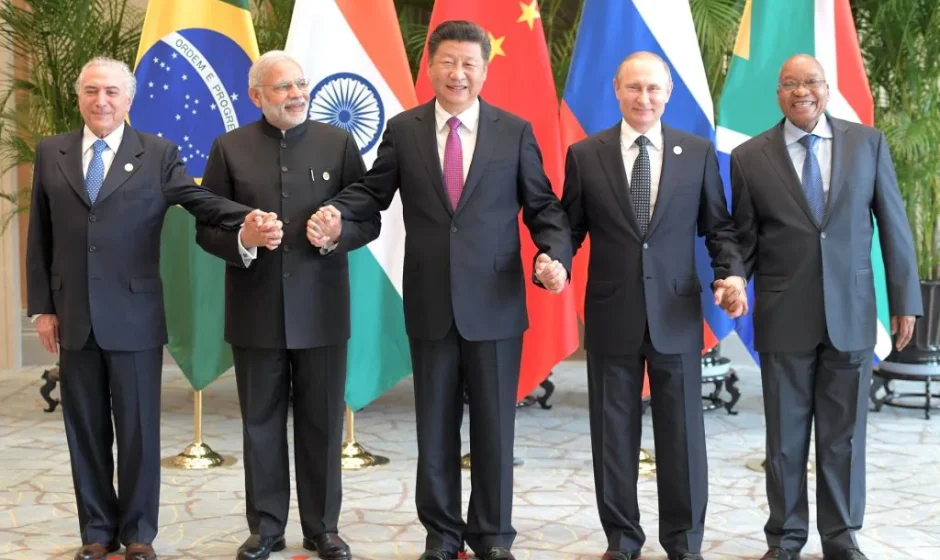
BRICS is an international coordination forum that brings together major emerging economies and developing countries. Its original participants were Brazil, Russia, India and China. South Africa joined in 2011, after which the group expanded further.
BRICS focuses on issues such as international economic cooperation, trade, financial development, diplomatic coordination and reform of global institutions.
According to the official BRICS information portal, the group has eleven full members.
| Region | Full BRICS Members |
|---|---|
| Africa | South Africa, Egypt, Ethiopia |
| Asia | China, India, Indonesia |
| Middle East | Iran, Saudi Arabia, United Arab Emirates |
| Europe / Eurasia | Russia |
| South America | Brazil |
BRICS is not equivalent to a single market like the European Union. It does not automatically eliminate tariffs between members, create unrestricted movement of workers or establish a shared currency.
It is primarily a forum through which participating governments coordinate policies and develop relationships.
For Ghana, its appeal is partly economic and partly diplomatic. Participation could provide more regular access to discussions involving countries that already influence Ghana’s trade, infrastructure development and investment environment.
It could also strengthen Ghana’s participation in conversations about how developing countries are represented in international financial institutions.
Ghana BRICS Partner Status vs Full Membership: What Is the Difference?
The difference between partnership and full membership is essential to understanding Ghana’s proposal.
BRICS introduced the Partner Country category in 2024, creating a way for interested governments to participate in selected activities without becoming full members.
| Feature | Full Member | Partner Country |
|---|---|---|
| Participation in BRICS meetings | Participates in the group’s decision-making meetings | May be invited to designated meetings and sessions |
| Decision-making | Participates in decisions made by consensus | Does not have the same decision-making role as a full member |
| Summit attendance | Participates as a member | May attend through the partner participation arrangements |
| Official declarations | Participates in negotiating and adopting group positions | May endorse selected BRICS declarations |
| Automatic free trade | No | No |
| Automatic New Development Bank membership | No | No |
Partner countries can be invited to BRICS summits and meetings of foreign ministers. Their participation in other activities depends on consultation and agreement among members.
Under the process described in the official BRICS frequently asked questions, an interested country communicates its interest to the rotating presidency. The proposal is then considered through diplomatic consultations, with a final decision on Partner Country status made by consensus among BRICS leaders.
Ghana would therefore need more than Cabinet approval to secure a place in the grouping.
Importantly, obtaining partnership status would not itself create a binding investment agreement or guarantee preferential trading conditions. Those outcomes would require separate decisions.
What Could BRICS Mean for Ghana’s International Trade?
Trade is one of the strongest economic arguments for Ghana’s proposed BRICS partnership.
Ghana already trades with major BRICS economies, particularly China and India. These relationships exist independently of the country’s proposed partnership and could deepen with or without a change in formal status.
During the October 6 announcement, Ablakwa highlighted the growth of Ghana’s trade relationship with India, saying bilateral trade had increased from approximately US$3 billion in 2024 to about US$7 billion.
Those were figures cited by the minister. They should not be interpreted as independently verified customs statistics without comparing the reporting periods and underlying trade data.
Expanding Ghana’s Export Markets
Ghana exports agricultural products, minerals and other commodities to international markets. But its economic ambitions increasingly focus on processing more of those resources domestically before exporting them.
Closer engagement with BRICS economies could support efforts to attract buyers for Ghanaian goods, establish manufacturing partnerships and develop new distribution networks.
Potential export opportunities include processed cocoa products, manufactured food products, textiles, agricultural inputs and selected mineral-based products.
The challenge is that Ghanaian exporters must still meet foreign quality standards, customs requirements, product certification rules and commercial conditions.
Partner Country status would not remove these barriers automatically.
Reducing Dependence on Raw Commodity Exports
Ghana has long faced the problem of exporting valuable raw materials while importing many finished products manufactured elsewhere.
Cocoa provides a familiar example. Although Ghana is an important producer of cocoa beans, much of the higher-value manufacturing and retail activity associated with chocolate takes place outside the producing countries.
A similar development question applies to minerals and other agricultural products.
The government wants more investment in local processing, manufacturing facilities and industrial supply chains.
If BRICS engagement helps attract investors willing to establish production facilities in Ghana, it could contribute to higher domestic value addition and employment.
However, investment proposals would still need to be evaluated individually. A foreign-financed factory is not automatically beneficial if it offers weak local employment, limited technology transfer or poor financial terms.
Could BRICS Attract More Foreign Investment Into Ghana?
Greater access to international investors is another potential benefit of Ghana BRICS partner status.
BRICS economies include large industrial manufacturers, construction companies, financial institutions, technology businesses and sovereign investors.
For Ghana, stronger diplomatic engagement could help connect domestic projects with potential financing partners.
Possible areas of interest include electricity infrastructure, transport, agricultural processing, industrial parks, digital services and manufacturing.
These are potential investment channels rather than investments already secured through BRICS.
Foreign investors will still assess Ghana’s regulatory framework, political stability, commercial opportunities, infrastructure, foreign-exchange availability and ability to enforce contracts.
Ghana’s investment environment also depends on domestic legislation and regulatory decisions. Foreign businesses considering the market should examine the country’s investment requirements and capital rules before making commitments.
Closer BRICS engagement could help Ghana compete for investment, but the quality of projects will matter more than the number of foreign investment announcements.
A manufacturing project that hires Ghanaian workers, purchases from local suppliers and develops export capacity could have lasting economic value. By contrast, an investment that relies heavily on imported equipment and labor may deliver narrower benefits.
Could Ghana Access Financing From the BRICS New Development Bank?
One institution frequently associated with BRICS is the New Development Bank (NDB).
Established by the original BRICS countries, the NDB finances infrastructure and sustainable development projects in emerging economies and developing countries.
Its financing activities include sectors such as transportation, clean energy, water, sanitation and digital infrastructure.
The bank offers a potential alternative or complement to established development-finance institutions.
However, an important distinction is that BRICS participation and New Development Bank membership are separate matters.
The NDB’s official membership information confirms that its membership extends beyond the original BRICS founders and follows its own admission process.
Ghana is not listed among the bank’s members as of this article’s publication date.
Therefore, Ghana’s proposed BRICS Partner Country status would not automatically give the government access to NDB loans or establish a guaranteed allocation of financing.
Any future Ghanaian engagement with the NDB would require the relevant institutional procedures, project assessments and financial agreements.
Even if financing eventually becomes available, it would need to be examined alongside Ghana’s debt obligations, borrowing costs and long-term repayment capacity.
Additional sources of financing can improve a government’s choices, but borrowing from a different institution does not make a project financially sustainable by itself.
Could BRICS Help Strengthen the Ghanaian Cedi?
One of the questions likely to attract attention is whether closer BRICS ties could strengthen Ghana’s currency or reduce reliance on the United States dollar.
Some BRICS members have supported greater use of national currencies in international trade and financial transactions.
For Ghana, alternative payment arrangements might eventually offer businesses additional ways to settle transactions with international partners.
However, no official Ghanaian announcement establishes that the BRICS partnership proposal will introduce a new currency arrangement for the country.
There is also no operational common BRICS currency that Ghana would automatically adopt by becoming a partner.
The value of the Ghanaian cedi continues to depend on broader economic conditions, including inflation, trade flows, export earnings, foreign-exchange reserves, fiscal policy and market confidence.
Reuters reported in October 2026 that demand for foreign currency from sectors such as energy and manufacturing was contributing to pressure on the cedi.
Partner status alone cannot remove those pressures.
If stronger trade and investment relationships eventually generate more export revenue and sustainable foreign investment, they could improve the availability of foreign exchange over time.
But the opposite is also possible: additional imports financed through new commercial relationships could increase demand for foreign currency.
Readers unfamiliar with local money and exchange-rate issues can consult our guide to Ghana’s currency and financial system.
Which Ghanaian Industries Could Benefit Most?
The potential benefits of Ghana’s engagement with BRICS would not be distributed equally across the economy.
Industries with existing international demand, viable investment projects and opportunities for domestic processing may be better positioned than sectors without those advantages.
| Sector | Potential Opportunity | Main Challenge |
|---|---|---|
| Agriculture | New buyers, processing equipment and export investment | Product standards, logistics and agricultural productivity |
| Manufacturing | Factories, equipment, industrial partnerships and technology transfer | Energy costs, financing and competitiveness |
| Mining and minerals | Mineral processing and higher-value domestic production | Environmental impacts, contract terms and local value retention |
| Energy | Infrastructure development and renewable-energy projects | Financing terms, utility finances and project execution |
| Technology | Software, digital infrastructure and cross-border business partnerships | Skills, cybersecurity and access to capital |
| Transportation | Ports, railways, roads and logistics infrastructure | Construction costs, debt sustainability and maintenance |
Technology is particularly relevant because partnerships with international companies could create opportunities for digital-service exports, technical training and investment in Ghanaian startups.
These possibilities are consistent with broader developments discussed in our article on Ghana’s growing technology sector.
Still, none of these outcomes follows automatically from BRICS participation. Domestic policies, commercial negotiations and infrastructure will determine how much investment materializes.
What Are the Potential Risks of Ghana’s BRICS Strategy?
Although Ghana may benefit from closer cooperation with emerging economies, participation also raises economic and diplomatic questions.
Dependence on Larger Economies
BRICS contains economies that are considerably larger than Ghana’s. Their companies may enjoy advantages in financing, technology, production scale and international distribution.
Ghana will need to negotiate commercial arrangements that support domestic businesses rather than simply opening additional channels for imported finished goods.
Trade Imbalances
More trade does not necessarily produce stronger domestic manufacturing.
If imports rise substantially faster than exports, Ghana could experience additional pressure on its trade balance and foreign-exchange demand.
The government will need to evaluate whether new commercial relationships increase Ghanaian production or primarily expand consumption of foreign goods.
Debt and Infrastructure Financing
Ghana’s recent experience with sovereign debt restructuring highlights the importance of borrowing discipline.
International financing may make major projects possible, but debt-funded investments must generate sufficient public or economic benefits to justify repayment obligations.
Project transparency, procurement procedures and sustainable financing terms remain important regardless of which country or institution provides the funding.
Geopolitical Disagreements
BRICS members have different political systems, foreign-policy priorities and relationships with Western governments.
Some members also face international sanctions or diplomatic disputes.
Ghana would need to preserve its ability to make independent foreign-policy decisions while maintaining access to international markets and financial systems.
Partner Country status does not require Ghana to adopt every position taken by a BRICS member, but diplomatic participation can still raise questions about alignment and national priorities.
Would Ghana Joining BRICS Damage Relations With the United States or Europe?
Ghana’s government has explicitly presented its proposed BRICS engagement as an expansion of international partnerships rather than a withdrawal from existing relationships.
During the October 6 announcement, Ablakwa emphasized that Ghana intended to maintain cooperation with established development partners, including the International Monetary Fund and World Bank.
This distinction matters because Ghana maintains important economic, diplomatic and development relationships with the United States, European countries and international financial institutions.
Ghana’s economic interests are not limited to one geopolitical grouping. The country benefits from relationships across multiple regions, and its trade, investment and development needs vary by sector.
Closer cooperation with BRICS would not automatically terminate Western trade arrangements or Ghana’s participation in existing international institutions.
Nevertheless, Ghana may face diplomatic questions if disagreements emerge between major international powers.
The practical challenge will be maintaining flexibility while securing benefits for the Ghanaian economy.
A successful strategy would allow Ghana to negotiate with a broad range of partners without becoming excessively dependent on any single country or financing institution.
What Could Ghana BRICS Partner Status Mean for Ordinary Ghanaians?
For most households, the significance of BRICS participation will depend on whether it produces visible economic results.
A new diplomatic relationship alone will not reduce food prices, guarantee employment or increase household income.
The most meaningful outcomes would involve investments that increase domestic production, create sustainable jobs and improve essential infrastructure.
For example, an investment in agricultural processing could create employment opportunities while helping Ghana retain more value from its crops.
Similarly, improved electricity infrastructure could benefit businesses struggling with energy costs, while more efficient transport infrastructure could reduce some logistical expenses.
These are possible indirect effects, not guaranteed outcomes of partnership.
Consumers may also benefit from greater competition and access to products, although increased reliance on imports can create challenges for domestic manufacturers.
The government will ultimately need to demonstrate whether closer international relationships produce measurable changes in the real economy.
Useful indicators would include newly operating factories, actual investment disbursements, employment created, export growth, domestic processing capacity and the performance of infrastructure projects.
What Happens Next With Ghana’s BRICS Application?
The next stage is diplomatic rather than economic.
Ghana must advance its stated intention to apply for Partner Country status through the established BRICS process.
The group’s rotating presidency and existing member countries would then consider the request under the rules governing partnerships.
Under official BRICS procedures, admission as a partner requires a consensus decision among member-country leaders.
There is no confirmed date on which Ghana will receive Partner Country status.
Several developments will be worth monitoring:
- Official confirmation that Ghana’s application has been submitted.
- Statements from the BRICS presidency acknowledging Ghana’s request.
- Public support or concerns expressed by existing members.
- Any invitation extending Partner Country status to Ghana.
- Specific trade, investment or development agreements connected to Ghana’s engagement.
It will also be important to distinguish agreements announced during diplomatic visits from completed investments that deliver economic benefits.
Ghana’s longer-term challenge is not simply gaining recognition within BRICS. It is converting international relationships into stronger domestic industries and more resilient economic development.
Frequently Asked Questions About Ghana and BRICS
Has Ghana officially joined BRICS?
No. As of October 13, 2026, Ghana has announced its intention to apply for BRICS Partner Country status. The available official statements do not confirm that Ghana has been admitted.
Is Ghana applying for full BRICS membership?
No. Foreign Affairs Minister Samuel Okudzeto Ablakwa clarified on October 10, 2026, that Ghana intends to pursue Partner Country status rather than full membership.
Could Ghana join BRICS in 2026?
It is possible for the application process to advance during 2026, but no confirmed admission date has been announced. Approval depends on the BRICS decision-making process.
Will Ghana receive money from BRICS?
Not automatically. BRICS Partner Country status does not guarantee direct financial assistance or loans. Individual financing arrangements would require separate agreements and approvals.
Will Ghana stop using the United States dollar?
No such change has been announced. Ghana’s participation would not automatically replace the dollar in international transactions or establish a new national currency.
Is Ghana leaving the IMF or World Bank?
No. Ghana’s government has described closer BRICS engagement as complementary to its established international relationships.
Could Ghanaian businesses trade more easily with China and India?
Closer diplomatic engagement could create additional commercial opportunities, but tariffs, customs procedures and import requirements would still depend on applicable trade agreements and national regulations.
Does BRICS membership allow Ghanaians to travel visa-free?
No. BRICS membership or partnership does not automatically establish visa-free travel. Entry requirements remain governed by individual countries and applicable bilateral arrangements.
Interested in Business Opportunities in Ghana?
International investment discussions often raise a more practical question: which businesses can entrepreneurs establish in Ghana, and where might demand exist?
Our guide, 543 Business Ideas to Start in Ghana, explores business possibilities across multiple industries for entrepreneurs researching the Ghanaian market.
The Bottom Line: Ghana’s BRICS Opportunity Depends on What Comes After the Application
Ghana’s decision to seek BRICS Partner Country status represents an effort to diversify its diplomatic and economic relationships at a time when emerging economies are seeking a greater role in international governance.
The initiative could provide opportunities for trade discussions, investment promotion, industrial partnerships and cooperation with major economies outside Ghana’s traditional development relationships.
But Partner Country status would be a diplomatic milestone, not an economic transformation in itself.
There is no automatic free-trade agreement, no guaranteed development loan and no immediate change to Ghana’s currency or immigration arrangements.
The economic value of Ghana’s engagement will depend on the quality of investments, the competitiveness of Ghanaian industries and the government’s ability to negotiate arrangements that support domestic production.
For Ghanaian households and businesses, success will ultimately be measured not by diplomatic announcements, but by jobs created, exports expanded, infrastructure completed and sustainable improvements in the economy.
Sources and References
- Ghana News Agency. “Ghana to apply for BRICS membership – Ablakwa.” October 6, 2026.
- Ghana Information Services Department. “Ghana Seeks BRICS Membership to Boost Trade, Investment.” October 7, 2026.
- Graphic Online. “Ghana not seeking full BRICS membership, applying as Partner Country – Ablakwa.” October 10, 2026.
- Ghana Information Services Department. “Foreign Affairs Minister Clarifies Ghana’s Intended BRICS Partner Country Status.” October 12, 2026.
- BRICS Official Information Portal. “About the BRICS.” Official information on members and participation categories.
- BRICS Official Information Portal. “Frequently Asked Questions about the BRICS.” Partner Country procedures and participation rights.
- New Development Bank. “Members.” Official membership information.
- New Development Bank. Agreement on the New Development Bank, including its purpose and membership provisions.
- Reuters. African currency market report, October 8, 2026.