
The Ghana Gold Board, widely known as GoldBod, is the government agency established to oversee, regulate, and conduct the trading of gold and other precious minerals in Ghana. Created by an Act of Parliament in 2025, GoldBod functions as the sole authority with exclusive rights to buy, weigh, grade, assay, value, and export gold and other precious minerals in the country. The agency operates under the Ministry of Lands and Natural Resources and represents a major restructuring of Ghana's gold trading sector, consolidating functions that were previously scattered across multiple state institutions.
GoldBod's creation reflects a deliberate government strategy to maximize foreign exchange earnings, build national gold reserves, and reduce smuggling in a sector where Ghana is Africa's leading gold producer. The agency combines regulatory powers with commercial operations, acting as the primary buyer of artisanal and small-scale mining gold, the national assayer for all gold exports, and the licensing authority for businesses across the gold value chain.
Location
Table of Contents
Overview
GoldBod is a body corporate established by the GoldBod Act, 2025 (Act 1140) to bring coherence to Ghana's gold trading industry. Before its establishment, gold purchasing operated under a fragmented system involving the Precious Minerals Marketing Company (PMMC), the Bank of Ghana, the Minerals Income Investment Fund, and private aggregators. Government officials described this arrangement as chaotic and prone to significant financial losses from unregulated operations and widespread smuggling.
The agency's mandate covers the entire gold value chain, from extraction to refining, value addition, and marketing. GoldBod is the sole buyer of gold from licensed small-scale miners, operating through licensed aggregators and buyers. It also holds the right to purchase a portion or all of the gold produced by large-scale mining companies, exercising pre-emption rights under Ghana's Minerals and Mining Act. Beyond trading, GoldBod serves as the national assayer with exclusive assay rights over all precious minerals in Ghana, meaning all gold exported from or brought into the country must pass through its valuation and purity testing.
The agency is backed by seed capital of US$279 million (cedi equivalent) advanced by the Government of Ghana. Its operational target includes the purchase, assay, refining, and export of a minimum of three tons of gold every week to international off-takers, with the dual purpose of generating foreign exchange and supporting gold reserve accumulation by the Bank of Ghana.
History and Legal Basis
The establishment of GoldBod followed a commitment made in the manifesto of President John Dramani Mahama and the National Democratic Congress government. In January 2025, Finance Minister Dr. Cassiel Ato Baah Forson inaugurated a technical committee tasked with developing the regulatory framework, governance structure, and operational strategies for the proposed Gold Board. The committee was given a tight schedule, with a draft bill expected by February 5, 2025, and operations slated to commence on March 8, 2025.
Parliament passed the GoldBod Bill on March 28, 2025, and President Mahama subsequently signed it into law as the GoldBod Act, 2025 (Act 1140). The legislation was introduced by the Ministry of Finance and aimed to restructure the country's gold sector by establishing GoldBod as a regulatory body with authority over gold trading and export activities. During the bill's passage, Finance Minister Forson described the legislation as transformative, stating that it aims to regulate the entire gold value chain from extraction to export.
The Act's Explanatory Memorandum noted that Ghana is the leading exporter of gold in Africa, yet revenue from gold has been largely limited to royalties and taxes, with minimal benefits derived from the trading of gold itself. The new law was designed to change that by centralizing authority and commercial operations under a single state entity.
GoldBod's creation also involved the absorption of the Precious Minerals Marketing Company (PMMC) Limited. Under Section 78 of Act 1140, GoldBod took over the rights, obligations, assets, liabilities, and workforce of PMMC, which itself had a long institutional history. PMMC traced its origins to the Ghana Diamond Marketing Board, established in 1963 to purchase and market Ghana's diamonds. That board was incorporated as a state-owned enterprise in 1965, renamed the Diamond Marketing Corporation in 1972, and became the Precious Minerals Marketing Corporation in 1989 with enhanced functions to grade, assay, and value gold, diamonds, and other precious minerals. In 2000, it was converted to a limited liability company operating under the Ghana Companies Code. In 2016, PMMC was appointed the national assayer by the Government of Ghana, a role that GoldBod has now assumed.
Structure and Leadership
GoldBod is governed by a 13-member Board of Directors appointed by the President of Ghana in accordance with Article 70 of the Constitution. The board composition reflects the agency's multi-faceted mandate and includes:
- A chairperson nominated by the President
- The Chief Executive Officer
- The Minister responsible for mines or a representative
- The Minister responsible for finance or a representative
- The Governor of the Bank of Ghana or a representative
- One representative of the Minerals Commission
- One representative of large-scale mining firms, nominated by the Ghana Chamber of Mines
- One representative of small-scale miners, nominated by the Minister of Lands and Natural Resources
- One representative of gold service providers, nominated by the Minister of Finance
- Four other experts with relevant knowledge and experience, including at least one woman
The Board of Directors exercises general oversight responsibility for the strategic direction of GoldBod, ensures the achievement of its objectives, and oversees the effective and efficient performance of its functions. Day-to-day operations are managed by the Chief Executive Officer, who is nominated by the President.
In May 2025, the Minister for Finance inaugurated the first 13-member board. Sammy Gyamfi Esq. serves as Chief Executive Officer. The board includes representatives from key stakeholder groups, including the Minerals Commission, the Ghana Chamber of Mines, the Ghana Small Scale Miners Association, and the Chamber of Bullion Traders. The Minister for Lands and Natural Resources and the Deputy Finance Minister also serve as members, alongside the Governor of the Bank of Ghana.
The agency also operates through subsidiary entities. GoldBod Jewellery Limited, also known as Precious Jewelry Limited (PJL), is a fully-owned Ghanaian jewellery manufacturing company incorporated in 2016. It operates as a subsidiary of the Ghana Gold Board, selling authentic, customized, and high-quality gold, diamond, and silver jewelry to clients in and outside Ghana.
Responsibilities and Powers
GoldBod's responsibilities span regulation, commercial trading, quality assurance, and law enforcement. The agency describes its core functions as trading, assaying, licensing, diamond operations, vault services, refining, fabrication and minting, jewelry, and tokenisation.
Trading and Commercial Role
GoldBod is the sole authority with exclusive rights to buy and sell artisanal and small-scale mining (ASM) gold. The agency provides funds to licensed aggregators and buyers to purchase gold on its behalf for export to off-takers across the globe. It also holds the right to buy a portion or all of the gold produced by large-scale mining companies, exercising the pre-emption right previously granted to the Minister of Lands and Natural Resources under the Minerals and Mining Act, 2006 (Act 703).
Under the previous system, gold from the small-scale mining sector was exported by holders of licenses issued by the Minister of Lands and Natural Resources. There were 61 such licensed exporters, required to repatriate 81% of foreign exchange proceeds within 30 days of export, but compliance with this requirement was reported to be low. GoldBod now assumes sole authority for the purchase and sale of gold produced by small-scale miners, a structural change designed to improve foreign exchange repatriation and reduce smuggling.
Assaying and Quality Standards
GoldBod is the sole authority with exclusive assay rights over all precious minerals in Ghana. All gold exported from Ghana, including from large-scale mines, must be assayed by GoldBod. The agency provides credible assay services for all gold and other precious minerals exported from or brought into Ghana for accurate purity measurements and valuation. GoldBod also sets standards on the quality, purity, and weight of gold sold or exported from the country.
Licensing Regime
The GoldBod Act established a mandatory licensing regime for all businesses in the gold trading and marketing industry. A license is now required for any business or related activity including aggregation, buying, selling, assaying, exportation, importation, refining, processing, shipment, storage, transshipment, transportation, transit, fabrication, and any other form of value addition. GoldBod is the only legally authorized body with the power to license persons engaged in the trading of gold, diamonds, and other precious minerals in Ghana.
Operating without a license is an offense. Penalties include fines between GHC 600,000 and GHC 2,400,000, or imprisonment between five and ten years for relevant officers, or both. Licenses may only be issued to Ghanaian persons or foreign companies in registered joint ventures with Ghanaians in accordance with local content participation requirements.
Enforcement and Anti-Smuggling
The Act grants GoldBod broad inspection and enforcement powers. The agency may appoint officers as inspectors to oversee gold trading activities, who may exercise the power of search or investigation conferred on a police officer. GoldBod may suspend and revoke licenses for non-compliance and may close down operations of any gold service provider posing risks to public health, safety, or security. The agency is also authorized to take interim measures such as seizing gold mining products or suspending business activities.
Anti-smuggling measures include random audits of licensed entities, deployment of enforcement teams at border points and export terminals, drone surveillance and AI to detect illegal gold movement, and seizure and confiscation of undocumented gold and related assets. GoldBod maintains a taskforce that monitors and arrests illegal gold dealers in Ghana.
Dispute Resolution
The Act establishes a tiered dispute resolution mechanism for disputes between licensed entities. The first step requires licensed entities to attempt amicable resolution through negotiation, followed by referral to a Dispute Resolution Committee established by the Act. The committee is chaired by a lawyer with at least ten years' experience in alternative dispute resolution.
A new Gold Board Tribunal considers appeals concerning decisions of GoldBod, licenses issued under the Act, and decisions of the Dispute Resolution Committee. The tribunal is appointed by the Minister of Finance and consists of a chairperson who is a retired judge or a lawyer with at least 15 years' experience in gold industry regulation or alternative dispute resolution, plus two other members with expertise in minerals and mining law or commerce. Decisions of the Gold Board Tribunal have the same effect as a judgment of the High Court, with appeals made to the Court of Appeal.
Programs and Institutions
GoldBod operates several programs and subsidiary institutions that extend its reach beyond core trading and regulation.
GoldBod Jewellery Limited
GoldBod Jewellery Limited, also known as Precious Jewelry Limited (PJL), is a fully-owned Ghanaian jewellery manufacturing company incorporated in 2016. The subsidiary designs and handcrafts bespoke jewellery, blending traditional Ghanaian artistry with contemporary techniques. Its product range includes neck jewellery, earrings, bracelets and bangles, rings, pendants, wedding bands, and gold tablets. The company operates showrooms, including a location at Marina Mall in Accra, and sells authentic, customized, and high-quality gold, diamond, and silver jewelry to clients in and outside Ghana.
GoldBod Jewellery also markets precision-minted gold tablets in 24-karat (99.99% pure) gold, available in 1 gram, 5 grams, 10 grams, and 31 grams formats. These tablets serve as a form of value storage and investment. In 2026, GoldBod Jewellery was honored at the Africa Governments Summit and Public Sector Innovation Awards for pioneering value-addition in the gold sector.
Refining, Fabrication, and Minting
GoldBod promotes and regulates the refining of Ghana's precious minerals and their fabrication into coins, tablets, and other forms of castings. In August 2026, GoldBod ordered mandatory local refining of gold doré before export, effective September 1, a policy designed to capture more value from Ghana's gold within the country.
Tokenisation
Through blockchain technologies, GoldBod converts physical gold into digital tokens for clients across the globe. This program represents an effort to modernize gold trading and expand access to Ghanaian gold through digital financial instruments.
Vault Services
GoldBod provides secured gold storage services for its diverse clients, supporting both domestic gold retention and the Bank of Ghana's reserve accumulation efforts.
Diamond Operations
GoldBod is the sole implementer of the Kimberley Process Certification Scheme (KPCS) in Ghana and is responsible for the marketing and export of rough diamonds produced in the country. The Kimberley Process is an international certification scheme that regulates the trade of rough diamonds to prevent the flow of conflict diamonds.
Role in Ghana
GoldBod occupies a central position in Ghana's economic strategy. As Africa's leading gold producer, Ghana derives substantial foreign exchange earnings from gold, yet government officials have long argued that the benefits accrued from this valuable mineral remained minimal, often coming at a steep environmental cost. GoldBod was created to address this imbalance.
The agency's primary economic functions are threefold: generating foreign exchange through gold exports, supporting gold reserve accumulation by the Bank of Ghana, and promoting value addition to Ghana's gold resources. By centralizing the purchase and export of small-scale mining gold, GoldBod aims to ensure full repatriation of foreign exchange earnings and reduce the smuggling that previously drained revenue from state coffers.
GoldBod also supports the formalization of small-scale mining operations. The government established a revolving fund to purchase all gold produced by small-scale miners, injecting liquidity into the sector and boosting confidence among miners. This approach is designed to improve monitoring and compliance while promoting traceability to enhance the international reputation of Ghanaian gold.
The agency's establishment has not been without scrutiny. Legal and industry observers have noted the potential challenges of combining regulatory and commercial functions in a single state-owned entity. GoldBod acts simultaneously as regulator, investigator, commercial buyer, financier, quality assurer, and anti-smuggling enforcer. Some commentators have questioned whether any organization can successfully balance such diverse and potentially conflicting mandates. The agency's financial requirements are also substantial, with its seed capital of US$279 million representing a significant state investment.
Despite these concerns, GoldBod represents a deliberate policy choice to maximize national benefits from Ghana's most valuable natural resource. Its success will depend on effective governance, international market credibility, and the ability to balance its multiple roles.
Related Government Bodies
GoldBod operates within a broader institutional framework of Ghanaian mining and financial governance. Several related bodies interact with or complement GoldBod's functions:
- Ministry of Lands and Natural Resources: The parent ministry under which GoldBod operates. The Minister for Lands and Natural Resources serves on the GoldBod Board of Directors.
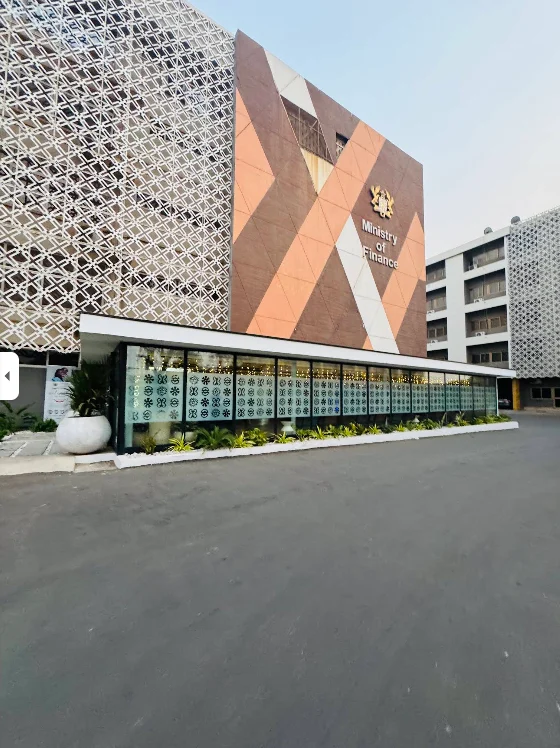
- Ministry of Finance: The ministry responsible for introducing the GoldBod legislation and providing oversight of the agency's financial operations. The Finance Minister inaugurated the technical committee that designed GoldBod and later swore in the first board.
- Bank of Ghana: Ghana's central bank, which works with GoldBod on gold reserve accumulation. The Governor of the Bank of Ghana or a representative serves on the GoldBod Board.
- Minerals Commission: The regulatory body responsible for mineral rights and mining oversight. GoldBod complements the Minerals Commission's regulatory functions without replacing them. A representative of the Minerals Commission serves on the GoldBod Board.
- Ghana Chamber of Mines: The industry association representing large-scale mining firms, which nominates a representative to the GoldBod Board.
- Ghana Small Scale Miners Association: The association representing small-scale miners, which nominates a representative to the GoldBod Board.
- Chamber of Bullion Traders: The industry body for gold traders, which nominates a representative to the GoldBod Board.
- Precious Minerals Marketing Company (PMMC): The predecessor entity whose rights, obligations, assets, liabilities, and workforce were transferred to GoldBod under Section 78 of Act 1140.
Related Entries