

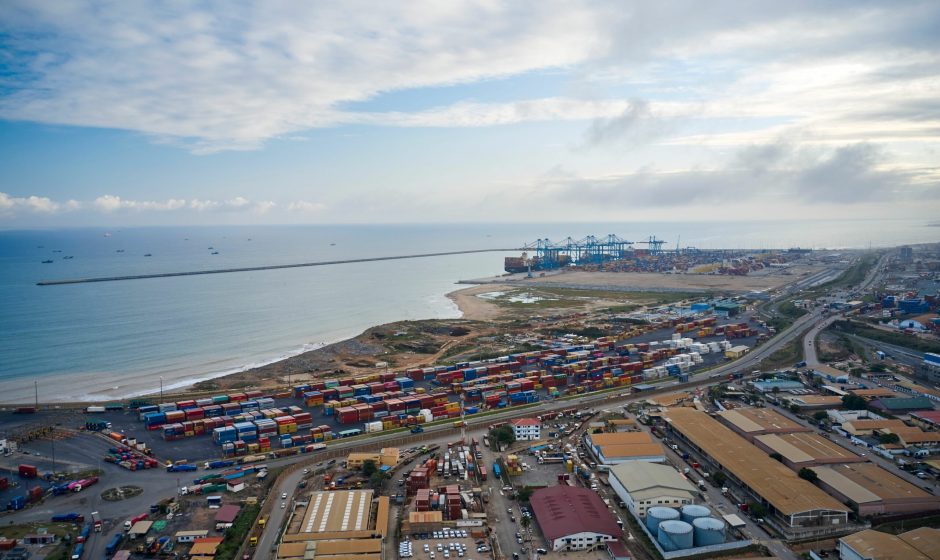

Ghana import duties 2026 are not one flat charge. What you pay can include the customs duty attached to the HS classification, import VAT, the National Health Insurance Levy, the Ghana Education Trust Fund Levy, excise duty where applicable, regulatory fees, shipping-line charges, port storage, insurance and other shipment-specific costs.
There have also been several important changes during 2026. Ghana introduced a reworked VAT system on January 1, mandatory local cargo insurance on February 1, the Publican AI risk-analysis system at Customs, new vehicle conformity rules scheduled for October 1, and a new Customs Act and Excise Act signed into law on August 26.
The practical lesson is simple: do not estimate a Ghana import bill from the purchase price alone. Classification, customs value, origin, permits, VAT status and how quickly the cargo clears can all materially change the final landed cost.
Quick links for importers and business owners:
Table of Contents
- Excise duty in 2026: new Act and current rate baseline
- Free Zones and Special Economic Zones
- AfCFTA: what it changes and what it does not
- Prohibited and restricted imports
- Food and agricultural imports
- Port-by-port guide and demurrage risk
- Customs valuation, objections and appeals
- Clearance stages and hidden costs
- Publican AI dispute and April 2026 trade action
- Sources
How Ghana Import Duties Are Calculated in 2026
The first number to establish is the customs classification. Ghana uses the Harmonized System and the ECOWAS Common External Tariff framework. The HS code determines whether a product attracts ordinary import duty, an exemption, a special levy, a regulatory requirement or another product-specific treatment.
VAT is a separate layer. Under the Value Added Tax Act, 2025 (Act 1151), effective January 1, 2026, the standard VAT rate remains 15%, while NHIL and GETFund remain 2.5% each. GRA describes the combined effective rate as 20%, with all three charges now applied on the same taxable base. The 1% COVID-19 Health Recovery Levy was abolished. This does not mean every importer should simply multiply the invoice or CIF amount by 20%. ICUMS determines the taxable import base under the customs and VAT rules for the shipment.
| Charge | 2026 position | What determines it |
|---|---|---|
| Import duty | Product-specific | HS code, origin, ECOWAS CET treatment, exemptions and trade preference eligibility |
| VAT | 15% | Taxable import value under Act 1151 |
| NHIL | 2.5% | Applied on the same taxable base under the 2026 VAT reforms |
| GETFund Levy | 2.5% | Applied on the same taxable base under the 2026 VAT reforms |
| Excise duty | Only for covered products | Product category and current excise schedule |
| Regulatory fees | Product-specific | FDA, GSA, EPA, veterinary, plant-health or other regulatory requirements |
1. Excise Duty in 2026: New Act and Current Rate Baseline
Ghana’s excise framework changed again on August 26, 2026, when the President assented to the Excise Act, 2026. The Presidency describes the new law as a consolidation of excise duties and specifically confirms an exemption for local manufacturers of fruit juice.
Because the full consolidated 2026 schedule was not yet available on the GRA Acts page when this update was prepared, the tables below use the last fully verifiable rate schedule from the Excise Duty (Amendment) (No. 2) Act, 2023 (Act 1108) and the Ministry of Finance’s Ghana tax-system survey. Treat these figures as a baseline to verify against the final Excise Act, 2026 and current GRA implementation notices before a shipment is priced.
Alcohol, water and beverage baseline
| Product | Local raw material content | Verified pre-2026 consolidation rate |
|---|---|---|
| Waters, mineral waters, non-alcoholic beer, energy drinks and covered beverages | Not applicable | 20% |
| Distilled or bottled water | Not applicable | 17.5% |
| Sachet water | Not applicable | 0% |
| Fruit and vegetable juices | Not applicable | 20% baseline; local fruit-juice manufacturers are now expressly exempted under the Excise Act, 2026 according to the Presidency |
| Malt drink | Less than 50% | 20% |
| Malt drink | 50% to 70% | 12.5% |
| Malt drink | Above 70% | 10% |
| Beer / stout other than indigenous beer | Less than 50% | 47.5% |
| Beer / stout other than indigenous beer | 50% to 70% | 32.5% |
| Beer / stout other than indigenous beer | Above 70% | 10% |
| Cider beer | Not applicable | 47.5% |
| Wine, including sparkling wine | Not applicable | 45% |
| Distilled, rectified, blended or compounded spirits | Not applicable | 50% |
| Akpeteshie | Not applicable | 20% |
The cider rate is an important correction from older guidance. Act 1108 raised cider beer to 47.5% to align it with the relevant beer rate.
Tobacco, nicotine products and plastics
| Product | Verified pre-2026 consolidation rate |
|---|---|
| Cigarettes | 50% plus GHS 0.28 per stick |
| Cigars | 50% plus GHS 0.28 per stick |
| Negrohead | GHS 280 per kilogram |
| Snuff and other tobacco | GHS 280 per kilogram |
| Electronic cigarette liquids | 50% plus GHS 0.50 per milliliter |
| Electronic cigarettes | 50% |
| Electronic smoking devices | 50% |
| Specified plastic and plastic products under Chapters 39 and 63 | 5% |
Act 1108 reduced the plastics excise rate from 10% to 5% and expanded the charge to imported plastic packaging. GRA’s 2024 annual report confirms the 5% treatment and the broader imported-plastic scope.
2. Free Zones and Special Economic Zones
Ghana’s Free Zones Scheme remains an important option for export-oriented manufacturers and service businesses. GFZA currently highlights a 10-year corporate tax holiday, exemptions from import duties for qualifying Free Zone production, unrestricted repatriation of profits and dividends, and other incentives.
The central operating rule remains the 70/30 requirement: at least 70% of a Free Zone enterprise’s annual production of goods and services must be exported, while up to 30% may be sold in Ghana. Domestic sales are treated as imports into Ghana and are subject to the applicable duties and taxes.
Current strategic Free Zones and industrial locations
Older summaries often refer to four export processing zones. GFZA’s current 2026 investment material instead identifies more than 7,000 acres of industrial land across five strategic locations.
| Location | Current relevance |
|---|---|
| Tema | Major industrial and export-processing location close to Ghana’s largest seaport |
| Afienya | Industrial development area where GFZA is also advancing planning for a proposed Special Economic Zone |
| Sekondi | Western industrial location with access to the Takoradi-Sekondi corridor |
| Shama | Western Region industrial land identified in GFZA’s current investment portfolio |
| Kumasi | Ashanti Region location supporting inland manufacturing and industrial development |
A Free Zone licence can also be issued to a qualifying enterprise outside a large industrial enclave, so physical location alone does not determine Free Zone status.
3. AfCFTA: What It Changes and What It Does Not
The African Continental Free Trade Area can reduce tariffs on qualifying trade between participating African countries, but it does not make every shipment moving between two African countries duty-free. The product has to meet the applicable rule of origin, the exporting and importing countries must have the necessary tariff schedules in place, and the trader must use the correct documentation.
- AfCFTA preferences apply to qualifying intra-African trade.
- Rules of origin are central. A product shipped from an African country does not automatically acquire AfCFTA origin.
- Tariff reductions are phased and product-specific.
- Imports from outside Africa remain subject to the applicable Ghana and ECOWAS customs framework unless another preference or exemption applies.
The Guided Trade Initiative has been phased out
The Guided Trade Initiative, or GTI, was a temporary pilot used to test AfCFTA trading procedures and selected shipments. A December 2025 update from the U.S. International Trade Administration states that the AfCFTA Secretariat has since phased out the GTI. The same update reported 50 ratifications of the baseline AfCFTA agreement and 25 countries, including Ghana, with approved and published tariff schedules at that stage.
Implementation is still incomplete in some areas. The Trade Administration update also noted that final rules of origin had not yet been agreed for some important product groups, including autos and textiles/apparel. For an importer, that means the correct question is not simply, “Is this coming from Africa?” It is, “Does this exact product qualify for the preference under the current origin rule and tariff schedule?”
4. Prohibited and Restricted Imports
GRA separates absolute import prohibitions from conditional import restrictions. That distinction matters because a restricted product may still be imported if the required permit, licence or certificate is obtained before entry.
Examples of absolute import prohibitions
| Category | Examples from GRA’s current list |
|---|---|
| Diseased animals and carcasses | Animals or carcasses infected with disease under the applicable animal-disease law |
| Contaminated food | Meat, vegetables and other provisions declared unfit for human consumption by a health officer |
| Counterfeit money | Base or counterfeit coin and counterfeit notes |
| Indecent or obscene articles | Indecent or obscene prints, photographs, books, cards and similar articles |
| Dangerous knives | Certain knives considered dangerous weapons by the Inspector-General of Police |
| Other goods prohibited by law | Any other item whose importation is prohibited under another Ghanaian law |
Examples of restricted goods that require approval
| Goods | Typical approval or regulator |
|---|---|
| Plant, plant products, plant pests, soil, manure, grass and certain packing material | Ministry of Food and Agriculture permit / plant-health requirements |
| Arms and ammunition | Ministry of the Interior permit |
| Explosives | Ministry of the Interior licence and applicable explosives controls |
| Food, medicines, medical devices, cosmetics and other FDA-regulated products | Food and Drugs Authority registration, permit, verification or other applicable approval |
| Electrical products and regulated standards goods | Ghana Standards Authority and, for applicable energy products, Energy Commission requirements |
| Hazardous chemicals and environmentally controlled products | Environmental Protection Authority or other product-specific approval |
5. Food and Agricultural Imports – Special Rules
Food and agricultural cargo often involves more agencies than ordinary general merchandise. A shipment may need FDA action, plant-health or veterinary approval, standards checks and customs clearance before it can leave the port.
Common agencies
- Food and Drugs Authority: food, medicines, medical devices, cosmetics, household chemicals and other regulated products.
- Plant Protection and Regulatory Services Directorate: plants, seeds, plant products and phytosanitary controls.
- Veterinary Services: live animals and animal products.
- Ghana Standards Authority: applicable product standards and conformity requirements.
- GRA Customs Division: classification, valuation, duties, taxes and release through ICUMS.
Practical import workflow
- Register the business with the Office of the Registrar of Companies where business registration is required.
- Confirm the HS classification before ordering or shipping.
- Confirm whether the product requires FDA registration, an import permit, phytosanitary documentation, veterinary approval, standards conformity or another licence.
- Arrange the required local cargo insurance before clearance. Ghana’s local cargo insurance directive took effect on February 1, 2026.
- Submit the declaration and supporting documents through ICUMS using the correct importer details.
- Complete customs valuation and pay the assessed duties, VAT, levies and other charges.
- Complete required agency inspections or examinations.
- Obtain the customs release and Delivery Allowed status before removing the cargo.
FDA verification fees for imported regulated products
The FDA fee schedule published on its website lists the following verification fees for imported regulated products. These are separate from customs duty and tax.
| Product category | FDA verification fee |
|---|---|
| Food | 0.80% of CIF value |
| Vessel loads of food such as wheat, rice, sugar and fish | 0.25% of CIF value |
| Drugs | 1.80% of CIF value |
| Medical devices | 1.30% of CIF value |
| Cosmetics and household chemical substances | 0.50% of CIF value |
| Food supplements | 1.30% of CIF value |
| Veterinary products | 1.30% of CIF value |
Always verify the fee sheet and product category before shipment because FDA fees and classifications can be revised.
Do not rely on generic agricultural duty percentages
Rice, poultry, dairy, processed food, machinery and fertilizer can fall under different tariff lines, exemptions or regulatory controls depending on the exact product. A generic statement such as “all poultry is 20%” or “all agricultural machinery is 5%” is not reliable enough for a commercial shipment. Use the exact HS code and current ICUMS tariff treatment instead.
6. Port-by-Port Guide and Demurrage Risk
Port of Tema
Tema is Ghana’s principal container port and a major entry point for general merchandise. Customs declarations and releases are integrated with ICUMS. A clean document set, correct classification and permits obtained before arrival can reduce the chance that a routine clearance becomes a storage problem.
Port of Takoradi
Takoradi is important for bulk, industrial, mining, oil-and-gas and western-corridor cargo. The same national customs law and ICUMS framework applies, although the physical handling and terminal process differs by cargo type.
Kotoka International Airport
Air freight is generally used where speed or cargo value justifies the higher transport cost. Perishable, pharmaceutical and time-sensitive shipments may still require the same regulator approvals that apply at the seaports.
Demurrage and storage are not the same charge
A delay can create both shipping-line demurrage or detention and port storage. Maersk’s current Ghana import page is useful as a public example, but its terms are carrier-specific and should not be treated as a universal Ghana statutory free-time rule.
| Maersk standard Ghana example | Published free time |
|---|---|
| Dry container delivered within Ghana | 7 days |
| Reefer delivered within Ghana | 5 days |
| Dry coastal transit to another West African country | 21 days |
| Dry inland transit | 28 days, with SPOT-booking exceptions |
Maersk also states that port storage is separate and billed by the port. Other shipping lines, negotiated contracts and SPOT bookings can use different terms. Check the actual bill of lading and carrier tariff for your shipment.
7. Customs Valuation, Objections and Appeals
Publican AI does not set the final customs value by itself
One of the most important corrections for 2026 concerns Publican AI. GRA Commissioner-General Anthony Sarpong explained in April that the system does not determine the final value of imported goods. It uses data to flag suspicious declarations and other risks for review. Customs officers remain responsible for the final valuation decision, and an importer can provide evidence supporting a legitimately lower transaction value.
This does not mean Publican has no effect. A flag can trigger scrutiny, requests for supporting documents or a valuation dispute. The difference is that an AI flag is not itself an unchallengeable final assessment.
For a detailed history of the rollout and trader concerns, see our Publican AI customs valuation guide.
Formal tax objection and appeal process
GRA’s Revenue Administration Act guidance sets strict deadlines and payment conditions. A taxpayer who is dissatisfied with a tax decision generally has 30 days from notification to lodge a written objection with the Commissioner-General, stating the grounds precisely.
| Stage | Current high-level rule |
|---|---|
| Objection to Commissioner-General | Generally file within 30 days of notification of the tax decision. |
| Payment condition for import duties and taxes | GRA states that all outstanding taxes, including the full amount of the import tax in dispute, must generally be paid before the objection is entertained. |
| Commissioner-General discretion | The Commissioner-General may waive, vary or suspend the payment condition, or require security, under section 42(6) of the Revenue Administration Act. |
| Objection decision | The Act provides a 60-day period for the Commissioner-General to serve the decision after receiving an objection, subject to the statutory procedure. |
| Independent Tax Appeals Board | A dissatisfied taxpayer may appeal an objection decision to ITAB within 30 days. |
| Courts | A taxpayer who remains dissatisfied after ITAB can proceed to the courts under the applicable appeal rules. |
Penalties and enforcement
Undervaluation, false declarations, smuggling, prohibited imports and failures involving regulated products can expose cargo to reassessment, seizure, penalties, forfeiture or prosecution depending on the law and facts. The exact consequence depends on the offence, so avoid generic penalty percentages unless they are tied to the specific statutory provision.
8. Ghana Import Duties 2026: Clearance Stages and Hidden Costs
There is no single honest number for how many days every import should take to clear. A low-risk shipment with complete documents can move much faster than regulated food, a vehicle, cargo selected for examination, or a shipment with a valuation dispute.
Where clearance time is usually won or lost
| Stage | What happens | Common delay trigger |
|---|---|---|
| Before arrival | Classification, permits, insurance and document preparation | Waiting until cargo arrives to discover a licence or registration is missing |
| Declaration | Entry is submitted in ICUMS with shipment documents | Incorrect HS code, inconsistent invoice details or importer information |
| Risk and valuation | Customs assesses the declaration and can flag it for review | Publican or officer risk flags, valuation concerns, origin questions |
| Regulator review | FDA, GSA, plant-health, veterinary or other agencies act where required | Missing approval, sampling, testing or inspection scheduling |
| Payment | Duties, taxes and fees are settled | Funding delay, banking issue, amended assessment |
| Release and delivery | Customs release, terminal process and carrier release are completed | Outstanding shipping-line charge, storage, document hold or physical examination |
Hidden import costs to budget for
| Cost | Why it appears |
|---|---|
| Licensed customs house agent / clearing fee | Professional declaration and clearance work. Fees are commercially negotiated, so do not assume a universal percentage. |
| Local cargo insurance | Required under Ghana’s 2026 local cargo-insurance directive for imports subject to the policy. |
| Shipping-line local charges | Documentation, service, security, container or other carrier charges can apply separately from customs tax. |
| Demurrage / detention | Can begin after contractual free time expires. |
| Port storage | Separate from shipping-line demurrage and can accumulate during customs or regulator delays. |
| FDA / GSA / other regulator charges | Applicable only where the product falls under that regulator’s mandate. |
| Testing, inspection or conformity costs | Can apply to regulated products and the new used-vehicle PVoC regime. |
| Upfront VAT payment | Potential additional 20% of customs value for certain unregistered importers above the GHS 750,000 threshold who should be VAT-registered. |
| Foreign-exchange movement | A delay between pricing and payment can change the Ghana-cedi amount needed to settle the shipment. |
9. Publican AI Dispute and the April 2026 Trade Action
In April 2026, Ghana’s trading community escalated its objections to the rollout of Publican AI. GUTA directed freight forwarders and clearing agents to suspend duty payments and operations as part of a planned nationwide action. Following talks with the Ghana Shippers’ Authority and later the Ministry of Finance and GRA, the trade action was suspended.
The settlement did not remove Publican AI. A joint business forum statement dated April 16 said the Ministry of Finance declined the demand to suspend the system. The government did agree to return the valuation-appeals process to the previous arrangement with a targeted 24-hour turnaround for appeals, and the parties agreed to continue work through a multi-party process.
That outcome is important for importers because it clarifies two things at once. Publican remains part of Customs risk analysis, but its output is not a final value that cannot be questioned. Importers should be ready to support transaction values with invoices, payment records, purchase agreements and other credible evidence when a declaration is flagged.
Practical Checklist Before You Ship to Ghana
- Confirm the exact HS code.
- Check whether the product is prohibited, restricted or regulator-controlled.
- Confirm the customs duty and any excise exposure using the current 2026 legal framework.
- Check whether AfCFTA, ECOWAS or another preference actually applies to the product and origin.
- Register with the required regulator before shipping where necessary.
- Arrange Ghana-compliant local cargo insurance.
- Make sure the invoice, proof of payment, packing list and shipping documents tell the same commercial story.
- Check your VAT status, especially if the taxable import value may exceed GHS 750,000.
- For a used vehicle shipping on or after the October 1 implementation date, confirm GS 4510:2022 and PVoC compliance before purchase and shipment.
- Budget for port, carrier, inspection and storage costs in addition to customs tax.
Sources
- Presidency of Ghana: Mahama signs 10 bills into law (August 26, 2026)
- Ghana Revenue Authority: Acts and abridged tax laws
- Parliament of Ghana: Excise Duty (Amendment) (No. 2) Act, 2023 (Act 1108)
- Ministry of Finance / Institute for Fiscal Studies: Survey of the Ghanaian tax system
- GRA: 2024 Annual Report, including plastics excise reform
- GRA: VAT reforms for 2026
- GRA: Guidelines for the Value Added Tax Act, 2025 (Act 1151)
- Ghana Free Zones Authority: current incentives and 70/30 export rule
- GFZA: current strategic industrial locations (June 2026)
- U.S. International Trade Administration: Ghana AfCFTA December 2025 update
- GRA: Import Prohibitions and Restrictions
- Ghana Standards Authority: PVoC and GS 4510:2022 used-vehicle rules
- Ghana Standards Authority: October 1, 2026 vehicle prohibitions
- Food and Drugs Authority: Approved Fees and Charges
- Ghana Shippers’ Authority: Mandatory Local Cargo Insurance Policy
- Maersk: Ghana import demurrage, detention and free-time terms
- GRA: objection and Independent Tax Appeals Board guidance
- GRA: Revenue Administration Act, 2016 (Act 915)
- MyJoyOnline: GRA Commissioner-General explains Publican AI valuation role (April 10, 2026)
- Ghana Shippers’ Authority: GUTA suspends planned trade action (April 13, 2026)
- Joint Business Forum statement on Publican AI negotiations (April 16, 2026)