
The Accra Metropolitan District is the local-government jurisdiction administered by the Accra Metropolitan Assembly (AMA) within Ghana's capital. It is one of the 29 districts in the Greater Accra Region and serves as an important political and administrative center of the country. The district is distinct from the wider built-up Accra urban area and the Greater Accra Metropolitan Area, which contain multiple local-government assemblies. As the seat of national government and a major commercial center, the Accra Metropolitan District holds central importance in Ghana's civic life, hosting key state institutions, the central business district, and historic neighborhoods that date back to the country's colonial era.
Location
Table of Contents
Overview
The Accra Metropolitan District is one of the 261 Metropolitan, Municipal, and District Assemblies (MMDAs) in Ghana and one of 29 such districts in the Greater Accra Region. As of the 2021 Population and Housing Census, the district recorded a population of 284,124. The district spans an area of approximately 60 square kilometers (23 square miles), making it one of the more compact administrative districts in the region despite its national significance.
Accra's local-government history dates to the colonial period. The Accra Municipal Council was established in 1953, and Accra was elevated to metropolitan status on 18 March 1989 under Legislative Instrument 1500 and PNDC Law 207. The Local Government Act 1993 (Act 462) later provided the statutory framework for district assemblies. Legislative Instrument 2034 is the current instrument relating to the Accra Metropolitan Assembly. The city of Accra serves as the district capital.
Today, the Accra Metropolitan District is part of the broader Accra urban area and the Greater Accra Metropolitan Area, which collectively serve as the capital region of Ghana. The district itself is the innermost core of this metropolitan region, containing the historic heart of the city and its principal government and commercial institutions.
Administration
The Accra Metropolitan District is administered by the Accra Metropolitan Assembly (AMA), which serves as the political and administrative authority within the district. The Assembly operates under Ghana's decentralized local government system and is responsible for policy formulation, development planning, and the delivery of local services within the district.
According to the AMA's published assembly description, the General Assembly is the apex decision-making body of the AMA. It is composed of 20 elected members, 10 government appointees, 3 Members of Parliament, and the Metropolitan Chief Executive, who serves as the political head of the district and the mayor of Accra (total membership of 34). Members of Parliament participate without voting rights. The Presiding Member chairs the meetings of the General Assembly, while the Metropolitan Chief Executive chairs the Executive Committee. The Assembly also includes a Metropolitan Coordinating Director who serves as the administrative head, overseeing the day-to-day operations of the Assembly's departments.
Structurally, the AMA is organized around three sub-metropolitan district councils, which are subordinate bodies performing functions assigned or delegated to them by the Assembly. These are:
- Ablekuma South Sub-Metropolitan District
- Ashiedu Keteke Sub-Metropolitan District
- Okaikoi South Sub-Metropolitan District
Each sub-metropolitan district council operates under the authority of the AMA and helps bring local governance closer to residents. AMA identifies six parliamentary constituencies within its jurisdiction: Ayawaso Central, Okaikoi South, Ablekuma Central, Ablekuma South, Odododiodioo, and Klottey Korley. Some AMA web pages retain older wording referring to six sub-metropolitan districts.
The AMA has sixteen statutory departments that carry out its functions, including Central Administration, Finance, Public Health, Physical Planning, and Works. Some of these departments are state entities that have been decentralized and incorporated into the local Assembly structure. They report to the Metropolitan Coordinating Director and ultimately to the Metropolitan Chief Executive.
The current boundaries of the Accra Metropolitan District are the result of a long series of administrative changes. The AMA's jurisdiction was progressively reduced by the creation of neighboring municipal assemblies, especially during reforms implemented between 2008 and 2019. These successive divisions have reduced the size of the Accra Metropolitan District while giving rise to the surrounding municipal assemblies that now encircle it.
Geography
The Accra Metropolitan District covers a total land area of approximately 60 square kilometers (23 square miles). It is a compact coastal jurisdiction adjoining several municipal assemblies, including Ablekuma Central, Ablekuma North, Ablekuma West, Okaikwei North, Ayawaso West, Ayawaso Central, Ayawaso East, Korle Klottey, and La Dade-Kotopon. The Gulf of Guinea forms the district's southern border, giving Accra its coastal character and its historic role as a port city.
The district's elevation averages about 61 meters (200 feet) above sea level. Its coastal location along the Gulf of Guinea influences both its climate and its urban development patterns. The southern portion of the district, particularly the Ashiedu Keteke sub-metropolitan district, contains the historic waterfront communities of Jamestown and Usshertown, which were among the earliest settlements in the city.
The three sub-metropolitan districts have distinct geographic character within the Accra Metropolitan District.
Population and Communities
According to the 2021 Population and Housing Census conducted by the Ghana Statistical Service, the Accra Metropolitan District has a population of 284,124. This figure reflects the district's boundaries after the series of administrative splits that created surrounding municipal districts. The population is distributed across the three sub-metropolitan districts, with the Ashiedu Keteke sub-metropolitan district historically recording the highest population density due to its role as the central business district.
The Accra Metropolitan District is home to some of the most historically significant communities in Ghana. In the Ashiedu Keteke sub-metropolitan district, the communities of Jamestown and Usshertown represent the oldest parts of Accra, with roots in the 17th-century trading settlements that grew up around the European forts on the coast. Other communities in this sub-metropolitan district include Tudu, Okaishie, and the Central Business District itself. The sub-metropolitan district houses the Central Business District and serves as the hub of major commercial activities within Accra.
The Ablekuma South sub-metropolitan district includes the communities of Korle Gonno, Korle-Bu, Chorkor, Mamprobi, and New Mamprobi. This area is notable for hosting the Korle-Bu Teaching Hospital, one of Ghana's premier medical institutions. The Okaikoi South sub-metropolitan district includes the communities of Bubuashie, Kaneshie North, Kaneshie, Awudome, and Avenor. Kaneshie is known for its bustling market and transport hub, serving as a gateway to the western parts of Accra.
The 2021 Population and Housing Census provides the official population benchmark for the district.
AMA's 2026 budget projects a population of 319,617 for 2026. This is a projection rather than a census count.
Economy
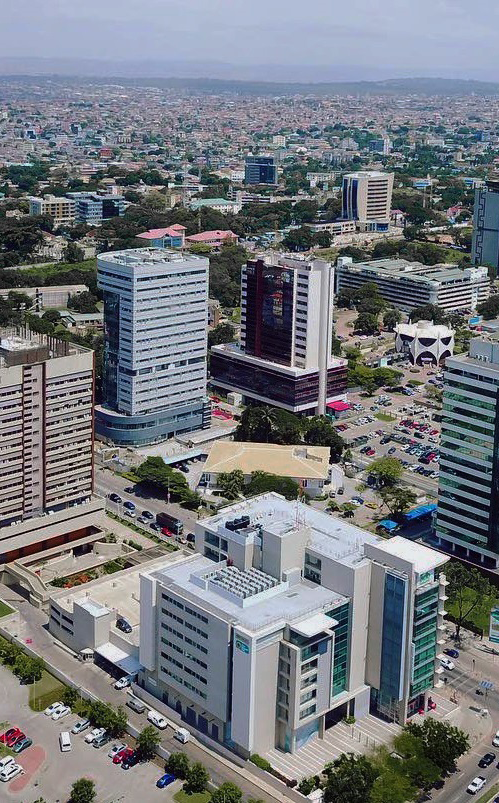
The Accra Metropolitan District is a major administrative, commercial, financial, and cultural center within Accra. As the capital and the location of the national government, the district hosts a concentration of administrative, financial, and commercial activities. The Central Business District, located within the Ashiedu Keteke sub-metropolitan district, is the primary commercial hub of Accra, containing banks, corporate offices, government buildings, and retail establishments.
The district's economy is dominated by services, including public administration, finance, trade, and hospitality. As the seat of government, the district hosts the presidency, parliament, and numerous ministries and state agencies. This concentration of government activity creates significant employment and drives demand for supporting services such as legal, accounting, and consulting firms.
Trade is another major component of the district's economy. The Central Business District and surrounding areas contain numerous markets, shops, and trading establishments. Kaneshie Market, located in the Okaikoi South sub-metropolitan district, is one of the largest and busiest markets in Accra, serving as a major distribution point for goods from across the country and beyond. The historic coastal communities of Jamestown and Usshertown also maintain active trading traditions, with fishing and fish processing remaining important local economic activities.
The district also benefits from its role as a center for tourism and hospitality. The historic forts and castles of the coast, including Ussher Fort and James Fort, attract visitors interested in Ghana's colonial history and the transatlantic slave trade. The district's hotels, restaurants, and cultural venues serve both business travelers and tourists.
As the capital city, the Accra Metropolitan District attracts significant daily commuting. The Accra Metropolitan Health Directorate reports that approximately two million people commute to Accra on a daily basis for a wide range of services, reflecting the wider urban area's role as a center for employment, education, healthcare, and government services in Ghana.
Infrastructure and Services
The Accra Metropolitan District benefits from infrastructure that reflects its status as the national capital. The district is served by an extensive road network that connects it to the rest of the Greater Accra Region and the country. Major roads within the district include the Independence Avenue, which links the central business district to the Accra International Conference Centre and the Black Star Square, and the Liberation Road, which connects the city center to the Ring Road and beyond.
The district's healthcare infrastructure is among the most developed in Ghana. The Korle-Bu Teaching Hospital, located in the Ablekuma South sub-metropolitan district, is one of the country's premier medical institutions and serves as a major referral center for patients from across Ghana. AMA's 2021 diagnostic reported 89 public and 107 private health facilities in the metropolis, including Korle-Bu Teaching Hospital. This 2021 inventory should not be treated as a current 2026 count.
The district's educational infrastructure includes numerous public and private schools at the primary, secondary, and tertiary levels. As the capital, the district hosts several prestigious secondary schools and is within easy reach of the University of Ghana, located in the neighboring Ayawaso West Municipal District.
The Accra Metropolitan Assembly is responsible for the provision of local services within the district, including sanitation, waste management, and public health enforcement. The Assembly's Public Health Department provides strategic and administrative leadership for the management of policies and programs related to environmental sanitation. The Works Department facilitates the construction, repair, and maintenance of public roads, drains, and public buildings, and assists in the building, equipping, and maintenance of markets within the district.
The Physical Planning Department manages land use and development control within the district, advising the Assembly on national policies on physical planning, land use, and development. This department is responsible for street naming, numbering of houses, and ensuring compliance with building regulations, functions that are particularly important in a densely built urban environment.
Related Places
The Accra Metropolitan District is surrounded by municipal districts that were once part of the larger AMA jurisdiction. These neighboring districts form part of the broader Greater Accra Metropolitan Area and are closely interconnected with the Accra Metropolitan District through commuting, trade, and shared infrastructure.
The district adjoins the Ablekuma Central, Ablekuma North, Ablekuma West, Okaikwei North, Ayawaso West, Ayawaso Central, Ayawaso East, Korle Klottey, and La Dade-Kotopon municipal assemblies, with the Gulf of Guinea to the south.
The broader Accra Metropolitan Area includes a number of districts that collectively serve as the capital of Ghana. In addition to the Accra Metropolitan District, these are understood to include several surrounding municipal districts, though the exact composition of this metropolitan area may vary by definition.
The AMA's jurisdiction was progressively reduced by the creation of neighboring municipal assemblies, especially during reforms implemented between 2008 and 2019. These changes have transformed the administrative landscape of Greater Accra, creating a patchwork of municipal assemblies that together manage the rapidly growing metropolitan region.
Related Entries
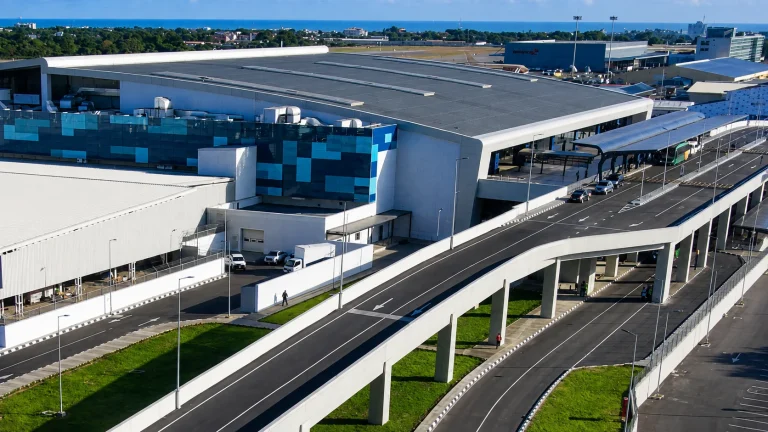
Accra International Airport
Serves as the primary international airport for Ghana and is located in the capital city of Accra.
Continue Reading →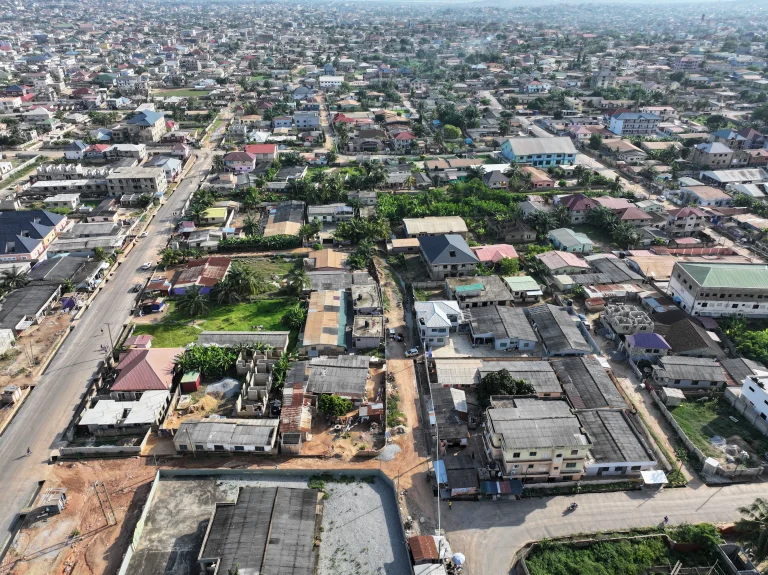
Search the Ghana Knowledge Database
Sources
- http://ama.ghanadistricts.gov.gh/
- Accra Metropolitan District - Wikipedia
- Ghana - 2021 Population and Housing Census
- DEMOGRAPHICS AND POPULATION - Accra Metropolitan Health Directorate
- Accra Metropolitan Assembly
- GREATER ACCRA REGION – LOCAL GOVERNMENT SERVICE
- Accra - Wikipedia
- https://ghanacitizenship.com/database/city/accra/
- ama.gov.gh
- www.ghanadistricts.com