

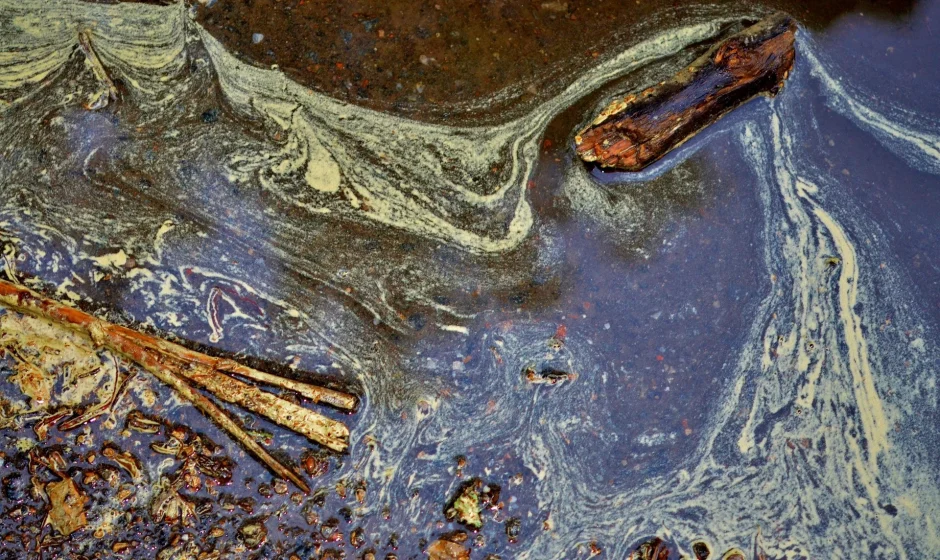

If a river, stream or other water source in Ghana has been contaminated by illegal mining, boiling the water does not necessarily make it safe to drink. Ghana’s Environmental Protection Authority has warned communities in galamsey-affected areas not to assume that heating polluted water removes the toxic chemicals introduced by mining.
The EPA says water affected by illegal mining can contain substances including mercury, cyanide and arsenic, along with polluted sediments and other contaminants. Boiling can kill many disease-causing microorganisms, but it does not remove these kinds of dissolved chemical pollutants.
This distinction is critical in rural communities where residents may have used the same stream or river for generations and may believe that boiling visibly dirty water makes it suitable for drinking. In a chemically contaminated water source, that assumption can be dangerous.
This guide explains what boiling does and does not do, why galamsey can contaminate rivers and groundwater, the health risks associated with mining chemicals, whether household filters can help, and what people should do when they suspect their water source has been affected by illegal mining.
Table of Contents
- Does Boiling Make Galamsey Water Safe?
- What Boiling Actually Removes
- What Chemicals May Be in Mining-Polluted Water?
- Mercury
- Cyanide
- Arsenic
- Health Risks
- Is It Safe for Bathing?
- Can It Be Used for Cooking?
- Can It Be Used for Crops or Livestock?
- Can a Home Water Filter Make It Safe?
- How Contaminated Water Is Properly Treated
- What Affected Communities Should Do
- Why Galamsey Threatens Ghana’s Water Supply
Does Boiling Galamsey-Polluted Water Make It Safe to Drink?
No, not if the water contains toxic mining chemicals. Boiling is useful when the main danger is biological contamination such as bacteria, viruses or parasites. It is not a universal water-purification method.
The EPA specifically warned residents in mining-affected communities that the idea that boiling galamsey-contaminated water automatically makes it safe is false. According to the Authority, polluted sources may contain mercury, cyanide, arsenic and other dangerous substances that remain a concern after boiling.
The U.S. Centers for Disease Control and Prevention gives the same general public-health guidance: boiling can kill microorganisms, but it does not remove harmful chemicals from contaminated water. When toxic chemical contamination is suspected, the recommended response is to use a different safe water source rather than relying on boiling alone.
What Does Boiling Water Actually Do?
Boiling is one of the most effective household methods for killing disease-causing microorganisms. Proper boiling can kill bacteria, viruses and parasites that may cause gastrointestinal illness and other infections.
That is why health authorities often issue boil-water advisories after microbial contamination, flooding or problems with a drinking-water system.
However, chemical contamination is different. Metals and many dissolved chemicals do not simply disappear when water reaches boiling temperature. CDC guidance explicitly states that boiling does not remove chemicals from drinking water.
| Contaminant Type | Does Boiling Help? |
|---|---|
| Bacteria | Yes, boiling can kill them |
| Viruses | Yes, boiling can inactivate them |
| Parasites | Yes, boiling can kill them |
| Mercury | No, do not assume boiling makes contaminated water safe |
| Arsenic | No |
| Cyanide or other toxic mining chemicals | No, household boiling should not be relied upon |
| Heavy metals | No |
What Can Galamsey Put Into Ghana’s Water?
Illegal and poorly controlled gold mining can introduce both physical sediment and chemical contamination into rivers, streams and groundwater.
The EPA has identified substances of concern including mercury, cyanide and acids associated with gold processing. Ghana’s national drinking-water framework also identifies mining as a source of metals and notes that arsenic can be associated with gold-mining areas, particularly illegal mining.
Mining can also dramatically increase turbidity, meaning the water contains large quantities of suspended particles and sediment. High turbidity can make water harder and more expensive to treat and can interfere with normal treatment processes.
Mercury in Galamsey-Affected Water
Mercury has historically been used in artisanal and small-scale gold mining because it can bind with gold and help separate it from other material.
Improper handling can release mercury into soil, air and water. Ghana’s EPA-linked environmental health programme identifies artisanal and small-scale gold mining as an important source of mercury pollution and highlights concerns about human exposure.
Mercury exposure can affect the nervous system, kidneys and other organs. The risk depends on the type of mercury, amount of exposure and duration.
Simply boiling suspected mercury-contaminated river water should not be treated as an adequate household treatment method.
Cyanide and Illegal Gold Processing
Cyanide compounds can be used to extract gold from crushed ore through a process known as leaching. When used in regulated mining, cyanide requires strict handling, containment and waste-management controls.
Ghana’s EPA has recently documented illegal sodium cyanide and unregulated leaching operations at mining sites. The Authority found chemicals stored near unlined pits where contaminated liquids could seep directly into the ground.
This creates a potential pathway into groundwater and nearby surface-water systems.
Residents should not assume that heating chemically polluted water in a cooking pot provides the specialized treatment required to make such contamination safe.
Arsenic in Mining-Affected Water
Arsenic is another important concern in some gold-mining areas. Ghana’s drinking-water quality framework specifically notes that arsenic can be associated with gold-mining zones, including areas affected by illegal mining.
The World Health Organization describes inorganic arsenic as highly toxic and identifies contaminated drinking water and food prepared with contaminated water as major exposure pathways. Long-term exposure has been associated with cancer, skin lesions, cardiovascular disease and other health problems.
Boiling does not provide reliable arsenic removal. A different safe source or treatment technology specifically designed and verified for arsenic removal is required.
What Are the Health Risks of Drinking Galamsey-Polluted Water?
The health effects depend on the contaminants present, their concentrations and how long a person is exposed.
EPA officials have warned that mining contaminants such as mercury, cyanide and arsenic can contribute to serious health problems. The Authority cited risks including kidney damage, neurological harm and developmental or birth-related effects.
Other contaminants may cause different problems. This is why appearance alone cannot determine whether water is safe. Water may appear clearer after sediment settles while still containing dissolved chemicals.
Anyone who believes they have consumed chemically contaminated water and is experiencing symptoms should seek medical advice rather than attempting to diagnose the exposure based on the water’s appearance or taste.
Clear Water Is Not Necessarily Safe Water
One of the most dangerous misconceptions is that water is safe once the mud, orange color or suspended sediment disappears.
Some contaminants are dissolved and cannot be seen with the naked eye. A glass of water can therefore look clear while still containing unsafe levels of certain chemicals or metals.
Likewise, an unpleasant color does not reveal exactly which contaminant is present. Laboratory testing is needed to identify specific chemical concentrations.
Can You Bathe in Galamsey-Polluted Water?
The EPA warning extends beyond drinking. Officials cautioned that contaminated mining water can also create risks when used for bathing and other domestic activities.
The appropriate advice depends on the type and concentration of contamination. Some chemicals can create risk through skin contact, accidental swallowing or inhalation.
If authorities identify a water source as chemically contaminated, residents should follow local instructions about whether the water can be used at all, rather than assuming it is safe for bathing simply because it is not being swallowed.
Can Galamsey-Polluted Water Be Used for Cooking?
If the water is suspected of containing harmful mining chemicals, it should not be assumed safe for cooking simply because the food will be heated.
The CDC recommends using safe alternative water for drinking and food preparation when harmful chemical contamination is suspected. Boiling or cooking does not reliably remove toxic chemical contaminants.
This includes water used to prepare soups, porridge, beverages, baby formula or other foods where the water becomes part of the final product.
Can Polluted Mining Water Be Used for Crops or Livestock?
The EPA has also warned about the use of polluted water for irrigation and livestock. Chemical contamination can potentially affect agricultural soil, animals and crops depending on the substance and concentration involved.
WHO notes, for example, that arsenic-contaminated water used for irrigation can contribute to human exposure through food.
Farmers in affected areas should therefore seek guidance from agricultural, environmental or water authorities rather than assuming that water unsuitable for people remains safe for crops or livestock.
Can a Household Water Filter Remove Galamsey Chemicals?
It depends entirely on the filter. A basic cloth filter, ceramic filter or ordinary household sediment filter should not be assumed to remove dissolved heavy metals or mining chemicals.
Some treatment technologies can reduce specific chemical contaminants. For example, properly designed reverse-osmosis systems can reduce certain metals and chemicals, while distillation can remove many dissolved contaminants. However, performance depends on the particular contaminant, concentration, equipment design and maintenance.
A filter should therefore be selected based on actual water testing and independent certification for the contaminant that needs to be removed.
Someone living near a polluted mining stream should not simply buy a generic household filter and assume the resulting water is safe.
Does Adding Chlorine Make Chemically Polluted Water Safe?
Chlorine is commonly used to disinfect water because it can kill many microorganisms. However, disinfection and chemical removal are different processes.
CDC guidance says methods such as boiling and chlorination can help make microbiologically contaminated water safer but cannot be relied upon to remove toxic chemicals.
If mining chemicals are suspected, adding chlorine alone is not an adequate solution.
How Is Mining-Polluted Water Properly Treated?
Proper treatment depends on the exact contaminants present. There is no single household method that reliably removes every possible mining pollutant.
Professional water-treatment systems may use combinations of coagulation, sedimentation, filtration, activated carbon, ion exchange, membrane technologies, chemical treatment and other processes depending on the source water and contaminant profile.
Testing is therefore the first critical step. Operators need to know what is in the water and at what concentration before designing an appropriate treatment system.
Ghana’s national drinking-water quality framework uses risk-based monitoring and identifies mining-related chemical hazards as part of water-supply management.
How Galamsey Is Making Ghana’s Water Harder to Treat
Illegal mining does not only affect households collecting water directly from rivers. It can also create problems for formal drinking-water treatment systems.
Ghana Water has warned that illegal mining has increased sludge and pollution at raw-water intake points, particularly in mining-affected parts of the Central and Western regions. Higher contamination can increase treatment difficulty, operating costs and maintenance requirements.
In November 2026, the Public Utilities Regulatory Commission also reported severe pollution near the Kyebi Water Treatment Plant. The plant’s source water was experiencing high turbidity and elevated iron levels associated with nearby illegal mining activity, creating treatment challenges.
How Long Can Mining Pollution Remain in the Environment?
Recovery can be extremely slow where mining contamination is severe. A University of Cape Coast civil and environmental engineering professor warned in November 2026 that some heavily polluted Ghanaian rivers and chemically degraded land could require decades or longer to recover naturally.
The precise recovery period will vary widely depending on the pollutant, contamination level, water flow, geology and remediation work. Estimates such as 100 years for some water systems or 300 years for some lands should therefore be understood as warnings about possible severe long-term degradation rather than a universal timetable for every polluted site.
The broader point is that stopping illegal mining does not necessarily cause contaminated rivers and soils to return immediately to their previous condition.
What Should Communities Do If Their Water Source Is Polluted by Galamsey?
The EPA’s recommendation is straightforward: use treated water or another safe alternative source rather than relying on boiling polluted river water.
Where possible, affected households should:
- Stop using the suspected source for drinking.
- Do not assume boiling makes it chemically safe.
- Use treated pipe-borne water, verified safe borehole water or another approved source where available.
- Use bottled water from a reliable source when no safer local supply is available.
- Follow EPA, Ghana Water, health-authority and local-government instructions.
- Report suspected illegal mining near water bodies.
- Seek medical attention if significant exposure is suspected or symptoms develop.
People should be particularly careful with water used for children, pregnant women, food preparation and infant formula because some chemical contaminants can pose greater risks during development.
What Counts as a Safer Alternative Water Source?
A safer source is one that is protected and treated or has been tested and shown to meet drinking-water standards.
Depending on the community, that may include treated Ghana Water supply, properly managed community water systems, verified boreholes or commercially packaged drinking water from a regulated producer.
A borehole is not automatically safe simply because it is underground. Ghana’s EPA has documented illegal mining practices capable of contaminating groundwater through seepage from chemicals and mining waste.
Testing remains important in communities located close to mining and chemical-processing sites.
How Can Residents Report Illegal Mining or Environmental Pollution?
The EPA has urged communities to report illegal mining activity to the appropriate authorities, particularly where mining threatens rivers, farms or drinking-water sources.
Residents can report environmental concerns through official EPA channels and can also notify local authorities and security agencies where active illegal mining is occurring.
Prompt reporting matters because preventing contamination is generally much easier than restoring a heavily polluted river or groundwater source after years of mining activity.
Galamsey-Polluted Water: Frequently Asked Questions
Can you boil galamsey water and drink it?
No. Boiling can kill germs but does not reliably remove toxic mining chemicals such as mercury, arsenic or cyanide.
Does boiling remove mercury from water?
Household boiling should not be relied upon to make mercury-contaminated water safe. Use a safe alternative source or properly designed treatment system.
Does boiling remove arsenic?
No. Ordinary boiling is not an effective arsenic-removal method.
Can chlorine make galamsey water safe?
Chlorine can disinfect water against many microorganisms but does not remove most toxic chemical contamination associated with mining.
Can I use a normal water filter?
Not necessarily. Different filters remove different contaminants. A system must be specifically designed and verified for the chemicals present in the water.
Can contaminated mining water be used for cooking?
It should not be used for drinking or food preparation when harmful chemical contamination is suspected.
What should I drink instead?
The EPA recommends treated water or another verified safe alternative source.
Bottom Line
Boiling water is extremely useful for killing bacteria, viruses and parasites, but it is not a universal purification method. Ghana’s EPA is warning residents that water polluted by galamsey may contain toxic substances such as mercury, cyanide and arsenic that boiling does not make safe.
This means muddy or discolored mining water should not simply be settled, boiled and consumed. Even water that looks clear may contain dissolved contaminants that cannot be identified by sight, smell or taste.
The same caution applies to cooking and potentially to bathing, irrigation and livestock use where chemical contamination is significant. The safest response is to use treated water or another verified safe source and follow instructions from Ghana’s environmental, health and water authorities.
The underlying solution is not better household boiling. It is preventing mercury, cyanide, mining waste and heavy sediment from entering Ghana’s rivers and groundwater in the first place.
Sources
- Ghana News Agency: EPA warns communities against boiling and drinking galamsey-polluted water, November 10, 2026
- Environmental Protection Authority Ghana: Illegal sodium cyanide and unsafe gold-leaching operations
- Environmental Protection Authority Ghana: Toxic chemical pollution and gold-leaching enforcement
- Ghana National Drinking Water Quality Management Framework
- CDC: Household Water Treatment and Chemical Contamination
- World Health Organization: Arsenic and Drinking Water