

Quick links (related guides):
Street beggars in Ghana are not always just individuals asking for help on their own terms. In some cases, especially in busy parts of Accra, street begging can overlap with trafficking, child exploitation, coercion, and organized control. That matters for visitors, diaspora returnees, expats, and everyday residents because a generous act can sometimes feed the very system harming the person in front of you.
This guide is not about treating poor people with suspicion. It is about helping in smarter ways. If you understand the risks, what to avoid, and what safer alternatives look like, you can respond with empathy without unintentionally rewarding exploitation.
Why this matters now
This topic became more urgent after the Ghana Immigration Service conducted an intelligence-led anti-trafficking operation in the early hours of April 15, 2026. The service rescued 305 West African nationals – 113 children (36 boys and 77 girls), 66 adult women, and 126 adult men – from organized street begging networks across Greater Accra. Hotspots targeted included Nima, Madina, Kaneshie, Abossey Okai, and Zongo Junction.
Critically, GIS described the April 2026 exercise as the second phase of its crackdown on organized street begging networks. The first phase was conducted on May 16, 2025, resulting in 2,241 arrests – 909 adults and 1,332 children (577 boys and 755 girls) – across Sabon Zongo, Nima, Abossey Okai, and Obetsebi Roundabout. Those numbers came directly from a GIS press release and were publicly confirmed by Interior Minister Muntaka Mubarak. The operation was so large that GIS temporarily suspended further arrests on May 19 to manage overcrowding at its detention centre, resuming repatriation shortly after. Together, the two phases reflect a sustained enforcement pattern, not a one-off response. The GIS has publicly urged the public to support these efforts by reporting suspicious begging activity to the nearest Immigration Office.
That does not mean every person begging on the street is trafficked. It does mean the public should stop assuming every roadside interaction is simple, voluntary, or harmless.
Ghana also continues to face broader trafficking pressure. The U.S. State Department’s 2025 Trafficking in Persons Report describes the country as a source, transit, and destination point for trafficking in West Africa. Children can be pushed into street begging, hawking, domestic work, fishing, and other exploitative labor. In plain language, this means some children or adults on the street may be working under control, not acting freely.
Main risks of helping street beggars in Ghana
The first risk is that your money may not stay with the person you are trying to help. In organized begging systems, adults or children may be required to hand over earnings to a controller at the end of the day. Giving cash can therefore strengthen the financial model behind exploitation.
The second risk is that direct cash to children can keep children in the street longer. If a child is earning reliably at traffic lights, bus stops, or busy junctions, the incentive to remove that child from the street becomes weaker for the adults benefiting from the arrangement.
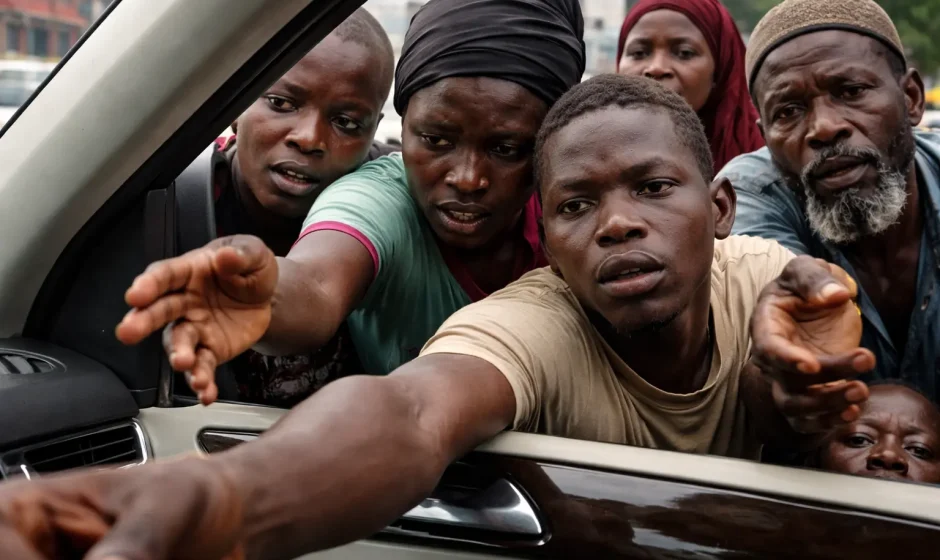
The third risk is personal safety. Busy intersections and crowded roadside areas can create distraction, and distraction can create opportunity for pickpocketing, bag snatching, or a sudden crowding situation. This is especially true when a driver lowers windows, reaches for a wallet, or displays cash or a phone in traffic.
The fourth risk is misreading distress as consent. Some people on the street may look calm because they are used to the routine, but that does not mean they are there voluntarily. A person can be under economic pressure, family pressure, or direct control and still appear composed in public.
The fifth risk is that emotional pressure can override judgment. Visitors often feel guilt when children approach them, especially in a country they want to engage with respectfully. That emotional pull is real. But good intentions without situational awareness can make a bad system more profitable.
Street begging risks at a glance
| Risk | What it can look like | Why it matters |
|---|---|---|
| Cash feeding a network | Repeated begging in the same zones by groups, often with children | Money may be collected by controllers, not kept by the person begging |
| Child exploitation | Children approaching cars, carrying babies, or working long hours in traffic | Direct giving can help normalize or extend the exploitation |
| Theft by distraction | Several people approach at once while you handle cash or your phone | You become easier to target in a crowded, fast-moving area |
| False reading of the situation | The person appears calm or rehearsed | Visible calm does not prove freedom or safety |
| Unsafe roadside interaction | You stop suddenly, lower windows, or step into traffic to give money | This increases both traffic risk and personal exposure |
What to avoid
Avoid handing cash to children at intersections, in traffic, or outside markets. Avoid opening your wallet in public when multiple people are nearby. Avoid making assumptions based only on appearance, language, or nationality. Avoid confrontations with any adult who seems to be directing people nearby. If the situation feels controlled, tense, or unusual, step back and focus on getting to a safer position.
You should also avoid turning the situation into a street investigation. Do not start filming children or confronting people you think are handlers. That can escalate quickly and may put the person you want to help at greater risk. Observation and reporting are usually more useful than direct confrontation.
Safer ways to help
If you want to help without fueling exploitation, use methods that do not depend on street cash transfers. Support established child protection, anti-trafficking, shelter, feeding, or social welfare organizations operating in Ghana. If you are a diaspora member or frequent traveler, choose one or two trusted organizations and support them consistently instead of giving randomly at junctions.
Another practical option is to help through structured assistance rather than impulse giving. That might mean supporting a shelter, contributing food through a vetted program, or asking a trusted local church, mosque, school, or community group which organizations actually work with vulnerable children and migrants on the ground.
In day-to-day situations, you can also respond with dignity without giving cash. A calm “sorry” and moving on is often the safest option. Compassion does not always require a transaction. In some cases, restraint is the more responsible form of help.
Warning signs that something may be wrong
No single sign proves trafficking, but several patterns should raise concern. A child begging late at night is a red flag. A very young child working around moving cars is a red flag. An adult watching from a distance while others collect money can be a red flag. So can signs of fear, injury, exhaustion, rehearsed behavior, or someone being moved repeatedly between nearby locations.
Pay attention to patterns, not just one moment. If you pass the same junction over several days and see the same children, the same babies, or the same adults cycling people through the area, that is the kind of detail worth reporting to the appropriate authorities.
What to do if you suspect exploitation
If you believe a child or adult may be under coercion, do not try to “rescue” the person yourself. Move to a safe place, note the location, time, nearby landmarks, vehicle details if relevant, and what you observed. Then report it to the nearest Ghana Immigration Service office or the Ghana Police Service Anti-Human Trafficking Unit.
This is the smarter response because trafficking cases often require coordinated screening, child protection, immigration review, and victim support. Ghana’s Human Trafficking Secretariat and Anti-Human Trafficking Unit exist for exactly that reason. The GIS has specifically asked the public to report suspicious activities to the nearest Immigration Office – that direct channel is worth using. A useful report is specific. A vague report is easy to lose. The more concrete your description, the more actionable it becomes.
FAQs about street beggars in Ghana
Are all street beggars in Ghana trafficked?
No. Some people on the street are there because of poverty, displacement, disability, or family hardship. The problem is that some are also part of organized exploitative systems, so direct giving is not always as harmless as it looks.
Should I ever give money to children begging in Ghana?
In most cases, giving cash directly to children is not recommended. Some children may be under pressure or control from adults, and direct giving can unintentionally prolong that cycle. Structured support is usually the better way to help (donate to your favorite Ghana charity).
Is it rude to say no?
No. A short, calm refusal is normal. You do not need to explain yourself, and you do not need to open your wallet to prove compassion.
What is the safest way to help?
The safest way to help is through vetted organizations, structured support, and formal reporting when exploitation is suspected.
Street beggars in Ghana: the bottom line
The danger of helping street beggars in Ghana is not kindness itself. The danger is helping blindly in a setting where poverty, trafficking, child exploitation, and public safety can overlap. The smarter approach is simple: stay alert, avoid roadside cash giving to children, protect your own safety, and direct your concern into channels that reduce harm instead of funding it.
Planning a move or extended stay in Ghana? Our e-book “250 Things to Know Before Moving to Ghana” covers safety, daily life, housing, costs, and much more – everything a diaspora returnee or expat needs before arriving. Get your copy here.
Sources
- GhanaCitizenship.com: 113 Children Among 305 Rescued in Ghana Anti-Trafficking Operation
- Graphic Online: GIS rescues 305 foreign nationals including 113 children in anti-begging trafficking operation (April 15, 2026)
- Associated Press: Ghana rescues 305 West African nationals, including 113 children, in anti-trafficking operation (April 16, 2026)
- Graphic Online: Why the Ghana Immigration Service halted arrests of migrant beggars – Phase 1 update (May 21, 2025)
- GhanaWeb: Over 1,300 Children and 909 Adults – GIS gives details of May 2025 street begging operation (May 16, 2025)
- U.S. Department of State: 2025 Trafficking in Persons Report, Ghana
- Ministry of Gender, Children and Social Protection: Human Trafficking Secretariat
- MoGCSP: Strengthens National Plan of Action for the Elimination of Human Trafficking
- Ghana Police Service: Anti Human Trafficking Unit