

Quick links (related guides):
Table of Contents
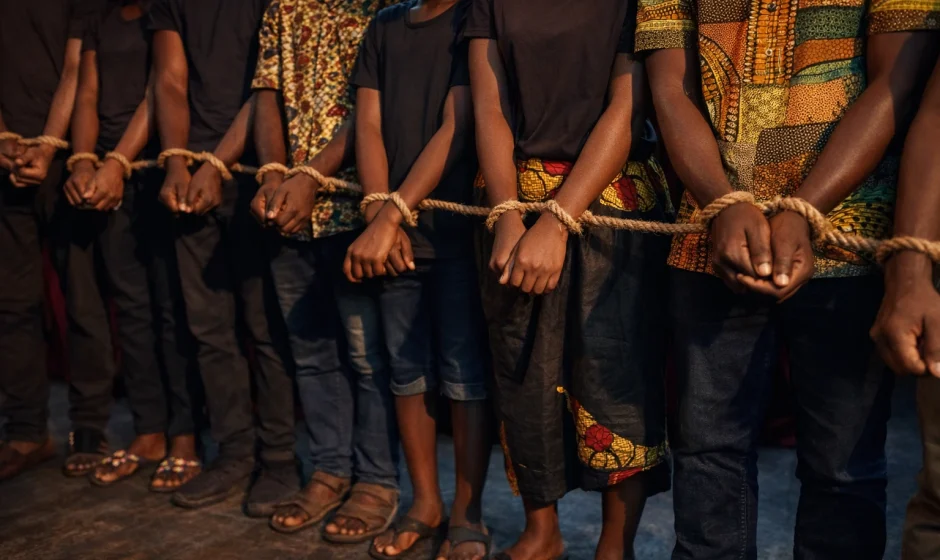
In the early hours of Wednesday, April 15, 2026, the Ghana Immigration Service (GIS) swept through five districts of Greater Accra and rescued 305 West African nationals from organised street begging networks linked to human trafficking. Of those rescued, 113 were children.
Street begging, at first glance, looks like poverty. What this operation confirmed is that it can also be a mechanism of control – one in which criminal networks move vulnerable people, including minors, across borders and put them to work generating money for traffickers rather than for themselves.
Human trafficking in Ghana has long carried a regional dimension. Ghana sits at a crossroads of West African migration, and this operation is a direct reminder of what that means in practice: that the people on the streets of Accra are not always there by choice.
What Happened: The April 15 Operation
The GIS described the operation as the second phase of a coordinated, intelligence-led crackdown. The first phase established the operational blueprint; this second phase expanded the geographic scope and improved coordination among agencies.
Officers targeted five known hotspots across the Greater Accra Region: Abossey Okai, Zongo Junction, Nima, Madina, and Kaneshie. These are densely populated, commercially active neighbourhoods where large numbers of foreign nationals congregate – and where, according to the GIS, criminal networks have embedded themselves under the cover of street begging activity.
The statement announcing the operation was signed by Maud Anima Quainoo, Deputy Commissioner of Immigration and Head of Public Affairs at the Ghana Immigration Service. According to the GIS, the exercise was focused on two objectives: rescuing affected persons and ensuring compliance with Ghana’s immigration laws. All 305 individuals encountered were taken to a dedicated processing centre, where they are currently undergoing profiling and immigration procedures.
No country breakdown for the 305 nationals was provided in the official GIS statement.
Who Was Rescued: A Breakdown of the 305
The GIS provided a demographic breakdown of everyone encountered during the operation. The figures reveal something that should not pass without comment: more than one in three of those rescued was a child.
| Category | Number Rescued | Share of Total |
|---|---|---|
| Children (total) | 113 | 37% |
| – Girls | 77 | 25% |
| – Boys | 36 | 12% |
| Adult women | 66 | 22% |
| Adult men | 126 | 41% |
| Total | 305 | 100% |
Source: Ghana Immigration Service official statement, April 15, 2026.
The GIS noted directly that the high proportion of minors underscores growing concerns about the vulnerability of children within these exploitative arrangements. Girls outnumbered boys among the rescued children by more than two to one. Broader trafficking reporting in Ghana and West Africa shows that children can be exploited in begging, domestic service, fishing, and other forms of forced labour.
The Link Between Organised Begging and Human Trafficking
Organised street begging is not simply desperate poverty. It is, in many documented cases across West Africa, a form of forced labour – one that looks informal from the outside but operates with strict internal control. A child or adult placed on a busy Accra roadside by a criminal network is typically required to return a daily quota. Failure to meet that quota can mean physical punishment, reduced food, or confinement.
The begging operation functions as cover. It provides a visible, seemingly benign explanation for why large numbers of foreign nationals are present in a city without clear employment or accommodation. It is also hard to police, because the individuals involved are scattered across public spaces rather than concentrated in a fixed location – which is exactly why the GIS used an intelligence-led approach rather than a simple patrol sweep.
The U.S. State Department’s 2024 Trafficking in Persons Report specifically identifies forced begging as one of several labour trafficking contexts in which Ghanaian and West African children are exploited. Children from neighbouring countries are trafficked for forced labour in cocoa farming, domestic service, fishing, and street begging – not as isolated incidents, but as part of commercial trafficking operations with supply chains.
Ghana’s Trafficking Record: What the Data Shows
The 2024 U.S. Trafficking in Persons Report placed Ghana on Tier 2 while describing the country as a source, transit, and destination point for trafficking in West Africa.
Ghana occupies an uncomfortable position in regional trafficking flows. It is simultaneously a source country (Ghanaians are trafficked abroad), a transit country (nationals from Burkina Faso, Togo, Nigeria, and other states are moved through Ghana), and a destination country (where foreign nationals are exploited within Ghanaian borders). The April 15 operation targeted the destination dimension specifically.
Ghana’s domestic legal framework does exist. The Human Trafficking Act (Act 694), passed in 2005, criminalises trafficking and established the Human Trafficking Secretariat, which coordinates anti-trafficking efforts and is managed by a 13-member board. However, enforcement has historically lagged, and the concentration of trafficking in informal urban spaces like those targeted in this operation has made consistent policing difficult.
This second-phase operation signals something different: a move toward sustained, intelligence-driven enforcement rather than one-off raids. Whether that shift holds will determine how meaningful these numbers turn out to be.
What Happens to Those Rescued
According to the GIS, all 305 individuals are currently being processed at a dedicated centre. The stated process involves profiling – establishing identities, nationalities, and individual circumstances – followed by necessary immigration procedures.
For those identified as trafficking victims, the process should involve referral to appropriate care and protection services. The GIS confirmed it is working with relevant stakeholders to ensure that victims, especially children, receive care, protection, and support. No partner organisations were named in the official statement.
For adults who are not identified as trafficking victims, GIS said immigration procedures are underway, but officials have not yet publicly detailed the final outcome for each case. The ECOWAS Free Movement Protocol permits West African nationals to enter member states without visas for up to 90 days, but it does not legalise exploitation or irregular employment arrangements.
Children present a more complex case. Cases involving children are likely to require additional protection screening and coordination with child welfare stakeholders before any final immigration decision is made. The GIS has not yet indicated how many of the 113 children fall into this category.
What Readers and Visitors Should Know
For diaspora members planning to return to Ghana, for travelers visiting Accra, and for NGOs and advocacy organisations operating in the region, this operation carries several practical implications.
The areas named in the operation – Nima, Madina, Abossey Okai, and Kaneshie – are busy, commercially active parts of Accra. They are not off-limits to visitors, but anyone spending time there should be aware that organised begging in these areas can involve coercion rather than individual choice. Giving money directly to street beggars, particularly children, may in some cases reinforce the financial model that makes trafficking networks viable.
For those considering relocation, Ghana’s urban centres carry the full complexity of any major West African city. Safety in Accra is not simply a matter of personal crime risk – it also involves understanding the social and humanitarian dynamics of the city’s informal spaces. The Crime in Ghana guide and Safety Tips for Visiting Ghana cover the practical side of navigating the city securely.
For NGOs and advocates, the GIS operation is both an enforcement milestone and a research opportunity. The volume of individuals processed in a single day – 305 people – suggests the scale of organised begging networks in Accra is larger than previously estimated in public reporting.
How to Report Human Trafficking in Ghana
The Ghana Immigration Service has called on members of the public to report suspicious activities related to human trafficking and organised street begging to the nearest Immigration office. This remains the primary reporting channel for immigration-related trafficking concerns.
The following contact points are relevant for reporting or seeking assistance:
| Agency | Contact / Role |
|---|---|
| Ghana Immigration Service (GIS) | Report to nearest Immigration office; national headquarters in Accra |
| Ghana Police Service – Anti-Human Trafficking Unit | Police emergency line: 191 / 18555 |
| Department of Social Welfare | Child protection referrals and victim support |
| Human Trafficking Secretariat | Under the Ministry of Gender, Children and Social Protection |
If you observe a situation involving children being controlled or directed by adults in street begging scenarios, particularly in high-density areas like Nima, Madina, or Kaneshie, reporting to the GIS or Police Anti-Trafficking Unit is the appropriate response.
Sources
- Graphic Online: “305 West African Nationals Rescued in Immigration Service Operation” (April 16, 2026)
- Asaase Radio: “Over 100 Children Among 305 Rescued in Anti-Trafficking Operation” (April 15, 2026)
- Adom Online: “GIS Rescues 305 West African Nationals in Anti-Trafficking Operation” (April 15, 2026)
- AP News: “Ghana rescues 305 West African nationals in anti-trafficking bust” (April 16, 2026)
- U.S. Department of State: “2024 Trafficking in Persons Report – Ghana” (2024)
- GBC Ghana: “Ghana Rescues 305 West African Nationals Including 113 Children in Anti-Trafficking Crackdown” (April 2026)
- Ministry of Gender, Children and Social Protection: “Human Trafficking Secretariat”