
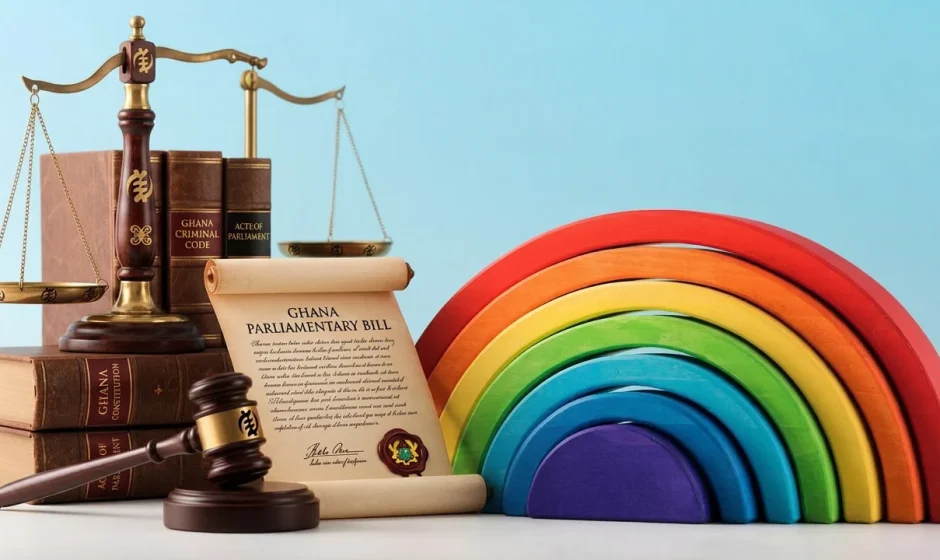

Ghana’s Parliament passed the Human Sexual Rights and Family Values Bill, 2025 on May 29, 2026, sending the legislation to President John Dramani Mahama for his signature. The bill criminalizes the promotion, funding, and sponsorship of LGBTQ activity, and extends existing prison penalties for same-sex acts.
If Mahama signs it, the law takes effect as part of Ghana’s formal legal code. This is not the first time Parliament has passed such a bill. A nearly identical version cleared Parliament in February 2024 under President Akufo-Addo, but legal challenges prevented it from receiving a presidential signature before the Eighth Parliament dissolved in January 2025. This new version was reintroduced in the Ninth Parliament and passed with unanimous committee backing.
The decision matters beyond Ghana’s borders. The bill has attracted international attention from human rights organizations, foreign governments, and diaspora communities. For expats, investors, journalists, advocates, and anyone planning to live or work in Ghana, understanding what the law actually says, and what it does not say, is essential.
Quick links (related guides):
What the Bill Does
The Human Sexual Rights and Family Values Bill, 2025 does three main things:
First, it preserves the existing criminal penalty of up to three years in prison for same-sex sexual acts. This provision was already part of Ghana’s legal framework under colonial-era laws, so the bill does not introduce that penalty from scratch.
Second, it creates new criminal offenses for what the bill calls the “promotion, funding, or sponsorship” of LGBTQ activities. Those offenses carry prison terms ranging from three to five years. This is the most significant new provision, because it extends criminal exposure beyond private conduct to public advocacy, organizational activity, and financial support.
Third, the bill contains a carve-out for certain professionals. Lawyers, journalists, and medical professionals who provide essential services are specifically protected. In practice, this means a doctor treating an LGBTQ patient, a journalist covering the law, or a lawyer representing a client would not automatically face prosecution under the promotion clause.
| Provision | Penalty | Notes |
|---|---|---|
| Same-sex sexual acts | Up to 3 years in prison | Maintained from existing law |
| Promoting, funding, or sponsoring LGBTQ activity | 3 to 5 years in prison | New provision in this bill |
| Legal, journalistic, medical services | Exempt | Professional carve-out added in the 2025 version |
What Changed from the 2024 Version
The 2025 bill is an amended version of the legislation that passed Parliament in February 2024. The most notable change is the professional carve-out described above. The 2024 bill drew criticism precisely because it would have exposed lawyers, doctors, and journalists to prosecution for doing their jobs. The 2025 version addresses that criticism, though rights organizations argue the protection is narrow and the core threat to LGBTQ individuals and their support networks remains.
The 2024 bill lapsed in January 2025 when the Eighth Parliament dissolved without presidential assent. Sponsors reintroduced it in the Ninth Parliament after President Mahama took office. According to advocates, Mahama encouraged Parliament to bring the bill back.
How It Passed
The bill passed by a voice vote on Friday, May 29, 2026, after the Constitutional and Legal Affairs Committee unanimously recommended its adoption. First Deputy Speaker Bernard Ahiafor announced the result.
Lawmakers from Mahama’s National Democratic Congress had faced sustained pressure from religious leaders and other bill supporters to bring the legislation to a vote. The timing is also notable: Parliament passed the bill days before the 4th African Inter-Parliamentary Conference on Family Values and Sovereignty was scheduled to take place in Accra.
The bill was originally introduced in the Ninth Parliament on July 24, 2025, by Member of Parliament Rev. John Ntim Fordjour on behalf of a group of co-sponsors including Samuel Nartey George, Emmanuel Kwasi Bedzrah, Helen Adwoa Ntoso, and others.
What Mahama Faces Now
Under Ghana’s constitution, once Parliament passes a bill, the President must assent to it, return it with objections, or allow it to become law without action after a set period. President Mahama was in New York on the day of the vote, leading a Ghanaian delegation at the United Nations to present a resolution on reparatory justice for the Transatlantic Slave Trade.
Political signals point toward a signature. Majority Leader Mahama Ayariga stated after the vote that it was “a promise that was made” and that the bill would receive express presidential assent. Mahama has previously described his commitment to the rule of law and Ghana’s legal traditions, without ruling out signing the bill.
International pressure in the other direction is real. Human rights organizations have condemned the bill’s passage. Foreign governments that have previously signaled concern may raise the issue formally. Whether that pressure affects Mahama’s decision remains to be seen.
Practical Implications for Expats and Visitors
For most tourists and expats, the law’s primary practical relevance is the promotion and sponsorship clause. Ghana has not historically enforced laws against private same-sex conduct with the same intensity as some neighboring countries, but the new provisions extend criminal risk to visible support, advocacy, or organizational involvement.
Foreign nationals who work in development, civil society, media, or health sectors should be aware that the professional carve-out is narrowly worded. Organizations that fund LGBTQ programs or campaigns in Ghana would fall within the bill’s scope if signed into law. The legal uncertainty around what constitutes “promotion” is significant and unlikely to be clarified quickly.
Travelers who are LGBTQ should be aware that Ghana already criminalized same-sex acts under existing law. This bill adds to, rather than creates, that legal environment.
International Response
The bill’s passage drew immediate condemnation from international human rights organizations. Ghanaian advocacy group IDNOWA described the vote as “a critical test of collective resilience” and noted that while lawyers, journalists, and medical professionals were protected, the bill still poses a serious threat to the safety and freedom of LGBTQ Ghanaians.
The broader West African context is relevant. Several countries in the region have moved in a similar direction in recent years. Advocates have noted that the Trump administration’s anti-LGBTQ executive orders in the United States reduced fears among West African lawmakers that economic sanctions would follow anti-LGBTQ legislation, removing a practical check that had existed in earlier years.
What Happens Next
The bill now sits with President Mahama for a decision. If he signs it, the law takes effect after the required constitutional processes. Legal challenges are likely. The 2024 version faced court challenges that contributed to its failure to receive assent, and rights groups have already signaled they will mount legal opposition to this version as well.
Watch for: a presidential statement, a formal signing event, any legal challenge filed before or shortly after assent, and reaction from Ghana’s international trade and development partners. GhanaCitizenship.com will update this article as the story develops.
Sources
- Reuters via Regional Media News: “Ghana lawmakers approve bill criminalizing LGBTQ ‘promotion’, official says” (May 29, 2026)
- Ghana Graphic Online: “Parliament passes anti-LGBTQ+ Bill” (May 29, 2026)
- Washington Blade: “Ghanaian lawmakers approve anti-LGBTQ bill” (May 29, 2026)
- 76 Crimes: “Ghana parliament approves cruel, sweeping anti-LGBTQ bill” (May 29, 2026)