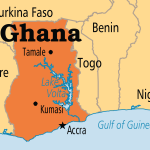



Ghana remains one of the most common West African destinations for Americans, members of the African diaspora, retirees, professionals, entrepreneurs, students, and families considering a long-term move to the continent.
For most people living in Accra, Kumasi, Cape Coast, Tema, Takoradi, and other major population centers, everyday life is considerably different from what dramatic news headlines may suggest. At the same time, relocating successfully requires a realistic understanding of crime, healthcare limitations, housing law, immigration status, banking, transportation, and regional security.
The U.S. Department of State currently classifies Ghana as Level 2: Exercise Increased Caution. Its July 7, 2026 advisory cites crime, poor health infrastructure, violence against women, and violence against lesbian and gay travelers. Several northern border areas carry the higher Level 3: Reconsider Travel designation.
This guide focuses on the practical issues someone actually needs to solve before and after moving to Ghana.
Table of Contents
- Personal Safety Overview
- Healthcare and Insurance
- Housing, Rent Law and Cost of Living
- Banking and Financial Logistics
- Community, Schools and Daily Life
- Step-by-Step Relocation Plan
- Sources
Related Ghana relocation guides:
1. Personal Safety Overview
Current U.S. Travel Advisory
The U.S. Department of State’s current Ghana Travel Advisory was issued on July 7, 2026.
Ghana remains:
Level 2: Exercise Increased Caution.
The current advisory identifies four principal concerns:
- Crime.
- Poor health infrastructure.
- Violence against women.
- Violence against lesbian and gay travelers.
This is not a recommendation against traveling to Ghana as a whole. Level 2 means travelers should exercise increased caution and understand the risks relevant to their itinerary.
Crime in Ghana
Criminal activity reported by the State Department includes:
- Robbery.
- Carjacking.
- Assault.
- Residential crime.
- Financial scams.
- Occasional kidnapping.
Street theft, phone theft, bag snatching, and opportunistic crime are also practical concerns in busy urban areas.
Basic precautions include:
- Avoid displaying large amounts of cash.
- Keep phones and handbags secure in congested areas.
- Do not leave valuables visible inside vehicles.
- Use well-lit pickup and drop-off points after dark.
- Verify people entering your residence compound.
- Do not assume a security guard removes the need for locked doors and windows.
- Use additional caution when withdrawing large amounts of cash.
Read our dedicated guide to crime in Ghana for a deeper breakdown.
Northern Ghana: Level 3 Areas
The July 2026 State Department advisory formally recommends that travelers reconsider travel to several northern border areas.
These currently include:
- The northern border in the Upper East Region.
- The northern border in the Northeast Region.
- The northern border in the Upper West Region.
- Areas west of the N12 highway in the Savannah Region.
The advisory cites violent crime, limited police presence, and the proximity of terrorist activity in neighboring Burkina Faso.
U.S. government employees require special authorization to travel to these areas, and the U.S. government’s ability to provide emergency assistance is more limited there.
Accra International Airport
Ghana officially reverted the name of Kotoka International Airport to Accra International Airport in February 2026.
The airport remains Ghana’s principal international aviation gateway.
Normal big-city airport precautions apply:
- Keep passports and phones in your possession.
- Confirm the identity of any driver meeting you.
- Agree on transportation before leaving the terminal when possible.
- Do not hand luggage to unofficial helpers unless you intend to use their service.
LGBTQ+ Safety and the Current Legal Situation
LGBTQ+ travelers and prospective residents should treat Ghana’s legal and social environment as a serious relocation consideration.
The current State Department advisory states that Ghanaian law makes same-sex sexual relationships illegal and notes that enforcement has predominantly affected men.
The State Department says penalties can include imprisonment of up to three years.
It also reports increasing criticism of and violence against people because of sexual orientation.
What Happened to Ghana’s New Anti-LGBTQ Bill?
The legislative situation has changed considerably during 2026.
Parliament passed the Human Sexual Rights and Family Values Bill, 2025 on May 29, 2026.
However, the process did not end there.
By late July, Speaker of Parliament Alban Bagbin indicated that portions of the punishment regime required reconsideration.
A motion to revisit Parliament’s earlier decision appeared on the July 31 Order Paper, but Parliament adjourned without completing that reconsideration.
As of September 2, 2026, the proposed legislation has not completed the process required to become operative law.
The existing criminal-law framework therefore remains the immediate legal baseline.
See our regularly updated guide to LGBT rights in Ghana.
Safety for Women
The July 2026 U.S. advisory separately identifies violence against women as a Ghana travel concern.
Women traveling or living alone should pay particular attention to:
- Transportation after dark.
- Isolated beaches and roads.
- Unfamiliar nightlife locations.
- Meeting strangers privately.
- Residential security.
This does not mean women cannot safely live or travel independently in Ghana. It means transportation, accommodation, and personal-security decisions deserve advance planning.
Emergency Numbers
| Service | Number | Current Guidance |
|---|---|---|
| General emergency / Ambulance | 112 | National Ambulance Service currently directs medical emergencies to 112, available 24/7. |
| Police | 191 / 18555 | Ghana Police Service emergency numbers. |
| Fire | 112 | Ghana National Fire Service currently publishes 112 as an emergency number. |
| U.S. Embassy Accra | +233-30-274-1000 | The State Department currently lists the same number for normal and after-hours emergencies. |
U.S. citizens should consider enrolling in the Smart Traveler Enrollment Program before travel so the embassy can send security and emergency information.
2. Healthcare and Insurance
Understand Ghana’s Medical Limitations Before Moving
The current U.S. Travel Advisory explicitly lists poor health infrastructure as one of the reasons Americans are advised to exercise increased caution.
It also states that:
- Emergency medical services outside Accra are limited.
- Serious medical emergencies can require evacuation.
This is one of the most important issues for retirees, people with complex medical conditions, pregnant travelers, and families with children.
Major Medical Facilities
Accra has both private hospitals and large public referral institutions.
Facilities commonly used or considered by residents include:
- Nyaho Medical Centre.
- Korle Bu Teaching Hospital.
- 37 Military Hospital.
In Kumasi, Komfo Anokye Teaching Hospital is a major tertiary referral hospital.
These names should not be interpreted as a ranking or guarantee that a particular facility can treat every emergency.
Review our medical care in Ghana guide before choosing where to live.
Health Insurance and Medical Evacuation
Long-term foreign residents should strongly consider insurance that covers:
- Private outpatient care.
- Hospitalization.
- Specialist treatment.
- Emergency transportation.
- Medical evacuation where appropriate.
Do not assume that a policy marketed as “international health insurance” automatically includes evacuation to another country.
Check:
- Maximum benefit limits.
- Deductibles.
- Pre-existing-condition exclusions.
- Which Ghanaian hospitals are in-network.
- Whether treatment must be pre-authorized.
- Whether air evacuation is covered.
- Where evacuation would take you.
See our medical insurance for Ghana expats guide.
Yellow Fever
Ghana requires proof of yellow fever vaccination for arriving travelers aged 9 months and older.
Carry your original International Certificate of Vaccination or Prophylaxis.
The certificate for a primary vaccination becomes valid 10 days after vaccination.
See our updated Ghana vaccine requirements guide.
Malaria
Malaria occurs throughout Ghana.
CDC currently recommends prescription malaria prophylaxis for travelers going to all areas of the country.
Common options can include:
- Atovaquone-proguanil.
- Doxycycline.
- Mefloquine.
- Tafenoquine for certain medically eligible travelers.
The correct drug depends on health history and should be selected with a medical professional.
Other Vaccines
Current CDC recommendations include:
- Hepatitis A for unvaccinated travelers.
- Hepatitis B for unvaccinated travelers.
- Typhoid for most travelers.
- Routine vaccinations, especially measles vaccination.
Meningococcal ACWY is recommended specifically for travelers visiting Ghana’s meningitis-belt areas during the dry season, roughly December through June. It is not a blanket year-round requirement for everyone visiting Accra.
Ghana was removed from CDC’s circulating-poliovirus destination list in March 2026, so a special adult polio booster is no longer recommended solely because someone is traveling to Ghana. Routine polio vaccination should still be current.
Mpox
Mpox transmission has occurred in Ghana, including developments during 2026.
CDC currently recommends mpox vaccination for travelers expecting certain higher-risk sexual or intimate-contact exposures rather than for every traveler to Ghana.
Check the current CDC Ghana traveler page shortly before departure.
Food and Water
Travelers should use additional caution where food handling or water quality is uncertain.
Practical precautions include:
- Use sealed bottled, boiled, or properly treated water when water quality is uncertain.
- Be cautious with ice when you do not know its water source.
- Prefer food that is cooked thoroughly and served hot.
- Wash or peel produce when appropriate.
It is too broad to say that every drop of Ghanaian tap water is inherently unsafe. Actual risk depends on the water source, plumbing, storage tanks, neighborhood infrastructure, and building maintenance.
3. Housing, Rent Law and Cost of Living
Where Many Foreign Residents Live
Popular Accra neighborhoods among international residents include:
- Airport Residential Area.
- Cantonments.
- Labone.
- East Legon.
- Airport West.
- Dzorwulu.
- Osu.
These areas offer convenient access to businesses, private schools, restaurants, supermarkets, medical facilities, and major roads, but they are also among Ghana’s most expensive residential markets.
Less expensive housing can often be found farther from central Accra, but commuting time can substantially affect quality of life.
Kumasi, Cape Coast, Tema, Takoradi, and other cities offer different combinations of cost, employment access, and lifestyle.
Do Ghanaian Landlords Really Demand One or Two Years Up Front?
Some landlords do.
That does not mean the practice is lawful.
Section 25 of Ghana’s Rent Act, 1963 (Act 220) restricts advance rent.
The Act provides that:
- For a monthly or shorter tenancy, demanding more than one month’s rent in advance is prohibited.
- For a tenancy exceeding six months, demanding more than six months’ rent in advance is prohibited.
Before paying:
- Obtain a written tenancy agreement.
- Verify the landlord or authorized agent.
- Inspect the property.
- Confirm what utilities are included.
- Document existing damage.
- Get an official receipt.
Read our guide to renting in Ghana as a foreigner.
Rent Should Be Quoted in Ghana Cedis
The Bank of Ghana issued another public notice on September 2, 2026 reminding the public that unauthorized:
- Pricing.
- Quoting.
- Advertising.
- Receipt issuance.
- Receiving payments.
- Making payments.
for goods and services in foreign currency in Ghana are prohibited under the Foreign Exchange Act, 2006 (Act 723).
Foreign residents may still encounter landlords advertising apartments in U.S. dollars, especially in prime Accra neighborhoods.
Insist on a lawful Ghana cedi-denominated agreement and payment structure.
Current Accra Rent Snapshot
Prime Accra asking rents are substantially higher than the figures published in the old version of this article.
For example, the current Meqasa marketplace shows an average asking price of approximately:
- GH₵20,406 per month for its current East Legon one-bedroom apartment listings, approximately US$1,799 / GBP 1,333 / RMB 12,090.
Recent three-bedroom Cantonments listings have appeared around:
- GH₵28,138 per month, approximately US$2,481 / GBP 1,838 / RMB 16,671.
- Up to around GH₵49,176 per month, approximately US$4,337 / GBP 3,213 / RMB 29,136, for some furnished properties.
These are asking-price snapshots from a commercial property marketplace, not government rental statistics or guarantees of what you should pay.
Much cheaper housing exists outside premium expatriate neighborhoods.
Conversions use Bank of Ghana September 2, 2026 mid-rates:
- US$1 = GH₵11.3400.
- GBP 1 = GH₵15.3073.
- RMB 1 = GH₵1.6878.
Buying Property as a Foreigner
Foreign nationals can acquire property interests in Ghana, but constitutional land restrictions apply.
Article 266 of Ghana’s Constitution prohibits a non-citizen from holding a freehold interest in land.
A lease granted to a non-citizen cannot exceed 50 years at one time.
Foreign buyers should independently verify:
- The identity and legal authority of the seller.
- The nature of the seller’s interest in the land.
- Lands Commission records.
- Site-plan boundaries.
- Competing claims.
- Outstanding mortgages or encumbrances.
- The remaining term of the underlying land interest.
See our guide on foreign ownership of land in Ghana.
Electricity and Utilities
Many residential properties use ECG prepaid electricity meters, while other billing arrangements also exist.
Before signing a lease, verify:
- Whether electricity is prepaid or postpaid.
- Whether water is directly metered.
- Whether the property uses a water-storage tank.
- Whether the building has backup power.
- Internet providers available at the exact address.
- Who pays common-area or service charges.
4. Banking and Financial Logistics
Opening a Ghanaian Bank Account
Requirements vary considerably by bank and account type.
Do not assume that every foreigner must wait until obtaining every long-term immigration document before any account can be opened.
For example, Ecobank Ghana currently publishes separate requirements for resident and non-resident personal accounts.
Its resident requirements include items such as:
- Account-opening documentation.
- Valid identification.
- Proof of address.
- Passport photographs.
- Residence permit for a foreign resident.
Non-resident accounts can have separate notarization and source-of-income requirements.
Other banks will have their own KYC procedures.
See our best banks in Ghana guide.
Do Not Confuse the Ghana Card With the Non-Citizen Ghana Card
This was incorrect in the previous version of the article.
Foreign residents use the Non-Citizen Ghana Card issued through the National Identification Authority’s Foreigner Identification Management System, commonly called FIMS.
This is different from the Ghana Card issued to Ghanaian citizens.
NIA currently states that a foreign national who has accumulated at least 90 days of residence can apply for the Non-Citizen Ghana Card, subject to specified exemptions and registration requirements.
Current FIMS charges are:
- First issuance: Cedi equivalent of US$120.
- Annual renewal: Cedi equivalent of US$78.
The current registration page lists documents including a valid passport and residence permit.
ATMs and International Cards
Visa and Mastercard are widely usable through major banks and merchants in Accra and other large cities.
However, there is no universal Ghana-wide “5% foreign ATM fee.”
Your cost can consist of several different charges:
- The Ghanaian ATM operator’s fee.
- Your home bank’s foreign ATM fee.
- Your card issuer’s foreign transaction fee.
- The currency-conversion rate.
Check your own bank before travel instead of relying on a generic percentage.
Mobile Money
Mobile money is deeply integrated into Ghanaian daily life.
Major regulated services include:
- MTN Mobile Money.
- Telecel Cash.
- AT Money.
Residents use mobile wallets for everything from utility payments and transfers to merchants and informal everyday transactions.
SIM and financial-account registration requirements apply, so complete registration through the official telecommunications or financial provider rather than buying a pre-registered account.
International Transfers
Use banks, money-transfer operators, and cross-border payment providers that are authorized to operate in or send funds to Ghana.
The Bank of Ghana regulates cross-border payment and foreign-exchange activity.
A service being popular internationally does not automatically mean every feature is available to a Ghana resident.
Confirm:
- Whether Ghana is supported.
- Whether you can receive as well as send money.
- Withdrawal methods.
- Exchange-rate spread.
- Transfer fees.
How Much Cash Can You Carry Into Ghana?
Bank of Ghana’s amended foreign-currency guidelines allow travelers to carry:
Up to US$10,000, or the equivalent in another foreign currency or monetary instruments, without declaration.
If you carry more than US$10,000, you must declare the full amount using the official Foreign Currency Declaration Form, FX-5.
Inbound travelers carrying more than US$10,000 must also present proof that the funds were declared at the port of origin or departure.
5. Community, Schools and Daily Life
Building a Community
Accra has substantial professional, diplomatic, international-development, diaspora, and expatriate communities.
New residents often connect through:
- Professional associations.
- Churches and religious communities.
- Business groups.
- School-parent communities.
- Sports and fitness groups.
- Volunteer organizations.
- Facebook groups.
- WhatsApp and Telegram groups.
See our Ghana WhatsApp and Telegram group guide.
Language and Social Customs
English is Ghana’s official language and is used extensively in government, education, business, media, and formal communication.
Ghana is also highly multilingual.
Akan languages, including Twi varieties, are widely spoken, particularly in southern Ghana, but no single Ghanaian language dominates every region.
Learning greetings in the language most commonly spoken where you live can make everyday interactions easier.
Social conventions vary by region, ethnicity, religion, age, family, and professional setting, but several habits are generally useful:
- Greet people before beginning a request or transaction.
- Use professional titles in formal situations until invited to do otherwise.
- Allow time for relationship-building in business environments.
- Ask rather than assume when unsure about a local custom.
Read our Ghanaian social culture guide.
International Schools
International-school options in Accra include institutions such as:
- Lincoln Community School, which offers the International Baccalaureate continuum.
- Ghana International School.
- American International School, Ghana, which offers an American-style academic structure and is also an authorized IB World School.
Admission availability, tuition, transport, curriculum, and grade placement should be confirmed directly with each school.
Families should research schools before choosing a neighborhood, because daily Accra traffic can turn a seemingly short school commute into a major quality-of-life issue.
6. Step-by-Step Relocation Plan
Step 1: Check Your Immigration Route Before Booking the Move
Do not begin with the assumption that one immigration status works for everyone.
Your route can depend on whether you are:
- A visitor.
- An employee.
- A student.
- A shareholder or investor.
- A missionary or NGO worker.
- A spouse or dependent.
- A Ghanaian citizen by descent.
- A former Ghanaian.
- A potential Right of Abode applicant.
A tourist visa is not a substitute for a long-term residence or work permit.
Step 2: Prepare Your Passport, Visa and Yellow Fever Documentation
Ghana launched its national electronic visa platform on May 25, 2026.
U.S. passport holders are currently included among nationalities that can use the official Ghana e-Visa platform.
Current general requirements include:
- A passport valid for at least six months beyond the intended stay.
- Passport photograph.
- Travel details.
- Accommodation information.
- Supporting documentation appropriate to the visa type.
- Proof of yellow fever vaccination at entry.
Use the official portal:
https://evisa.immigration.gov.gh/
Step 3: Book Temporary Housing First
Unless you know Ghana extremely well, avoid committing to a long residential lease before seeing the property and neighborhood personally.
A two-to-four-week temporary stay gives you time to evaluate:
- Traffic.
- Noise.
- Water supply.
- Electricity.
- Internet.
- Flooding risk.
- Security.
- Distance to work or school.
See our temporary accommodation guide.
Step 4: Establish Your Legal Residence Status
Ghana Immigration Service says a non-citizen entering Ghana is commonly admitted for approximately 60 or 90 days depending on nationality and circumstances.
If the person wants to reside in Ghana for a substantial period, usually more than 90 days, a residence permit is generally required.
The correct permit depends on the purpose of residence.
A foreign national who wishes to work and live in Ghana generally needs the appropriate work and residence authorization.
GIS currently states that there is no single guaranteed residence-permit processing period but says applications may generally take approximately 8-10 weeks.
Step 5: Register for the Correct Non-Citizen Identification
Foreign residents do not simply register as Ghanaian citizens for a standard Ghana Card.
The appropriate foreigner system is FIMS.
The resulting identity document is commonly called the Non-Citizen Ghana Card.
Current first-time issuance costs the cedi equivalent of US$120, with an annual card renewal at the cedi equivalent of US$78.
Step 6: Set Up Communications
Obtain service from a licensed Ghana telecommunications provider and complete the applicable SIM-registration process.
Do not purchase a supposedly “ready-made” SIM registered to another person’s identity.
Before choosing home internet, ask neighbors in the exact building or street what service actually performs well there. Provider performance can vary considerably by neighborhood.
Step 7: Find Permanent Housing
Inspect the property personally.
Before transferring rent:
- Verify ownership or agent authority.
- Check the tenancy agreement.
- Insist that monetary terms comply with Ghana’s cedi and rent rules.
- Understand service charges.
- Photograph the property’s condition.
- Obtain receipts.
Step 8: Open Local Financial Accounts
Compare multiple banks instead of assuming one bank is universally best for foreigners.
Ask specifically about:
- Resident versus non-resident accounts.
- Required immigration documentation.
- Non-Citizen Ghana Card requirements.
- Online banking.
- International transfers.
- ATM charges.
- Foreign-currency accounts.
Step 9: Establish Medical Care Before You Need It
Identify:
- Your preferred nearby clinic.
- Your preferred emergency hospital.
- Your insurer’s Ghana assistance number.
- Your medical evacuation contact if included.
Keep medications, prescriptions, allergies, medical conditions, and emergency contacts accessible.
Step 10: Handle Schools Early
Families should contact schools before finalizing the move.
International schools may require:
- Previous academic records.
- Teacher recommendations.
- Testing or interviews.
- Vaccination records.
- Deposits.
School location should influence your housing decision.
Step 11: Be Careful When Shipping Household Goods
Before shipping a vehicle, appliances, furniture, or other expensive items, check current Ghana Revenue Authority and applicable standards requirements.
Do not rely on an old online customs calculator.
Import duties, age restrictions, product standards, and documentation can change.
Step 12: Plan Transportation
Ride-hailing services are widely used in Accra and Kumasi.
If you plan to drive:
- Review current Ghana Highway Code requirements.
- Confirm with DVLA what licensing or conversion rules apply to your foreign license.
- Obtain appropriate vehicle insurance.
- Remember that Ghana drives on the right-hand side of the road.
See our transportation in Ghana guide.
Step 13: Prepare for Power, Internet and Water Interruptions
Conditions vary substantially by neighborhood and building.
A resilient setup may include:
- Power banks.
- A small UPS for internet equipment.
- Backup mobile data.
- Water storage where appropriate.
- Generator, inverter, or battery backup for people whose work depends on uninterrupted power.
See our guide to power outages in Ghana.
Step 14: Enroll in STEP and Save Emergency Contacts
U.S. citizens can enroll in STEP before departure.
Save:
- 112.
- Police 191 / 18555.
- U.S. Embassy Accra: +233-30-274-1000.
- Your insurer.
- Your landlord or property manager.
- A trusted Ghana contact.
Step 15: Give Yourself Time to Adjust
Moving to Ghana successfully is not simply an immigration project.
The first few months involve learning:
- Traffic patterns.
- How utility systems work.
- Which businesses are reliable.
- Local communication styles.
- How long routine administrative tasks actually take.
Building trusted local relationships often makes the biggest difference between merely living in Ghana and actually feeling settled.
Sources
- U.S. Department of State: Ghana Travel Advisory, July 7, 2026
- U.S. Embassy Accra: Emergency and Consular Services
- U.S. Centers for Disease Control and Prevention: Ghana Traveler Health Information
- Ghana Immigration Service: Official Ghana Immigration Service Portal
- Ghana Immigration Service: Residence Permit FAQ and Processing Guidance
- Ghana Immigration Service: Work and Residence Permit for Companies
- Government of Ghana: Official Ghana e-Visa Portal
- Ministry of the Interior: Ghana e-Visa Launch, May 25, 2026
- National Identification Authority: Foreigner Identification Management System and Non-Citizen Ghana Card
- National Identification Authority: 2026 NIA Fees and Charges
- National Ambulance Service: Emergency Medical Services and 112 Hotline
- Ghana National Fire Service: Emergency Contact Information
- Ghana Police Service: Official Ghana Police Service
- Parliament of Ghana: Current Bills Before Parliament
- Parliament of Ghana: Human Sexual Rights and Family Values Bill, 2025
- Parliament of Ghana: Rent Act, 1963 (Act 220)
- Bank of Ghana: Unauthorized Foreign Exchange Transactions Notice, September 2, 2026
- Bank of Ghana: Foreign Currency Import and Export Guidelines
- Bank of Ghana: Daily Interbank Foreign Exchange Rates
- Ghana Revenue Authority: Passenger Customs Obligations
- Ministry of Transport: Accra International Airport Name Change
- Ghana News Agency: August 2026 Anti-LGBTQ Bill Status
- Ecobank Ghana: Resident and Non-Resident Account Requirements
- Meqasa: Current East Legon Rental Listings