

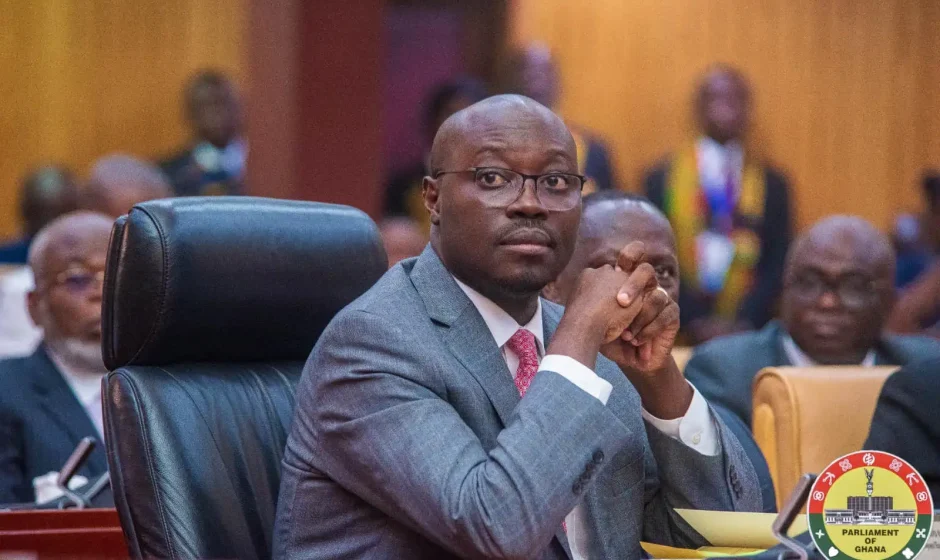

Finance Minister Dr Cassiel Ato Forson announced on July 23, 2026, that Ghana has achieved its statutory public debt target of 45% of GDP years ahead of the schedule laid out under the International Monetary Fund programme and the Public Financial Management Act. The announcement came during the 2026 Mid-Year Fiscal Policy Review presented to Parliament.
The milestone reflects a sharp improvement in Ghana’s fiscal position. The debt-to-GDP ratio dropped from 61.8% at the end of 2024 to 44.7% by the close of 2025, then edged slightly to 45.0% by June 2026. Dr Forson credited the turnaround to deliberate policy decisions and what he called superior economic management, including a leaner government and disciplined spending.
This matters because hitting the debt target early signals stronger debt sustainability, lower borrowing costs, and more fiscal room for development spending. The joint World Bank-IMF Debt Sustainability Analysis now rates Ghana’s debt as sustainable, the first such upgrade since before the 2022 debt crisis.
Quick links (related guides):
Table of Contents
The Announcement
Presenting the 2026 Mid-Year Budget Review in Parliament, Dr Forson stated that Ghana’s fiscal performance had exceeded programme targets across multiple metrics. The primary balance on a commitment basis recorded a surplus of 2.5% of GDP in 2025, beating the 1.5% target by a full percentage point, and achieved a further surplus of 0.9% of GDP by June 2026.
Primary expenditure declined from 18.7% of GDP in 2024 to 13.2% in 2025 without harming economic growth. Dr Forson attributed this to the government’s decision to reduce the number of ministers from 123 to 60 and cut ministries from 30 to 23. He described a leaner government as not merely good politics but sound fiscal policy.
“Ghana has achieved its statutory debt target of 45 percent of GDP years ahead of both the IMF programme timetable and the target date established under the Public Financial Management Act,” Dr Forson told Parliament.
Ghana has achieved its statutory debt target of 45 percent of GDP years ahead of both the IMF programme timetable and the target date established under the Public Financial Management Act.
Key Numbers at a Glance
The mid-year review presented several striking figures that illustrate the pace of Ghana’s fiscal recovery. Inflation fell from 23.8% in December 2024 to 5.4% by end of 2025, and stood at 5.3% in June 2026. The 91-day Treasury bill rate dropped from 11.09% in December 2025 to 5.73% in June 2026, while the Monetary Policy Rate was cut by a cumulative 1,300 basis points to 14%.
Debt servicing as a share of domestic revenue fell from 55.7% in 2022 to 28.8% in 2025, freeing up billions of cedis for schools, hospitals, and roads. The cedi appreciated by 40.7% against the US dollar in 2025, with Bloomberg confirming it as the world’s strongest-performing currency that year. Ghana’s economy grew at 6.4% in the first quarter of 2026, well ahead of the 4.8% full-year target.
| Metric | Previous | Current |
|---|---|---|
| Debt-to-GDP ratio | 61.8% (end 2024) | 45.0% (June 2026) |
| Inflation | 23.8% (Dec 2024) | 5.3% (June 2026) |
| Monetary Policy Rate | 27% (Jan 2025) | 14% (July 2026) |
| Primary surplus (% GDP) | 1.5% target (2025) | 2.5% actual (2025) |
| Debt service / domestic revenue | 55.7% (2022) | 28.8% (2025) |
| GDP growth (Q1 2026) | 4.8% target | 6.4% actual |
What This Means for Ghana
The improvement in debt sustainability goes beyond headline numbers. For the first time since April 2014, Ghana’s external and overall risk of debt distress has been upgraded from high to moderate. The joint World Bank-IMF Debt Sustainability Analysis moved Ghana’s debt from unsustainable in May 2023 to sustainable with room to absorb shocks in 2025.
Dr Forson also highlighted that Ghana had overcome what he called the “original sin” – the inability of a country to borrow over the long term in its own currency. In April 2026, Ghana successfully issued a GH¢2.7 billion seven-year cedi-denominated bond, the first since the 2022 debt default. He told Parliament: “Ghana has moved from default to credibility, from debt distress to debt sustainability, from market exclusion to renewed investor confidence.”
The current account surplus increased to US$5.1 billion in the first half of 2026, while the cumulative trade surplus reached US$8.8 billion, equivalent to 6.6% of GDP. The information and communication subsector surged to 25.2% growth, contributing 26.9% to overall economic growth.
Ghana has moved from default to credibility, from debt distress to debt sustainability, from market exclusion to renewed investor confidence.
What Comes Next
The government remains on track to achieve its end-year primary surplus target of 1.5% of GDP. With inflation in single digits and debt risk reduced, the focus will shift to sustaining fiscal discipline while channeling freed-up resources into infrastructure, healthcare, and education.
Dr Forson emphasized that the recovery was not due to good fortune but deliberate policy. However, external risks such as global commodity price volatility and tighter international financial conditions remain. Continued adherence to the fiscal responsibility rules under the Public Financial Management Act will be key to maintaining the gains.
For investors and the diaspora watching Ghana’s economic progress, the improved debt metrics and upgraded risk assessment signal a more stable environment for business and investment. The government expects renewed access to international capital markets and lower borrowing costs going forward.
Sources
- Ghana hits 45% debt target years ahead of schedule – Ato Forson presents mid-year review (FULL DOCUMENT) – Graphic Online
- Ghana hits 45 per cent debt target years ahead of schedule – Ato Forson presents mid-year review – BusinessGhana
- https://www.ghanaweb.com/GhanaHomePage/business/Ghana-meets-debt-target-ahead-of-IMF-schedule-2044586