

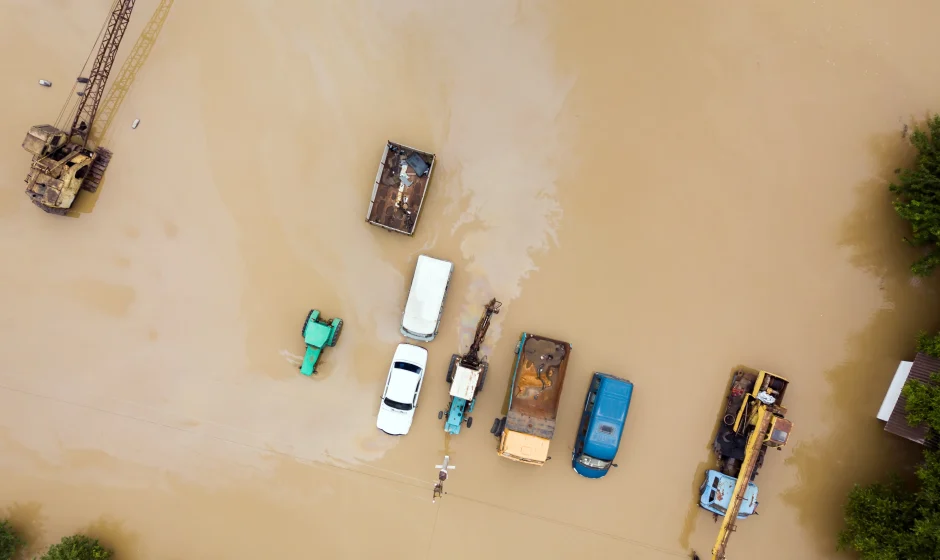

Ghana’s Interior Minister, Muntaka Mohammed-Mubarak, has told Parliament that the Ghana flood death toll from the country’s June flood disasters has climbed to 35, with six people still unaccounted for.
In plain terms: three separate flooding events in the Central, Greater Accra, and Volta regions during June are now being counted together as one national disaster tally, and that combined number keeps shifting as recovery teams find more victims.
This matters for anyone with family, property, or business interests in Ghana. The floods displaced tens of thousands of people in Accra alone, and the government’s response, including where displaced residents are being housed and how relief is reaching them, has direct implications for readers connected to the affected areas.
Quick links (related guides):
Regional Breakdown of the Death Toll
The Interior Minister broke the national figure down by region in an update to Parliament on July 7. The Central Region recorded the heaviest losses, with 18 deaths from a flood disaster that struck about a week before the more widely reported Accra flooding on June 29.
The Greater Accra Region’s June 29 floods initially left 12 people dead and seven missing. A body recovered on July 6 raised the confirmed Accra toll to 13 and cut the missing count to six, pending formal identification. The Volta Region separately recorded four deaths from flooding earlier in June.
Added together, Central’s 18, Accra’s 13, and Volta’s 4 bring the national total to 35. The Minister noted that if the July 6 body is not formally confirmed as one of the missing, the toll would instead stand at 34, with seven still missing.
| Region | Confirmed Deaths | Missing | Timing |
|---|---|---|---|
| Central Region | 18 | Not reported | About a week before June 29 |
| Greater Accra Region | 13 (pending confirmation) | 6 | June 29 |
| Volta Region | 4 | Not reported | Earlier in June |
| National Total | 35 | 6 | As of July 7 |
58,000 Displaced in Accra
Beyond the death toll, the Minister described the scale of displacement in Accra as severe, putting the number of people forced from their homes at approximately 58,000 following the June 29 floods. The rainfall that triggered the disaster inundated homes, businesses, and public infrastructure across the capital, forcing thousands of residents out with little notice.
The Central and Volta regions were also affected, and emergency agencies including NADMO have continued search, rescue, and relief operations in all three regions since the disasters struck.
Government Shelters and Why Many Went Unused
Government set up several temporary shelters to house displaced residents. A facility managed by the Ministry of Gender, Children and Social Protection could take in about 200 people, while a larger site in Ashaiman had capacity for 1,000. An additional bunk-bed facility for another 1,000 people was prepared, along with plans to convert office space into temporary housing if needed. A separate National Security facility could accommodate roughly 300 people.
Despite that capacity, the Minister told Parliament that many displaced residents turned down government shelter, preferring to stay with relatives or friends and asking instead for relief items. Officials said they could not force anyone into a shelter against their wishes.
What Happens Next
Relief distribution, debris clearance, and flood mitigation work are ongoing, carried out by NADMO, the Ghana Armed Forces, and other emergency agencies. Authorities have also increased public health surveillance because of concerns about waterborne disease outbreaks following the flooding, and engineering teams are working to desilt drains, clear waterways, and repair damaged infrastructure.
The July 6 body recovery still needs formal confirmation before the national toll is locked in at 35 rather than 34. Search operations for the six remaining missing persons continue.
Practical Impact for Diaspora and Property Owners
For members of the diaspora with family or property in the affected areas, the most useful next steps are practical rather than dramatic. Reach out directly to relatives in Accra, Central, and Volta to confirm their situation, since many displaced residents chose to stay with family rather than register at a government shelter, which can make it harder to track who has been affected through official channels alone.
If you own property in flood-prone parts of Accra, this is a reasonable moment to check drainage conditions, review property insurance coverage, and confirm whether your neighborhood falls within one of the higher-risk zones covered in our flood risk guide linked above.
Sources
- MyJoyOnline: “Flood death toll rises to 35; six still missing, 58,000 displaced in Accra – Interior Minister” (July 7, 2026)
- Graphic Online: “Accra floods: 12 Dead, 7 missing – Interior Minister tells Parliament” (July 1, 2026)
- Al Jazeera: “Heavy rainfall kills dozens in Ghana, Ivory Coast” (June 30, 2026)