

If you’re a foreign investor or Ghanaian entrepreneur looking to tap into the booming Ghana‑China trade corridor, this guide is your all‑in‑one resource. Backed by official statistics, licensing requirements, and real‑world case studies, we cover everything from export opportunities to legal pathways, so you can move from planning to profit with confidence.
Quick links for investors and entrepreneurs:
- Ghana Business Registration for Foreign Investors
- Ghana Foreign Investment Guide
- Ghana Investment Act – Minimum Capital Requirements
- How to Invest in the Ghanaian Stock Exchange
- Ghana Corporate Tax Rates – 2026
- Starting a Business in Ghana as a Foreigner – Step-by-Step
- Ghana-China Zero Tariff Deal and Investment Citizenship
Table of Contents
- 1. Trade Overview: A Booming Corridor
- 2. Key Trade Statistics
- 3. Top Export Opportunities for the China Market
- 4. Regulatory Landscape – Licensing and Legal Pathways
- 5. The Free Zones Advantage – A Game‑Changer
- 6. Case Study: Cocoa Processing – The Strategic Choice
- 7. Gold Export – Licensing, Compliance, and Opportunities
- 8. Cashew Success Story: Adding Value in the Free Zone
- 9. Export Compliance – Documentation and Certification
- 10. Investor Entry Strategies – A Practical Guide
- 11. Visa Pathways and Long‑Term Residency for Investors
- 12. Recent Developments and Future Outlook
- 13. Locations – Where to Establish Your Export Business
- 14. Export Logistics: Ports, Air Freight, and Customs
- 15. Step‑by‑Step Checklist for New Exporters
- 16. Financing Your Export Business – EXIM Bank, Credit, and Insurance
- 17. Risk Factors and Regulatory Watch
- Sources
1. Trade Overview: A Booming Corridor
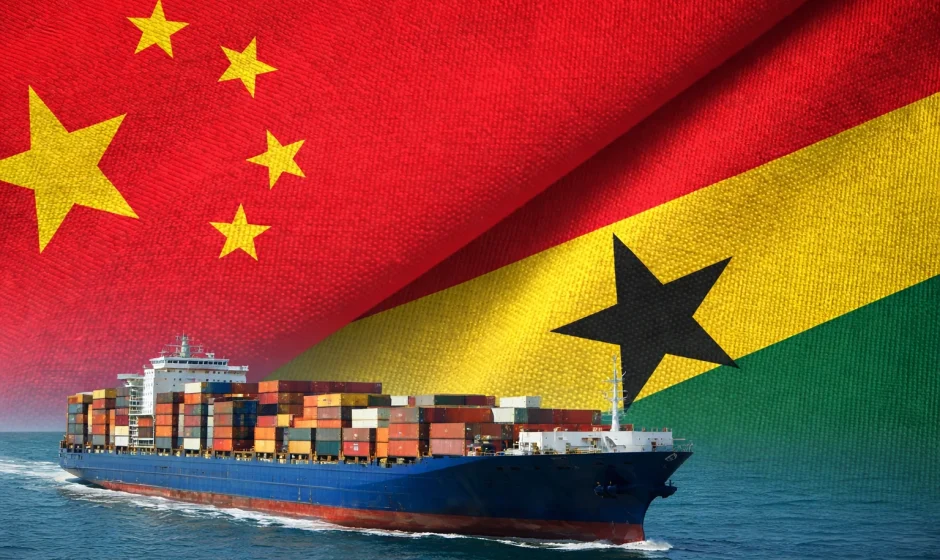
Ghana and China share one of Africa’s most dynamic trade relationships. In 2025, total bilateral trade surpassed $14.1 billion, marking a 19.3% year‑on‑year growth, according to the Chinese Ambassador to Ghana. That figure includes both Ghanaian exports to China and Chinese exports to Ghana (the larger share). China remains Ghana’s largest bilateral trading partner in West Africa.
For foreign investors and Ghanaian entrepreneurs, this presents an unprecedented opportunity. Ghana’s exports to China reached approximately $1.4 billion in 2024, according to the Ministry of Trade and Industry, with gold, crude oil, cocoa, and manganese leading the way. Beneath those headline numbers lies a complex landscape of regulations, opportunities, and strategic pathways that every serious investor must navigate.
Here’s the real meaning: Ghana is no longer just a source of raw commodities. The country is steadily building a value‑added export sector, and Chinese buyers are paying attention. Whether you’re a local entrepreneur or a foreign investor, understanding the rules of the road will determine whether you capture a share of this fast‑growing trade lane.
2. Key Trade Statistics
Ghana’s total merchandise exports in 2024 reached approximately $20.4 billion, with China accounting for roughly 8% of that total. While China’s exports to Ghana are significantly larger, the growth trajectory for Ghanaian exports remains strongly positive. More importantly, non‑traditional exports (NTEs) – value‑added products – have become a vital part of the export basket. According to the Ghana Export Promotion Authority’s 2024 Non‑Traditional Exports Report (published May 2025), Ghana’s NTE sector earned $3.83 billion in 2024, representing a slight decline of 2.87% from 2023’s $3.94 billion. NTEs accounted for 18.75% of total merchandise exports, with manufactures and semi‑processed goods making up 83% of the category. This reflects China’s growing appetite for processed and semi‑processed goods from Ghana.
3. Top Export Opportunities for the China Market
Based on 2024 data from GEPA and the Ministry of Trade and Industry, these products represent the highest‑earning opportunities for Ghana‑China trade.
| Product Category | 2024 Earnings (GHS) | Market Outlook |
|---|---|---|
| Cocoa Products (paste, butter, powder) | GHS 8.1 billion (approx. USD 745M, GBP 580M, RMB 5.4B) |
Strong demand in Chinese confectionery and cosmetics |
| Cashew Nuts & Processed Cashew | GHS 4.2 billion (approx. USD 386M, GBP 300M, RMB 2.8B) |
China is a top cashew importer; Ghanaian nuts are premium |
| Gold (refined & dore) | GHS 45 billion (approx. USD 4.14B) |
China remains the largest buyer of Ghanaian gold |
| Shea Oil & Butter | GHS 1.1 billion (approx. USD 101M, GBP 79M, RMB 730M) |
Growing use in Chinese cosmetics and food industries |
Other strong performers include natural rubber sheets, canned tuna, iron and steel products, and plastics. Each of these sectors has room for processing before export – a move that unlocks higher margins and fewer regulatory restrictions.
4. Regulatory Landscape – Licensing and Legal Pathways
4.1 Ghana Export Promotion Authority (GEPA) Registration
Every exporter must register with GEPA. The process is straightforward:
- Register your business with the Registrar‑General’s Department.
- Complete the GEPA registration form (fee: GHS 200 / USD 18 / GBP 14 / RMB 130).
- Submit documents and allow inspection by relevant Permit‑Issuing Agencies (PIAs).
- Receive your export certificate and obtain per‑shipment documents (Certificate of Origin, Phyto‑Sanitary, etc.).
Exchange rates approximate (March 2026: 1 USD ≈ 10.87 GHS, 1 GBP ≈ 14.05 GHS, 1 RMB ≈ 1.50 GHS).
4.2 Sector‑Specific Licensing – Cocoa
Cocoa is not a free commodity. The Ghana Cocoa Board (COCOBOD) controls all raw bean exports through the Cocoa Marketing Company (CMC). Foreign investors cannot simply buy and export raw beans. They must either become a Licensed Cocoa Exporter (LCE) – which requires local incorporation – or, more strategically, invest in processing as a Licensed Processor of Cocoa (LPC). Processed cocoa products (butter, powder, cake) are not under CMC control and can be freely traded internationally.
4.3 Gold – Minerals Commission Licensing & GoldBod
Gold exports are regulated by the Minerals Commission under the Minerals and Mining Act, 2006 (Act 703), as amended. Any entity exporting gold must hold a gold export license from the Minerals Commission. Key requirements:
- For refined gold: Exporters must be licensed by the Minerals Commission and are subject to Bank of Ghana reporting.
- For dore bars (unrefined): Under the Ghana Gold Board Act, 2025 (Act 1140), the Ghana Gold Board (GoldBod) is now the sole buyer, assayer, and exporter of all artisanal and small‑scale mining (ASM) gold. GoldBod replaced the former Precious Minerals Marketing Company (PMMC) effective April 2, 2025. Trading gold without a GoldBod license is illegal and carries severe penalties.
- All gold exports are subject to anti‑money laundering (AML) checks; exporters must provide audited provenance documents.
The Minerals Commission publishes a list of licensed gold exporters annually. New investors should budget for licensing fees and compliance audits.
4.4 Timber and Other Resources
Timber exports require licenses from the Forestry Commission. Similar sector‑specific regimes exist for minerals and petroleum.
5. The Free Zones Advantage – A Game‑Changer
The Ghana Free Zones Authority (GFZA), established under Act 504 (1995), offers powerful incentives for export‑oriented businesses. If you export at least 70% of your production, you can qualify.
| Feature | Benefit |
|---|---|
| Ownership | 100% foreign ownership permitted |
| Tax exemption | 100% corporate tax holiday for 10 years; 8% thereafter |
| Duty‑free imports | 100% exemption on all imports for production |
| Repatriation | No restrictions on profits, dividends, or capital |
| Local sales | Up to 30% of production may be sold in Ghana (with import duties) |
Fees (initial & annual):
Manufacturing: GHS 45,000 / USD 4,140 / GBP 3,200 / RMB 30,000 (initial); GHS 37,500 / USD 3,450 / GBP 2,670 / RMB 25,000 (annual).
Service: GHS 60,000 / USD 5,520 / GBP 4,270 / RMB 40,000 (initial); GHS 37,500 / USD 3,450 / GBP 2,670 / RMB 25,000 (annual).
Exchange rates approximate (March 2026).
Priority sectors for free zone investment include agro‑food processing (fruits, vegetables, cocoa), ICT, textiles, seafood processing, jewelry, and metal fabrication.
6. Case Study: Cocoa Processing – The Strategic Choice
Consider two investors:
Investor A exports raw cocoa beans. They must incorporate locally, obtain an LCE license, buy beans from CMC at regulated prices, and beans remain under CMC control until shipment. Flexibility is limited.
Investor B establishes a cocoa processing facility in the Tema Free Zone. They enjoy 100% foreign ownership, purchase beans under an LPC license, process them into cocoa butter and powder, and sell freely to any international buyer. They also get a 10‑year tax holiday and duty‑free imports. Up to 30% of production can be sold in Ghana.
The takeaway: value addition in a free zone reduces regulatory friction, increases margins, and aligns with Ghana’s industrialization goals.
7. Gold Export – Licensing, Compliance, and Opportunities
Gold accounts for over 40% of Ghana’s export earnings, and China is the top buyer. To export gold legally, investors must follow a structured process:
- Obtain a gold export license from the Minerals Commission (fees vary; expect GHS 50,000 – 150,000 depending on scale).
- For large‑scale mining, hold a mining lease. For small‑scale mining, under the Ghana Gold Board Act, 2025, all ASM gold must be sold to the Ghana Gold Board (GoldBod), which handles assaying and export.
- All exports require a Certificate of Origin and a Precious Minerals Export Permit from the Minerals Commission.
- Stringent AML/KYC checks: each shipment must be accompanied by a due diligence report showing the gold’s provenance.
Investors can also operate as gold refineries in free zones. A free‑zone gold refinery enjoys the same 10‑year tax holiday and can export refined bars directly to Chinese buyers without the restrictions faced by raw gold exporters.
8. Cashew Success Story: Adding Value in the Free Zone
Consider a hypothetical free‑zone cashew processor based in Techiman. In 2023, such a company moved from exporting raw cashew nuts to producing roasted and salted cashews, plus cashew butter. By setting up in the free zone, it gained:
- Duty‑free import of packaging materials and processing equipment
- 10‑year tax holiday
- Direct access to Chinese buyers through trade fairs arranged by GFZA
Within two years, its export revenue tripled. It now supplies major Chinese snack brands and has added a shea‑processing line. The lesson: processing cashews (or any agricultural commodity) before export is not just about higher margins – it also opens doors to premium buyers who value traceability and value addition.
9. Export Compliance – Documentation and Certification
Every export shipment requires specific documents. The table below lists the most common ones and the issuing authorities.
| Document | Issuing Authority |
|---|---|
| Export License | GEPA |
| Certificate of Origin | GEPA / Chamber of Commerce |
| Phyto‑Sanitary Certificate | Ministry of Food and Agriculture |
| Health Certificate (food) | Food and Drugs Authority |
| Precious Minerals Export Permit | Minerals Commission (for gold) |
| Export Consignment Certificate | Relevant PIA (e.g., COCOBOD for cocoa) |
Sustainability and Certification Programs
Many Chinese buyers – especially in cocoa, cashew, and shea – now demand proof of sustainable sourcing. Exporters can strengthen their market position by obtaining certifications such as:
- Rainforest Alliance (common for cocoa)
- Fairtrade (cashew, cocoa)
- FDA/HACCP (for processed food exports)
- Organic certification (for shea, cocoa)
These certifications can be obtained through accredited bodies in Ghana and should be factored into your compliance timeline.
E‑commerce and B2B Portals
For exporters targeting Chinese buyers directly, digital marketplaces are increasingly important. Ghanaian exporters can list their products on:
- Alibaba.com (the largest B2B platform; Chinese buyers actively source African commodities)
- TradeKey and Global Sources
- GEPA’s GhanaTradeHub – a government‑backed platform that connects verified Ghanaian exporters to international buyers
Using these portals, even small‑scale producers can reach Chinese importers without a physical presence in China. GEPA provides training on how to optimize product listings and negotiate with buyers.
10. Investor Entry Strategies – A Practical Guide
- Direct Export – Best for existing Ghanaian businesses. Register with GEPA, obtain product licenses, secure Chinese buyers through trade fairs, arrange logistics.
- Free Zone Enterprise – Best for new foreign investment. Incorporate, apply for GFZA license, establish operations in Tema, Kumasi, or Takoradi enclaves, enjoy full incentives.
- Joint Venture with LCE/LPC or Licensed Gold Exporter – Best for investors wanting cocoa or gold access without full licensing complexity. Partner with a licensed entity, provide trade finance or off‑take agreements.
- Processed Product Procurement – Best for Chinese buyers. Purchase processed products directly from Ghanaian manufacturers (no special licensing), handle logistics through freight forwarders.
11. Visa Pathways and Long‑Term Residency for Investors
Foreign investors looking to establish an export business in Ghana need the right immigration status. The Ghana Immigration Service offers several pathways:
- Business Visa: For short‑term visits (up to 90 days). Renewable, but not a substitute for residency.
- Investor Permit: Under the Ghana Investment Promotion Centre (GIPC) Act, 2013 (Act 865), the minimum investment thresholds are:
- Joint venture with Ghanaian partner: $200,000
- Wholly foreign‑owned enterprise: $500,000
- Trading enterprise: $1,000,000
Note: As of March 2026, the GIPC is actively championing reforms to eliminate minimum capital requirements for most investment categories, particularly for SME and diaspora investors. A revised Act is expected to pass in 2026, but the current Act 865 thresholds remain in effect until then.
- Residence Permit: For those employed by a Ghanaian company or free‑zone enterprise; often arranged by the employer.
- Citizenship by Investment: Ghana has periodically discussed a citizenship‑by‑investment program. As of early 2026, no formal program has been enacted, though legislative proposals have been mentioned.
For Ghanaian‑born investors who have acquired another nationality, dual citizenship is available. See our detailed guide: Ghana Dual Citizenship Requirements for US Citizens.
Investors should consult a qualified immigration lawyer to navigate these pathways. (Use the form below for legal assistance.)
12. Recent Developments and Future Outlook
Starting May 1, 2026, China will implement zero‑tariff treatment for 53 African countries, including Ghana. This policy will dramatically expand market access for Ghanaian exports. Combined with deepening bilateral cooperation in education, industrial development, and infrastructure, the Ghana‑China trade corridor is poised for accelerated growth. The ongoing revision of the GIPC Act to remove minimum capital requirements further signals the government’s intent to attract foreign investment.
For more on the zero‑tariff announcement and its implications, see: Ghana‑China Zero Tariff Deal and Citizenship by Investment Plan.
13. Locations – Where to Establish Your Export Business
- Accra: Access to government agencies, banking, international airport. Best for service‑based exports and regional headquarters.
- Tema: Ghana’s premier port, established free zone enclave, industrial infrastructure. Best for manufacturing and bulk exports.
- Kumasi: Central location, agricultural hinterland. Best for agro‑processing and timber.
- Takoradi: Deepwater port, oil and gas hub. Best for minerals and heavy industry.
- Northern Regions: Shea and cashew belt. Best for shea processing and agricultural exports; developing free zone infrastructure.
14. Export Logistics: Ports, Air Freight, and Customs
Efficient logistics are critical to export success. Ghana offers several well‑developed gateways:
- Tema Port: The largest and most modern port, handling over 80% of Ghana’s container traffic. It has dedicated terminals for cocoa, metals, and general cargo.
- Takoradi Port: Specializes in bulk commodities (minerals, timber, oil and gas). It is the primary exit point for manganese and bauxite.
- Kotoka International Airport (Accra): Has a dedicated cargo terminal with cold‑storage facilities – ideal for perishable exports like fresh fruits, vegetables, and cut flowers.
- Bonded Warehouses: Exporters can store goods in bonded warehouses while awaiting clearance, deferring duties until goods leave the country. This is especially useful for free‑zone enterprises managing inventory.
Customs clearance is handled by the Ghana Revenue Authority (GRA). Most export documentation can be processed electronically through the ICUMS (Integrated Customs Management System), which has reduced clearance times significantly. Free‑zone operators enjoy expedited procedures.
15. Step‑by‑Step Checklist for New Exporters
Preparation (Weeks 1‑4): Market research, business plan, free zone eligibility, financing.
Registration (Weeks 5‑8): Company registration, GEPA registration (GHS 200 / USD 18 / GBP 14 / RMB 130), free zone license, product‑specific permits (Minerals Commission, COCOBOD, etc.), EPA permit if needed.
Operations Setup (Weeks 9‑16): Acquire premises, procure equipment (duty‑free if in free zone), hire staff, establish quality control.
Export Readiness (Weeks 17‑20): Identify Chinese buyers, arrange logistics partners, obtain per‑shipment certificates, set up foreign currency account.
First Export & Beyond: Present documents to GRA Customs, ship, receive payment, renew licenses annually.
16. Financing Your Export Business – EXIM Bank, Credit, and Insurance
Access to capital is often the make‑or‑break factor for export ventures. Ghana offers several financing tools tailored to exporters:
- Ghana Export–Import Bank (GEXIM): Provides pre‑shipment and post‑shipment financing, guarantees, and export credit insurance. GEXIM also provides financing support to enterprises under Ghana’s industrialisation programs, including support for agro‑processing and export‑oriented manufacturing.
- Export Credit Insurance: GEXIM and private insurers offer coverage against non‑payment by foreign buyers – a critical risk mitigator when dealing with new Chinese importers.
- Development Bank Ghana (DBG): Offers medium‑ and long‑term loans to manufacturing and agro‑processing businesses, with favourable rates for exporters.
- Commercial Bank Facilities: Most Ghanaian banks have export finance desks that provide working capital lines secured against export contracts.
Free‑zone enterprises also benefit from preferential access to these financing programs. It is advisable to open a foreign currency account to receive payments in USD or RMB, reducing exchange‑rate exposure.
17. Risk Factors and Regulatory Watch
While the opportunities are substantial, exporters must be aware of potential pitfalls:
- Currency Volatility: The Ghana cedi has fluctuated significantly. Exporters are advised to invoice in USD or RMB and hedge where possible.
- Regulatory Changes: Export policies can shift with new government administrations. Monitor announcements from GEPA, the Minerals Commission, and the Ministry of Trade.
- Port Delays: Although improvements have been made, occasional congestion at Tema Port can affect shipment schedules. Use experienced freight forwarders and maintain buffer stock.
- Trade Disputes: The Arbitration Centre of the Ghana Chamber of Commerce offers dispute resolution services for commercial conflicts, including cross‑border trade. Many contracts with Chinese buyers also specify arbitration under the China International Economic and Trade Arbitration Commission (CIETAC).
Staying informed and building flexible operations can help mitigate these risks.
Setting up an export business in Ghana involves legal steps – from company registration to sector‑specific licenses. If you need personalized legal assistance, consider reaching out to a qualified Ghanaian lawyer. Use the form below to get started:
Sources
- Ghana Export Promotion Authority: “2024 Non‑Traditional Exports Report” (May 2025)
- Ghana Free Zones Authority: “Investor Handbook” (2025)
- Ghana Cocoa Board: “Licensing and Export Regulations” (2025)
- Minerals Commission: “Gold Export Licensing Procedures” (2025); Ghana Gold Board Act, 2025 (Act 1140)
- Ghana Export–Import Bank: “Export Finance Products”
- Ghana Investment Promotion Centre: “Investor Permit Guidelines” (Act 865); pending reform announcements (2025–2026)
- Ministry of Finance: “2025 Economic Outlook and Trade Data”
- Ministry of Trade and Industry: “Export Development Strategy and 2024 Trade Figures”
Compliance note: All money transfer services must be licensed by the Bank of Ghana.