
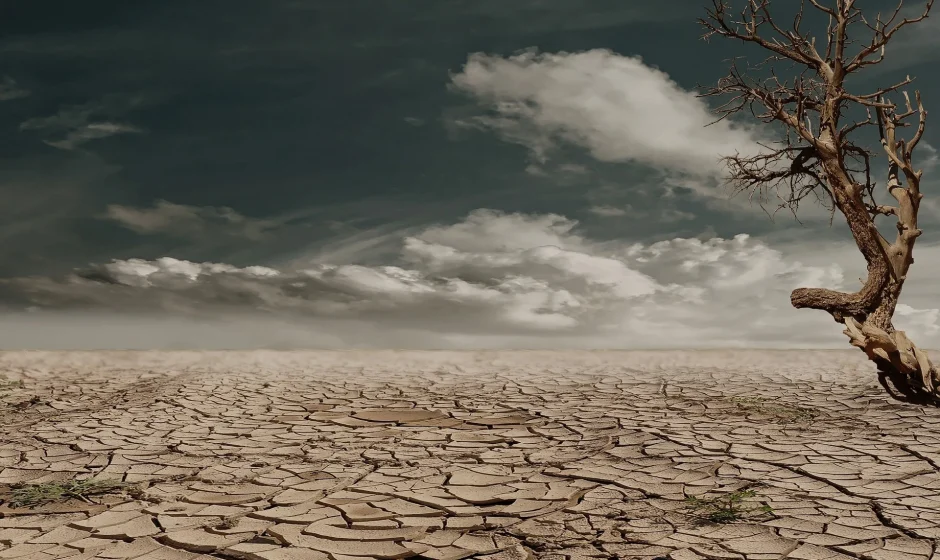

Ghana is preparing for a potentially very strong El Niño that could bring hotter and drier conditions, longer dry spells, increased bushfire risk, water stress and pressure on agriculture between late 2026 and early 2027.
The Ghana Meteorological Agency, or GMet, issued a national preparedness brief on October 30, 2026 after reviewing the rapidly strengthening El Niño in the tropical Pacific. GMet says the period of greatest concern for Ghana extends roughly from November 2026 through April 2027, with heat stress expected to become particularly important between February and April 2027, especially in northern Ghana.
However, El Niño does not mean every part of Ghana will experience drought. Ghana’s rainfall is also influenced by the tropical Atlantic Ocean and other regional weather systems, so some areas can still experience normal rainfall, heavy storms or flooding during an El Niño year.
This guide explains what El Niño is, how it affects Ghana, what it could mean for farmers and food prices, why Volta Lake and hydropower matter, and what households, businesses and government agencies should watch during the 2026-27 event.
Table of Contents
- What Is El Niño?
- How Strong Is the 2026-27 El Niño?
- What Could El Niño Mean for Ghana?
- Will El Niño Cause Drought in Ghana?
- How El Niño Can Affect Farming
- Could Food Prices Rise?
- What It Could Mean for Cocoa
- Water Supply and Reservoirs
- Hydropower and Electricity
- Heat and Public Health
- Bushfires, Dust and Air Quality
- Can Ghana Still Flood During El Niño?
- What Ghana Is Doing to Prepare
- What Households and Farmers Can Do
- What Happens Next?
What Is El Niño?
El Niño is a naturally occurring climate pattern involving unusually warm ocean conditions in the central and eastern tropical Pacific Ocean. Those ocean temperatures interact with the atmosphere and can change wind, rainfall and temperature patterns in many parts of the world.
El Niño is one phase of a larger climate cycle known as the El Niño-Southern Oscillation, or ENSO. The opposite phase is La Niña, while periods that are neither El Niño nor La Niña are described as ENSO-neutral.
Although El Niño begins thousands of kilometers from Ghana in the Pacific Ocean, changes in tropical circulation can influence weather patterns across Africa. The effect is not identical every time, and Ghana’s response can vary significantly from one El Niño event to another.
How Strong Is the 2026-27 El Niño?
NOAA’s Climate Prediction Center says the ongoing El Niño is continuing to strengthen. Its October 2026 probabilistic outlook places the probability of the event reaching the very strong category at 96% for November 2026 through January 2027.
For December 2026 through February 2027, NOAA assigns an 81% probability to the very strong category. Its broader diagnostic discussion says a strong-to-very-strong El Niño is likely through January-March 2027, with probability remaining above 83%.
These numbers describe the expected strength of El Niño in the Pacific Ocean. They do not mean there is a 96% probability that Ghana will experience drought, crop failure or any particular disaster.
| Period | NOAA Very Strong El Niño Probability |
|---|---|
| November 2026-January 2027 | 96% |
| December 2026-February 2027 | 81% |
| January-March 2027 | 46% very strong, with additional probability of strong conditions |
NOAA also warns that the strength of an El Niño event does not directly determine the severity of weather impacts in every country. GMet makes the same point in its Ghana-specific assessment.
What Could El Niño Mean for Ghana?
GMet says the main period of concern for Ghana is from November 2026 through April 2027. Potential risks include hotter-than-normal conditions, longer dry periods, reduced soil moisture, water stress, bushfires and increased dust.
The Ghana Meteorological Agency is particularly concerned about heat between February and April 2027. Northern Ghana could face the greatest heat stress, although temperatures are expected to be above average across many parts of the country.
GMet’s late-2026 outlook also points toward predominantly normal-to-below-normal rainfall across much of Ghana, while some areas may still receive normal-to-above-normal rainfall. This regional variation is one reason national averages can sometimes hide serious local impacts.
Will El Niño Cause a Drought in Ghana?
Not necessarily. El Niño increases the probability of certain rainfall patterns, but it does not guarantee a nationwide drought.
GMet specifically cautions that Ghana’s climate is strongly influenced by conditions in the tropical Atlantic as well as the Pacific. Two El Niño events of similar strength can therefore produce different rainfall outcomes in Ghana.
This has already been visible in 2026. Southern Ghana experienced exceptionally heavy rainfall and flooding during June, while parts of northern Ghana later experienced prolonged dry spells that affected agricultural activities.
For November 2026, GMet expects rainfall to be generally normal to below normal across much of the country, although parts of the Forest and Transition zones may receive normal to above-normal rainfall.
How El Niño Can Affect Farming in Ghana
Agriculture is one of the sectors most exposed to El Niño because a large portion of Ghanaian farming remains dependent on rainfall. Long dry spells or poorly timed rainfall can affect planting dates, seed germination, soil moisture, crop development and final yields.
Higher temperatures can compound the problem by increasing evaporation from soil and water bodies. Crops and livestock can also experience heat stress, particularly where farmers have limited access to irrigation or shade.
GMet is recommending that agricultural authorities make more drought-tolerant and early-maturing seeds available to farmers. It also wants irrigation and water-harvesting systems expanded in vulnerable areas, particularly in northern Ghana and the transition zone.
Farmers may also need to adjust planting decisions as updated seasonal forecasts become available. GMet plans to issue new forecasts for Ghana’s 2027 major and northern rainfall seasons in early 2027.
Could El Niño Increase Food Prices in Ghana?
El Niño could contribute to higher food prices if heat or rainfall problems significantly reduce agricultural output, but higher prices are not guaranteed. Ghanaian food prices are influenced by many factors, including harvest size, transport costs, imports, exchange rates, fuel prices and regional trade.
When domestic crop production falls, fewer products may reach markets while demand remains relatively stable. That can create upward pressure on prices, particularly for crops grown heavily in areas affected by dry spells.
This is one reason GMet is recommending stronger national food and seed reserves before the most vulnerable period. The government can use reserves and agricultural support programmes to reduce the impact of a poor harvest or temporary supply shortage.
The size of any food-price impact will therefore depend on how rainfall develops during the 2027 planting seasons and how effectively farmers and government agencies respond.
What Could El Niño Mean for Ghana’s Cocoa Farms?
Cocoa is sensitive to temperature, moisture, rainfall distribution and disease. Extended dry conditions can reduce soil moisture and place stress on cocoa trees, while unusually wet conditions can increase some disease risks.
GMet is recommending joint monitoring of Ghana’s cocoa belt with the Ghana Cocoa Board. The agency says farmers may need targeted extension support, including advice on shade management and disease control.
The effect will not necessarily be uniform across every cocoa-growing district. Local rainfall, soil conditions, tree age, farm management and shade cover can all influence how individual farms respond.
Because cocoa is one of Ghana’s most important export commodities, significant weather-related production changes can have consequences beyond farmers, including export earnings and government revenue.
How El Niño Could Affect Ghana’s Water Supply
Longer dry spells can reduce streamflow, reservoir inflows and available surface water. Higher temperatures can also increase evaporation, placing additional pressure on stored water during prolonged hot periods.
GMet is recommending closer monitoring of water levels and inflows, particularly in the Volta Basin. Agencies are being encouraged to establish trigger levels so authorities know when drought-related or flood-related contingency measures should begin.
The potential impact on household water supply will vary by location and water system. Communities dependent on smaller rivers, wells or local reservoirs may experience different conditions from urban areas supplied through larger treatment and storage systems.
Ghana can also experience water-quality problems during both droughts and floods. Low water levels can concentrate pollutants, while intense rainfall can wash sediment, waste and contaminants into rivers and reservoirs.
Could El Niño Affect Electricity and Hydropower in Ghana?
Yes, particularly because Ghana still relies partly on hydropower. The amount of electricity that hydroelectric stations can generate depends in part on reservoir levels and water inflows.
GMet says electricity generation during the 2026-27 dry season will depend largely on water already stored in Volta Lake. Rainfall and inflows during the 2027 rainy season will then become important for hydropower availability in 2028.
The agency has recommended that the Ministry responsible for Energy work with GRIDCo, the Energy Commission and the Volta River Authority to prepare energy-mix and demand-management contingencies for 2027 and 2028.
That does not mean El Niño will automatically cause power cuts. Ghana’s generation system also includes thermal plants and other sources, so the overall impact depends on reservoir levels, fuel availability, electricity demand and the performance of the wider power system.
Heat Could Become One of the Biggest El Niño Risks
GMet expects heat stress to become particularly important from February through April 2027, especially in northern Ghana. Hotter-than-normal temperatures can affect outdoor workers, farmers, children, older adults and people with certain health conditions.
High temperatures can also reduce worker productivity, increase household electricity demand for cooling and place additional stress on livestock and crops. Urban areas may feel especially uncomfortable because roads, buildings and other surfaces retain heat.
GMet has recommended that health authorities develop heat-health action plans and issue public advisories during the peak period. Increased surveillance may also be necessary for health problems that become more serious during hot and dry conditions.
El Niño Could Also Affect Public Health
The potential health effects go beyond heat. GMet is recommending stronger meningitis surveillance in northern Ghana and wants vaccines and treatment supplies positioned in advance of the highest-risk period.
Hot, dry and dusty conditions can create an environment favorable to meningitis outbreaks in parts of the Sahel and northern West Africa. Ghana’s northern regions can therefore require increased monitoring during particularly dry periods.
GMet has also advised health authorities to strengthen malnutrition surveillance because agricultural disruption can affect food availability and household nutrition. At the same time, the country must remain prepared for cholera and other water-borne diseases because intense rainfall and flooding can still occur even during an El Niño period.
Bushfires, Harmattan Dust and Dry Vegetation
Extended dry conditions can dry grasses, shrubs and agricultural residue, increasing the risk that fires spread quickly. Bushfires can damage farmland, forests, homes, power infrastructure and wildlife habitat.
GMet has asked NADMO and local authorities to strengthen wildfire prevention messaging ahead of the highest-risk months. Farmers and communities may need to take additional care with open burning, field preparation and fires near dry vegetation.
Dry conditions can also contribute to greater dust concentrations. Combined with Harmattan conditions, this can reduce visibility and worsen respiratory irritation for some people.
Can Ghana Still Experience Flooding During a Strong El Niño?
Yes. El Niño does not prevent heavy rain or flooding in Ghana.
Even when seasonal rainfall totals are below normal, a large amount of rain can fall during a small number of intense storms. That means a season can contain prolonged dry periods and damaging flash floods at different times.
GMet specifically recommends keeping flood-control plans active alongside drought preparation. Reservoir operators are being asked to balance water conservation against the need to retain enough capacity to manage heavy inflows.
NADMO is also being advised to prepare flood-prone communities in the Volta Basin and coastal areas and to maintain evacuation and public communication plans.
Has Ghana Experienced Strong El Niño Events Before?
Yes. GMet identifies the El Niño events of 1982-83, 1997-98 and 2015-16 as very strong events relevant to Ghana’s climate history. The more recent 2023-24 event was classified as moderate in GMet’s Ghana-focused assessment.
However, the agency cautions against assuming the current event will produce the same impacts as previous ones. Rainfall patterns and effects varied considerably between those episodes and across different parts of Ghana.
GMet also notes that some of Ghana’s most damaging climate events have occurred outside El Niño years. The agency therefore recommends continuous monitoring rather than treating ENSO status as a simple prediction of what Ghanaian weather will do.
What Ghana Is Doing to Prepare for the 2026-27 El Niño
GMet is calling for a coordinated national response involving ministries responsible for agriculture, health, energy, water resources, local government and finance. The agency wants preparations made before the most serious impacts appear rather than after communities are already affected.
Recommended actions include:
- Expanding access to drought-tolerant and early-maturing seeds.
- Improving irrigation and water harvesting.
- Strengthening national food and seed reserves.
- Monitoring cocoa farms and providing extension support.
- Preparing heat-health action plans.
- Strengthening meningitis surveillance.
- Pre-positioning vaccines and medical supplies.
- Monitoring Volta Lake levels and reservoir inflows.
- Preparing energy supply and demand contingencies.
- Replenishing NADMO relief supplies.
- Strengthening bushfire prevention.
- Updating flood evacuation plans.
- Reviewing disaster financing and contingency funds.
GMet has also proposed reactivating or reconvening a national El Niño and dry-season preparedness task force. The group would coordinate government ministries, technical agencies and the Volta River Authority during the highest-risk months.
What Farmers Should Watch
Farmers should pay attention to GMet’s seasonal and short-range forecasts rather than relying only on the national El Niño label. Local rainfall timing may be more important to an individual farm than the overall strength of ENSO.
Depending on location and crop, useful preparations may include selecting early-maturing or drought-tolerant varieties, conserving soil moisture, harvesting rainwater and improving access to irrigation where practical. Farmers should also follow Ministry of Food and Agriculture and extension-service recommendations for their districts.
Cocoa farmers may need particular attention to shade, moisture management and disease conditions. Livestock owners should consider reliable access to water and shade during the hottest months.
What Households Can Do During Hotter and Drier Conditions
Most households do not need to make drastic changes simply because an El Niño is occurring. The most useful approach is to monitor official forecasts and respond to conditions as they develop.
During periods of unusual heat, households can reduce exposure during the hottest parts of the day, drink sufficient safe water and pay extra attention to children, elderly relatives and people working outdoors. Communities in fire-prone areas should also take dry-season fire warnings seriously.
Where water shortages become possible, households should follow guidance from local water authorities rather than storing unsafe water for long periods. During storms, flood warnings should still be taken seriously even if the wider season has been unusually dry.
What Businesses Should Consider
Businesses in agriculture, food processing, energy, hospitality and water-intensive industries may be more exposed to El Niño-related disruptions than other sectors. Companies dependent on agricultural inputs should consider the possibility of reduced supply or higher prices for specific commodities.
Businesses may also face higher cooling demand during extended hot periods. Organizations operating in areas vulnerable to flooding, wildfire or water shortages should review continuity plans and insurance arrangements before peak conditions develop.
The most useful business decisions will depend on actual seasonal forecasts and local conditions rather than the El Niño label alone.
How Certain Are These Predictions?
Scientists are highly confident that the Pacific El Niño itself is very strong. What remains less certain is exactly how that global climate event will translate into rainfall and temperature patterns across individual parts of Ghana.
NOAA specifically states that a stronger El Niño increases confidence in some typical climate responses but does not guarantee them. GMet likewise says Ghana’s response depends strongly on conditions in the tropical Atlantic Ocean.
That is why updated seasonal forecasts are important. GMet plans to issue new forecasts for the 2027 major rainfall season in southern Ghana and the 2027 northern rainfall season as additional ocean and atmospheric data become available.
What Happens Next?
The El Niño is expected to remain important through early 2027, but its intensity should eventually weaken. For Ghana, the key period to watch is approximately November 2026 through April 2027, with particularly significant heat concerns between February and April.
GMet will continue updating its forecasts as conditions change. The most important developments to monitor include:
- Rainfall patterns during the remainder of 2026.
- Temperature forecasts for February-April 2027.
- Volta Lake levels and inflows.
- Dry-season bushfire activity.
- Food and seed reserve levels.
- Crop conditions in northern and transition-zone districts.
- Cocoa belt conditions.
- Ghana’s 2027 major rainy season forecast.
- Ghana’s 2027 northern rainfall forecast.
- Any changes in NOAA’s El Niño strength outlook.
Bottom Line
Ghana is preparing for a very strong 2026-27 El Niño that could increase the likelihood of hotter and drier conditions, water stress, bushfires and agricultural disruption. NOAA currently places the probability of very strong El Niño conditions at 96% for November 2026 through January 2027, while GMet identifies November through April as the main period of concern for Ghana.
The greatest risks are likely to involve agriculture, food security, heat, water management, public health and electricity planning. Northern Ghana and the transition zone may be particularly vulnerable to dry conditions and heat, while cocoa-producing areas will require close monitoring.
However, a very strong El Niño does not mean Ghana will experience a nationwide drought. Some areas can still receive normal or above-normal rainfall, and intense storms and flooding remain possible. Conditions in the tropical Atlantic will also influence Ghana’s weather.
The practical message from GMet is therefore preparation rather than panic. Farmers, households, businesses and government agencies should follow updated Ghana-specific forecasts as the event develops instead of assuming that global El Niño strength alone determines what will happen in every part of the country.
Sources
- Ghana Meteorological Agency: The Developing Very Strong El Niño Event (2026-27), Implications for Ghana and Recommended National Preparedness Measures, October 30, 2026
- Ghana News Agency: GMet urges ministries to lead coordinated action against El Niño threat, November 2, 2026
- NOAA Climate Prediction Center: Official ENSO Strength Probabilities, October 2026
- NOAA Climate Prediction Center: ENSO Diagnostic Discussion, October 8, 2026
- Ghana Meteorological Agency: November 2026 Rainfall Forecast
- Ghana Meteorological Agency: Ghana Climate Atlas 2026