

Waste management in Ghana is handled through a mixture of household collection, private waste companies, municipal services, transfer stations, recycling facilities, public dumping sites and landfills. The system works considerably better in parts of major cities than it does in many rural and lower-income communities, but large amounts of waste are still burned, dumped in open spaces or disposed of without formal collection.
The scale of the problem is substantial. A recent World Bank assessment estimates that Ghana generates nearly 8 million metric tons of solid waste each year, with that amount expected to nearly triple by 2050 if current trends continue. At the same time, Ghana’s municipal solid-waste recycling rate has been estimated at only 8.4%. Much of the recycling that does happen depends on informal waste collectors and waste pickers rather than a universal household recycling system.
Ghana is now trying to move toward a more organized model built around waste separation, shorter transportation routes, transfer stations, composting, recycling, better landfill management and a stronger “polluter pays” approach. Understanding that transition requires looking at what happens to waste from the moment it leaves a home or business.
Table of Contents
- How much waste does Ghana generate?
- How Ghana’s waste-management system works
- How households dispose of waste
- Who collects the waste?
- What transfer stations do
- Landfills and open dumping
- How recycling works in Ghana
- Ghana’s plastic-waste problem
- Electronic waste and imported used electronics
- Who regulates waste management?
- Why the system still struggles
- What Ghana is trying to change
- What comes next
How Much Waste Does Ghana Generate?
Ghana generates an enormous amount of waste relative to the capacity of its collection and disposal systems.
The World Bank’s assessment of Ghana’s cities estimates that the country produces nearly 8 million metric tons of solid waste per year. The same assessment warns that total waste generation could nearly triple by 2050 as Ghana’s population grows, cities expand and household consumption increases.
This is not simply an Accra problem. Greater Accra produces some of the country’s largest concentrations of municipal waste, but Kumasi, Tema, Sekondi-Takoradi, Tamale and other fast-growing urban areas face similar pressures.
More people living in cities means more food waste, plastic packaging, paper, bottles, cans, discarded appliances, construction debris and other materials that have to be collected and moved somewhere.
The difficult part is that “somewhere” is still too often an open dumping area, an overloaded landfill or a place where waste is burned.
How Waste Management in Ghana Works
There is no single national garbage company that collects every household’s waste.
Instead, waste management in Ghana is divided among metropolitan, municipal and district assemblies, private waste-management companies, smaller collection operators, informal workers, recycling companies and individual households.
A typical urban waste stream can look like this:
| Stage | What Happens |
|---|---|
| 1. Generation | Waste is produced by households, markets, shops, restaurants, offices, hospitals and industries. |
| 2. Storage | Waste may be stored in household bins, sacks, communal containers or other receptacles. |
| 3. Collection | Private trucks, tricycles, communal container services and smaller collectors move the waste. |
| 4. Transfer | In some urban areas, waste is delivered to a transfer station before being moved in larger vehicles. |
| 5. Recovery or treatment | Some recyclable materials and organic waste can be recovered, sorted, composted or processed. |
| 6. Final disposal | Remaining waste is transported to a landfill, dumpsite or other disposal facility. |
The weakness is that large parts of this chain are inconsistent. A neighborhood with regular door-to-door collection can have a very different experience from a rural community or informal settlement with no dependable collection service.
How Ghanaian Households Dispose of Their Waste
The most detailed national household picture still comes from the Ghana Statistical Service’s 2021 Population and Housing Census.
According to the census, only 33.4% of Ghanaian households had their solid waste collected. The difference between cities and rural areas was enormous: collection reached 51.4% of urban households but only 5.8% of rural households.
Among rural households, 57.3% used a public dump or open space for solid-waste disposal, compared with 24.6% of urban households.
The census also found that when household waste was not collected, burning was extremely common. About 77.5% of households with uncollected waste burned it.
The data is from the 2021 census, so it should not be interpreted as a precise 2026 collection rate. It remains the country’s most comprehensive national household baseline and shows the scale of the access gap Ghana is trying to close.
Who Collects Garbage in Ghana?
Waste collection in Ghana is heavily dependent on private-sector operators working alongside local authorities.
In parts of Accra and other major cities, households and businesses contract with private waste collectors for scheduled pickup. Trucks collect bins or containers and move the waste toward transfer stations, processing plants or final disposal sites.
Smaller collection systems are also common. Tricycles, push carts, small vehicles and informal collectors can provide service in neighborhoods that large garbage trucks cannot easily reach.
The 2021 census illustrates how varied the system is. Household disposal methods included compaction trucks, other vehicles, tricycles, central containers, push carts and other collection methods alongside burning and dumping.
This mixed system provides flexibility, but it also creates coordination problems. Different operators may charge different amounts, follow different routes and depend on disposal facilities located far from the communities they serve.
That distance matters more than it might appear. A garbage truck that spends hours traveling through traffic to unload waste has higher fuel, maintenance, labor and vehicle costs. Those costs can eventually affect what households pay.
What Is a Waste Transfer Station?
A transfer station is an intermediate point between local garbage collection and final treatment or disposal.
Instead of every small collection truck traveling directly to a distant landfill, trucks can unload closer to the neighborhoods they serve. The waste is then consolidated and moved in larger vehicles to a processing plant or disposal facility.
Greater Accra has used facilities including the Achimota-Abofu Transfer Station and the James Town Waste Transfer Station.
The importance of these facilities became particularly visible in 2026. The government and Zoomlion reopened the Achimota-Abofu Transfer Station following severe flooding and waste-collection disruptions in Greater Accra.
Transfer stations can reduce travel time, fuel use and pressure on collection fleets, particularly where the final landfill or processing facility is far from the collection area.
Where Does Ghana’s Garbage Eventually Go?
A large share of Ghana’s waste eventually ends up at landfills or dumpsites.
The distinction matters. An engineered sanitary landfill is designed with systems intended to control leachate, gases and other environmental hazards. An uncontrolled dump may simply accumulate waste with far fewer protections.
The World Bank has described open dumpsites as the most common final disposal method in Ghana, often located on the edges of urban areas and sometimes near wetlands or surface-water sources.
Greater Accra’s landfill capacity shows how fragile the system can become.
In February 2026, local government authorities warned that the Kpone landfill was nearing its remaining capacity. Ghana News Agency reported that the site was receiving approximately 600 to 800 metric tons of waste per day.
Officials also reported that waste at the site had risen beyond its intended height and that the older section being used did not have the same protective lining and leachate-management systems associated with a properly engineered landfill.
Kpone’s difficulties demonstrate a national problem: even when collection improves, the country still needs enough safe places to treat or dispose of what is collected.
How Much Waste Does Ghana Recycle?
Ghana recycles only a relatively small share of its municipal solid waste.
The World Bank estimates the national municipal solid-waste recycling rate at approximately 8.4%.
What makes Ghana’s recycling system particularly interesting is who does much of the work. The World Bank estimates that the informal sector accounts for about 74% of total municipal solid-waste recycling.
Waste pickers recover plastics, metals, bottles, paper and other valuable materials from streets, containers and disposal sites. Those materials may then move through junk dealers, aggregators and processors before reaching recycling businesses.
That means Ghana already has a recycling economy, but much of it operates outside the kind of curbside recycling system familiar in parts of Europe or North America.
Formal processing capacity also exists. Ghana has integrated waste-processing and recycling facilities capable of recovering materials and producing compost from organic waste. Private operators have developed plants that recover plastics, metals, paper and refuse-derived fuel while converting organic material into compost.
Ghana Has a Major Plastic-Waste Problem
Plastic has become one of the most visible parts of Ghana’s waste challenge.
Water sachets, bottles, takeaway containers, shopping bags and food packaging are used across the country. When collection fails, lightweight plastics can move quickly into streets, drains, lagoons, rivers and coastal areas.
UNDP estimated in 2025 that Ghana generates approximately 840,000 metric tons of plastic waste annually and that only about 9.5% is collected for recycling.
Ghana’s Environment Ministry has given a similar picture. In 2025, the sector minister said only about one out of every 10 units of plastic waste generated was being processed.
This becomes more than a litter problem when plastic blocks storm drains.
During heavy rains, clogged drains can reduce the ability of urban drainage systems to move water. Poor solid-waste management is therefore intertwined with flooding risk in cities such as Accra.
Ghana has adopted a National Plastics Management Policy designed to move the country toward a circular economy in which plastic remains in productive use longer and more material is recovered instead of discarded.
In 2025, Ghana also began implementing a US$7 million Global Environment Facility-supported circular-economy project for the plastics sector through the Environment Ministry and UNIDO. The project includes support for businesses involved in collection, recycling and material recovery.
What Happens to Electronic Waste in Ghana?
Electronic waste is a separate and especially hazardous part of Ghana’s waste system.
Old computers, televisions, phones, refrigerators, cables, batteries and other electrical equipment can contain valuable metals, but they can also contain substances that should not be released through uncontrolled burning or dismantling.
Ghana has long had a large informal e-waste sector. Workers recover copper and other valuable materials from discarded electronics, sometimes using methods such as burning insulation from cables. Those practices can expose workers and nearby communities to harmful pollutants.
UNEP has previously estimated that Ghana generates more than 150,000 metric tons of waste electrical and electronic equipment annually, although national e-waste data remains incomplete and estimates vary depending on methodology.
Ghana also imports large amounts of used electrical and electronic equipment.
There is an important distinction here: a functioning second-hand television, laptop or refrigerator imported for reuse is not automatically electronic waste. The regulatory problem arises when equipment presented as reusable is actually nonfunctional waste or when hazardous electronic waste crosses borders without complying with applicable controls.
Ghana was one of the countries that pushed for stronger international rules. A proposal led by Ghana and Switzerland resulted in amendments to the Basel Convention covering transboundary movements of electrical and electronic waste. Those amendments took effect for applicable parties on January 1, 2025 and expanded prior-informed-consent controls over international e-waste movements.
Who Regulates Waste Management in Ghana?
Responsibility is spread across several levels of government.
Metropolitan, municipal and district assemblies play a major role in local sanitation and waste collection. They work with private contractors, operate or oversee local disposal systems and enforce sanitation requirements within their jurisdictions.
At the national environmental level, the Environmental Protection Authority regulates activities that can affect Ghana’s environment.
The legal framework changed substantially in 2025.
Ghana’s Environmental Protection Act, 2025 (Act 1124) consolidated the country’s environmental protection framework and established the Environmental Protection Authority. The law includes responsibilities relating to hazardous waste, industrial waste and electrical and electronic waste.
Act 1124 replaced the earlier Environmental Protection Agency Act and also incorporated the subject matter previously regulated under the Hazardous and Electronic Waste Control and Management Act, 2016.
This means references to Act 917 still matter historically, but readers looking at Ghana’s current environmental legislation should now start with Act 1124.
Why Does Waste Management in Ghana Still Struggle?
The problem is not one single failure. Several weaknesses reinforce one another.
Collection does not reach everyone
National census data shows a major gap between urban and rural household collection. Where regular service is absent, burning and open dumping become much more likely.
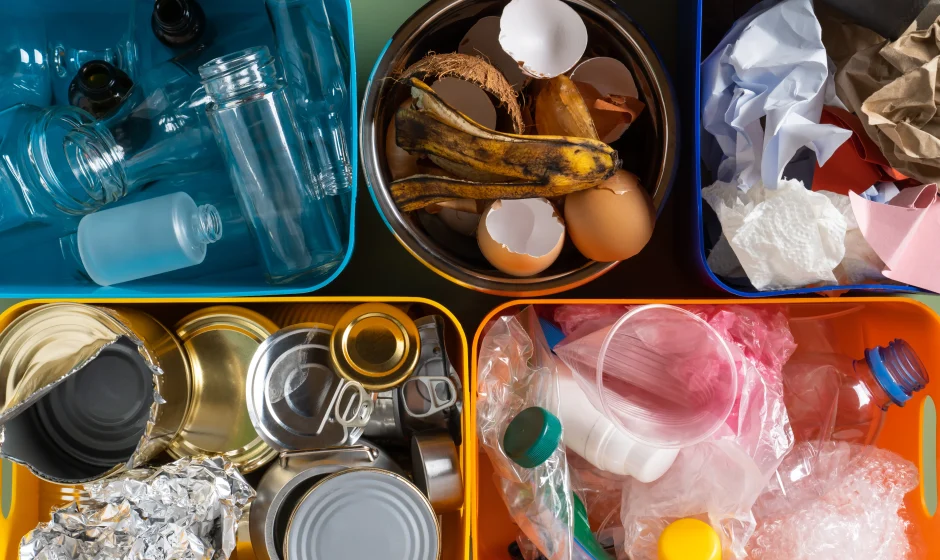
Waste is rarely separated at the household level
Food waste, plastic, paper, metal and other materials are often placed together. Once everything is mixed and contaminated, recovering recyclable material becomes more difficult and expensive.
Disposal facilities are under pressure
The 2026 warning over Kpone shows what happens when cities generate more waste than existing disposal infrastructure can comfortably absorb.
Collection vehicles travel long distances
Where transfer stations are unavailable or poorly located, trucks spend more time and fuel moving waste instead of collecting it.
Recycling remains heavily informal
Informal waste workers provide an important environmental service, but many operate without formal labor protections, safety equipment or integration into municipal waste planning.
Plastic has little value once discarded in the wrong place
A plastic bottle that reaches a recycler can become raw material. The same bottle in a storm drain becomes a flooding and pollution problem.
Waste data is still incomplete
A recent UNEP country assessment found important gaps in Ghana’s national data on hazardous, municipal and industrial waste generation, recycling and disposal. Better data is necessary if policymakers are going to know whether reforms are actually working.
Ghana Is Planning a Major Waste-Management Overhaul
Ghana’s current government is signaling that it wants to reorganize much of this chain rather than simply add more garbage trucks.
On September 1, 2026, Local Government, Chieftaincy and Religious Affairs Minister Mahama Ayariga toured the Accra Compost and Recycling Plant, the James Town Waste Transfer Station and the Kpone landfill.
After the tour, Ayariga said Ghana needed changes beginning at the household level, including separation of different forms of waste before collection.
He also called for:
- More appropriate household waste bins and receptacles.
- Transfer stations located closer to communities.
- Treatment and composting facilities closer to cities.
- More efficient transportation of waste.
- Greater investment in recycling and treatment.
- Application of the polluter-pays principle.
The minister argued that many of Ghana’s waste-management costs come from inefficiency rather than an absence of technology.
He suggested that better organization could potentially reduce household waste-management costs by as much as 50%. That figure is a government estimate rather than a guaranteed reduction, and no nationwide 50% price cut had been announced as of September 2026.
Ayariga also toured the facilities with Dr. Fatima Elsheikh of the Arab Bank for Economic Development in Africa, or BADEA, as Ghana explored possible financing for waste infrastructure. BADEA expressed willingness to work with Ghana, although the September announcement did not disclose a finalized financing package.
What Does “Polluter Pays” Mean for Ghanaian Households?
The polluter-pays principle means that the person or property generating pollution should contribute toward the cost of managing it.
For household garbage, the idea is simple: waste collection and treatment cost money, so those producing the waste should contribute to the system rather than expecting the government to finance every stage from general tax revenue.
Ghana already has households that pay private collectors, so paying for waste service is not new. What could change is how broadly and consistently charges are structured if the government develops a more unified national approach.
As of September 2026, the government had expressed its intention to apply the principle more effectively, but a new nationwide household charging formula had not been announced.
What Can Residents Do With Waste in Ghana?
Available services depend heavily on location. A resident in central Accra may have access to options that do not exist in a small rural community.
Where formal service is available, households can reduce problems by using an authorized collection provider, keeping waste contained until collection and separating recoverable materials when a local recycler or collection program accepts them.
Residents should avoid disposing of household waste in drains, waterways, undeveloped land or unauthorized public spaces.
Burning mixed household waste also creates risks because plastics, electronics and other materials can release hazardous pollutants when burned in the open.
Electronic equipment, batteries and other potentially hazardous materials should be directed toward appropriate recovery or disposal channels rather than burned with ordinary household rubbish.
What Comes Next for Waste Management in Ghana?
Ghana has moved beyond treating waste solely as something that needs to be hauled away.
The country’s official policies increasingly describe waste as a resource that can be separated, recovered, recycled, composted or converted into useful materials instead of immediately dumped.
The difficult part is implementation.
Ghana will need more reliable household collection, more transfer capacity, properly managed disposal facilities, better separation of waste, stronger recycling markets, safer conditions for informal workers and sustainable financing for the entire chain.
Landfill pressure in Greater Accra and the continuing prevalence of burning and open dumping show why collection alone cannot solve the problem.
The long-term test will be whether Ghana can make the full chain work together: generation, separation, collection, transport, recovery, treatment and final disposal.
If that happens, less waste should end up in drains, open spaces and uncontrolled dumps. More material can instead remain in Ghana’s economy as compost, recycled plastic, metal, paper and other recovered resources.
Ghana Waste Management: Key Facts
| Indicator | Best Available Figure | Source / Period |
|---|---|---|
| Estimated solid waste generated | Nearly 8 million metric tons per year | World Bank assessment |
| Estimated municipal solid-waste recycling rate | 8.4% | World Bank |
| Share of recycling attributed to informal sector | About 74% | World Bank |
| Households with collected solid waste | 33.4% | Ghana Statistical Service, 2021 Census |
| Urban households with collection | 51.4% | Ghana Statistical Service, 2021 Census |
| Rural households with collection | 5.8% | Ghana Statistical Service, 2021 Census |
| Plastic waste generated annually | About 840,000 metric tons | UNDP Ghana, 2025 estimate |
| Plastic collected for recycling | About 9.5% | UNDP Ghana, 2025 estimate |
| Kpone waste intake during 2026 capacity crisis | About 600-800 metric tons per day | Ghana News Agency, February 2026 |
Important: These figures come from different years and methodologies. They should not be combined as if they describe one single 2026 national waste survey. Ghana still has significant gaps in comprehensive waste data.
Frequently Asked Questions
Does Ghana have garbage collection?
Yes. Formal household and commercial waste collection exists, especially in major cities, but access is uneven. Ghana Statistical Service found in the 2021 census that 33.4% of households nationally had solid waste collected, with much higher access in urban areas.
Does Ghana recycle?
Yes. Ghana has recycling companies, integrated waste-processing plants and a large informal recycling sector. The World Bank estimates that approximately 8.4% of municipal solid waste is recycled.
Does Ghana separate household recycling?
Not on a universal basis. Mixed household waste remains common. The government has identified source separation as one of the major changes needed in the current system.
Where does Ghana’s garbage go?
Waste may go through transfer stations and processing facilities before final disposal, but large quantities ultimately reach landfills, dumpsites or open disposal areas. Some waste is also burned or dumped by households that lack collection.
Is Ghana banning second-hand electronics?
No general ban on all functioning second-hand electronics is described by the current framework. Ghana regulates hazardous and electronic waste and is subject to international controls on cross-border e-waste shipments. Functional used equipment intended for genuine reuse is not automatically the same thing as electronic waste.
Who is responsible for waste management in Ghana?
Local metropolitan, municipal and district assemblies play an important role in waste and sanitation services, usually working with private operators. The Environmental Protection Authority regulates broader environmental and hazardous-waste matters under the Environmental Protection Act, 2025.
Sources
- World Bank: How Sustainable Are Ghana’s Cities?
- Ghana Statistical Service: 2021 Population and Housing Census, Water and Sanitation
- Parliament of Ghana: Environmental Protection Act, 2025 (Act 1124)
- Ministry of Environment, Science and Technology: Revised National Plastics Management Policy
- UNDP Ghana: Ending Plastic Pollution for Sustainability
- Basel Convention: Ghana and Switzerland E-Waste Amendment Proposal
- Basel Convention: Revised Convention Text and E-Waste Amendments
- Ghana News Agency: Kpone Landfill Nears Capacity, February 2026
- Ghana News Agency: Achimota Transfer Station Reopened, June 2026
- MyJoyOnline: Mahama Ayariga Calls for Major Overhaul of Ghana’s Waste Management System, September 2026