

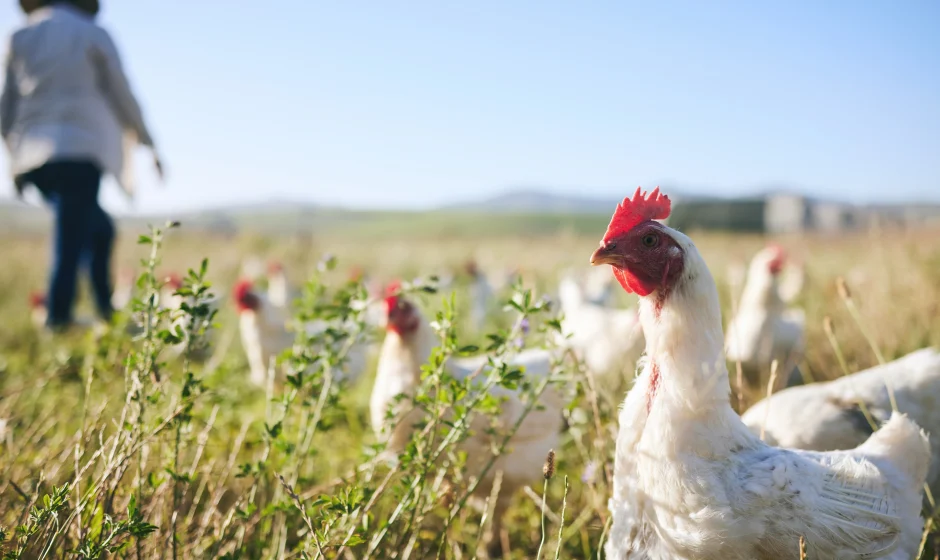

Ghana has taken another step toward rebuilding its domestic poultry industry, with the 24-Hour Economy and Accelerated Export Development Secretariat and four investment partners signing Heads of Terms for a proposed US$270 million National Poultry Transformation Programme.
The headline number is the projected creation of 12,000 direct jobs. But the plan goes much further than building a few large chicken farms. It is designed as an integrated poultry industry covering animal feed, breeding, hatcheries, commercial broiler farms, processing plants, cold storage, transportation and access to domestic and export markets.
If the project reaches the scale now proposed, the effect could reach farmers, feed suppliers, transport companies, veterinarians, food processors, retailers and entrepreneurs far beyond the businesses directly operating the poultry facilities.
Quick links (related guides):
Table of Contents
- What Ghana’s $270 million poultry project includes
- Where the 12,000 jobs could come from
- How much chicken is the project expected to produce?
- Why Ghana is targeting imported chicken
- Business opportunities outside the main project
- Who is investing?
- What has actually been signed?
- What still has to go right?
- What happens next?
What Ghana’s $270 Million Poultry Project Includes
The National Poultry Transformation Programme is being presented as an attempt to build an entire production system rather than solve one problem at a time.
The planned value chain includes:
- Feed production
- Poultry breeding
- Hatchery operations
- Broiler farming
- Chicken processing
- Cold-chain infrastructure
- Transportation and logistics
- Market access
That matters because poultry production does not begin with a farmer buying chicks and end when the birds reach market weight. Commercial production depends on a reliable supply of feed, chicks, veterinary care, electricity, processing capacity, refrigeration and transportation.
A failure in one part of that chain can make locally produced chicken more expensive or harder to distribute, even when farmers are capable of raising the birds themselves.
Where Could the 12,000 Poultry Jobs Come From?
The official 24H+ announcement says the Ghana $270 million poultry investment is expected to create 12,000 direct jobs.
Those jobs would not necessarily mean 12,000 people working inside poultry houses. An integrated industry requires workers across the production chain.
| Part of the Poultry Industry | Examples of Work Created |
|---|---|
| Feed production | Feed mill workers, grain buyers, technicians, warehouse staff and quality control |
| Breeding and hatcheries | Hatchery technicians, animal health workers and chick handling staff |
| Commercial farms | Farm workers, supervisors, maintenance workers and poultry managers |
| Processing | Plant operators, food safety staff, packaging workers and maintenance technicians |
| Cold storage | Refrigeration technicians, warehouse workers and inventory staff |
| Transportation | Drivers, fleet operators, dispatch workers and logistics coordinators |
| Distribution | Wholesalers, retailers, market suppliers and sales staff |
There is one figure readers should watch carefully as the project develops. An earlier MyJoyOnline report quoted Agrium Capital CEO Rod Bassett as referring to more than 1,000 direct jobs and over 2,500 indirect jobs when the project becomes fully operational. The later official 24H+ announcement gives the substantially larger figure of 12,000 expected direct jobs.
Until detailed employment projections are released, the safest description is that 12,000 direct jobs is the current official program target, rather than a guaranteed employment outcome.
How Much Chicken Is the Project Expected to Produce?
The first phase is expected to produce about 20,000 tonnes of dressed and processed broiler products per year.
The longer-term target is 50,000 tonnes annually.
| Stage | Planned Annual Broiler Output |
|---|---|
| Initial phase | Approximately 20,000 tonnes |
| Scaled production | Approximately 50,000 tonnes |
For context, Ghana’s Ministry of Food and Agriculture’s Feed Ghana Programme puts total poultry meat consumption at about 266,927 tonnes for 2026 and targets domestic production of about 66,679 tonnes.
That means even a fully scaled 50,000-tonne project would not by itself eliminate Ghana’s poultry supply deficit. It would, though, represent a substantial addition to local production if those targets are reached.
Why Ghana Wants to Reduce Its Dependence on Imported Chicken
The economics behind the project are fairly straightforward. Ghana consumes much more poultry than its domestic farms currently supply.
The 24H+ Secretariat says Ghana spends approximately US$400 million each year importing chicken and other poultry products. The Ministry of Food and Agriculture’s historical import figures also show just how large poultry imports have become. Its agricultural statistics recorded about 285,568 tonnes of poultry imports in 2023, with chicken accounting for more than 97 percent of the poultry category.
The government’s objective is not simply to replace foreign chicken with Ghanaian chicken. Import substitution only produces a lasting economic benefit if Ghana can build a local industry that is productive enough to compete on price, quality, food safety and reliability.
If more chicken is produced locally, money now flowing abroad to purchase poultry can instead circulate through Ghanaian farms, processing plants, transport businesses, workers and suppliers.
The Bigger Business Opportunity May Be Around the Poultry Farms
A US$270 million poultry industry would require a network of suppliers. That is where smaller Ghanaian businesses and entrepreneurs should pay attention.
Not every opportunity requires owning thousands of chickens.
A growing commercial poultry sector creates demand for maize and soybean production, feed ingredients, animal health services, equipment repair, packaging, crates, refrigerated transportation, sanitation, pest control, water systems, electrical maintenance, generators, solar systems, warehousing and distribution.
Feed could become one of the most important opportunities
Feed is one of the largest operating costs in commercial poultry production. Scaling chicken production therefore creates demand upstream for crops such as maize and soybeans as well as feed milling, storage and transportation.
This means the economic effect of the project could extend into crop-producing areas that never host a major poultry processing facility.
Cold storage and logistics
Processed chicken needs temperature-controlled storage and transportation. A larger domestic poultry industry therefore creates demand for cold rooms, refrigerated vehicles, backup power, warehouse management and distribution networks.
This becomes especially important if the program eventually moves beyond import substitution and develops the regional and export business envisioned by 24H+.
Processing, packaging and retail
Chicken also has to be slaughtered, processed, packaged, labeled, stored and sold. Businesses positioned between the farm and the final customer can participate in the industry without becoming poultry farmers themselves.
Who Is Behind Ghana’s $270 Million Poultry Investment?
The Heads of Terms bring together four investment partners with the 24-Hour Economy and Accelerated Export Development Secretariat:
- Agrium Capital, a UK-based agrifood investment company and subsidiary of Asset Green Ltd
- Petra Trust
- Axis Pension Trust
- Ghana EXIM Bank
The agreement combines international private capital with Ghanaian institutional capital and development finance.
The official 24H+ announcement describes the transaction as the largest UK agrifood investment in Ghana’s history. That description comes from the project organizers and should be read as their characterization of the transaction unless an independent historical investment comparison is published.
Petra Trust’s participation is also notable because it points to Ghanaian pension capital being directed toward productive infrastructure and industry rather than the project depending entirely on foreign financing.
Has Ghana Actually Received the $270 Million Yet?
No public announcement reviewed for this article establishes that the entire US$270 million has already been transferred, spent or deployed.
What has been signed is a Heads of Terms agreement.
A Heads of Terms document normally sets out the principal commercial terms and framework under which parties intend to proceed. In this case, the official 24H+ statement is unusually helpful because it also tells readers what comes next: the Heads of Terms are expected to be developed into a Shareholders’ Agreement for execution by the parties.
This distinction matters. Saying “Ghana has secured a proposed US$270 million poultry program” or “partners have signed Heads of Terms for a US$270 million investment” accurately describes the current stage. Saying that US$270 million has already been invested would go beyond the public evidence available so far.
What Still Has to Go Right?
The numbers are ambitious, but an agreement and a production target are not the same thing as chickens arriving in stores.
The project still has to move through financing, detailed design, contractual execution, construction or facility development, equipment procurement, staffing, feed sourcing and actual commercial production.
An earlier MyJoyOnline report quoted Agrium Capital’s Rod Bassett as saying the development and design process was expected to take around 10 to 12 months and that the project would be implemented in three phases.
Feed prices will matter enormously. So will electricity, water, veterinary controls, disease management, processing standards, refrigeration and the ability to distribute chicken competitively across Ghana.
There is also the consumer question. Locally produced chicken still has to reach supermarkets, restaurants, hotels, chop bars and households at prices buyers are willing to pay.
Those are the measures that will ultimately determine whether this becomes a durable poultry industry rather than simply a large investment announcement.
Why Poultry Fits Ghana’s 24-Hour Economy Strategy
The poultry project gives a clearer picture of what Ghana’s 24-Hour Economy policy is intended to look like outside the political slogan.
A large integrated food industry naturally contains activities that operate beyond a traditional eight-hour workday. Hatcheries, farms, processing plants, refrigeration systems, warehouses and logistics networks can require continuous operations or multiple shifts.
The 24H+ program is also using poultry as part of its wider import-substitution strategy. The Secretariat has identified sectors where Ghana currently buys large quantities from abroad but has the capacity to expand domestic production.
For poultry, the theory is simple: produce more of the chicken Ghana already consumes, process more of it locally, keep more value inside the country and eventually build enough scale to pursue export markets.
What Happens Next?
The immediate milestone to watch is the planned Shareholders’ Agreement.
After that, the more meaningful indicators will be physical rather than ceremonial: financing committed, facilities under development, production capacity installed, farmers and suppliers contracted, employees hired and chicken entering the market.
The project is also arriving shortly before the scheduled UK-Ghana Investment Summit on September 24, 2026, which the 24H+ Secretariat says will bring together businesses and investors from both countries.
If the National Poultry Transformation Programme progresses from Heads of Terms to a functioning integrated industry, it could become one of the clearest tests yet of Ghana’s attempt to turn the 24-Hour Economy agenda into actual factories, farms, supply chains and jobs.
For Ghanaian farmers and entrepreneurs, the opportunity is broader than poultry farming itself. Every additional tonne of chicken produced locally needs inputs before production and services after production. Feed has to be made. Equipment has to be maintained. Products have to be processed, refrigerated, transported and sold.
That surrounding ecosystem is where some of the most accessible business opportunities may emerge.
Sources
- 24-Hour Economy and Accelerated Export Development Secretariat: “24-Hour Economy and Partners Sign US$270 Million Heads of Terms for National Poultry Transformation Programme” (August 28, 2026)
- MyJoyOnline: “$270m poultry investment to create 12,000 jobs under 24-Hour Economy” (September 1, 2026)
- MyJoyOnline: “24-Hour Economy Secretariat brokers $270m poultry project to cut chicken imports” (August 30, 2026)
- Ghana Ministry of Food and Agriculture: Feed Ghana Programme, poultry production and consumption targets
- Ghana Ministry of Food and Agriculture, Statistics Research and Information Directorate: Agriculture in Ghana, Facts and Figures, poultry import statistics