


Why this guide exists
If you have ever tried to estimate the “real” cost of importing into Ghana, you already know the problem: the duty bill is rarely just one number. In practice, you are dealing with multiple layers of charges (import duty, VAT-related charges, levies, and sometimes excise), plus administrative steps inside ICUMS that can delay clearance and trigger demurrage.
This page is a gap-filler. It focuses on the items people consistently miss: excise duty details, free zones rules, AfCFTA reality on the ground, prohibited vs restricted goods, and the hidden costs that can quietly become more expensive than the taxes.
Official systems and authorities referenced throughout include the Ghana Revenue Authority (GRA) and its ICUMS Single Window platform.
Table of contents
- 1. Excise Duties – detailed rates (Act 878, amended)
- 2. Free Zones and Special Economic Zones
- 3. AfCFTA – what it changes (and what it does not)
- 4. Prohibited and restricted imports
- 5. Food and agricultural imports – special rules
- 6. Port-by-port guide + demurrage risk
- 7. Disputes, penalties, and appeals
- 8. Clearance timeline + hidden costs
- Official sources (clickable)
1. Excise Duties – Detailed Rates
Excise duty is imposed under Ghana’s Excise Duty Act, 2014 (Act 878), as amended in later years. Excise is different from import duty because it can apply to both imported and locally-manufactured goods, and it is generally assessed on ex-factory value (local) or CIF value (imports), depending on the product and transaction.
If you import excisable goods, plan for excise compliance early – especially tax stamps. GRA guidance on excise tax stamps is available here:
Excise Tax Stamp Act overview (GRA PDF).
Alcohol
Beer and stout (non-indigenous) attract rates that vary according to the percentage of local raw materials used (water excluded). Malt drinks are taxed separately at lower rates (commonly cited in the 10% to 20% range depending on product category).
| Product | Local Raw Material Content | Excise Rate |
|---|---|---|
| Beer / Stout (non-indigenous) | Less than 50% local raw materials | 47.5% of ex-factory price |
| Beer / Stout (non-indigenous) | 50% to 70% | 32.5% of ex-factory price |
| Beer / Stout (non-indigenous) | More than 70% | 10% of ex-factory price |
| Cider beer | Any | 20% of ex-factory price |
| Wine (including sparkling) | Any | 45% of ex-factory price |
| Spirits (distilled, rectified, blended) | Any | 50% of ex-factory price |
| Akpeteshie (local spirit) | Any | 20% of ex-factory price |
| Non-alcoholic beverages, mineral water, energy drinks, fruit juices | Any | 20% of ex-factory price |
| Distilled / bottled water | Any | 17.5% of ex-factory price |
Tobacco and nicotine products
| Product | Excise Rate |
|---|---|
| Cigarettes and cigars | 50% of ex-factory price + GHS 0.28 per stick |
| Negrohead, snuff, other tobacco | GHS 280 per kilogram |
| Electronic cigarette liquids | 50% of ex-factory price + GHS 0.50 per millilitre |
| Electronic cigarettes / smoking devices | Assessed on CIF value (imported goods) |
Products found without stamps can be confiscated. See official GRA material:
Sweetened beverages (SSBs)
Recent reforms expanded excise coverage to sweetened beverages and some juices.
In practice, this commonly includes energy drinks, flavoured waters, non-alcoholic beers, and packaged fruit juices.
If you import beverages, confirm the current schedule directly through GRA channels and your customs agent.
Plastics
Plastic bags, containers, and packaging products can attract additional environmental-related charges.
If you import plastics or chemicals, confirm whether you need an Environmental Protection Agency (EPA) permit:
EPA Ghana.
2. Free Zones and Special Economic Zones
Ghana’s Free Zones framework is managed under the Free Zones Act, 1995 (Act 504).
For customs and tax purposes, a free zone is treated as “foreign territory” even though it is physically within Ghana.
GRA’s own summary of Free Zones for customs purposes is here:
GRA – Free Zones.
Monetary incentives (high-level)
- 100% exemption from import duties and levies on goods brought into the free zone for production and subsequent export.
- Tax incentives can include an initial tax holiday period depending on the approved structure and compliance terms.
- Some materials still quote legacy language from older incentive schedules – always verify the current position with GRA and the relevant authority before committing capital.
- Domestic sales from free zones are treated like imports and are fully dutiable.
Four export processing zones (EPZs) commonly referenced
| EPZ | Location | Strategic advantage |
|---|---|---|
| Tema EPZ | Tema (Greater Accra area) | Near Ghana’s largest seaport and close to Kotoka International Airport |
| Sekondi EPZ | Sekondi-Takoradi | Near Takoradi Port and the western industrial corridor |
| Kumasi EPZ | Ashanti Region | Central location with access to manufacturing and agri-processing belts |
| Accra Export Free Zone | Greater Accra | Capital connectivity and services and light manufacturing concentration |
Key constraints and rules (practical)
- Free zone companies may sell up to 30% of output on Ghana’s domestic market, but those sales are treated as imports and are fully dutiable.
- Domestic sales usually require approvals and proper declaration through ICUMS, with duties and taxes paid.
- Free zone operations remain subject to national laws outside customs duties (labour, environment, company law, and more).
Transition to special economic zones (SEZ)
Ghana has discussed modernising investment hubs beyond the EPZ model. If you are planning an investment or manufacturing import pipeline,
monitor official communications from relevant trade and investment institutions (and confirm current law before relying on older incentive flyers).
3. AfCFTA – African Continental Free Trade Area
Ghana is a signatory to the AfCFTA framework, and the AfCFTA Secretariat is based in Accra.
Official African Union confirmation is here:
African Union – AfCFTA.
What AfCFTA changes for Ghana import duties
- AfCFTA aims to reduce tariffs on most intra-African tariff lines over time (implementation is phased and varies by product category and country readiness).
- AfCFTA applies to intra-African trade and does not replace ECOWAS CET rules for imports originating outside Africa.
- Rules of origin are the gatekeeper. If origin rules are not met, preferential claims can be denied and standard duties apply.
Guided Trade Initiative (GTI) – current status
The AfCFTA Secretariat has operated a Guided Trade Initiative (GTI) to move early trade into real-world execution.
An external reference that summarizes the “37 State Parties” readiness threshold is available here:
AfCFTA Update (U.S. International Trade Administration).
In Ghana, AfCFTA-related onboarding and exporter procedures can involve ICUMS steps.
If you want a practical “click-by-click” reference, this Ghana AfCFTA resource describes the ICUMS pathway:
AfCFTA Ghana – ICUMS registration procedure.
unless your documentation, classification, and origin proof are solid.
4. Prohibited and Restricted Imports
Ghana distinguishes between goods that are absolutely prohibited (banned) and goods that are restricted (allowed only with permits).
If you are unsure, your safest workflow is: confirm HS code, confirm restriction status, obtain permits first, then ship.
Absolutely prohibited goods (examples)
These goods may be confiscated and can trigger prosecution.
| Category | Examples |
|---|---|
| Narcotics and controlled drugs | Illegal drugs not covered by medical licences |
| Toxic and hazardous waste | Contaminated goods and toxic waste |
| Agricultural quarantine items | Foreign soil; plants and seeds without permits |
| Pornographic material | All forms |
| Counterfeit currency | Fake banknotes and coins |
| Selected banned items | Used LPG cylinders; certain restricted poultry by-products; selected restricted second-hand sanitary items |
Restricted goods – permit or licence required
| Goods category | Permit / authority typically involved |
|---|---|
| Food products | FDA registration and product approval (often processed via ICUMS). FDA fee references: Trade.gov – Ghana import requirements |
| Pharmaceuticals and drugs | FDA registration and approvals |
| Cosmetics | FDA registration |
| Agricultural produce, plants, seeds | MOFA plant protection and phytosanitary processes (PPRSD pathway) |
| Live animals and animal products | MOFA veterinary health certification and permits |
| Electrical fittings, appliances, cables | Standards and energy compliance (check: GSA and Energy Commission) |
| Plastics and hazardous chemicals | EPA permit (EPA Ghana) |
| Weapons and ammunition | Ministry of Interior permit |
Use internationally recognized labeling principles and make sure importer details and traceability fields are clear and consistent.
5. Food and Agricultural Imports – Special Rules
Food and agricultural imports typically require coordination across multiple agencies, and clearance can be slower than general cargo.
Common agencies involved include the FDA, plant protection, veterinary services, the Ghana Standards Authority, and GRA Customs.
Key regulatory bodies (common)
- Ghana Food and Drugs Authority (FDA) – product registration, importer registration, labeling and safety (FDA Ghana)
- Plant Protection and Regulatory Services Directorate (PPRSD) – phytosanitary controls (MOFA pathway)
- Veterinary Services Directorate – live animals and animal products
- Ghana Standards Authority (GSA) – standards compliance (GSA)
- GRA Customs Division – duties, valuation, clearance (GRA Customs)
Step-by-step import process for food products (practical workflow)
- Register your business (Registrar-General’s Department) so your importer identity is clean and consistent.
- Register the product and register as an FDA importer through ICUMS where applicable (validity often stated as 1 year).
- For agricultural products, obtain MOFA-related permits and phytosanitary certification where required.
- Obtain a Tax Clearance Certificate where required.
- Submit required import documentation through ICUMS and complete classification and valuation steps (CCVR workflow where applicable).
- Pay assessed duties and taxes through authorized payment channels.
- Prepare for inspection steps by FDA, GSA, customs examination, and specialist checks.
- Receive the customs clearance approval and “Delivery Allowed” steps inside ICUMS before port exit.
Trade.gov – Ghana import requirements.
Always confirm current fees with the FDA and your customs agent before shipment.
Agricultural tariff rates (typical bands)
Agricultural items often fall into higher duty bands than capital goods or raw materials. Exact rates depend on HS classification and the ECOWAS CET band.
Use these examples as “directional only” and confirm by HS code:
| Product category | Typical import duty (directional) |
|---|---|
| Rice | Often classified in consumer goods bands (commonly cited around 20% depending on HS code) |
| Poultry (frozen) | Often cited around 20% plus regulatory and inspection costs (permits may be quota-controlled) |
| Dairy (milk, cheese, butter) | Commonly varies (example range 5% to 20%) depending on HS classification |
| Processed foods | Often in consumer goods bands (commonly cited around 20%) |
| Agricultural machinery | Often lower bands (example 0% to 5%) depending on classification |
| Fertilisers | Often lower bands (example 0% to 5%) depending on classification |
6. Port-by-Port Guide
Port of Tema (primary)
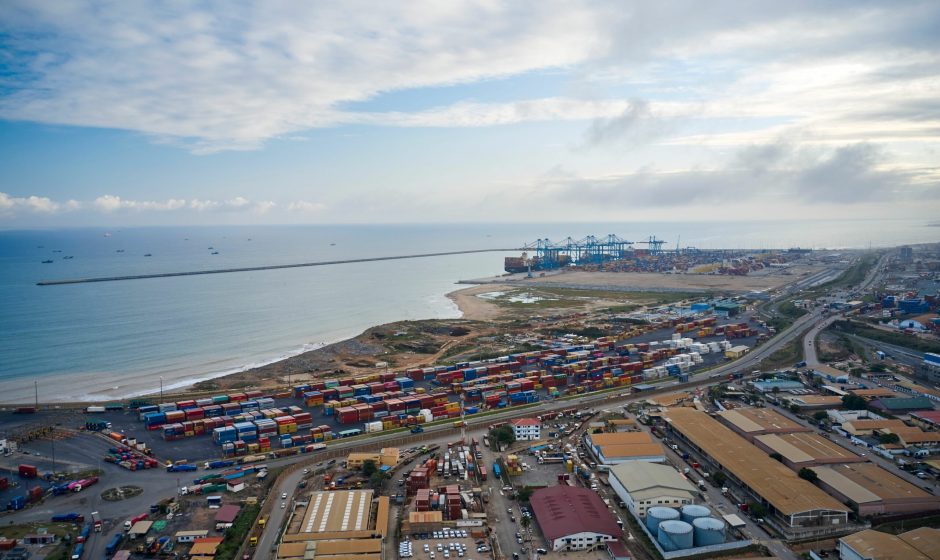
Tema is Ghana’s main seaport for containerised imports and is tightly integrated into the ICUMS workflow.
If your documents are clean and your classification is correct, ICUMS can reduce friction.
Start at the official ICUMS information page:
GRA – ICUMS.
Port of Takoradi (secondary)
Takoradi handles significant bulk and industrial cargo, especially for western Ghana industries.
Customs and duty rules still run through the same legal and ICUMS framework.
Kotoka International Airport (KIA), Accra
Air cargo tends to clear faster in many cases, but freight cost is higher. For perishables, factor in cold chain constraints and inspection coordination.
Demurrage and storage – critical cost factors
Demurrage (shipping line charges) and port storage charges are separate. If clearance delays occur, you can get hit twice per day.
One public shipping-line reference for standard free time in Ghana often states:
7 days dry, 5 days reefer, 21 days transit (coastal), 28 days transit (landlocked).
See:
Maersk – Ghana import local information.
| Container type | Free days (typical reference) | Demurrage risk (what matters) |
|---|---|---|
| Standard dry (20ft/40ft) | Often 7 days from discharge (varies by contract) | Escalates quickly after free days. Rates depend on shipping line and contract. |
| Reefer (refrigerated) | Often 5 days (varies by contract) | Reefer demurrage can become extreme fast. Do not ship without a clearance plan. |
| Transit (coastal West Africa) | Often 21 days (dry) | Transit terms still require strict documentation and compliance to avoid reclassification. |
| Transit (landlocked) | Often 28 days (dry, standard bookings) | Confirm your exact booking terms and transit regime in ICUMS before shipping. |
Your best defense is pre-arrival document readiness and a clearing agent who knows ICUMS and valuation workflows.
7. Disputes, Penalties and Appeals
Customs valuation – your rights (and the real-world friction)
Ghana’s valuation system sits under the customs legal framework. The GRA publishes the Customs Act and abridged references here:
GRA – Acts,
including an abridged Customs Act PDF:
Abridged Customs Act (GRA PDF).
In practice, valuation disputes often arise where customs considers invoices unreliable and applies reference pricing or benchmark values.
If you ship used vehicles, always confirm the current valuation workflow and tools inside ICUMS:
ICUMS – used vehicle tax tool (portal).
The appeals process (high-level)
| Stage | Action | Key rules (practical) |
|---|---|---|
| Stage 1 | File objection with the Commissioner-General (GRA) | Usually time-limited. Pay undisputed amounts. Dispute-payment rules can differ by tax type. |
| Stage 2 | GRA review and decision | Expect timeline variability. Keep a clean paper trail (ICUMS logs, receipts, letters). |
| Stage 3 | Independent Tax Appeals Board (ITAB) | Operational status and usage can change – verify current ITAB functionality before relying on it. |
| Stage 4 | Courts | Final escalation route for unresolved disputes. |
Penalties for non-compliance (examples)
| Violation | Potential outcome |
|---|---|
| Undervaluation or misclassification | Seizure risk and significant penalties depending on the offence and assessment |
| Importing prohibited goods | Confiscation and prosecution risk |
| No excise tax stamp on excisable goods | Confiscation risk and enforcement actions (see GRA excise stamp references) |
| Smuggling | High penalty exposure and prosecution risk |
8. Practical Clearance Timeline and Hidden Costs
Realistic clearance timeline (what to expect)
| Phase | Activity | Typical duration (directional) |
|---|---|---|
| Pre-arrival | Prepare documents and classification planning before ETA | 2 to 5 days (ideally before vessel arrival) |
| Arrival | Manifest submission and ICUMS processing begins | Day 1 |
| Risk assessment | Green, Yellow, or Red risk indicator assignment | 1 to 3 days |
| Payment | Pay duties and taxes and confirm processing | 1 to 2 days |
| Inspection | If required, coordinate agency inspections and customs examination | 2 to 7+ days (can stack across agencies) |
| Delivery allowed | Final release and exit steps | Same day once approvals are complete |
If you need high certainty, build a demurrage buffer into your budget and plan.
Hidden costs that can add 5% to 15%+
| Hidden cost | Approximate range (directional) | Why it matters |
|---|---|---|
| Licensed clearing agent fee | Often quoted around 1% to 2% of total import costs | Agents reduce valuation errors, ICUMS mistakes, and demurrage exposure |
| Demurrage (shipping line) | Varies by contract; escalates after free days | Late clearance turns “small delays” into big bills |
| Port storage | Separate daily charges | Storage runs in parallel with demurrage |
| FX movement | Can move quickly during clearance | Your duty bill can change in local-currency terms if funding is late |
| Bank and payment charges | Varies by bank and transaction method | Small percentage costs add up on large duty payments |
| Inspection fees and compliance fees | Product dependent | FDA and other regulatory costs can rival duty for regulated goods |
| Warehousing / cold storage | Daily charges | Critical for perishable food and medicines |
classification clarity, permit readiness, invoice consistency, and an agent who understands ICUMS.
Official sources
- GRA – ICUMS overview: https://gra.gov.gh/customs/icums/
- ICUMS portal (external): https://external.unipassghana.com/
- GRA – Acts and abridged tax laws: https://gra.gov.gh/acts/
- Abridged Customs Act (GRA PDF): PDF
- Abridged Excise Tax Stamp Act (GRA PDF): PDF
- GRA – Free Zones summary: https://gra.gov.gh/customs/free-zones/
- Free Zones Act, 1995 (Act 504 PDF): PDF
- African Union – AfCFTA (Secretariat in Accra): https://au.int/en/african-continental-free-trade-area
- FDA Ghana: https://fdaghana.gov.gh/
- Ghana Standards Authority: https://www.gsa.gov.gh/
- Energy Commission Ghana: https://energycom.gov.gh/
- EPA Ghana: https://epa.gov.gh/
Final note: Rates, levies, and procedures can change. Before you ship, confirm HS classification, permits, and current practices through GRA and the relevant regulators, and work with a licensed clearing agent where required.