

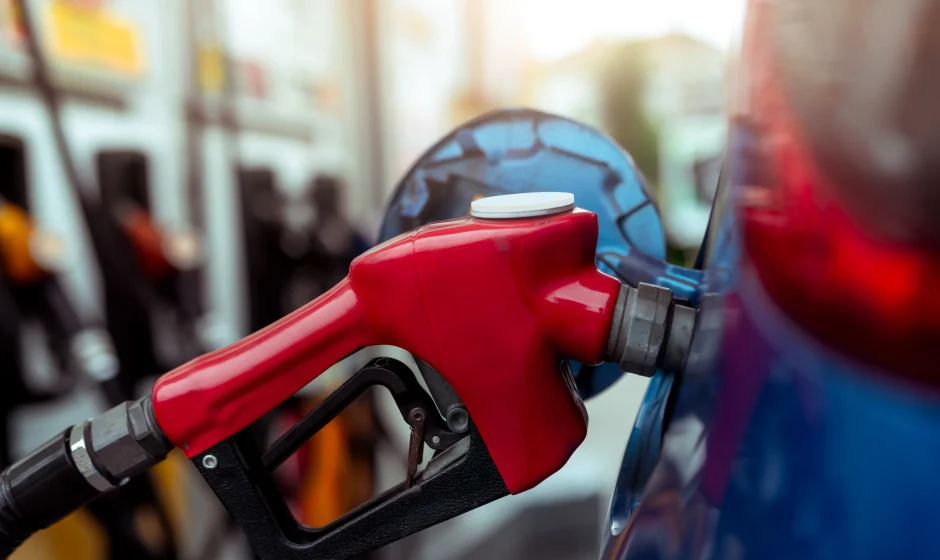

Fuel prices in Ghana are set to decline from June 16, 2026, as the second pricing window of the month takes effect. Petrol is projected to record the sharpest reduction, falling by 9.31%, while diesel is expected to decline by 1.65% and liquefied petroleum gas (LPG) by 0.52%.
If that sounds like just another price adjustment, here is the real meaning: consumers and businesses across Ghana are about to get some relief at the pumps. This is the steepest decline in fuel prices recorded since the start of 2026.
That matters because transport costs, food prices, and the overall cost of living in Ghana are closely tied to fuel prices. When fuel drops, the ripple effect touches almost everything else.
What Is Happening with Fuel Prices in Ghana?
Fuel prices in Ghana are adjusted every two weeks under a deregulated framework influenced by global oil prices, exchange rate movements, taxes, and competition among Oil Marketing Companies (OMCs). The second pricing window of June 2026 runs from June 16 to June 30.
According to the latest pricing outlook from the Chamber of Oil Marketing Companies (COMAC), the projected reductions are as follows:
| Product | Projected Price Drop |
|---|---|
| Petrol | 9.31% |
| Diesel | 1.65% |
| LPG | 0.52% |
The projections are based on a significant drop in international refined petroleum product prices, marking the steepest decline recorded since the beginning of 2026.
Why Are Fuel Prices Dropping?
The primary driver behind the price relief is a sharp downturn in the international energy market. Crude oil prices eased sharply in mid-June, falling from US$110.59 per barrel to US$97.32 per barrel—a significant 12% decline.
Refined petroleum product prices also declined markedly for the June 16 pricing window, recording the largest reductions so far in 2026:
| Product | International Price Drop |
|---|---|
| LPG | 19.94% |
| Petrol | 15.21% |
| Diesel | 10.17% |
Several factors contributed to the global price decline. Diplomatic breakthroughs, including a mediated peace agreement between the United States and Iran, signaled the potential reopening of the strategic Strait of Hormuz, a key global oil shipping route. Following the announcement, Brent crude fell by 4.8% to $83.18 per barrel, while U.S. West Texas Intermediate (WTI) crude dropped by 5.6% to settle at $80.13 per barrel.
However, the impact on diesel prices in Ghana is expected to be more modest due to the full removal of the government-industry intervention mechanism. LPG prices also remain constrained by existing tender arrangements that have locked in supply costs.
Meanwhile, the Ghana cedi depreciated slightly against major trading currencies. For the June 16, 2026 pricing window, the exchange rate moved from GH¢11.59 to GH¢11.80 to the dollar, representing a 2.45% depreciation.
New NPA Price Floors for June 2026
The National Petroleum Authority (NPA) has announced lower price floors for three key petroleum products for the second pricing window of June. Price floors represent the minimum benchmark prices at which OMCs and LPG Marketing Companies (LPGMCs) are expected to retail petroleum products.
| Product | Previous Price Floor (First Window) | New Price Floor (Second Window) | Reduction |
|---|---|---|---|
| Petrol (per litre) | GH¢15.20 | GH¢13.39 | GH¢1.81 (nearly 12%) |
| Diesel (per litre) | GH¢15.49 | GH¢15.11 | GH¢0.38 (about 2.5%) |
| LPG (per kilogram) | GH¢13.48 | GH¢13.23 | GH¢0.25 (about 1.9%) |
Petrol recorded the most significant adjustment, with its price floor dropping to GH¢13.39 per litre from GH¢15.20 per litre previously. Diesel’s price floor was reduced to GH¢15.11 per litre from GH¢15.49 per litre. For LPG, the price floor was lowered to GH¢13.23 per kilogram from GH¢13.48 per kilogram.
Some OMCs have already begun implementing the reductions. State-owned GOIL reduced petrol to GH¢13.87 per litre and diesel to GH¢15.95 per litre. Star Oil also reduced petrol to GH¢13.85 per litre and diesel to GH¢15.93 per litre.
What This Means for Consumers and Businesses
The price reductions come at a crucial time for Ghanaian consumers. Earlier this month, transport unions, including the Ghana Private Road Transport Union (GPRTU), implemented a 20% transport fare increase, citing rising fuel costs.
Industry experts hope the sharp decline under the NPA pricing framework will help stabilize transport fares and ease broader inflationary pressures on food and other basic goods.
For households, lower fuel prices mean:
- Reduced transport costs for commuting and travel
- Lower prices for goods as businesses pass on savings from reduced logistics costs
- More disposable income for other expenses
For businesses, particularly those in transportation, logistics, and agriculture, the savings on fuel can improve margins and potentially allow for price adjustments that benefit consumers.
What to Watch Next
There are indications that crude oil prices could ease further following reports of a new agreement aimed at ending the conflict in the Middle East—a development that could provide additional relief for consumers in the coming pricing windows.
For import-dependent economies such as Ghana, sustained progress toward a U.S.-Iran agreement could provide further relief in domestic fuel pricing as international crude and refined product costs continue to moderate.
Industry watchers say the sharp decline in international product prices has offset the impact of the withdrawal of the diesel relief program, allowing OMCs to pass on lower prices to consumers.
More OMCs are expected to adjust their pump prices in the coming days.
What you should do: Keep an eye on your local filling station. Prices vary by OMC, and some may take longer than others to reflect the new price floors. If you are a business owner, consider reviewing your logistics and transport costs to see where savings can be passed on or reinvested.
Sources
- Citi Newsroom: “Petrol prices to fall 9.3%, diesel by 1.7% in second June pricing window” (June 2026)
- Citi Newsroom: “Government scraps diesel price relief” (June 2026)
- Citi Newsroom: “Petrol records biggest price cut in months as OMCs adjust fuel prices” (June 2026)
- GBC Ghana Online: “Petrol prices to drop sharply amid falling global oil prices – COMAC” (June 2026)
- Adomonline: “Fuel prices fall as some OMCs cut petrol to GH¢13.87 per litre” (June 2026)
- Daily Guide: “Fuel Prices Set For Major Drop” (June 2026)
- National Petroleum Authority: “Petroleum Products Pricing Guidelines 2024”