
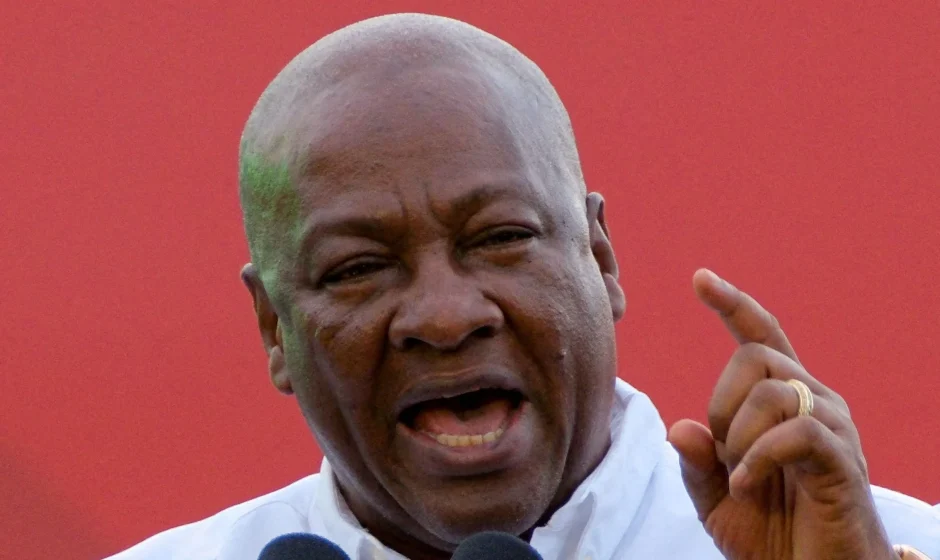

President John Dramani Mahama has launched the Ghana National Research Fund (GNRF) with GH¢100 million in seed funding, calling on scientists and researchers to develop practical solutions to the country’s most pressing challenges.
If that sounds like another government announcement, here is what it actually means: Ghana now has a legally established, funded mechanism to finance research that is supposed to solve real problems — not just produce papers that sit on library shelves.
That matters because Ghana has historically underinvested in research and development. While the African Union recommends that member states invest at least one percent of GDP in research, Ghana’s legal provisions currently amount to about half that level. With a GDP of roughly GH¢1.14 trillion, even the lower threshold would require annual research spending of about GH¢6 billion — a figure the government acknowledges it cannot meet alone.
Quick links (related guides):
What Is the Ghana National Research Fund?
The Ghana National Research Fund is a state-backed financing mechanism established under the Ghana National Research Fund Act, 2020 (Act 1056). Although the law was passed six years ago, the fund only began moving toward full operation after its governing board was inaugurated a year ago.
The launch on Tuesday, June 16, 2026, marked the operationalisation of the fund — meaning the money is now accessible, the secretariat is in place, and the first research calls have been issued.
What the Fund Will Finance
President Mahama described the GH¢100 million as “immediate catalytic support.” The fund will finance:
– Competitive national research grants
– Doctoral and postdoctoral programs
– A digital grants management system
– Priority research initiatives linked to the government’s development agenda
The fund’s board has identified five national research missions covering:
– Food systems
– Health innovation
– Digital and industrial transformation
– Climate resilience
– Governance data
Why This Matters for Ghana
The fund is not abstract policy. It is tied directly to specific, practical problems.
President Mahama urged research institutions to tackle challenges including:
– Cocoa swollen shoot disease, which damages Ghana’s most important agricultural export
– Fall armyworm infestations that destroy maize and other staple crops
– Boll weevil attacks on cotton farms
– Post-harvest losses that continue to affect food production and economic activity
The President also cited a specific example of what he wants to change: a non-toxic organic pesticide developed at the University of Cape Coast has yet to reach farmers, despite Ghana spending hundreds of millions of dollars annually on pesticide imports.
The message was direct. “We need research that solves problems, creates jobs, builds industries, and improves lives,” he said.
The fund is also linked to the administration’s broader economic agenda, including the 24-hour economy initiative, agricultural modernisation, and industrialisation.
The Fund’s Structure and Leadership
The fund has a secretariat and offices at East Legon in Accra.
Key leadership:
– Board Chairman: Prof. Eric Yirenkyi Danquah
– Acting Administrator: Prof. Abigail Opoku Mensah
Prof. Opoku Mensah is the first woman to head the fund, a point UNESCO’s Representative to Ghana, Edmond Moukala, praised as significant.
The board has outlined a six-point strategy for 2026 to 2030 covering:
1. Research talent development
2. Competitive funding
3. Industry partnerships
4. Policy support
5. Sustainable financing
6. Institutional capacity building
International Partnerships
A pilot research call has already been launched in partnership with Canada’s International Development Research Centre to support technologies aimed at advancing the Sustainable Development Goals.
The United Kingdom’s High Commissioner to Ghana, Christian Rogg, noted that the UK invests about 2.5 percent of its national income in research and highlighted that there are more than 360 partnerships between Ghanaian and British research institutions.
UNESCO’s representative described the launch as a “declaration of mind’s independence.”
What Happens Next
President Mahama acknowledged that the government alone cannot meet the full funding gap. He directed the Ministries of Finance, Education, and Environment to begin the gradual release of statutory funding to support research activities.
He also instructed the Ministries of Finance and Education to submit Ghana’s expression of interest to participate in the World Bank’s ACE Innovate program and pledged full presidential support for the initiative.
Education Minister Haruna Iddrisu added that the government had resolved the long-running dispute over book and research allowances for university lecturers, meaning the launch of the fund would not be accompanied by labour unrest in the tertiary education sector.
For researchers, entrepreneurs, and investors watching Ghana’s innovation landscape, the fund represents a signal: the government is putting money behind the idea that research should produce commercial outcomes, not just academic publications.
If you are considering a research-related business, investment, or relocation to Ghana, understanding the policy landscape is essential.
Sources
Compliance note: All government funding programs are subject to parliamentary oversight and budgetary approval. Readers should verify current eligibility and application procedures through official channels.