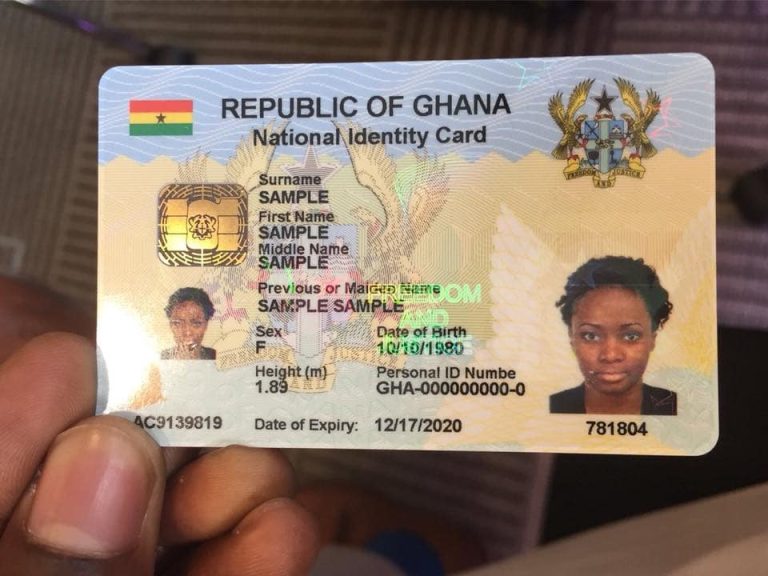

The National Identification Authority (NIA) is the statutory body responsible for creating, maintaining, and promoting the use of Ghana's national identity card, commonly known as the Ghana Card. Established by an Act of Parliament in 2006, the NIA operates under the Office of the President and manages the National Identification System (NIS), a centralized database of biometric and demographic data for Ghanaian citizens and legally resident foreign nationals. The Authority's work underpins a wide range of civic and commercial activities, from voter registration and passport acquisition to banking, SIM card registration, and access to government services.
Location
Overview
The National Identification Authority Ghana is a government agency established by the National Identification Authority Act, 2006 (Act 707). Its core mandate is to register all Ghanaian citizens, both resident and non-resident, as well as legally and permanently resident foreign nationals, and to issue them with a secure, biometric identity card. The Authority's headquarters is located at No. 8 Nelson Mandela Avenue, South Legon, Accra, with a postal address of P. O. Box M-680, Ministries Post Office, Accra.
The NIA's flagship product is the Ghana Card, a smart card with an embedded microchip. The card serves as proof of identity, citizenship, and residence, and is designed to be the single source of truth for personal identification in Ghana. The Authority also manages the Foreigner Identification Management System (FIMS), which issues the Non-Citizen Ghana Card to eligible foreign nationals residing in the country.
As of August 2026, the NIA reported that over 20.1 million Ghanaians had been enrolled in the National Identification System. These figures, published on the Authority's official website, illustrate the scale of the registration exercise and the Ghana Card's near-universal adoption among the adult population.
Background
The idea of a national identification system in Ghana dates back several decades. According to historical accounts, the first national identity cards were issued in 1973 to citizens in border regions, including Volta, Northern, Upper East, Upper West, Brong Ahafo, and parts of the Western Region. That project was discontinued three years later due to logistical and financial challenges.
The concept was revisited in 1987 under the Provisional National Defence Council (PNDC) government, which established committees to explore the idea, but economic difficulties again stalled progress. In 2001, the National Economic Dialogue identified the National Identification System (NIS) as a major policy priority, leading to the creation of a multisectoral Technical Committee. The committee's 2002 report recommended a system that would cover all citizens and legally resident non-Ghanaians, and support objectives ranging from crime prevention and healthcare delivery to the creation of a credible voters register and improved revenue collection.
In 2003, the National Identification Secretariat was established to implement the NIS. The National Identification Authority Act, 2006 (Act 707) then gave the NIA its statutory foundation, and the National Identity Register Act, 2008 (Act 750) authorized the collection of personal and biometric data while providing for the protection of privacy and personal information. A pilot mass registration exercise was held in 2007 in the communities of Abokobi and Sege in the Greater Accra Region, with mass registration rolling out across the country from 2008 onward.
Ghana Context
Ghana's journey toward a unified national identification system reflects broader governance and development priorities. Before the Ghana Card, Ghanaians relied on a patchwork of documents for identification, including passports, driver's licenses, voter ID cards, and national health insurance cards. Each of these served a specific purpose but none provided a single, verifiable, and secure proof of identity across all sectors.
The NIA's mandate is closely tied to the country's digitalization agenda. By creating a centralized biometric database, the Authority aims to streamline the delivery of public services, reduce fraud, and enable more efficient data sharing among government agencies. The Ghana Card has been integrated into numerous public and private sector processes, including passport acquisition, driver's license issuance, banking, business registration, and SIM card registration. The card is also used for electoral registration, helping to authenticate the citizenship, name, age, and residence of prospective voters.
For foreign nationals, the Non-Citizen Ghana Card is mandatory for those permanently residing in Ghana or staying cumulatively for at least 90 days in a calendar year. This card provides access to essential services such as healthcare, education, banking, and SIM card registration, while explicitly not conferring voting rights or other civic privileges reserved for citizens.
Key Facts and Developments
The NIA's operations have evolved significantly since its establishment. Key developments and current operational facts, as reported by the Authority in 2026, include the following:
Registration Statistics
As of 17 August 2026, the NIA reported 20,146,876 Ghanaians enrolled, 2,004,576 cards printed, and 1,916,193 cards issued. These figures, published on the Authority's website, demonstrate the extensive reach of the registration exercise.
Service Centres
The NIA operates a network of service centres across the country. The district offices remain the primary access point for most citizens, offering standard fees for registration and related services.
Fees and Payment Channels
In August 2026, the NIA clarified its fee structure following public commentary about revised charges. According to the Authority, the revised fees were approved by Parliament under the Fees and Charges (Miscellaneous Provisions) (Amendment) Regulations, 2025 (L.I. 2512), pursuant to the Fees and Charges (Miscellaneous Provisions) Act, 2022 (Act 1080), and took effect on 2 February 2026. Card replacement at district offices costs GH¢200. The NIA does not accept physical cash at any of its centres; payments must be made via USSD by dialing *771#, the CalBank Mobile App, or at any CalBank branch.
Prestige Centre
The NIA's 24-hour Prestige Centre at Labone commenced operations on 1 August 2026. This optional, fee-based service offers greater convenience and faster access to NIA services, operating seven days a week including weekends. The Authority has emphasized that the Prestige Centre complements, rather than replaces, its regular district offices.
Non-Citizen Ghana Card
Under the Foreigner Identification Management System (FIMS), a public-private partnership between the NIA and Identity Management Systems (IMS), eligible foreign nationals can obtain the Non-Citizen Ghana Card. As of the latest published fee schedule, first issuance costs USD 120 (or the Ghana Cedi equivalent), with annual renewal at USD 78 and card replacement at USD 78. The registration process, which requires a valid passport, a certified birth certificate, and an Oath of Identity form, takes approximately 30 to 40 minutes including instant card issuance.
Leadership
As of the latest information available, Mr. Wisdom Kwaku Deku serves as the Executive Secretary of the NIA. An accomplished IT leader with over 15 years of experience in cybersecurity, systems analysis, and IT strategy, Mr. Deku previously served as Head of Systems Administration at the Authority, where he played a key role in implementing the National Identity System.
Why It Matters
The National Identification Authority Ghana plays a central role in the country's governance and economic infrastructure. The Ghana Card has become a foundational document for accessing a wide range of services, and its integration into public and private systems has significant implications for efficiency, security, and inclusion.
For citizens, the Ghana Card simplifies identity verification across multiple domains, reducing the need to carry multiple documents and enabling faster, more reliable transactions. For the government, the National Identification System provides a credible database that supports policy planning, targeted service delivery, and the reduction of fraud in areas such as social protection, taxation, and electoral administration.
For foreign nationals, the Non-Citizen Ghana Card ensures legal compliance and facilitates access to essential services, contributing to a more orderly and transparent environment for expatriates, students, and investors. The NIA's work also supports regional integration, as the Ghana Card is designed to meet ECOWAS identity card standards, facilitating travel and identification within the West African region.
The Authority's ongoing expansion of service centres and its clarification of fee structures reflect an effort to balance accessibility with sustainability. The introduction of premium and prestige service options provides choice for those seeking convenience, while the maintenance of services at district offices helps ensure that registration remains accessible to all segments of the population.
Related Topics
Readers interested in the National Identification Authority Ghana may also find the following topics relevant:
- The Ghana Card: The physical identity card issued by the NIA, its security features, and its uses across various sectors.
- Foreigner Identification Management System (FIMS): The program for registering foreign nationals and issuing the Non-Citizen Ghana Card.
- National Identification System (NIS): The centralized database and biometric infrastructure managed by the NIA.
- Ghana Card Registration: The process, requirements, and fees for obtaining or replacing a Ghana Card.
- Digitalization in Ghana: The broader government initiative to digitize public services, of which the NIA is a key component.
Related Entries