

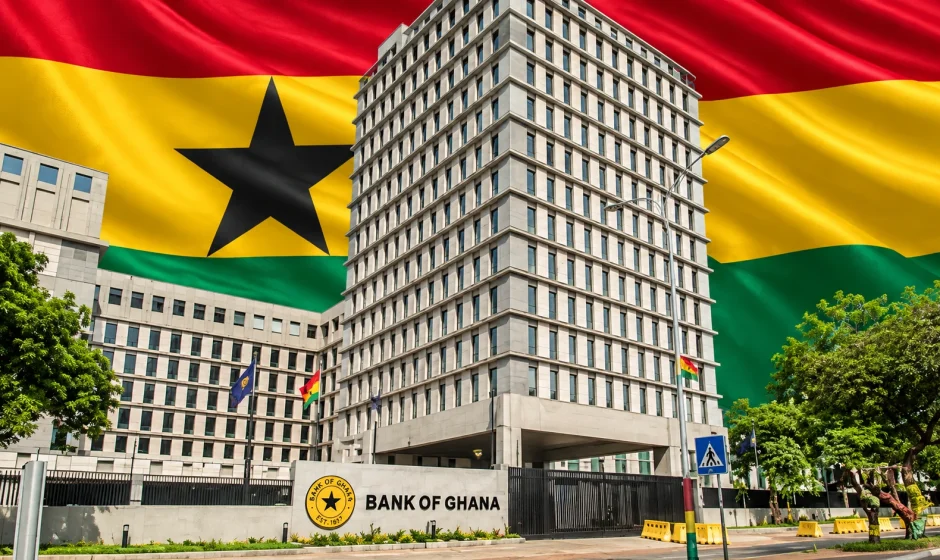

The Bank of Ghana money transfer rules changed significantly in 2026, with international money transfer operators now required to register directly with the central bank if they want to participate in Ghana’s inward remittance market.
In plain English, a company cannot simply offer international transfers into Ghana because it has a partnership with a local bank, mobile money company or payment processor. Bank of Ghana now requires International Money Transfer Operators, commonly called IMTOs, to pass through a formal registration process of their own.
The transition deadline for existing operators was eventually extended to July 31, 2026. Bank of Ghana stated that operators that failed to meet the registration requirements would not be permitted to operate in Ghana and that their existing arrangements with Ghanaian banks, specialized deposit-taking institutions and payment service providers would become null and void.
For Ghanaians abroad who send money home, and families in Ghana who receive those funds, the changes are important. They affect which companies can legally participate in the remittance system, how foreign currency enters Ghana, how transfers can be paid out, how customers are protected and what regulators can do when an operator breaks the rules.
Quick links (related guides):
Table of Contents
- What Changed in 2026?
- The July 31 Registration Deadline
- Why Bank of Ghana Is Tightening the Rules
- What a Registered IMTO Can Do
- What an IMTO Cannot Do
- How the Money Must Enter Ghana
- Can Remittances Still Go to Mobile Money?
- Consumer Protection Rules
- How to Know Whether a Service Is Approved
- What About Sending Money Out of Ghana?
- Why Remittances Matter to Ghana
- What Senders and Recipients Should Do
What Changed in Ghana’s Money Transfer Rules in 2026?
Bank of Ghana introduced a dedicated regulatory framework titled the Guidelines for the Registration and Operations of International Money Transfer Operators in Ghana.
The guidelines create a direct registration requirement for companies that facilitate inward international remittances into Ghana.
The framework applies not only to IMTOs themselves but also to banks, specialized deposit-taking institutions, payment service providers and other regulated financial institutions participating in the remittance chain.
Bank of Ghana says the objectives include creating a clearer legal framework, strengthening consumer protection, improving transparency, establishing anti-money laundering controls, protecting customer information and preserving the integrity of Ghana’s foreign exchange system.
One of the most important changes is that a Ghanaian bank or payment company is no longer enough to legitimize an international transfer operator on its own. Bank of Ghana’s guidelines say an agent should not partner with an IMTO for inward remittances unless Bank of Ghana has registered the IMTO under the new framework.
The July 31, 2026 Registration Deadline
When Bank of Ghana formally announced the registration system in January 2026, existing IMTOs were initially given 90 calendar days to regularize their operations.
The central bank later extended that deadline to July 31, 2026.
The June extension notice contained a significant warning. Bank of Ghana said an existing IMTO that failed to comply with the registration requirements by the deadline would not be permitted to operate in Ghana.
It went further, stating that the operator’s existing partnerships with banks, specialized deposit-taking institutions and payment service providers would be rendered null and void.
Why Is Bank of Ghana Tightening Money Transfer Rules?
Remittances have become too important to Ghana’s economy for regulators to treat them as a minor financial service.
Speaking at a diaspora roundtable in 2026, Bank of Ghana Governor Dr. Johnson Pandit Asiama said Ghana received approximately US$4.6 billion in remittances in 2024 and that inflows increased to nearly US$7.8 billion in 2025.
The governor said remittances represented roughly 6% of Ghana’s gross domestic product and exceeded foreign direct investment.
Those figures help explain why the central bank is concerned about how remittance foreign exchange enters Ghana.
Money sent by the diaspora is not only household income. It is also an important source of foreign currency for the national economy.
When transfers move through unauthorized channels, regulators may have less visibility into the source, value, settlement and final destination of the money. Bank of Ghana’s framework is designed to pull more of that activity into regulated channels.
The rules also address risks involving money laundering, fraud, cybersecurity, consumer disputes and the improper use of exchange rates.
What Can a Registered International Money Transfer Operator Do?
The 2026 framework focuses specifically on inward remittances, meaning money sent from another country to a beneficiary in Ghana.
Under the rules, a registered IMTO can receive money from a sender abroad and arrange for the beneficiary in Ghana to receive the funds through authorized channels.
| Activity | Allowed Under IMTO Framework? |
|---|---|
| Receive international transfers destined for people in Ghana | Yes |
| Pay a beneficiary through a Ghanaian bank account | Yes, through authorized channels |
| Pay a beneficiary through an approved payment or mobile wallet | Yes |
| Offer over-the-counter cash payout | Yes, through authorized channels |
| Provide customer support and complaint resolution | Yes, and required as part of the framework |
| Send money from Ghana to another country under the IMTO registration | No |
The rules say IMTO services should primarily serve individual customers on a person-to-person basis.
What Are Registered IMTOs Not Allowed to Do?
Registration as an IMTO does not give a company permission to become a general-purpose financial institution in Ghana.
Bank of Ghana specifically prohibits registered IMTOs from using the registration to conduct several activities outside the inward-remittance business.
Among other restrictions, an IMTO cannot use this registration to:
- Conduct outbound international money transfers from Ghana.
- Take deposits from customers.
- Provide loans.
- Terminate inward remittances into business or corporate accounts under the standard IMTO framework.
- Provide investment or insurance services unless separately authorized.
- Operate as a dealer in gold or other precious metals.
- Maintain customer deposit accounts.
- Engage in trade finance.
- Hold client funds as a custodian.
- Engage in unauthorized foreign exchange trading.
This is an important distinction for consumers. A company being registered for international remittances does not automatically mean every other financial product offered by that company is regulated or authorized in Ghana.
How Must Remittance Money Enter Ghana?
The foreign exchange settlement rules are one of the most important parts of the new framework.
Bank of Ghana requires the settlement bank to maintain designated local settlement accounts for inward remittances.
The IMTO must ensure that foreign currency proceeds associated with remittances are credited to the nostro account of its Ghanaian universal partner bank for same-day conversion into the local cedi settlement account.
In practical terms, the foreign currency behind a remittance is supposed to enter the regulated banking system rather than being settled through an unofficial or hidden arrangement outside the framework.
The guidelines also establish how the settlement bank should determine the exchange rate used for same-day conversion, referring to the applicable Bloomberg USD/GHS regional bid-ask range or another rate prescribed by Bank of Ghana.
This does not necessarily mean the exchange rate displayed to an individual sender in an app will look identical to the underlying settlement rate. Consumer pricing can also reflect the company’s fee structure and other transaction terms. However, the underlying settlement process itself is now more tightly regulated.
Can You Still Receive International Remittances Through Mobile Money?
Yes. The new rules do not eliminate mobile money as a way to receive international transfers.
Bank of Ghana specifically allows remittance funds to be made available through authorized payment wallets, in addition to bank accounts and over-the-counter cash payouts.
This matters because mobile money has become one of the most convenient ways for many Ghanaian households to receive funds from relatives abroad.
The regulatory issue is not whether mobile money can be used. The issue is whether the companies and partnerships moving that international transfer into the wallet are authorized to participate in the remittance chain.
For a broader comparison of transfer methods, see our guide to sending money to Ghana.
What Protections Do Senders and Recipients Have?
The new framework contains several consumer-protection requirements that are useful for ordinary users.
IMTOs are expected to provide accurate and timely information about services, fees, charges and exchange rates. They are also required to maintain consumer-protection and dispute-resolution systems.
The rules prohibit agents from charging beneficiaries fees other than those agreed with the sender when the transaction was initiated.
Operators and their agents must also maintain transaction records that include information such as:
- The sender’s name.
- The beneficiary’s name.
- Contact information.
- Country of origin.
- Purpose of the transfer.
- Date of the transfer.
- Amount transferred in foreign currency.
- Amount paid to the beneficiary in Ghanaian cedis.
The IMTO also serves as a second level of complaint resolution when an issue cannot be resolved by the local agent handling the transaction.
That means consumers should keep transaction references, receipts, screenshots and correspondence whenever a transfer goes wrong.
How Can You Tell Whether a Money Transfer Service Is Approved in Ghana?
This is where consumers need to be careful.
A transfer company having a website, mobile app or Ghana destination option does not by itself prove that GhanaCitizenship.com has independently verified its registration under Bank of Ghana’s new 2026 IMTO regime.
Likewise, a Ghanaian payment company being licensed as a Payment Service Provider does not automatically mean the international company sending money through it is separately registered as an IMTO.
The 2026 guidelines treat these as different regulatory roles.
Before relying on a company, consumers should look for current information from Bank of Ghana and verify that the company’s Ghana operations are being conducted through authorized channels.
GhanaCitizenship.com will not describe a particular international transfer company as Bank of Ghana-approved under the new regime unless that status can be supported by current regulatory evidence.
This is particularly important because historical Bank of Ghana notices may no longer describe a company’s current status. A service that was warned, suspended or unapproved several years ago could later obtain authorization, while a company that previously operated through a partnership may face different requirements under the new system.
Do These Rules Cover Sending Money From Ghana to the USA or UK?
No, not by themselves.
The IMTO registration framework discussed in this article is specifically designed for inward international remittances.
Bank of Ghana explicitly states that an IMTO registered under these guidelines cannot conduct outbound international money transfer transactions using that registration.
Therefore, a company being registered to send money into Ghana does not automatically mean it has authorization to move money from Ghana to the United States, United Kingdom, Canada or another country.
Outbound transfers can involve different foreign exchange rules, banking procedures and regulatory approvals.
Consumers searching for a service to send money out of Ghana should therefore verify the specific outbound service rather than assuming an inward-remittance approval covers both directions.
Why Remittances Matter So Much to Ghana
International transfers are a major part of everyday economic life in Ghana.
Remittances help families pay for food, housing, healthcare, school fees, utilities, construction and other household expenses. They also bring foreign currency into the economy.
Bank of Ghana Governor Johnson Asiama said in 2026 that remittance inflows reached nearly US$7.8 billion in 2025, after approximately US$4.6 billion in 2024.
Bank of Ghana has also highlighted the increasing diversity of the remittance market. Transfers now move through banks, mobile money platforms, fintech applications, cross-border payment platforms and cash-pickup networks.
That growth creates convenience, but it also makes oversight more complicated.
The 2026 IMTO framework is Bank of Ghana’s attempt to create a clearer regulatory perimeter around the international companies at the beginning of that chain, while continuing to regulate the Ghanaian banks, wallets and payment companies used to deliver the money.
For more background on the size and role of these flows, see our guide to remittances in Ghana.
What Should You Do Before Sending Money to Ghana?
The new rules do not mean international remittances to Ghana have become unusually difficult. They mean consumers should pay more attention to which service they are using and how the transaction is being completed.
Before sending money, check the total amount the recipient will receive rather than comparing transfer fees alone. A company advertising a low fee may still provide a less favorable exchange rate.
Confirm the recipient’s delivery method before paying. Bank transfer, mobile money and cash pickup can have different processing times and requirements.
Keep the transaction receipt and reference number until the beneficiary confirms that the money has arrived.
Do not send money through an individual who claims to provide a better unofficial exchange rate outside the regulated transfer process. Apart from fraud risk, informal arrangements can bypass the consumer protections built into Ghana’s regulated remittance system.
Be particularly cautious when a company or agent:
- Cannot clearly explain how the recipient will receive the money.
- Requests payment into an unrelated personal account.
- Promises an unusually high exchange rate without explaining the transaction structure.
- Cannot issue a proper receipt or transaction reference.
- Claims that Bank of Ghana regulations do not apply to its service.
- Pressures you to complete the transfer immediately.
If a transfer fails or the amount delivered is different from what was agreed, contact the service provider or its Ghanaian agent promptly and keep evidence of the transaction.
What Happens Next?
The most important development to watch is how Bank of Ghana implements the post-July 31 regulatory environment.
The rules are already clear that existing IMTOs were required to regularize their operations and that unregistered operators should not continue participating in the Ghanaian market.
What consumers need now is greater public visibility into which international operators have successfully completed that registration process.
A comprehensive and regularly updated Bank of Ghana list of registered IMTOs would make it much easier for senders, recipients, banks and payment companies to verify whether a particular service is operating under the current framework.
Until then, consumers should avoid treating an old approval, old enforcement notice or company’s own marketing page as conclusive evidence of its current regulatory status.
Ghana’s remittance market is likely to keep growing, particularly as mobile money and digital transfer services make sending money faster and easier. The 2026 rules are designed to make sure that growth takes place inside a system where Bank of Ghana can identify the operators, track the foreign exchange, enforce consumer protections and sanction companies that do not comply.
Sources
- Bank of Ghana: “Guidelines for the Registration and Operations of International Money Transfer Operators (IMTOs) in Ghana” (published for the 2026 registration framework)
- Bank of Ghana: Notice No. BG/GOV/SEC/2026/02 on IMTO Registration (January 20, 2026)
- Bank of Ghana: “Deadline for the Registration of International Money Transfer Operators (IMTOs) in Ghana” (June 12, 2026)
- Bank of Ghana: Speech by Governor Dr. Johnson Pandit Asiama at the Maiden Diaspora Roundtable Programme (2026)
- Bank of Ghana: Guidelines for Inward Remittance Services by Payment Service Providers
Compliance note: All money transfer services must be licensed by the Bank of Ghana.