

Ghana free primary healthcare is now operating in 135 districts through 4,447 participating facilities, according to the government’s September 2026 implementation update.
In plain English, you do not need active National Health Insurance Scheme membership to receive services included in the Free Primary Health Care Programme. Covered care includes health screening, maternal and child services, family planning support and basic treatment for common illnesses at participating community-level facilities.
The word primary is the important limit. The program does not make every hospital service free. Admission, surgery, specialist care and other higher-level treatment remain outside the basic FPHC package and generally move into the NHIS, referral system or Ghana Medical Trust Fund.
Table of Contents
Ghana Free Primary Healthcare at a Glance
| Question | Current Answer |
|---|---|
| Is the program operating? | Yes. The government reported active implementation in 135 districts as of September 2026. |
| How many facilities participate? | 4,447 facilities: 3,774 CHPS compounds, 632 health centers and 41 polyclinics. |
| Do I need active NHIS membership? | No, not for services included in the FPHC package. |
| What if my NHIS membership expired? | You can still be verified and served for covered FPHC services. |
| What if I have no NHIS card? | A person with a Ghana Card can be issued an FPHC identification number. |
| What if I have neither card? | Facility staff can record basic details and issue an FPHC identification number. |
| How can I get an access code? | Dial *929#, select the OTAC portal and generate a four-digit code valid for 24 hours. |
The program was formally launched in April 2026. The initial Phase One plan covered 150 districts. By early September, 135 had met the requirements to begin operating, including trained staff, equipment, financing and service-delivery capacity.
Do I Need NHIS to Use Ghana’s Free Primary Healthcare Program?
No. Active NHIS membership is not required for the preventive and basic treatment services included in the FPHC package.
The September implementation update gives several practical examples. A person whose NHIS membership has expired can still be verified and served. A person with a Ghana Card but no NHIS membership can receive an FPHC identification number. Even someone who has neither active NHIS membership nor a Ghana Card can have basic details recorded and receive an FPHC identification number.
This does not make the NHIS unnecessary. The two systems cover different levels of care. Free primary healthcare is the front door for prevention, screening and treatment of selected common conditions. If you need admission, surgery, specialist treatment or other higher-level services, the referral and NHIS systems become important.
Who Qualifies for Free Primary Healthcare in Ghana?
At the April launch, the program was described as providing essential primary-level care to Ghanaian citizens and legal residents, regardless of insurance status. The later implementation guidance focuses on identifying and serving people at participating facilities, including those without active NHIS membership or a Ghana Card.
In practice, access depends on three things:
- You are seeking a service included in the FPHC package.
- You use a participating CHPS compound, health center, polyclinic or approved community outreach point.
- Your district has begun implementation, or a participating facility can verify your eligibility in the program.
At launch, President John Dramani Mahama said a Ghana Card or another valid form of identification could be used at the primary level. The September update makes clear that lacking both an NHIS card and Ghana Card should not automatically exclude a person. Facility staff can record basic details and create an FPHC identification number.
Short-term foreign visitors should not assume they are covered. The public eligibility language specifically refers to citizens and legal residents. Tourists and other short-stay visitors should continue to carry travel or private medical insurance and be prepared for out-of-pocket costs outside the program.
What Treatments and Services Are Free?
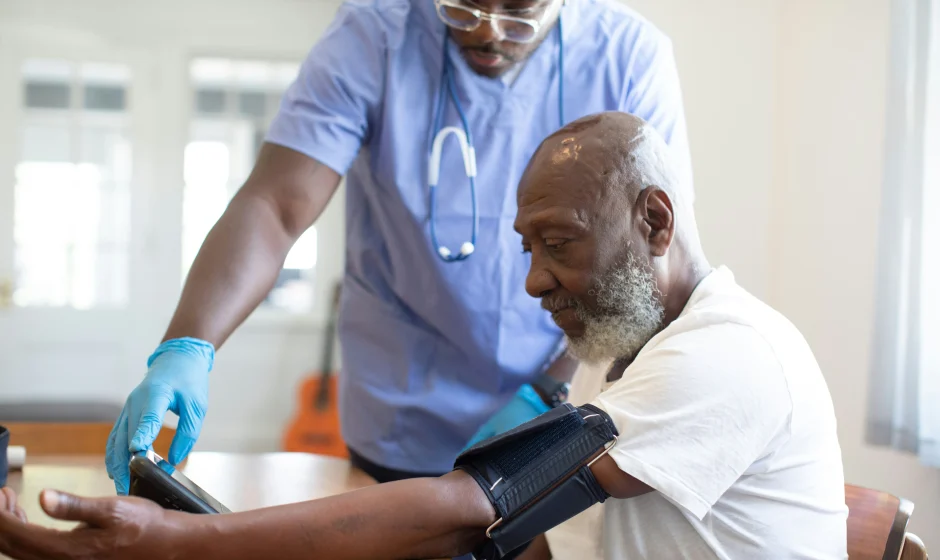
The current benefits package is broader than blood pressure and diabetes checks. It combines preventive care, maternal and child health, selected screening, health education and basic treatment for common illnesses.
| Area of Care | Services Reported as Covered |
|---|---|
| General screening | Blood pressure, blood sugar, weight and other health-risk assessments. |
| Non-communicable diseases | Early detection of hypertension and diabetes, plus selected cancer and mental health screening. |
| Maternal care | Antenatal care and pregnancy-related primary services. |
| Child and newborn care | Immunization, growth monitoring, child health services and newborn follow-up. |
| Family planning | Family planning services and related counseling. |
| Common illnesses | Basic treatment for malaria, diarrheal diseases and respiratory infections. |
| Health education | Nutrition, physical activity, hygiene and healthy-lifestyle counseling. |
| Community outreach | Screening and preventive services in homes, schools, markets, workplaces and other community settings. |
The exact service available on a particular day will still depend on the facility’s trained staff, equipment, medicine supply and ability to perform the service safely. A small CHPS compound will not have the same capacity as a polyclinic.
Where a condition cannot be handled at the primary level, staff should refer the patient to a district or municipal hospital or another suitable facility. A referral is not a promise that the next level of care will also be free under FPHC.
What Is Not Covered by Free Primary Healthcare?
The clearest exclusions are services above the primary-care level. The Health Minister said patients needing hospital admission, surgery, specialist treatment or other higher-level care would continue through the NHIS or Ghana Medical Trust Fund, depending on the condition and applicable rules.
You should not assume FPHC automatically pays for:
- Hospital admission or inpatient care
- Surgery
- Specialist consultations
- Advanced imaging or complex laboratory tests
- All prescription medicines
- Emergency transport or ambulance charges
- Private hospital treatment
- Care at a facility that is not participating in the program
Some of these services may be covered through NHIS, Mahama Cares or another public program. Coverage depends on the service, facility, accreditation, referral and the patient’s status under that separate program.
For a serious emergency, do not delay treatment while trying to determine whether FPHC applies. Go to the nearest capable emergency facility. Our guide to emergency healthcare in Ghana explains why patients may still encounter deposits or out-of-pocket costs outside basic primary care.
Which Districts Qualify?
As of the government’s September 7 update, Ghana’s Free Primary Health Care Programme was operational in 135 districts across all 16 regions. Phase One was designed for 150 districts, so the phrase “150 participating districts” is not yet the most accurate description of actual implementation.
The remaining Phase One districts are expected to join after meeting requirements for trained personnel, equipment, financing and service-delivery capacity.
However, the Ministry of Health, Ghana Health Service and Information Services Department have not published a complete, searchable list naming all 135 operational districts in the sources reviewed for this update. That makes it impossible to provide a reliable district-by-district directory without risking outdated or incorrect information.
To confirm your district:
- Contact or visit your nearest CHPS compound, health center or district health directorate.
- Ask whether the facility is currently active under the Free Primary Health Care Programme.
- Ask whether the service you need is included in the current local package.
- If the facility cannot provide it, ask which participating facility serves your area.
Which Hospitals, CHPS Compounds and Clinics Participate?
The 4,447 participating primary healthcare facilities reported in September include:
| Facility Type | Participating Facilities | Share of Reported Total |
|---|---|---|
| CHPS compounds | 3,774 | About 84.9% |
| Health centers | 632 | About 14.2% |
| Polyclinics | 41 | About 0.9% |
| Total | 4,447 | 100% |
This is primarily a community and primary-care program. A teaching hospital, regional hospital, district hospital or private hospital should not be assumed to provide every service free under FPHC simply because it is part of Ghana’s health system.
The government also reported that 127 facilities affiliated with the Christian Health Association of Ghana had received training on the policy, benefits package, financing and service-delivery requirements. Training is evidence of implementation preparation, but patients should still confirm whether a specific CHAG facility is actively providing the requested FPHC service.
The government is also adding care outside conventional clinics. Thirty prefabricated health kiosks had been completed for deployment in six regions and 30 districts, with placement planned in locations such as markets and transport centers. Community teams are also expected to deliver outreach in homes, schools and workplaces.
How to Register and Get Free Treatment
There are two reported access routes.
Option 1: Go Directly to a Participating Facility
- Visit a participating CHPS compound, health center or polyclinic.
- Tell staff you want to use the Free Primary Health Care Programme.
- Present your Ghana Card, NHIS card or another valid form of identification if available.
- If you do not have active NHIS membership, staff can verify or create an FPHC identification number.
- Confirm that the service you need is part of the FPHC package before treatment begins.
Option 2: Generate a Four-Digit Access Code
- Dial *929# on a mobile phone.
- Select the OTAC portal from the menu.
- Follow the prompts to generate an FPHC four-digit code.
- Use the code within 24 hours.
The published instructions do not say that every patient must generate the code before visiting a facility. They describe visiting a participating facility or using the mobile access-code route. If the menu does not appear, the code fails or you are unsure which option to select, ask the facility to register or identify you through its client system.
Bring any medical records, prescription information and identification you have. These may help staff understand your history, but the September guidance says a person without both NHIS membership and a Ghana Card can still have basic details recorded and receive an FPHC identification number.
What Should I Do if a Facility Tries to Charge Me?
First, ask the staff member to separate the covered primary-care service from anything outside the FPHC package. A visit can include both. For example, a blood pressure check may be covered, while a medicine that is unavailable under the program or a higher-level test may not be.
Ask these questions before paying:
- Is this facility currently participating in FPHC?
- Is the exact service included in the FPHC benefits package?
- Is the charge for treatment, medicine, laboratory work, registration or a referral service?
- Can the facility show or explain the applicable payment rule?
- Can the district health directorate confirm the facility’s status?
Keep the receipt if you pay. Record the facility name, date, service and amount. A documented complaint is much easier to review than a general claim that a clinic charged money.
Do not argue or delay urgent care over a disputed fee. Get necessary treatment first when your condition is serious, then raise the billing question with the facility administrator or district health directorate.
How Much Has Ghana Spent on the Program?
The government reported committing approximately GH₵79.624 million to implementation as of September 5, 2026. Using Bank of Ghana mid-rates from September 16, that was about USD 6.92 million, GBP 5.15 million or RMB 46.44 million. Currency conversions are approximate and change with exchange rates.
The official breakdown included GH₵35.1 million in population-based payments for the first 106 districts, GH₵16.9 million in approved Ghana Health Service implementation funding, GH₵16.7 million in district training-related transfers and GH₵9.5 million transferred to the Ghana Health Service. These listed components do not add up to the full reported total, so they should be treated as major funding lines rather than a complete accounting of every cedi.
To support delivery, the government also reported distributing 24,534 pieces of essential equipment, more than 10,000 motorbikes and tricycles, and 5,000 outreach kits. Another 5,000 outreach kits and 12,000 pieces of equipment were expected in the following month.
The next implementation challenge is not simply adding facilities. The government says it will track medicine shortages, referrals, screening numbers, detected hypertension and diabetes cases, treatment initiation, maternal and child reach, patient satisfaction and out-of-pocket spending. Those measures will show whether free access exists in practice, not only on paper.
Frequently Asked Questions
Can I get free malaria treatment without NHIS?
Yes, basic treatment for malaria is included in the reported FPHC package at participating primary-care facilities. Availability of a particular medicine can still vary by facility and stock.
Can I use the program if my NHIS has expired?
Yes. The government’s September update says people with expired NHIS membership can still be verified and served for covered FPHC services.
Can I use the program without a Ghana Card?
Yes. If you have neither active NHIS membership nor a Ghana Card, the facility can record your basic details and issue an FPHC identification number.
Are all medicines free?
No official source reviewed for this guide says every medicine is free. Treatment for selected common conditions is included, but medicine availability and the limits of the benefits package still matter.
Are operations and specialist visits free?
Not under the primary-care package. Surgery, hospital admission, specialist treatment and other higher-level services move into the NHIS, Ghana Medical Trust Fund or another payment route.
Does every hospital participate?
No. The reported network consists of participating CHPS compounds, health centers and polyclinics. Confirm a facility’s FPHC status before assuming that treatment is free.
How long does the *929# code last?
The four-digit FPHC access code is valid for 24 hours.
Where can I find the full list of 135 districts and 4,447 facilities?
A complete official public directory was not available in the government and health-sector sources reviewed for this September 2026 update. Confirm locally with the nearest CHPS compound, health center or district health directorate.
Sources
- Information Services Department: “Free Primary Healthcare now operational in 135 districts – Health Minister” (September 7, 2026)
- Ghana News Agency: “Free Primary Healthcare reaches 135” (September 8, 2026)
- The Presidency, Republic of Ghana: “From community kiosks to specialised care: How Mahama’s Free Primary Healthcare will be rolled out” (April 15, 2026)
- Information Services Department: “Free Primary Healthcare to Take Services Closer to Communities” (September 14, 2026)
- Ghana Business News / Ghana News Agency: “President Mahama launches Free Primary Healthcare to complement NHIS” (April 16, 2026)
- Bank of Ghana: Daily Interbank FX Rates