

Ghana Hits 45% Debt Target Ahead of Schedule
Ghana Inflation 2026 Explained
Ghana Economy 2026 Outlook
How Ghana’s GDP Works
Ghana Foreign Investment Guide
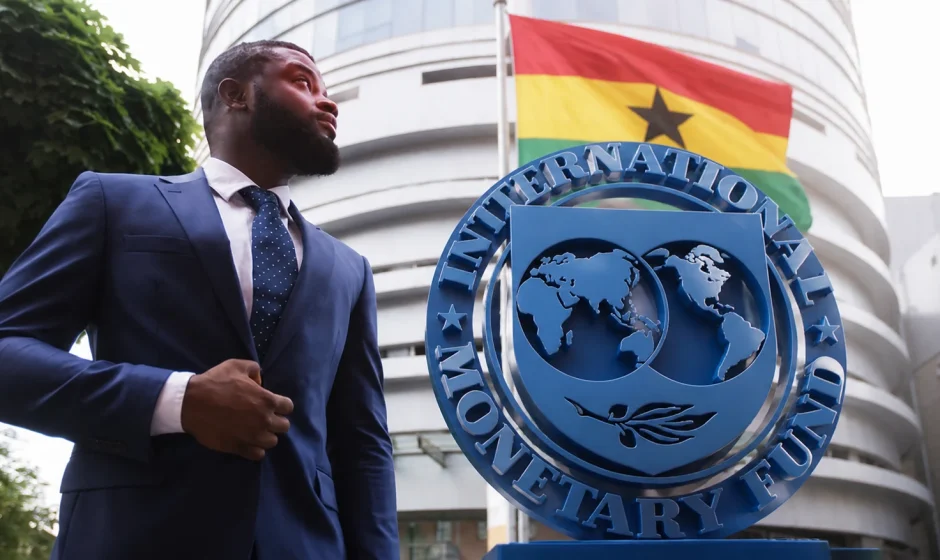
The International Monetary Fund completed the sixth and final Ghana IMF final review on July 27, 2026, clearing the way for an immediate disbursement of SDR 265.9 million, worth about US$371 million at the IMF’s current conversion. The payment brings total disbursements under Ghana’s Extended Credit Facility to about US$3 billion.
In plain English, Ghana has reached the end of the emergency lending programme that began during the country’s debt and currency crisis. The final payment is important, but the larger story is that Ghana is moving from a financed IMF programme into a new phase focused on maintaining fiscal discipline without receiving another loan under the Policy Coordination Instrument.
What the Ghana IMF Final Review Approved
The IMF Executive Board completed the final review of Ghana’s Extended Credit Facility, concluded the country’s 2026 Article IV consultation, and reviewed Ghana’s request for a 36-month non-financing Policy Coordination Instrument, commonly called a PCI.
The IMF’s July 2026 release describes the ECF as a 39-month arrangement, even though the programme was originally approved in May 2023 as a 36-month facility. The longer description reflects the programme’s actual period through the final Board review.
The original arrangement was designed to restore macroeconomic stability, restructure unsustainable public debt, rebuild foreign exchange reserves, and improve public financial management. Ghana received an initial disbursement of about US$600 million in 2023. The July 2026 release closes the programme with the final US$371 million payment.
| Item | Official IMF position |
|---|---|
| Final disbursement | SDR 265.9 million, about US$371 million |
| Total ECF disbursements | About US$3 billion |
| Final review | Sixth review, completed July 27, 2026 |
| Next framework | 36-month non-financing Policy Coordination Instrument |
Why Some Reports Say $360 Million Instead of $371 Million
Graphic Online reported the final tranche as US$360 million, while the IMF and Reuters reported about US$371 million. The difference does not mean Ghana received two separate payments. The loan is denominated in Special Drawing Rights, not fixed US dollars. The official amount is SDR 265.9 million, and its dollar value changes with the SDR exchange rate.
The US$360 million figure also appeared in earlier IMF financing projections for 2026. For current reporting, the IMF’s July 27 conversion of approximately US$371 million is the stronger figure to use. A careful headline can still note that local reporting described it as the final US$360 million tranche, but the article should explain the currency-conversion difference rather than present the two amounts as contradictory.
What Changed During Ghana’s IMF Programme
The IMF said Ghana’s performance was broadly satisfactory. Real GDP grew by 6 percent in 2025 and expanded by 6.4 percent year-on-year in the first quarter of 2026. Headline inflation fell to 5.4 percent at the end of 2025 and 5.3 percent in June 2026. Readers can compare that decline with our full guide to Ghana inflation in 2026.
Ghana’s external position also improved. The current account recorded a surplus equal to 7.9 percent of GDP in 2025, supported by historically high gold prices. Gross international reserves reached US$11.9 billion, equal to about four months of imports, by the end of 2025. The primary fiscal balance moved to a surplus of 2.1 percent of GDP.
Debt conditions improved enough for the IMF to upgrade Ghana’s risk of external and overall debt distress to moderate. This happened two years earlier than expected when the programme began.
Ghana has signed debt-relief agreements with more than half of its bilateral creditors and reached agreements in principle with a similar share of external commercial creditors. Negotiations with remaining creditors are still underway, so the debt restructuring is largely complete, not completely finished.
What the New Policy Coordination Instrument Means
The PCI is not another bailout and does not provide fresh IMF financing. It gives Ghana a formal framework for continued policy reviews, reform targets, and IMF monitoring after the ECF ends. The goal is to show creditors, donors, and investors that the government intends to keep following policies considered strong enough for IMF upper-credit-tranche standards.
This distinction matters. Under the ECF, Ghana received money after meeting programme conditions and completing reviews. Under the PCI, Ghana receives policy endorsement and monitoring, but no scheduled loan disbursements.
The value comes from credibility. A positive PCI review can support donor financing, improve market confidence, and make Ghana’s economic management easier for outside investors to assess. It does not guarantee that Ghana will receive new loans or regain full access to international capital markets.
The 2026 budget targets a primary surplus of 1.5 percent of GDP. The IMF said improved debt conditions have created limited fiscal space for development and social spending while preserving Ghana’s goal of reducing public debt to 45 percent of GDP by 2034. GhanaCitizenship.com has separately examined the government’s claim that it reached the 45 percent debt target ahead of schedule.
What the Ghana IMF Final Review Means in Real Life
For households, programme completion does not automatically lower food prices, rent, electricity bills, or transport costs. Lower inflation means prices are rising more slowly. It does not mean prices return to their old levels. The benefits become more visible when lower inflation is paired with wage growth, reliable services, stronger employment, and stable exchange rates.
For Ghanaian businesses, lower inflation and improved reserves can make planning easier. Importers benefit when exchange-rate volatility falls, while companies seeking credit may benefit over time if financial-sector stability improves.
The IMF still sees weaknesses in some state-owned and private banks, specialized deposit-taking institutions, and non-performing loan portfolios. Lower macroeconomic risk will not immediately translate into cheap or widely available business credit.
For diaspora investors and foreign companies, the final review is a positive signal, not a guarantee of profit or policy stability. Ghana’s growth, reserve position, and debt rating have improved, but investors still need to examine taxes, licensing, sector rules, currency exposure, and local operating costs.
Our Ghana foreign investment guide covers the practical legal and market issues that sit behind the headline economic numbers.
The Main Risks Ghana Still Faces
The IMF’s approval was not a declaration that every problem has been solved. Ghana must complete negotiations with remaining external creditors, protect the Bank of Ghana’s independence, and carry out its plan to recapitalize the central bank by 2032.
The Fund also wants the Domestic Gold Purchase Programme transferred to GoldBod and quasi-fiscal activities permanently discontinued. Energy-sector losses, cocoa-sector financial pressures, weak state-owned enterprises, and bank vulnerabilities remain major risks.
The IMF approved a waiver related to a small temporary breach of the end-December 2025 ceiling on Bank of Ghana claims on the government and public entities. The breach was linked to cost-sharing under the domestic gold purchase programme. The waiver was granted because the deviation was temporary and corrective action had been taken.
Ghana’s next test is not receiving the last tranche. It is keeping the reforms in place when the regular flow of ECF money has ended. Readers should watch future PCI reviews, outstanding debt-restructuring agreements, Bank of Ghana recapitalization, energy-sector arrears, and whether economic growth produces stronger employment and household purchasing power.
Sources
- International Monetary Fund: “IMF Executive Board Completes the Sixth Review of Ghana’s Arrangement Under the Extended Credit Facility” (July 27, 2026)
- Reuters: “IMF Completes Final Review of Ghana Lending Program, Unlocks $371 Million” (July 27, 2026)
- Graphic Online: “IMF Releases $360m to Ghana – Final $360m of $3bn Approved” (July 28, 2026)
- International Monetary Fund: “IMF Executive Board Approves US$3 Billion Extended Credit Facility Arrangement for Ghana” (May 17, 2023)