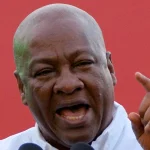



President John Dramani Mahama will host a High-Level Next Steps Conference on Reparatory Justice in Accra from June 17 to 19, 2026. The conference follows the adoption of a landmark United Nations resolution declaring the transatlantic enslavement of Africans as the gravest crime against humanity.
The UN General Assembly adopted the resolution on March 25, 2026, with overwhelming support from a broad coalition of nations. A small number of nations voted against the measure, while several others abstained. The resolution marks the first time in the UN’s 80-year history that the international community has formally recognized the transatlantic slave trade and racialized chattel enslavement of Africans in these terms.
This recognition is not just symbolic. The resolution calls for good-faith dialogue on reparatory justice and the prompt restitution of cultural properties. For Ghana, this shifts the global conversation from acknowledgment to concrete implementation, a role the country has actively pursued since the Year of Return in 2019.
Quick links (related guides):
What Happened: The UN Resolution
On March 25, 2026, the United Nations General Assembly adopted Resolution A/RES/80/250, tabled by President Mahama on behalf of African Union member states. The resolution recognizes the transatlantic slave trade and the racialized chattel enslavement of Africans as “the gravest crime against humanity.”
The vote demonstrated a clear international consensus, though the outcome was not unanimous. The resolution passed with strong support from African, Caribbean, and Global South nations. A minority of member states voted against the text, while a notable bloc—including several European nations—chose to abstain.
The transatlantic slave trade lasted approximately 400 years, from the early 16th to the late 19th century, with an estimated 18 million Africans forcibly captured and transported across the Atlantic. Millions more perished during raids, forced marches, and the Middle Passage.
The resolution urges member states to engage in good-faith dialogue on reparations, including issuing formal apologies, returning stolen artifacts, providing financial compensation, and ensuring guarantees of non-repetition.
President Mahama, presenting the motion, said: “So today we come together in solemn solidarity to affirm truth and pursue a route to healing and reparative justice.”
The Conference: Dates, Location, and Purpose
The High-Level Next Steps Conference on Reparatory Justice is taking place over three days in Accra:
– June 17: Technical experts’ meeting at the Ministry of Foreign Affairs
– June 18: High-level summit at the Kempinski Hotel Gold Coast City
– June 19: Commemorative programme and Juneteenth observance at Christiansborg Castle in Osu
The conference is organized under President Mahama’s leadership as African Union Champion on Advancing the Cause of Justice and Payment of Reparations.
Foreign Affairs Minister Samuel Okudzeto Ablakwa described the gathering as “one of the most consequential international meetings on reparatory justice in recent history.”
The core purpose is straightforward: translate the UN resolution from political recognition into practical, coordinated international action. As the conference concept note states, the resolution “represents a fundamental departure from the international community’s response to the transatlantic slave trade, replacing commemorative gestures with the pursuit of historical truth and dialogue, aimed at reconciliation and justice.”
Agenda and Expected Outcomes
The conference is structured around five core objectives, designed to transform political momentum into a common concrete institutional commitment for reparatory justice.
Key outcomes expected from the conference include:
A Global Post-Adoption Framework. The conference will develop a coherent, structured framework to guide implementation of the UN resolution across member states, addressing what organizers describe as fragmentation in current approaches.
Three global panels. The conference will establish:
– A Global Advisory Panel for Reparatory Justice
– An Expert Panel on the Restitution of Cultural Artefacts
– A Legal Panel for Reparatory Justice
These bodies are intended to provide sustained intellectual, legal, policy, and strategic leadership for the global reparations movement.
A permanent transcontinental consultative forum. The forum will strengthen cooperation among stakeholders across Africa, the Caribbean, Latin America, Europe, and North America to ensure continued engagement on reparatory justice.
An outcome document. A formal outcome document will be adopted on June 19 and submitted as a contribution to the UN Secretary-General’s report on implementation of the resolution, which will be presented at the 82nd Session of the UN General Assembly.
Thematic panels. Six thematic panels will cover legal frameworks for reparations, economic dimensions of restitution, cultural heritage recovery, and strategies for transcontinental cooperation.
Juneteenth Commemoration at Christiansborg Castle
A notable highlight of the conference is the Juneteenth commemoration on June 19 at Christiansborg Castle in Osu—a 17th-century fortress built by the Danish that served as a hub for the transatlantic slave trade.
This is described as the first-ever joint observance of Juneteenth between an African country and the United States, and the first Juneteenth commemoration to be held outside America.
The programme at Christiansborg Castle will include:
– A tour of the castle for spiritual reconnection and reflection
– Commemoration of tragic moments
– A traditional durbar involving political leaders, traditional authorities, and diaspora representatives
– The Juneteenth observance itself
The commemoration is expected to feature diaspora leaders, civil rights advocates, and descendants of prominent Pan-African figures, honoring Africans who were taken through the transatlantic slave trade. The event focuses on remembrance, reconciliation, and renewed commitment to the reparations cause.
International Participation and Significance
The conference brings together participants from more than 80 countries, including heads of state and government, foreign ministers, international organizations, scholars, civil society actors, and diaspora representatives.
Confirmed heads of state and government attending include presidents from Senegal, Liberia, Namibia, The Gambia, Guinea-Bissau, and the Prime Minister of Barbados. The African Union Commission Chair is also expected to speak, alongside virtual addresses from other international leaders.
Why this conference matters.
Ghana has positioned itself at the forefront of the global reparations discourse in recent years, leveraging its historical significance in the transatlantic slave trade and its diplomatic engagements within the African Union.
The country’s designation of President Mahama as the African Union Champion for Reparations has strengthened its advocacy for justice, recognition, and restitution for Africans and people of African descent.
The African Union has declared 2026 to 2036 as the Decade of Reparations, and this conference represents a major step in operationalizing that vision.
What makes this moment different from previous efforts is the institutional framework now taking shape. Previous initiatives by African countries to address historical injustices were often fragmented. The UN resolution and the Accra conference together create a structured, multilateral process with clear mechanisms for follow-through.
The conference is expected to consolidate the gains of the UN resolution by shifting the global conversation from recognition to implementation, including legal, economic, and institutional pathways for reparations.
As President Mahama has said: “Reparatory justice will not be handed to us. Like political independence, it must be asserted, pursued and secured through determination and unity.”
Sources