
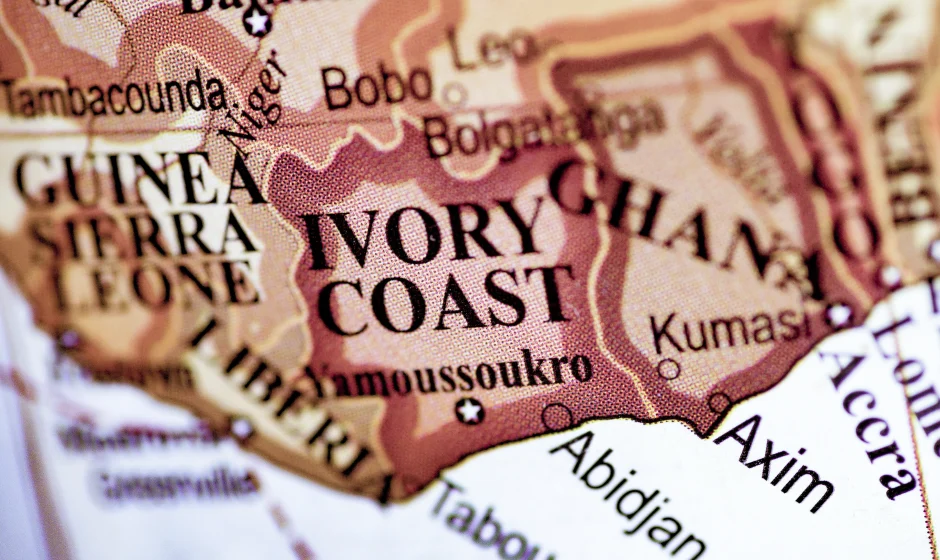

Ghana and Ivory Coast have signed a Joint Declaration committing both countries to tighter coordination across their cocoa sectors, following a bilateral summit in Abidjan on June 16, 2026. President John Dramani Mahama met with Ivorian President Alassane Ouattara at the Ivory Coast-Ghana High-Level Summit on the Future of the Cocoa Economy.
The declaration covers price alignment, environmental protection, local processing, and disease control. Together, the two countries supply roughly 60 percent of global cocoa production, giving their coordinated policy choices outsized influence over the entire cocoa-chocolate value chain.
For Ghana’s cocoa farmers, diaspora investors watching the agriculture sector, and businesses operating in the cocoa supply chain, the summit signals a deliberate push to convert raw production dominance into real economic returns and more stable farm-gate prices.
Quick links (related guides):
What Was Agreed at the Summit
The Joint Declaration signed in Abidjan on June 16 covered five broad areas: producer price coordination, environmental protection, disease research, local processing, and alliance expansion. The statement from Ghana’s Presidency described both leaders as satisfied with the progress of the Joint Technical Committee that has been working on implementation details between the two countries.
A key framing from the summit was the emphasis on the farmer. Both Mahama and Ouattara stated that cocoa farmers must remain at the center of cocoa governance, a position that directly shapes the pricing and LID agenda discussed below.
The declaration also formally recognized the Ivory Coast-Ghana Cocoa Initiative (CIGCI) and the African Regional Standards for Sustainable Cocoa (ARS-1000) as the primary instruments for traceability and sustainability compliance across both supply chains.
The Living Income Differential and Price Harmonization
The Living Income Differential (LID) is a pricing mechanism that Ghana and Ivory Coast introduced in 2019 to guarantee farmers a premium above commodity market prices. The summit reaffirmed the LID and extended the commitment to include harmonized producer price announcements across both countries.
The practical logic is straightforward: when the two largest producers announce prices independently, traders and multinational buyers can exploit the gap. A coordinated announcement removes that arbitrage and gives farmers in both countries more predictable income regardless of short-term swings in London or New York futures markets.
The Joint Declaration called for improved market intelligence systems to back up this coordination, ensuring price decisions are grounded in current data rather than political calculations alone.
Illegal Mining, Disease, and Environmental Threats
Both presidents raised concerns about illegal mining’s impact on shared water bodies. This is not an abstract policy concern for cocoa farmers: contaminated water sources increase farming costs, damage ecosystems that cocoa trees depend on, and threaten the long-term viability of farms in affected areas. The two leaders agreed on a joint strategy to fight illegal mining, including cleanup efforts on shared water sources that cross the border.
On disease, the summit produced a specific commitment to deepen scientific collaboration to combat Cocoa Swollen Shoot Virus Disease (CSSVD). CSSVD has been one of the most destructive threats to Ghana’s cocoa output for decades, and addressing it effectively requires cross-border research cooperation because the disease does not respect national boundaries. Coordinated pest control and shared research findings between national institutions are expected to follow.
The declaration also acknowledged climate change as a structural risk to production, without specifying particular mitigation targets. That gap leaves room for future summits to fill in with measurable commitments.
Local Processing and Intra-African Trade
One of the most commercially significant elements of the declaration was the pledge to move beyond raw cocoa exports. Africa produces roughly 80 percent of the world’s cocoa beans, yet captures a small fraction of the value in finished chocolate and cocoa-derived products. The summit addressed this directly, with both governments committing to expand local processing capacity and promote cocoa consumption within Africa.
For investors and businesses in Ghana’s processing sector, this represents a policy signal worth watching. Scaling up domestic processing requires power infrastructure, industrial investment, trained labor, and reliable bean supply. Companies positioned in intermediate processing, such as cocoa butter, liquor, or powder production, stand to benefit if both governments follow the declaration with concrete investment incentives.
Promoting intra-African trade in value-added cocoa products is the complementary demand-side goal. Building African consumer markets for chocolate and cocoa derivatives would reduce dependence on European and North American buyers, though building that market takes sustained effort from both the public and private sectors.
Expanding the Alliance Across Africa
The most forward-looking element of the declaration is the proposal to open the Ghana-Ivory Coast Cocoa Alliance to other African producer countries. The stated goal is to strengthen Africa’s collective bargaining power in the global cocoa-chocolate value chain.
The scale of the opportunity is significant. Africa already produces about 80 percent of global cocoa beans. If producer countries could coordinate on pricing, sustainability standards, and processing investment the way major oil producers coordinate through OPEC, the leverage over global pricing would be considerable. The CIGCI is the institutional vehicle proposed for this expanded coordination.
Whether other producers, such as Cameroon, Nigeria, and Uganda, join and align on price coordination remains to be seen. Each country has its own cocoa marketing structure, domestic politics, and relationship with international buyers. The alliance concept is sound in principle; execution will depend on sustained diplomatic commitment beyond this single summit.
What This Means for Ghana’s Cocoa Sector
The summit outcomes matter on three levels for Ghana specifically.
For farmers, the reaffirmation of the LID and the commitment to harmonized pricing means continued policy support for farm-gate prices above pure commodity market rates. Whether that support translates into actual income gains depends on implementation and whether COCOBOD maintains alignment in practice during the next crop season price announcement.
For the sector’s long-term health, the joint commitment to fight CSSVD and address illegal mining’s water contamination tackles two of the most persistent threats to Ghana’s cocoa output volume. A coordinated research and containment program backed by both governments is meaningfully stronger than Ghana acting alone.
For investors and businesses, the processing push is the headline. Ghana has existing cocoa processing facilities, but scaling up requires investment. The political backing from a bilateral summit with Ivory Coast, the continent’s largest producer, adds credibility with international development finance institutions and private investors evaluating Ghana’s agribusiness sector.
Sources
- Ghana News Agency: “Ghana, Ivory Coast strengthen Cocoa Alliance as Mahama meets Ouattara” (June 17, 2026)
- World Economic Forum: “Beyond the Bean: Building a Resilient Cocoa Future” (October 2025)
- European Journal of Development Research: “Cocoa: Origin Differentials and the Living Income Differential” (2024)
- PLOS One: “Cacao Sustainability: The Case of Cacao Swollen-Shoot Virus Co-Infection” (March 2024)