



Related Ghana guides:
- Mobile Money in Ghana: How It Works, Fees, and What Expats Should Know
- Best Banks in Ghana (2026): Accounts, Loans, and What to Expect
- How to Open a Ghanaian Bank Account from the USA (Step-by-Step)
- Bills Micro Credit in Ghana: Real Costs, Risks, and What Borrowers Miss
- Ghana Safety and Relocation Guide (2026): What You Need to Know
- 543 Business Ideas to Start in Ghana
If you’ve ever tried to borrow money in Ghana, you already know the reality: it’s possible, but it’s not cheap, and one wrong move can cost you thousands. Whether you need capital for a business, school fees, or an unexpected expense, access to credit is one of the biggest questions people ask, especially if you’ve just arrived from London, Beijing, or New York.
In March 2026, the Bank of Ghana reduced its policy rate to 14%, the lowest since July 2021. That’s the official signal. But the gap between that and what you’ll actually pay (often ranging from 19% to 28% depending on your risk profile) is where the real story lives. The shift means affordability is improving, but you still need to know where to look and how to avoid traps.
All licensed lenders in Ghana must be regulated by the Bank of Ghana. That’s your first line of defence. This guide covers everything about how to get a loan in Ghana, who can borrow, where to find legitimate lenders, what interest rates to expect, and most importantly, how to spot scams before they empty your bank account. Whether you are a salaried worker, a market trader, an entrepreneur, or an expat, you’ll find the loan options and qualification steps that fit your situation.
Table of Contents
- Who Can Get a Loan in Ghana?
- Types of Loans Available
- Where to Borrow: Reputable Lenders
- Current Interest Rates (2026)
- How to Qualify: Credit, Records, Collateral
- Loan Scams: Red Flags & How to Avoid Them
- Special Considerations for Foreigners & Expats
- Practical Steps to Get a Loan
- The Reality of Borrowing in Ghana
- Best Loan Options by Goal (Quick Reference Table)
- Why Loans Get Rejected (Common Reasons)
- How to Increase Your Approval Chances
- How Much Can You Realistically Borrow?
- Understanding the Real Cost of a Loan
- Loans in Ghana vs US/UK: What Expats Should Know
- What This Means for Borrowers in 2026
- Biggest Mistakes Borrowers Make in Ghana
- Consumer Protection: What to Check Before Signing
- Real‑World Case Studies
Who Can Get a Loan in Ghana? (Locals, Expats, Business Owners)
Eligibility depends less on your passport and more on your ability to prove you can repay. Here’s how it breaks down by borrower type.
Ghanaian Citizens and Residents
If you’re Ghanaian or a permanent resident with a valid Ghana Card and a bank account, you have the widest options. Traditional banks, savings and loans companies, and microfinance institutions all serve local borrowers. The key requirement is a verifiable income stream or business history.
Foreigners and Expats
Non‑Ghanaians can obtain loans, but requirements vary by lender. The following documents are commonly requested (not universal):
- Valid passport with residence permit (non‑citizen Ghana Card is ideal)
- Employment contract or proof of business registration in Ghana
- Six months of bank statements from a Ghanaian bank account
- Tax identification number (TIN) and proof of tax filings if self‑employed
- Reference letter from employer or landlord (sometimes)
Some banks require a local guarantor or collateral. Fintech lenders that use mobile money data may be easier to access if you have an active MTN MoMo or Vodafone Cash account with consistent transaction history. Opening a bank account in Ghana is your first step to building a local financial footprint.
Business Owners, Entrepreneurs, and SMEs
Small and medium enterprises (SMEs) are the backbone of Ghana’s economy, and lenders know it. In 2026, banks and development partners are actively targeting businesses with products like Adansi Rural Bank’s “Adwuma Nkosuo” and Kintampo Rural Bank’s MSME Financing initiative. Key requirements include business registration documents, tax clearance, and financial records separating personal and business accounts.
Informal Sector Workers and Traders
If you’re a market trader, artisan, or self‑employed without formal payslips, you’re not locked out. Mobile money lenders and microfinance institutions assess creditworthiness using your mobile money transaction history. For example, MTN MoMo users may access mobile‑linked loan products from partner banks such as Fidelity Bank (through the *170# menu) or the Ahomka Loan product (Absa + MTN + JUMO). Always confirm directly with the provider before applying.
Types of Loans Available in Ghana
Different needs call for different loan structures. Here’s what you’ll find in the market.
Personal Loans
Unsecured loans for individuals covering education, medical expenses, travel, or home improvement. Repayment terms typically range from 6 to 36 months. Interest rates vary based on your credit profile and lender.
Mobile Money Loans (Short‑Term)
Products like Ahomka Loan (Absa + MTN + JUMO) and other mobile‑linked offerings from banks are disbursed directly to your mobile wallet. These are short‑term, often repaid within 30 days, and use your mobile money transaction history instead of collateral. Loan amounts start small and increase with consistent repayment. Warning: These products often quote fees (e.g., 10‑20%) rather than annual interest rates. The effective annual percentage rate (APR) can be much higher if you roll over the loan.
Business and SME Loans
Tailored for registered businesses, these can cover working capital, equipment purchase, or expansion. Lenders like Bayport Savings and Loans, Sinapi Aba Savings and Loans, and Advans Ghana offer products specifically for SMEs. Some have flexible repayment schedules tied to your business cash flow.
Invoice and Supply Chain Financing
If your business supplies goods to larger companies or government institutions, you can borrow against outstanding invoices. This is often cheaper than traditional loans because the repayment is tied to confirmed sales rather than speculative growth.
Group and Cooperative Loans
For traders, artisans, and small business owners, group lending through associations (like the Ghana National Tailors and Dressmakers Association or market cooperatives) can secure better terms. Lenders view group loans as lower risk because members guarantee each other’s repayments.
Where to Borrow: Reputable Lenders and Platforms
The safest place to start is the Bank of Ghana’s official list of licensed institutions. Here are the main categories of legitimate lenders operating in Ghana.
Commercial Banks (Traditional)
All major Ghanaian banks offer loan products. Fidelity Bank (largest privately‑owned Ghanaian bank) has mobile‑linked products. Other major players include Absa, Standard Chartered, GCB Bank, and Ecobank. Interest rates are generally lower than microfinance but require stronger documentation.
Savings and Loans Companies (Licensed by Bank of Ghana)
These institutions specialize in consumer and SME lending. According to the Bank of Ghana’s official registry, licensed savings and loans companies include:
- Advans Ghana Savings and Loans Ltd.
- Bayport Savings and Loans Plc
- Sinapi Aba Savings and Loans Company Ltd
- Opportunity International Savings and Loans Co. Ltd
- Letshego Savings and Loans Plc
- BRAC Ghana Savings and Loans Limited
Always verify a company is on this list before applying.
Rural and Community Banks (with Development Partners)
Rural banks are often more accessible to borrowers outside Accra. Kintampo Rural Bank and Adansi Rural Bank have partnered with GIZ (German Development Agency) to offer MSME loans with reduced interest rates and flexible repayment terms.
Fintech and Mobile Lending Platforms
Companies like JUMO (technology partner for mobile loans) and Fido Money offer digital lending through mobile networks. These platforms use automated scoring models based on transaction data to assess creditworthiness. They’re fast but interest rates can be higher than bank loans—so check terms carefully.
Regulatory note: Fido is licensed as a Tier 3 microfinance institution (not a bank). This means it operates under a different regulatory framework. Always confirm the license type and whether the lender is supervised by the Bank of Ghana.
Government‑Backed and Development Finance Schemes
Several government agencies provide targeted loan programs. Examples include:
- MASLOC (Microfinance and Small Loans Centre): Offers small loans to traders, artisans, and small businesses. Requirements vary by district.
- Ghana Enterprises Agency (GEA): Provides business development support and facilitates access to credit, often in partnership with banks.
These programs are often limited in scope and availability. Before applying, verify current openings and eligibility criteria on the official websites (www.masloc.gov.gh, www.gea.gov.gh). Do not assume “government‑backed” means easy approval or no collateral.
Current Interest Rates and What to Expect in 2026
If you’ve been waiting for borrowing costs to drop, 2026 is showing signs of improvement—but rates vary widely.
| Lender Type | Typical Interest Rate (2026) | Notes |
|---|---|---|
| Commercial Banks | 19% – 28% | The average lending rate fell to around 19.7% in February 2026, down from over 30% a year earlier. Rates at the lower end are for low‑risk borrowers. |
| Savings and Loans Companies | 25% – 35% | More accessible than banks but higher rates; may be declining but still above bank averages. |
| Fintech/Mobile Loans | Fees quoted (10–20% per cycle) | Short‑term effective rates can translate to high APRs if rolled over. |
| Rural Banks (with development support) | 18% – 24% | Programs like GIZ‑backed MSME loans offer reduced rates. |
| Government‑Backed Schemes | 10% – 18% | Limited windows; requires meeting specific criteria (e.g., MASLOC, GEA). |
Why do lending rates stay above the policy rate? Banks price loans to cover inflation risk, currency volatility, and the chance that borrowers default. Even when the central bank cuts rates, it often takes months for those savings to reach consumers—and the gap is always wider for riskier borrowers.
The Bank of Ghana signaled in March 2026 that it may continue to ease monetary policy if inflation remains under control. That means borrowing costs could fall further, but the actual rate you receive will always depend on your risk profile.
Currency note: All rates are in Ghana Cedi (GHS). For reference, as of March 26, 2026, GHS 10,000 is approximately USD 913, GBP 683, or CNY 6,300 (based on mid‑market rates; actual bank rates may vary). See our cost of living guide to put these amounts in perspective.
How to Qualify: Credit Scores, Financial Records, and Collateral
Lenders in 2026 are moving beyond the old “collateral or nothing” approach. Here’s what actually matters now.
Credit History and Credit Bureaus
Ghana has a credit reporting system managed by licensed bureaus (e.g., XDS Data Ghana). If you’ve taken loans before and repaid them on time, that information is recorded and can work in your favour. Late payments and defaults will also be visible, making future borrowing more difficult. Informal borrowers can begin building a credit profile by taking small, repayable loans from licensed microfinance institutions or using mobile money products that report to bureaus.
Financial Records (For Business Owners)
Lenders increasingly rely on cash flow rather than just assets. Maintain:
- Separate business and personal bank accounts
- Proper bookkeeping (digital tools are acceptable)
- Tax filings and clearance certificates
- Consistent transaction history on mobile money or bank statements
Alternative Collateral Options
Traditional property collateral is no longer the only option. Lenders now accept:
- Vehicles and equipment (movable assets)
- Inventory and warehouse receipts
- Invoice financing (borrowing against pending payments)
- Group guarantees through cooperatives or associations
- Unregistered land with proof of ownership (varies by lender)
For SMEs without titled land, lenders may still accept movable assets if registered with the Registrar General’s Collateral Registry.
Mobile Money History as a Credit Proxy
For individuals without formal banking relationships, your MTN MoMo or Vodafone Cash transaction history can qualify you for loans up to certain limits. Products like Ahomka Loan and other bank‑linked mobile offerings use automated scoring models based on your mobile money activity.
Loan Scams in Ghana: Red Flags and How to Avoid Them

This section might save you thousands of cedis. Loan scams are increasingly sophisticated in Ghana, and victims include lawyers, doctors, and even cybersecurity professionals.
The Numbers Are Alarming
According to statements made by Cyber Security Authority officials at an October 2025 awareness webinar, Ghana lost more than GH₵19 million to cybercrime in the first nine months of 2025—a 17% increase from the previous year. The Authority noted that a large majority of these losses were linked to online fraud and impersonation.
Common Types of Loan Scams
Advance Fee Scams: Fraudsters promise a loan regardless of your credit score but demand upfront payment for “processing.” Legitimate lenders deduct fees from the disbursed amount—they never ask for money before you receive funds. If a lender asks for money upfront, stop all communication immediately.
Phishing and Identity Theft: Scammers pretend to be from your bank or MTN and ask for your PIN, password, or OTP. No legitimate institution will ever ask for these.
Fake Lender Websites and Social Media Ads: Scammers create websites that look exactly like real lenders. They may even use real company names and logos to build trust. Also beware of fake mobile apps mimicking legitimate lenders.
Cloned Social Pages: Fraudsters create Facebook or Instagram pages with the name of a real bank or savings and loans company, then advertise “easy loans” via WhatsApp. Always verify the official handle or visit the physical branch.
The Psychology of Scams: U-A-T
According to Benjamin Abiemo, Head of Cybersecurity Management at Absa Bank Ghana Ltd., scammers use three psychological levers:
- Urgency: “Your account has been compromised—act now!” This prevents you from thinking clearly.
- Authority: “I’m calling from your bank.” People instinctively defer to authority figures.
- Trust: Using real product names (like Ahomka Loan) with fake application links.
Red Flags to Watch For
- Requests for upfront fees before loan disbursement
- Guaranteed approval without any credit check or documentation
- Pressure to act immediately—”This offer expires in 30 minutes”
- Unsolicited offers via WhatsApp, Telegram, or text message with suspicious links
- Requests for your mobile money PIN, OTP, or bank password
- Fake agent messages impersonating a real lender’s customer service
How to Protect Yourself
Pause: When someone creates urgency, treat that urgency as a warning. Legitimate lenders don’t need you to decide in 60 seconds.
Verify: Dial your bank’s official number from your bank card—never use a number provided in a text message. For MTN MoMo loans, use only the official *170# menu.
Protect: Never share your PIN, OTP, or password. Anyone who asks is trying to defraud you.
Check the source: Before applying, verify that the lender is listed on the Bank of Ghana’s official registry. For fintech lenders, check their licensing status (e.g., Tier 3 microfinance). Our safety guide offers more tips on avoiding financial fraud.
Special Considerations for Foreigners and Expats
If you’re a non‑Ghanaian living in Accra, Kumasi, or elsewhere, here’s what you need to know about accessing credit.
Commonly Requested Documents
As noted earlier, the following are frequently required, though not all lenders ask for everything:
- Valid passport with residence permit (non‑citizen Ghana Card is ideal)
- Employment contract or proof of business registration in Ghana
- Six months of bank statements from a Ghanaian bank account
- Tax identification number (TIN) and proof of tax filings if self‑employed
- Reference letter from employer or landlord (sometimes)
Challenges Expats Face
Without a Ghanaian credit history, you may be treated as a higher‑risk borrower. Some banks require a local guarantor or collateral in the form of property. Fintech lenders using mobile money data can be easier to access if you’ve been using MTN MoMo or Vodafone Cash consistently.
Tips for Expats
Open a Ghanaian bank account as soon as you arrive and use it consistently. If you’re employed by a multinational or recognized organization, ask your employer if they have relationships with specific banks—this can streamline approval. Keep copies of your residence permit and ensure it’s valid throughout the loan term.
Practical Steps to Get a Loan
Ready to apply? Here’s a step‑by‑step framework that works for most borrowers.
Step 1: Check Your Eligibility
Determine what type of borrower you are (individual, business owner, expat) and gather the documents listed above. If you lack formal documents, start by building a mobile money transaction history.
Step 2: Verify the Lender
Cross‑check the lender against the Bank of Ghana’s official list of licensed institutions. For mobile loans, confirm you’re using the official USSD code (*170# for MTN) and not a third‑party link.
Step 3: Prepare Your Financial Profile
If you’re self‑employed, prepare 6–12 months of bank statements showing consistent deposits. For business loans, have your registration documents, tax clearance, and financial statements ready. Consider using digital bookkeeping tools to present clean records.
Step 4: Compare Loan Terms
Don’t accept the first offer. Compare interest rates, fees, repayment schedules, and total cost across at least three lenders. For SME loans, ask if they offer grace periods or flexible repayment tied to your business cash flow.
Step 5: Apply and Follow Up
Submit your application with complete documentation. Incomplete applications are the most common reason for delays. Follow up politely and keep copies of everything you submit.
Step 6: Repay on Time
Timely repayment builds your credit profile, making future loans cheaper and easier. Late payments affect your credit score and can make borrowing more expensive later.
The Reality of Borrowing in Ghana
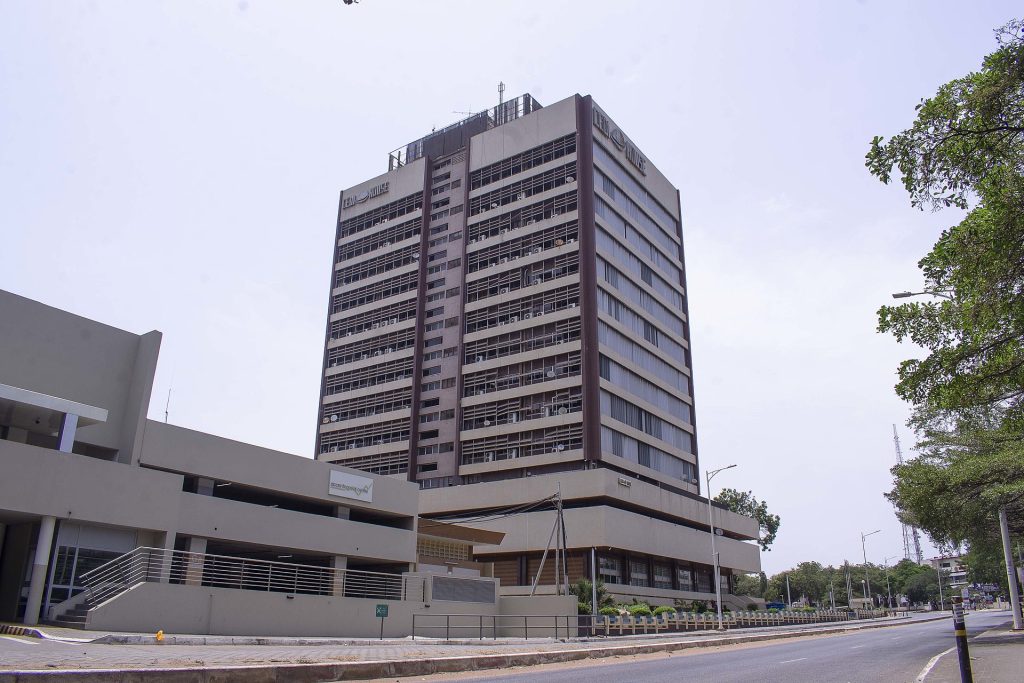
It’s easy to read lists of lenders and interest rates and think, “I’ll just pick one.” But the real experience of borrowing in Ghana comes with nuances that many first‑time borrowers don’t anticipate.
- Interest rates are high, period. Even with the policy rate at 14%, commercial loans for individuals often start around 19% and can go up to 28% for riskier borrowers. If you’re coming from the US or UK, that number will feel jarring. It’s not a mistake; it’s the risk premium.
- Collateral is still king. For any loan above GHS 20,000, most banks will ask for property title or a guarantor with property. Movable assets are gaining acceptance, but the process is still slower.
- Informal sector borrowers pay the most. Mobile money loans are convenient, but their effective annual cost can exceed 100% if you roll over. For many traders, this is the only option—and they often don’t realise the long‑term cost until they’re trapped in a cycle.
- Approval times vary wildly. A salary‑backed loan from your bank might take 24 hours; a business loan with collateral can take weeks. If you need money urgently, plan ahead.
None of this means you shouldn’t borrow. It means you should go in with eyes open, documents ready, and a clear repayment plan.
Best Loan Options by Goal (Quick Reference Table)
Use this table to quickly match your situation with the most suitable lender type.
| Your Situation | Best Loan Option | Why It Fits |
|---|---|---|
| Emergency cash (within hours) | Mobile money loan (MTN MoMo, Vodafone Cash) | Fast disbursement, minimal documentation |
| Salary worker with payslips | Bank salary loan (your salary account) | Lower interest, often pre‑approved |
| Registered SME with financial records | Commercial bank SME loan | Larger amounts, longer repayment terms |
| Trader / informal worker | Mobile money loan + microfinance | Uses transaction history, builds credit |
| Startup with no collateral | Government scheme (MASLOC, GEA) | May accept group guarantees or small amounts |
| Foreigner / expat | Bank where you hold account + fintech | Banks with existing relationship may lend |
Why Loans Get Rejected (Common Reasons)

Understanding why lenders say no can help you prepare better. The top reasons applications are declined in Ghana include:
- No or inconsistent income history – Lenders want to see stable inflows (bank or mobile money).
- Existing defaults or bad credit bureau record – A history of late payments can flag you as high risk.
- Insufficient collateral or unclear ownership – For secured loans, unregistered land or disputed assets are not accepted.
- Fake or incomplete documents – Submitting altered payslips or forged bank statements guarantees rejection and may result in a blacklist.
- Lack of guarantor (for lenders that require one) – Some microfinance and rural banks still require a guarantor for certain loan sizes.
- Not meeting the lender’s minimum tenure requirements – For example, some banks require you to have held a salary account for at least 3 months.
If you are rejected, ask the lender why. Often it’s a specific issue you can fix (e.g., missing document, short account history).
How to Increase Your Approval Chances
There’s no magic formula, but these practical steps will dramatically improve your odds.
- Maintain consistent income flows – Whether through a bank account or mobile money, show regular deposits. Avoid zero‑balance days.
- Avoid bounced transactions – Insufficient funds or failed direct debits appear on your banking history and signal unreliability.
- Build a small loan history – Start with a mobile money loan, repay it early, then apply for a larger amount. A proven track record matters.
- Keep your documents up‑to‑date – Ensure your Ghana Card, TIN, business registration, and tax clearance are current and match across all records.
- For business loans, separate personal and business finances – Lenders need to see your business’s cash flow clearly. Mixing accounts creates confusion.
- Register movable assets – If you don’t have land title, register equipment or vehicles with the Registrar General’s Collateral Registry. This can substitute for traditional collateral.
- Join a trusted association or cooperative – Group lending through established bodies often comes with easier approval and lower rates.
How Much Can You Realistically Borrow?
Loan amounts vary widely based on your income, collateral, and lender type. Here are typical ranges as of 2026.
| Lender Type | Typical Loan Amount (GHS) | Notes |
|---|---|---|
| Mobile Money Loans | 50 – 5,000 | Starts small; increases with repayment history |
| Microfinance (Tier 3) | 500 – 20,000 | May require group or individual guarantee |
| Savings & Loans Companies | 1,000 – 100,000+ | Based on income and collateral |
| Commercial Banks (salary loans) | 3,000 – 200,000 | Up to 3–4 times monthly salary |
| Commercial Banks (business loans) | 10,000 – 1,000,000+ | Requires strong financials and/or collateral |
Real example: A market trader with six months of consistent MTN MoMo deposits of GHS 2,500 per month may qualify for an initial mobile loan of GHS 500. After repaying three times on time, the limit can increase to GHS 2,000. Borrowing GHS 2,000 with a 15% fee means repaying GHS 2,300 in 30 days. If rolled over, the effective cost rises quickly.
Understanding the Real Cost of a Loan
Many borrowers focus only on the monthly payment or the stated interest rate. Here’s what you must also consider.
Short‑Term vs. Annualized Cost
When a mobile loan says “10% fee,” that fee is usually charged for a 30‑day term. If you roll it over for a year, the effective APR can exceed 100%. Always ask: “What is the total repayment amount and when is it due?” Then compare the total cost, not just the percentage.
APR breakdown example: You borrow GHS 2,000 with a 15% fee. You repay GHS 2,300 in 30 days. Over one year, if you repeated this every 30 days (rolling over the loan), the effective annual interest rate would be roughly 180%. That’s why short‑term loans are meant for emergencies, not long‑term financing.
Hidden Fees and Charges
Beyond interest, look for:
- Processing or commitment fees
- Insurance premiums (sometimes mandatory)
- Late payment penalties
- Early repayment fees (some lenders charge a penalty if you pay off early)
All fees should be disclosed in the loan agreement. If they are not, ask before signing.
What Happens If You Miss a Payment?
Most lenders report late payments to credit bureaus, which will lower your credit score. This can affect your ability to get future loans or even housing. Some lenders also apply rollover fees, capitalize interest, or initiate collection calls. If you anticipate trouble, contact the lender immediately to negotiate a payment plan—many will work with you rather than escalate.
Loans in Ghana vs US/UK: What Expats Should Know
If you’ve borrowed money in the United States or United Kingdom, you’ll notice significant differences in Ghana. Understanding these will help you set realistic expectations.
| Aspect | Ghana | US / UK |
|---|---|---|
| Typical interest rates | 19% – 35% (or higher for short‑term) | 5% – 15% for secured loans; higher for unsecured |
| Loan tenure | Often 1–3 years for personal loans; 30 days for mobile loans | 5–30 years common for mortgages; 1–5 years for personal loans |
| Collateral requirement | Frequently required for larger amounts; movable assets accepted | Credit score based; unsecured options more common |
| Credit reporting | Credit bureaus exist but coverage is still expanding | Widespread credit scoring (FICO, etc.) |
Why the difference? Ghana’s lending market reflects higher inflation, currency risk, and a less mature credit information system. Consequently, lenders charge more to compensate for risk. As an expat, you may also face additional documentation requirements and shorter loan terms. Plan accordingly and always compare total costs rather than focusing solely on monthly payments.
What This Means for Borrowers in 2026
At first glance, a policy rate of 14% sounds like loans should be cheap. But the gap between that and what you actually pay (19–28% for most commercial loans) tells the real story: lenders are still pricing in risk.
Here’s what that means for you right now:
- If you have a clean credit history and stable income, you can negotiate rates on the lower end of the range. Banks are more willing to compete for low‑risk borrowers.
- If you rely on mobile money history alone, expect shorter terms and higher effective costs. Use these loans as a stepping stone—repay on time to unlock better options.
- If you’re a business owner, the combination of lower policy rates and development programs (like GIZ‑backed rural bank loans) means you may find better terms today than in the past two years. But you’ll still need clean financial records.
- If you’re a foreigner, don’t assume your international credit score travels. Start building a local banking and mobile money history as soon as you arrive.
The opportunity in 2026 is that borrowing is more affordable than it’s been since 2021—but the gap between “eligible” and “approved” still comes down to documentation and reputation. The steps in this guide are designed to close that gap.
Biggest Mistakes Borrowers Make in Ghana
Even experienced borrowers can fall into these traps. Avoid them to protect your wallet and your credit.
- Focusing only on the monthly payment. A lower monthly payment often means a longer term, which can double the total interest paid. Always ask for the total repayment amount.
- Ignoring the total cost of a mobile loan. That 15% fee might seem small, but if you roll it over repeatedly, the effective APR can climb above 100%.
- Not verifying the lender’s license. Borrowing from an unlicensed “loan shark” can lead to harassment, illegal interest rates, and no legal protection.
- Using a mobile money loan for long‑term needs. These products are designed for short‑term cash flow gaps, not business expansion. Use them sparingly.
- Signing without reading the contract. Hidden fees, early repayment penalties, and vague collateral clauses are common. If you don’t understand a clause, ask—or walk away.
- Assuming a guarantor solves everything. Some lenders still require collateral even with a guarantor. Clarify what each party is responsible for.
Consumer Protection: What to Check Before Signing
Before you sign any loan agreement, confirm these details:
- Total repayment amount: Principal + all interest + fees.
- Repayment schedule: Dates, method (direct debit, mobile money, etc.).
- Default consequences: Penalty fees, reporting to credit bureaus, legal action.
- Rollover policy: Can you extend? What does it cost?
- Early repayment terms: Is there a penalty for paying early?
- Collateral seizure clauses: How and when can the lender take your asset?
- Dispute resolution: Does the agreement specify arbitration or court jurisdiction?
If any of these are unclear, ask the lender to explain in writing. If they refuse, consider it a red flag.
Complaint channel: If you believe a licensed lender has violated consumer protection rules, you can file a complaint with the Bank of Ghana’s Financial Stability Department or the relevant industry ombudsman.
Real‑World Case Studies
These examples show how different borrowers navigated the Ghana loan market.
Case Study 1: Expat – Michael (UK)
Michael moved to Accra in late 2025 for a tech job. He needed GHS 15,000 for a deposit on an apartment. His UK credit score meant nothing in Ghana. He opened a GCB account, received two months of salary, and applied for a salary loan. The bank approved GHS 12,000 at 24% interest, repayable over 12 months. He used the remaining GHS 3,000 from savings. Michael’s lesson: build local banking history early.
Case Study 2: SME – Abena’s Catering Services
Abena runs a catering business in Kumasi. She needed GHS 50,000 to buy industrial ovens. A commercial bank asked for land title as collateral—she didn’t have it. Instead, she approached Sinapi Aba Savings and Loans. They accepted her business registration, two years of bank statements, and the ovens themselves as collateral under the Movable Assets Registry. She got the loan at 28% with a 3‑month grace period. Abena’s advice: know your options; movable assets can work.
Best Loan Providers in Ghana (Ranked by Use Case)
To help you decide, here’s a curated list of reputable lenders matched to common borrowing scenarios. Always verify current terms and eligibility.
| Use Case | Recommended Provider Type / Example | Notes |
|---|---|---|
| Fast emergency cash (GHS 50 – 5,000) | MTN MoMo loans / Vodafone Cash loans (via *170#) | Disbursed instantly; fees quoted per cycle. Repay quickly to avoid high effective APR. |
| Salary worker with payslips | Your primary bank (e.g., GCB, Absa, Fidelity) | Often pre‑approved; interest rates lower than microfinance. |
| Registered SME with financials | Commercial bank SME desks (Absa, Fidelity, GCB) | Larger amounts, longer tenors; may require collateral. |
| Micro‑business / informal sector | Savings & Loans (Bayport, Sinapi Aba, Advans) | More flexible than banks; can use group guarantees. |
| Digital / mobile-first borrower | Fido Money, JUMO (via mobile partners) | Licensed microfinance; uses transaction data for scoring. |
| Government‑backed or development support | MASLOC, Ghana Enterprises Agency | Limited windows; often sector‑specific. Check official sites. |
Related Ghana guides:
Still unsure which loan fits your situation? If you’re staring at a loan contract and something feels off—or if you’re a business owner trying to structure financing without putting personal assets at risk—a qualified Ghanaian lawyer can review the terms and help you negotiate. Use the form below to get connected with a finance and banking law specialist.
Sources
- Bank of Ghana: Monetary Policy Committee Press Release (March 2026)
- Bank of Ghana: List of Savings & Loans Companies
- Bank of Ghana: List of Microfinance Institutions
- Cyber Security Authority – Public Awareness Statements (October 2025)
- The Ghanaian Chronicle: “Fidelity Bank, partners launch mobile‑based short‑term loan product” (July 2025)
- Fido Money: “How to Spot and Avoid Loan Scams in Ghana” (March 2026)
- Graphic Online: “BoG’s policy anchor stability, easing borrowing costs” (March 2026)
- Ghanaian Times: “Kintampo Rural Bank, GIZ unveil financial product for MSMEs” (March 2025)
- Graphic Online: “Adansi Rural Bank, GIZ empower MSMEs” (June 2025)
- Ghana Enterprises Agency (Official)
- MASLOC (Microfinance and Small Loans Centre) Official Website
Compliance note: All money transfer services must be licensed by the Bank of Ghana. Borrowers should only engage with financial institutions duly licensed by the Bank of Ghana and should verify licensing status before transacting.