

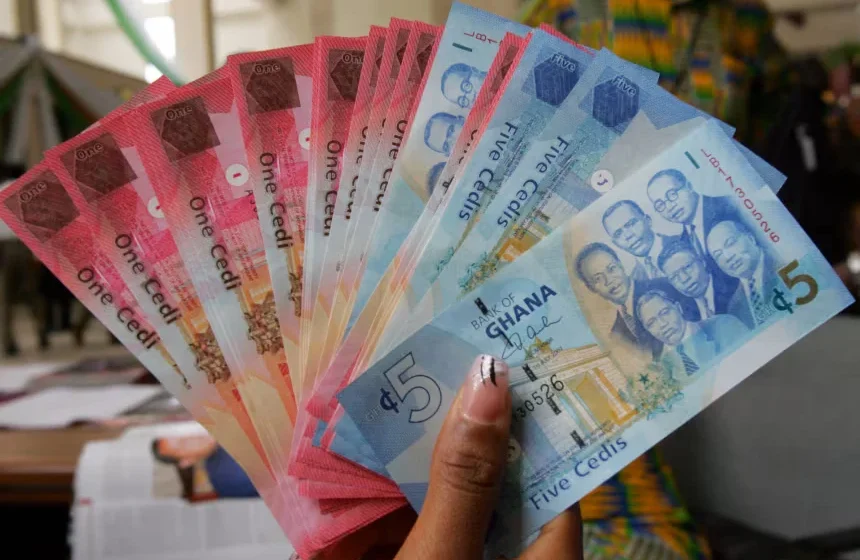

Ghana Treasury bills are short-term government securities sold through the Bank of Ghana on behalf of the Ministry of Finance, and they remain one of the most popular places for Ghanaians and the diaspora to park cash. In plain terms, you lend the government money for 91, 182, or 364 days, you pay less than the bill’s face value up front, and you collect the full face value when it matures.
That structure matters because it is different from a bank fixed deposit or a bond with coupon payments. There is no separate interest payment along the way. Your entire return is baked into the discount you pay at purchase, and the government hands back the full face value on the maturity date.
This guide breaks down how the auctions work, what current rates look like, how residents and non-residents actually buy in, what tax rules apply, and where the real risks sit. It matters whether you are a first-time saver in Accra, a small business owner parking working capital, or a diaspora Ghanaian trying to decide whether cedi returns are worth the currency risk.
Quick links (related guides):
Table of Contents
- What Ghana Treasury Bills Are
- How the Auction and Primary Market Work
- Current Rates and What They Mean
- How to Buy Treasury Bills as an Individual
- Selling Before Maturity on the Secondary Market
- Tax Treatment
- Risks to Watch
- A Worked Example
- Treasury Bills vs Other Options
- Special Cases: Non-Residents and Dual Citizens
- Bottom Line
What Ghana Treasury Bills Are
The Ministry of Finance issues Government of Ghana securities to finance government spending, refinance maturing debt, and give the wider financial market a benchmark, risk-free instrument to price everything else against. The short-term menu is three tenors: the 91-day bill, the 182-day bill, and the 364-day bill. The 364-day bill replaced an older one-year note in 2019.
These are discount securities, not coupon bonds. You pay less than face value at purchase and collect full face value at maturity. The gap between what you pay and what you collect is your return. Auction results publish two related numbers: the discount rate, which sets the purchase price, and the interest rate, which is the annualized investment yield that discount price works out to. They will not be the same number, and beginners sometimes assume they are.
Physical Treasury bill certificates no longer exist. Holdings sit electronically in the Central Securities Depository, the book-entry system that replaced paper certificates when Ghana modernized its government securities infrastructure.
How the Auction and Primary Market Work
Here is where a lot of first-time investors get confused: the wholesale Treasury bill auction is not open to the public. Bank of Ghana guidelines for the government securities market give Primary Dealers, licensed institutions that are also Ghana Fixed Income Market dealing members, the exclusive right to bid at the wholesale auction. Everyone else, meaning individuals, small businesses, and most institutions, buys through a Primary Dealer or another accredited depository participant rather than bidding directly.
In practice, that means your bank or broker collects your order, places it through its own dealing relationship with the wholesale market, and then allocates the securities into your CSD-linked account once the auction settles. You are not submitting a bid to the Bank of Ghana yourself. Databank, GCB, Ecobank, and other retail-facing institutions package this process for individual customers, sometimes down to a mobile money channel.
Auctions run weekly. Once bids are in, allotments are typically confirmed by the end of the first business day after the auction, which is why practitioners describe settlement as T+1. On settlement day, the Bank of Ghana debits the buyer’s settlement partner and the CSD credits the securities into the investor’s account. At maturity, proceeds go straight to the holder’s linked account.
Current Rates and What They Mean
Ghana’s Treasury bill curve has stayed upward sloping through 2026, meaning the 364-day bill pays noticeably more than the 91-day bill. For the auction settling July 13, 2026 (Tender 2015), the weighted average rates were:
| Tenor | Discount rate | Interest rate (annualized) |
|---|---|---|
| 91-day | 5.7770% | 5.8617% |
| 182-day | 7.4965% | 7.7884% |
| 364-day | 11.4978% | 12.9915% |
Demand at that auction was strong. Bids came in around GH₵10.03 billion against a target of roughly GH₵5.67 billion, and a little more than GH₵7 billion was accepted. The 364-day bill drew the most interest, at about GH₵5.65 billion in bids and GH₵4.5 billion accepted, ahead of the 182-day bill (about GH₵1.3 billion bid, just over GH₵1.0 billion accepted) and the 91-day bill (about GH₵2.98 billion bid, roughly GH₵1.79 billion accepted). Investors clearly favored the longer bill for its higher yield.
Inflation context matters here. Ghana’s headline inflation rate rose to 5.3% year-on-year in June 2026, up from 3.7% in May, according to the Ghana Statistical Service. That means the 91-day bill’s annualized return only sat modestly above the latest inflation reading, while the 182-day and especially the 364-day bill offered a much wider cushion above inflation. Rates and inflation both move week to week, so treat these figures as a snapshot rather than a fixed number, and check the Bank of Ghana’s Treasury bill rates page before you commit funds.
How to Buy Treasury Bills as an Individual
Buying a Treasury bill is mostly a documentation and timing exercise once you understand the sequence.
First, pick an intermediary. Any commercial bank, licensed broker, or Primary Dealer that offers fixed income services can place the order for you. Compare minimum investment amounts and fees before you commit, since these vary by institution and channel.
Second, complete KYC and open a CSD account. The standard Central Securities Depository account-opening form classifies applicants as Resident Ghanaian, Resident Foreigner, Non-Resident Ghanaian, or Non-Resident Foreigner, and accepts a national ID (Ghana Card for residents), passport, or other approved ID depending on that status, along with a passport photo. Since the Bank of Ghana’s 2026 KYC guidance now requires the Ghana Card as the primary identifier for residents and resident signatories, while non-residents visiting for short stays or without a Ghana Card can generally still use a valid passport, the exact document list depends on your residency status and the intermediary’s own checklist. Depository participants are also required to run anti-money-laundering and FATCA checks, so ask your intermediary exactly what its onboarding checklist requires before you start.
Third, choose your tenor and amount. Ask your dealer to show you both the purchase cost and the maturity value before you confirm, since the price is set by the discount formula rather than a coupon schedule.
Fourth, fund the purchase on time. Because settlement is ordinarily T+1, do not wait until the following week to send money. Confirm the funding cut-off with your bank or broker.
Fifth, confirm the holding. After the issue date, check that the bill shows up in your CSD-linked account or that you have a transaction advice from your intermediary. Keep that confirmation. It is your evidence if a maturity payment is delayed or disputed later.
Sixth, decide what happens at maturity. Rollover is not automatic. If you want to reinvest, you are placing a fresh order into a new auction at whatever rate that auction clears, not the rate from your maturing bill.
Selling Before Maturity on the Secondary Market
Treasury bills can trade before maturity on the Ghana Fixed Income Market, which exists to give holders of government securities somewhere to buy and sell before the maturity date instead of being locked in. Trading is limited to authorized members, mainly Primary Dealers and other licensed dealing entities, so a retail holder sells through a bank, broker, or depository participant rather than trading directly on the market.
Selling early introduces price risk that holding to maturity does not have. If market rates have risen since you bought your bill, a buyer will only take it off your hands at a discount that reflects the new, higher rate environment, which can mean receiving less than you expected. This is one of the trade-offs of choosing a longer tenor: more time for rates to move against you if you need to exit early.
Tax Treatment
This is an area where a lot of guides get vague, so it is worth being precise. Under Ghana’s income tax exemptions, interest paid to an individual by a resident financial institution, and interest and gains on bonds issued by the Government of Ghana, are treated as tax-exempt income. Ghana’s income tax rules on interest specifically carve out payments made to individuals on Treasury bills, alongside government bonds, from the standard withholding treatment that applies to other interest income.
In practice, that means individual holders of Treasury bills generally do not have tax withheld on the discount income they earn, whether they are resident or non-resident. Businesses and institutional holders should confirm treatment with the Ghana Revenue Authority or a tax advisor, since corporate tax rules differ from the individual exemption. Tax rules can change with each budget cycle, so always ask your intermediary for a current withholding statement rather than relying on last year’s treatment.
Risks to Watch
Treasury bills carry government credit, which is about as safe as Ghanaian investments get, but “safer” is not the same as “risk-free.”
Inflation risk. With June 2026 headline inflation at 5.3%, the 91-day bill’s return only modestly outpaced inflation at the time of writing, while the 364-day bill offered a wider real return. If inflation rises faster than expected during your holding period, your purchasing power at maturity can shrink even though your cedi return is fixed.
Interest-rate risk. This mainly bites if you need to sell before maturity. Hold to maturity and you already know your payout. Sell early into a higher-rate environment and you may take a lower price than you paid.
Reinvestment risk. Rolling short bills, say four consecutive 91-day bills across a year, means each rollover exposes you to whatever rate the market offers that week. If rates fall, your effective annual return falls with them compared to locking in a 364-day bill upfront.
Currency risk for non-residents. Treasury bills are issued in Ghana cedis. The Bank of Ghana’s interbank rate put the US dollar at around GH₵11.48 to GH₵11.50 in mid-July 2026, and the cedi’s value against major currencies has moved meaningfully over shorter periods before. A strong cedi return can still translate into a weaker return once converted back to dollars, pounds, or another home currency, so compare the expected cedi yield to your realistic view on the exchange rate over your holding period, not just the headline rate.
Liquidity risk. Auction demand and secondary market liquidity both vary. Strong auctions like the one settling July 13, 2026 show healthy appetite, but that is not a guarantee that every tenor or trade size will find a buyer instantly if you need to sell.
A Worked Example
Using the July 13, 2026 rates and a GH₵10,000 face value bill, here is what the purchase price and payout actually look like for each tenor.
| Tenor | Purchase price | Maturity value | Discount earned | Purchase price in other currencies (approx.) |
|---|---|---|---|---|
| 91 days | GH₵9,855.58 | GH₵10,000.00 | GH₵144.42 | USD 857.75 / GBP 640.80 / RMB 5,820.34 |
| 182 days | GH₵9,625.18 | GH₵10,000.00 | GH₵374.82 | USD 837.70 / GBP 625.82 / RMB 5,684.27 |
| 364 days | GH₵8,850.22 | GH₵10,000.00 | GH₵1,149.78 | USD 770.25 / GBP 575.44 / RMB 5,226.61 |
Currency conversions above are approximate, based on Bank of Ghana interbank rates in the second week of July 2026, and will move by the time you read this. The purchase price follows directly from the discount formula: face value multiplied by one minus the discount rate scaled to the number of days held out of 364.
To see how tenor choice compounds over a year, compare two strategies starting with GH₵10,000. Rolling into four successive 91-day bills at July 2026 rates compounds to an effective annual return of roughly 5.99%. Buying a single 364-day bill at the same snapshot annualizes to roughly 12.99%. The trade-off is liquidity: the 91-day strategy frees up cash four times a year, but each rollover exposes you to reinvestment risk if rates fall in the meantime.
Treasury Bills vs Other Options
| Instrument | Typical term | Liquidity | Best fit |
|---|---|---|---|
| Treasury bills | 91, 182, or 364 days | Good if held to maturity; secondary sale depends on dealer access | Short, transparent, government-backed exposure |
| Bank fixed deposit | Set by the bank | Often limited before maturity, or penalized for early withdrawal | When a bank’s after-tax rate genuinely beats T-bills and you will not need the cash |
| Government notes and bonds | 2 years or more | Tradable on the Ghana Fixed Income Market, price moves with yields | Longer lock-in and a higher term premium, such as Ghana’s 7-year bond |
| Ghana Stock Exchange | No fixed term | Depends on the stock, generally more liquid than direct bonds | Investors comfortable with market risk in exchange for higher potential return |
If your goal is capital preservation with predictable maturity dates, direct Treasury bills are hard to beat for transparency. If you want equity-style growth and can tolerate volatility, comparing Treasury bills against investing on the Ghanaian Stock Exchange is worth doing before you commit all your savings to one instrument.
Special Cases: Non-Residents and Dual Citizens
If you live outside Ghana: you can still invest as a non-resident foreign investor, but your onboarding documents differ from a resident’s, and currency conversion costs and cedi movement should factor into your decision as much as the headline rate. Reading up on how diaspora investors approach Ghana’s securities market before you fund an account will save time later.
If you are a dual citizen: your Ghana Card generally satisfies the resident documentation requirement, but you should still confirm with your intermediary whether any tax obligations follow you back to your other country of residence. Ghana’s own tax rules for dual citizens are worth reviewing alongside this guide.
If you need cash before maturity: confirm with your bank or broker whether they can execute a secondary market sale for you and what spread to expect, since not every retail channel offers this smoothly.
If your documents are incomplete: most onboarding delays come down to KYC or ID mismatches rather than the auction process itself. Sort out your Ghana Card, passport, or residence permit paperwork before you plan around a specific auction date.
Bottom Line
Ghana Treasury bills work through a simple mechanism: buy at a discount, collect face value at maturity, no separate interest payment along the way. The complexity sits in the details, who can bid directly, how settlement timing works, what tax treatment applies, and how currency risk affects a non-resident’s real return. For a first purchase, the 91-day or 182-day bill through a bank or broker that already handles the CSD process end to end is usually the simplest way to learn the mechanics before committing larger amounts to a full year.
Sources
- Ministry of Finance: “Guidelines for the Government Securities Market” (Republic of Ghana)
- Bank of Ghana: Quarterly Statistical Bulletin, Quarter One 2019 (confirms the 364-day bill replaced the 1-year note)
- Ministry of Finance: “Requirements and Responsibilities of Primary Dealers and Bond Market Specialists”
- Bank of Ghana: Treasury Bill Rates
- Adomonline: “T-bills auction: Gov’t exceeds target by 77%” (July 2026)
- Graphic Online: “Bus fares, rent, and school fees push Ghana’s inflation to 5.3% in June” (Ghana Statistical Service data, July 2026)
- Pulse Ghana: Bank of Ghana Interbank Exchange Rates (July 2026)
- Ghana Revenue Authority: Income Tax Exemptions
- PwC Tax Summaries: Ghana, Individual Income Determination