
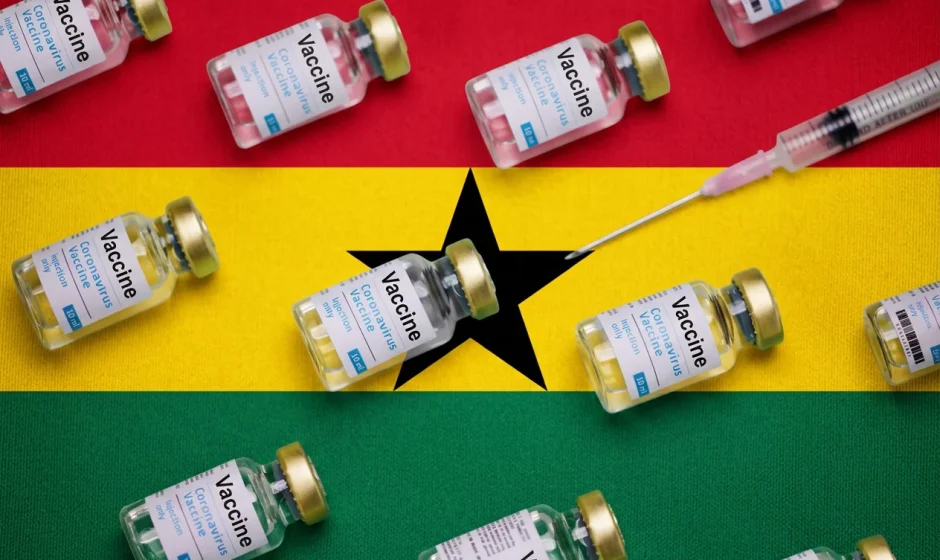

On May 7, 2026, Ghana’s Finance Minister Dr Cassiel Ato Forson confirmed that the government plans to fully finance all vaccines and critical medicines from domestic resources starting January 2030. The announcement came during a meeting in Accra with the World Health Organization’s Regional Director for Africa, Dr Mohamed Yakub Janabi, focused on the long-term sustainability of Ghana’s healthcare system.
In plain terms: the Global Fund, which has been covering a substantial share of Ghana’s supply of vaccines and medicines for HIV, tuberculosis, and malaria, is winding down that support by 2029. The government is not waiting for that deadline to arrive. It is already restructuring health financing so that when the external funding stops, local budgets step in without interruption.
For anyone living in, moving to, or investing in Ghana, this matters for one straightforward reason: the reliability of Ghana’s healthcare supply chain directly affects what medicines are on the shelves, what treatments are available at public facilities, and how resilient the health system is when global aid conditions change.
What the Finance Minister Said
Dr Forson’s remarks were made on the sidelines of the Second Africa Health Workforce Investment Forum, held in Accra from May 6 to May 8, 2026. The forum brought together governments, development institutions, and health agencies to examine the funding pressures facing African healthcare systems, including rising costs, donor dependency, and workforce shortages.
The Finance Minister stated that support from the Global Fund for vaccines and critical medicines would wind down by 2029, and that the government was taking steps to ensure Ghana fully budgets for and finances those essential health needs from January 2030 onward.
He also confirmed that the government’s health sector reforms are aimed not only at extending life expectancy but at improving quality of life. The WHO’s Dr Janabi, for his part, commended Ghana’s direction and urged African countries broadly to strengthen local medicine and vaccine production and reduce dependence on imported supplies.
The Ministry of Finance published an official account of the meeting on May 8, 2026, confirming the details of the announcement.
What the Global Fund Has Provided to Ghana
The Global Fund to Fight AIDS, Tuberculosis and Malaria has been a major financier of Ghana’s disease control programs for over two decades. Globally, the organization has invested more than $55 billion in health systems and services across low- and middle-income countries, contributing to an estimated 59 million lives saved across two decades of operation.
Ghana is classified as a top-20 recipient country, meaning it has historically received significant allocations. The 2023-2025 grant cycle focused primarily on disease control and health system strengthening, including end-to-end transformation of Ghana’s health product supply chain as part of efforts toward Universal Health Coverage.
The transition now underway is not a sudden cut. The Global Fund’s Grant Cycle 8, covering 2026-2028, is already expected to deliver smaller allocations globally, partly as a result of global aid shortfalls. The 2029 deadline for Ghana’s full transition to domestic financing is the government’s acknowledgment of that trajectory.
| Year | Global Fund Status | Ghana’s Position |
|---|---|---|
| 2023-2025 | Grant Cycle 7 – active disease control support | Top-20 recipient; supply chain reform underway |
| 2026-2028 | Grant Cycle 8 – reduced allocations expected globally | Government increasing domestic health budgets |
| 2029 | Global Fund support for Ghana vaccines/medicines winds down | Transition phase; domestic budgeting being structured |
| January 2030 | Ghana fully self-financing vaccines and essential medicines | Target confirmed by Finance Minister May 2026 |
The 2024 Tema Port Crisis: A Warning Sign
The urgency behind the government’s announcement becomes clearer with the context of what happened in 2024. Hundreds of containers of essential medical commodities donated by the Global Fund, including supplies for malaria, tuberculosis, and HIV treatment, sat at Tema Port for months because of unresolved clearance and demurrage issues.
At one point, more than 182 containers were stuck. Civil society organizations, including the Network of Persons Living With HIV/AIDS, warned publicly that some supplies were nearing expiry. The Ghana Revenue Authority eventually granted exemptions and the Ministry of Health released funds to clear the containers, but only after months of pressure from Parliament, civil society groups, and health advocates.
The episode exposed a structural vulnerability: Ghana was dependent on donated supplies it lacked the administrative and fiscal systems to consistently receive and deploy on time. Health facilities faced supply pressure, treatment programs came under strain, and the Global Fund itself temporarily halted shipments during the standoff.
The Ministry of Finance’s move toward domestic financing from 2030 is, in part, a response to precisely that kind of failure. A country that funds its own vaccines and medicines controls its own supply chain.
Health Financing Reforms Already Underway
The 2030 target is not a blank commitment. According to the Ministry of Finance’s May 8 statement, the government has already implemented several structural reforms since 2025 to move toward a more self-sufficient health financing model.
The National Health Insurance Levy has been uncapped, allowing more revenue to flow into the system. The National Health Insurance Authority (NHIA) now receives its full allocation, with the Finance Minister noting that for the first time in a long while, the NHIA received everything that was due to it in the prior year. Funds are directed strictly toward health-related activities rather than being diverted or delayed.
The government has also launched the Free Primary Healthcare Programme, which extends access to basic health services without out-of-pocket costs. New investment through the Ghana Medical Trust Fund is targeting non-communicable diseases, with specialized treatment units being established in hospitals across the country.
In 2025, the government programmed GHS 9.93 billion (approximately USD 879 million, GBP 655 million, RMB 6.3 billion, based on indicative May 2026 exchange rates – subject to fluctuation) for the NHIS to cover claims payments, essential medicines, vaccines, free primary healthcare, and the Ghana Medical Care Trust, according to a March 2025 statement by the Finance Minister to Parliament.
The Push for Vaccine Sovereignty
The financing announcement sits within a broader regional conversation about vaccine sovereignty. The WHO’s Dr Janabi explicitly called on African governments to reduce their dependence on imported medicines and vaccines and to invest in local pharmaceutical manufacturing. Ghana has positioned itself as a potential vaccine production hub in West Africa, and discussions between government officials and health experts have intensified on that front since 2025.
This is not purely aspirational. Several African countries are at various stages of building out domestic pharmaceutical capacity, and the Global Fund’s own frameworks have increasingly tied grant support to recipient countries developing sustainable systems that do not require permanent donor dependency.
For Ghana, reaching the 2030 milestone would represent one of the more concrete commitments to health financing independence on the continent. The practical test will be whether the government’s budget allocations grow consistently enough over the next three years to absorb what the Global Fund currently covers, without gaps in supply.
What This Means for Residents and Expats
For Ghanaians and foreigners living in the country, the key question is not whether this policy sounds good on paper. It is whether it delivers a more reliable supply of medicines and vaccines at health facilities by 2030 and beyond.
If the transition is managed well, the practical outcome is a health system less vulnerable to port clearance standoffs, donor funding cycles, and global aid fluctuations. Medicines for HIV, malaria, and tuberculosis would be procured and financed domestically, reducing the risk of stock-outs at public facilities.
For expats relying on private healthcare, the reform matters indirectly. A stronger public health system reduces disease transmission and eases pressure on the broader healthcare ecosystem. Anyone planning a long-term stay should have independent medical insurance, regardless of how the public sector develops. A guide to medical care in Ghana covers what to expect at both public and private facilities.
Travelers should also be aware that Ghana has its own vaccine entry requirements separate from the NHIS and domestic supply system. Those planning a visit can review the Ghana vaccine requirements for travelers before arrival.
The 2030 deadline gives the government roughly three and a half years to close the gap. Whether it gets there will depend on consistent budget releases, the passage and implementation of the NHIA allocation formula, and continued progress on the NHIS reforms already in motion.
Sources
- Ministry of Finance Ghana: “Finance Minister Highlights Ghana’s Increased Investment in Health Financing” (May 8, 2026)
- Daily Graphic: “Ghana to Fully Finance Vaccines, Critical Medicines – Finance Minister” (May 12, 2026)
- Adom Online: “Ghana to Fully Finance Vaccines, Critical Medicines as Global Fund Support Winds Down” (May 2026)
- Ecofin Agency: “Ghana Prepares for Post-Donor Health Financing Shift as Global Fund Support Nears Phase-Down” (May 2026)
- The Africa Report: “Health Crisis Looms as Vital Medical Supplies Held at Ghana’s Tema Port” (April 2024)