


Quick links (related guides):
Table of Contents
- What Is PBC and Why Does It Matter?
- The Debt Crisis in Numbers
- The Court Order and Asset Seizure Risk
- Farmers Are the Biggest Losers
- The COCOBOD Connection
- Why COCOBOD Is Also Struggling
- Government Pledges vs. Reality
- What a Structured Intervention Could Look Like
- What This Means for Investors and Expats
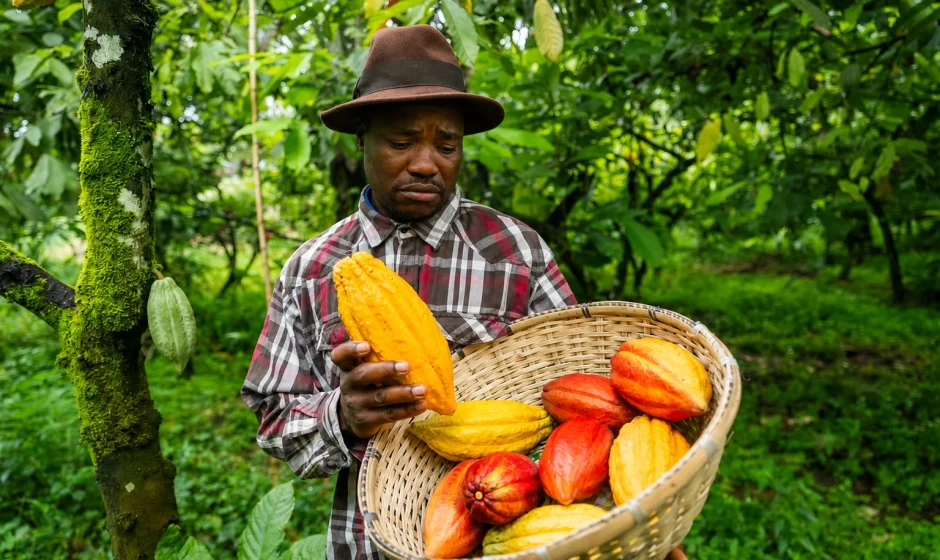
On May 7, 2026, Reuters reported that Ghana’s state-owned Produce Buying Company (PBC) faces a court-ordered asset seizure over 257 million cedis in unpaid bank debt, while thousands of cocoa farmers have not been paid since November 2025. This Ghana cocoa buyer asset seizure crisis has turned a company debt problem into a direct threat to farmers’ income.
Here is what that actually means: PBC, the legally mandated buyer of last resort for Ghana’s cocoa farmers, has effectively stopped functioning. It cannot buy new crop, it cannot pay farmers for beans already delivered, and its creditors are now moving to sell off its assets.
That matters because Ghana has historically produced around 800,000 metric tonnes of cocoa in stronger years, supporting over 800,000 smallholder farmers. However, recent output has been far lower after weather, disease, smuggling, financing problems, and weak crop forecasting hit the sector. If that safety net collapses, some remote cocoa-growing communities could be left with fewer reliable buying options. The crisis goes beyond one company: it exposes structural weaknesses in how Ghana’s most important agricultural commodity is managed.
What Is PBC and Why Does It Matter?
PBC Limited, also known as Produce Buying Company, is a state-owned Licensed Buying Company (LBC) in Ghana’s cocoa supply chain. LBCs purchase cocoa directly from farmers and sell it into Ghana’s regulated cocoa system, where COCOBOD and the Cocoa Marketing Company coordinate internal take-over, storage, and external marketing.
What makes PBC distinct is its legal mandate: it must purchase cocoa from any farmer who presents beans, no matter how remote the location or how small the quantity. Private LBCs can pick and choose where they operate. PBC cannot. That makes it the buyer of last resort, operating in all 127 cocoa-growing districts across Ghana.
At its peak, PBC controlled roughly 30% of Ghana’s domestic cocoa purchasing market. That figure has now collapsed to under 5%. The company is trapped: it cannot buy because it has no liquidity, and it cannot pay past debts because COCOBOD has not reimbursed it for cocoa already delivered.
The Debt Crisis in Numbers
According to a company source who spoke to Reuters anonymously, PBC’s total debt stood at 673 million cedis as of early May 2026. Here is how that breaks down:
| Category | Amount (GHS) | Approx. USD | Approx. GBP | Approx. RMB |
|---|---|---|---|---|
| Debt owed to consortium of Ghanaian banks | 257 million | $23 million | GBP 18 million | RMB 165 million |
| Unpaid farmer arrears (9,000+ bags delivered) | 24 million | $2.1 million | GBP 1.7 million | RMB 15 million |
| Staff salary arrears | 24+ months unpaid | — | — | — |
| Total estimated debt | 673 million | $60 million | GBP 47 million | RMB 430 million |
Currency conversions are approximate and included only for reader context. Reuters reported GHS 673 million as approximately $60 million. Figures as reported by Reuters, May 7, 2026.
Two of the five banks in the creditor consortium are state-owned institutions, both reporting to Ghana’s Finance Ministry. That detail underscores the uncomfortable position the government finds itself in: its own agencies are moving to seize assets of another state-owned company.
The Court Order and Asset Seizure Risk
In March 2026, the five-bank consortium obtained a court order authorising the sale of PBC’s assets to recover the 257 million cedis owed. If executed, an asset sale would strip PBC of the warehouses, vehicles, and district offices needed to operate. The company would effectively cease to exist as a functioning buyer.
SSNIT, the Social Security and National Insurance Trust, is a major shareholder in PBC and Ghana’s state pension fund. According to the same company source, SSNIT has declined to inject fresh capital because it has not received expected dividends on its initial investment. That reluctance is rational: why put good money into a company that cannot pay its existing debts?
Farmers Are the Biggest Losers
While the institutional drama unfolds in Accra, the human cost is being borne by smallholder farmers across Ghana’s cocoa-growing regions. Thousands of farmers have not been paid for beans delivered since November 2025. That is now more than six months of waiting.
PBC currently owes farmers 24 million cedis for more than 9,000 bags of cocoa already delivered. The company has confirmed it lacks the liquidity to resume purchases of new crop. That means the problem is not just unpaid arrears but a complete halt to buying activity.
Ghana’s official farmgate price for the remainder of the 2025/26 season, as announced by COCOBOD on February 12, 2026, is GHS 41,392 per tonne (GHS 2,587 per 64kg bag). That is approximately $3,700, GBP 2,900, or RMB 26,500 per tonne. Farmers who already delivered cocoa to PBC are now waiting without payment, while any remaining cocoa may depend on whether another licensed buyer is available and has cash to purchase it.
Cocoa beans can lose quality when stored too long in humid conditions, especially where moisture, ventilation, pests, and warehouse handling are not properly controlled. For unpaid farmers, the risk is not only delayed income but also possible loss of quality and bargaining power over time. Agricultural analysts warn that prolonged unpaid arrears will discourage farmers from investing in fertiliser, farm maintenance, and labour for future planting cycles. That depresses output and bean quality for the 2026/27 and subsequent seasons.
The COCOBOD Connection: A Chain of Unpaid Debts
PBC’s liquidity problem is not entirely its own making. According to the company source, COCOBOD has not reimbursed PBC for 800 metric tonnes of cocoa that PBC delivered more than two months ago. Under the normal flow of Ghana’s cocoa supply chain, COCOBOD receives cocoa from LBCs and passes payment back down the chain. That payment has not arrived.
COCOBOD publicly stated that it has been disbursing funds to buying companies. However, PBC’s internal source confirmed the company had not received any such payments at the time of Reuters’ reporting. PBC’s management has formally requested support from both COCOBOD and the Finance Ministry. Neither institution had responded as of May 7, 2026, and neither responded to Reuters’ separate requests for comment.
Why COCOBOD Is Also Struggling: The Bigger Picture
COCOBOD’s own financial position explains some of the inertia. The board entered the 2025/26 cocoa season carrying an estimated 60 billion cedis in total liabilities. The problems built up over several seasons.
Here is how: COCOBOD routinely pre-sells 70% to 80% of its projected crop through forward contracts before a season begins. In the 2023/24 season, it forecast output of 800,000 tonnes but actually produced only 432,145 tonnes. That 45% shortfall triggered approximately $1.3 billion in losses from forward contract rollovers.
Global cocoa prices compounded the problem. After reaching multi-decade highs above $10,000 per tonne in early 2025, international cocoa prices fell to roughly $3,680 per tonne by February 2026. That price crash reduced COCOBOD’s revenues significantly. Ghana’s farmgate price of GHS 41,392 per tonne is now close to what international buyers can pay at prevailing world prices, but the gap remains tight. As of February 2026, COCOBOD was holding approximately 50,000 metric tonnes of unsold cocoa at Ghanaian ports.
The Licensed Cocoa Buyers Association of Ghana described another structural issue in February 2026: politically-driven personnel turnover at COCOBOD each time a new government takes office. That pattern makes it difficult to build institutional knowledge and financial discipline across seasons.
Government Pledges vs. Reality on the Ground
In February 2026, Ghana’s Finance Minister, Cassiel Ato Forson, publicly pledged to revive PBC and position it as a transparent, competitive institution capable of ensuring fair cocoa pricing for farmers. The government committed to restoring PBC as Ghana’s leading cocoa buying company.
Three months later, none of the specific arrears threatening PBC have been settled through direct government financial support. The company source told Reuters that no government funding had reached the company to address the debt situation.
In early May 2026, Bloomberg reported that Ghana was planning to raise about $1 billion through domestic cocoa bonds to finance cocoa purchases ahead of the 2026/27 crop season. That signals that policymakers recognise the sector’s liquidity emergency. Whether those funds will flow to PBC specifically, and whether they will arrive in time to prevent asset seizure or restore farmer payments, remains to be seen.
What a Structured Intervention Could Look Like
The company source who spoke to Reuters outlined what a meaningful COCOBOD intervention would require:
- COCOBOD directing a portion of its international buyer allocations specifically toward PBC, restoring trading volume and cash flow
- COCOBOD releasing funds owed for the 800 metric tonnes already delivered by PBC more than two months ago
- The Finance Ministry coordinating with state-owned banks in the creditor consortium to pause or restructure the court-ordered asset sale
- SSNIT reassessing its position as a major shareholder and considering a structured capital injection, tied to a governance reform package
PBC’s unmatched geographic coverage (all 127 cocoa-growing districts) gives it a strategic value that no private LBC currently replicates. If the company collapses entirely, there is no replacement structure capable of guaranteeing access for farmers in remote or commercially unattractive districts. That gap could leave large numbers of smallholder farmers without any buyer at all in those areas.
What This Means for Investors and Expats Watching Ghana
For those considering agricultural investment in Ghana, the PBC crisis illustrates the importance of understanding how the country’s commodity supply chains are structured. Ghana’s cocoa sector operates through a highly centralised model, with COCOBOD and the Cocoa Marketing Company controlling export rights, setting farmgate prices, and coordinating external marketing. That concentration of control creates systemic risk: when COCOBOD faces liquidity problems, the effects cascade down to every level of the chain.
The crisis does not mean cocoa farming in Ghana is unviable. Ghana remains the world’s second-largest cocoa producer, and the sector is a fundamental part of the economy. But it does mean that investors and agribusiness operators need to understand how the licensed buying system works and which institutions carry counterparty risk. For a deeper look, see our Ghana Agriculture Investment Guide.
For diaspora members sending money home to family members in cocoa-growing regions, the impact may already be felt. Farmers who have not been paid since November 2025 are under significant financial pressure. See our guide to the best ways to send money to Ghana for your options.
The broader investment climate question is whether this crisis represents a temporary liquidity shock or a structural failure requiring fundamental redesign of how Ghana manages its cocoa sector. Ghana’s recent foreign investment framework suggests the government is aware of the need for change, but execution has lagged behind intention.
543 Business Ideas to Start in Ghana
Sources
- Reuters: “Farmers go unpaid as Ghana’s indebted state cocoa buyer faces asset seizure, source says” (May 7, 2026)
- COCOBOD: “Press Release on Cocoa Sector Reforms for Financial Viability and Long-term Sustainability” (February 12, 2026)
- Bloomberg: “Ghana Targets $1 Billion in Cocoa Bonds as Part of Overhaul” (May 7, 2026)
- African Arguments: “Ghana’s Cocoa Crisis Is Not a Price Story: It Is a Governance Failure” (April 2026)
- Reuters: “Ghana cuts farmgate cocoa price, introduces new financing model” (February 12, 2026)