
Ghana Independence Day is the national holiday of the Republic of Ghana, observed annually on 6 March. It commemorates the declaration of Ghanaian independence from British colonial rule on 6 March 1957, making Ghana the first country in sub-Saharan Africa to achieve independence from European colonial rule. The day is a public holiday in Ghana and is celebrated by Ghanaians at home and in the diaspora through national parades, cultural performances, official ceremonies, and community gatherings. It honors the leaders and citizens who worked to attain the country's freedom, with Kwame Nkrumah, the first Prime Minister of Ghana, as the central historical figure.
Date and Observance
Ghana Independence Day is celebrated every year on 6 March. The date marks the historic declaration of independence made on Wednesday, 6 March 1957. As a national public holiday, it is recognized across Ghana and by Ghanaian communities worldwide.
The holiday is officially listed among Ghana's public holidays by the Ministry of the Interior. According to Ghana's public holiday legislation, when a public holiday falls on a Saturday or Sunday, the President may declare the following Monday as a public holiday. Additionally, when a public holiday falls on a Tuesday, Wednesday, or Thursday, the President may declare Monday or Friday as a holiday. This provision ensures that citizens receive an observed day off when 6 March falls on a weekend.
History and Origins
Before independence, the territory was known as the Gold Coast, a name derived from its abundant gold resources. European interest in the area was driven by its mineral wealth, which included gold, ivory, bauxite, diamond, and manganese, as well as its food and cash crops. The Portuguese were the first Europeans to settle at Elmina in 1482, and the British took control of parts of the Gold Coast in 1874, after which the territory became known as the British Gold Coast.
The push for self-governance gained momentum after World War II, when Britain reduced its control over its African colonies. The United Gold Coast Convention pioneered the call for independence in the late 1940s. Kwame Nkrumah emerged as a key leader during this period. After winning the Gold Coast legislative election in 1951, Nkrumah led the Gold Coast administration by 1952. He later led the country to independence through the Convention People's Party (CPP).
On Wednesday, 6 March 1957, the Gold Coast declared its independence from Britain and was renamed Ghana. Kwame Nkrumah, who served as the first Prime Minister of Ghana from 1957 to 1960, declared the nation's freedom to the people. His declaration affirmed that African people were capable of managing their own affairs and that Ghana was free forever. Ghana's independence was a landmark moment in African history, as it was the first country in sub-Saharan Africa to gain independence from European colonial rule.
Traditions and Activities
Ghana Independence Day is marked by a range of national and community traditions. The most prominent is the national parade held at Black Star Square, also known as Independence Square, in Accra. This parade features military units, police forces, and school children marching in formation. The President of Ghana typically inspects the guard of honor and delivers an official address to the nation, often touching on themes of unity, economic progress, and national peace.
Beyond the formal parade, the day includes cultural performances featuring traditional music, drumming, and dance that showcase Ghana's diverse ethnic heritage. Community celebrations take place in towns and villages across the country, where families, schools, and communities gather for food, music, and cultural activities. Many people wear traditional attire, including kente cloth and fabrics in the national colors of red, gold, and green.
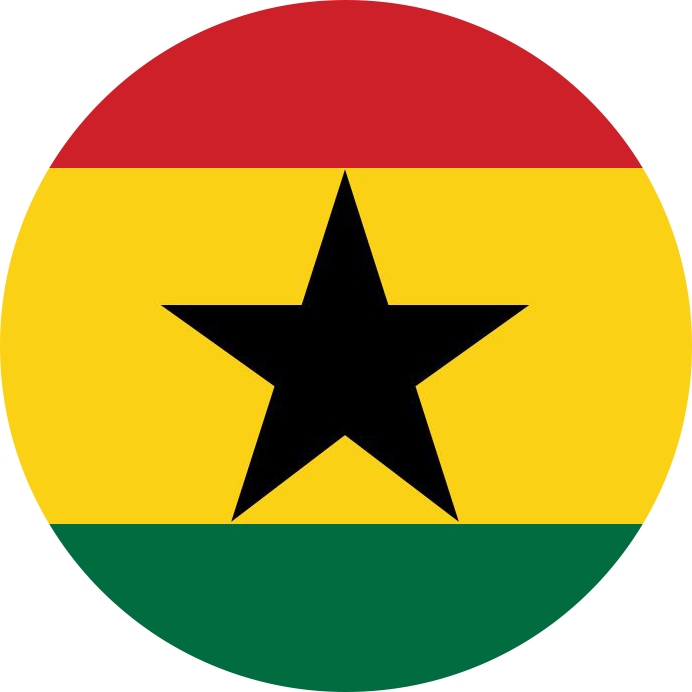
The national flag, designed by Theodosia Okoh, is a central symbol of the celebration. It features three horizontal bands of red, gold, and green with a black star in the center. Red represents the blood of those who died in the struggle for independence, gold represents the country's mineral wealth, green represents the nation's forests and natural wealth, and the black star represents African freedom and emancipation.
Cultural and National Significance
Ghana Independence Day holds deep historical and cultural significance for the nation and for Africa as a whole. Ghana's achievement of independence in 1957 was a turning point in African history. As the first sub-Saharan African country to gain independence from European colonial rule, Ghana became a powerful symbol of hope and self-determination for other nations seeking freedom. The event inspired independence movements across the African continent.
The day is an official state holiday for citizens of Ghana both within the country and in the diaspora. It serves to honor and celebrate the heroes who led the country to independence. The holiday also functions as a yearly reminder of the sacrifice and resilience of those who fought for freedom, and it encourages citizens to reflect on the nation's progress since 1957.
Independence Day fosters a sense of national identity that transcends tribal and regional differences. It invites every citizen to contribute to the development and prosperity of the nation, reinforcing the principles of unity, pride, and self-determination that defined the independence movement.
How It Is Observed in Ghana
The main national celebration takes place in Accra at Black Star Square, also known as Independence Square. This iconic parade ground is the heart of the national festivities and can hold tens of thousands of spectators. The Independence Arch, located within Black Star Square, stands as a monumental tribute to the country's freedom struggle.
While the main event is held in Accra, similar parades and march pasts occur in regions across the country. These events involve thousands of students and civic groups who march to show their patriotism and respect for the nation's history. In recent years, the national celebration has also been held outside Accra. The 2019 celebration took place at the Aliu Mahama Stadium in Tamale, and the 2020 celebration was held at the Baba Yara Sports Stadium in Kumasi. These were the first times the Independence Day celebration was held outside Accra.
After the formal parades, the atmosphere turns festive. Highlife and hiplife music are played, traditional dance performances take over the streets, and families gather for meals featuring dishes such as jollof rice, fufu, and banku. The celebration is also observed by Ghanaian diaspora communities in major cities around the world, including London, New York, and Toronto, where community groups organize food festivals, church services, and cultural showcases.
Related Events, People and Places
Several key figures are associated with Ghana Independence Day. Kwame Nkrumah is the central historical figure, having led the country to independence and served as its first Prime Minister from 1957 to 1960. Martin Luther King Jr., president of the Southern Christian Leadership Conference, attended the independence celebrations in 1957. Queen Elizabeth II, who was Queen of Ghana until 1960, attended the parade in 1961 as the British sovereign and took part in the inspection tour with President Nkrumah.
Key locations associated with the holiday include Black Star Square (Independence Square) in Accra, which is the primary venue for national celebrations, and the Independence Arch within the square. Other venues that have hosted national celebrations include the Aliu Mahama Stadium in Tamale and the Baba Yara Sports Stadium in Kumasi. The Jubilee House has also served as a venue for Independence Day events.
Annual celebrations often feature invited guests from other countries. Since the time of Kwame Nkrumah, presidents from other African countries and Europe have been invited to Ghana to join the celebration as guest speakers or invited guests. The 60th anniversary celebrations in 2017 included participation by the Bagad Lann Bihoue of the French Navy.
Search the Ghana Knowledge Database
Sources
- Independence Day (Ghana) - Wikipedia
- Ghana Embassy to The Holy See - NATIONAL INDEPENDENCE CELEBRATION
- Ghana Independence Day: History, Meaning & Celebrations
- Ghana Independence Day 2026: History, Symbols & Celebrations | Remitly
- Public Holidays and Commemorative Days in Ghana | Ministry of the Interior│Republic of Ghana
- en.wikipedia.org