

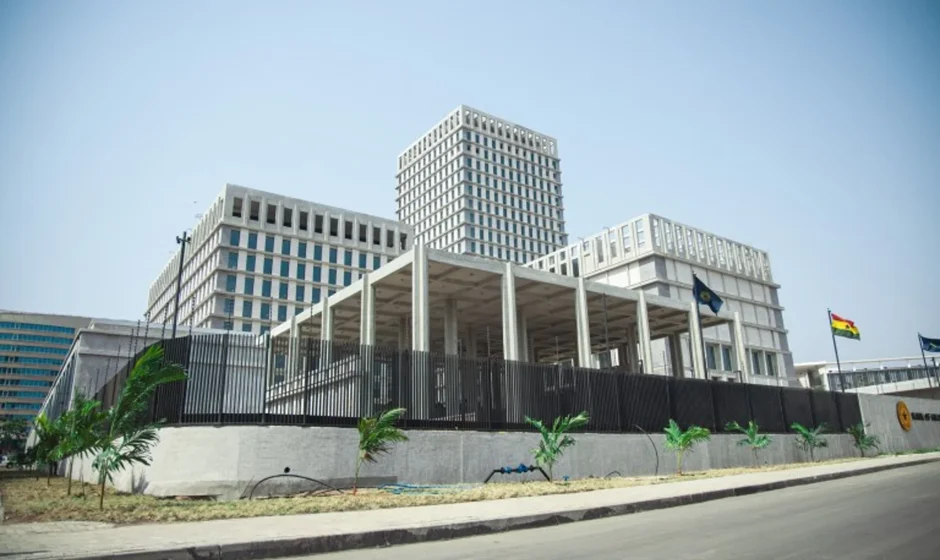

The Bank of Ghana revoked Zeepay Ghana Limited’s Dedicated Electronic Money Issuer (DEMI) licence on July 14, 2026, ending the fintech company’s authority to issue mobile money and digital wallet balances in Ghana with immediate effect. The central bank said the move follows years of unresolved regulatory breaches, including a failure to keep enough cash on hand to back customer wallet balances. For the thousands of Ghanaians, diaspora users, and cross-border remittance customers who relied on Zeepay wallets, the revocation raises urgent questions about how and when they can recover their money.
Quick links (related guides):
Table of Contents
- What Happened
- Why the Licence Was Revoked
- The $11.6 Million Court Judgment
- What Affected Customers Should Do
- What This Means for Ghana’s Mobile Money Sector
What Happened
In a public notice dated July 14, 2026, the Bank of Ghana announced it had revoked Zeepay Ghana Limited’s DEMI licence under Section 13 of the Payment Systems and Services Act, 2019 (Act 987). The notice was signed by Aimee Vyda Quashie, Secretary to the Bank of Ghana, and described Zeepay’s conduct as “detrimental to the interest of users and providers in the payment service ecosystem.”
Zeepay had operated in Ghana as an electronic money issuer, offering mobile wallets, digital payments, and international remittance services to individuals, businesses, agents, and merchants. The company had positioned itself as a cross-border payments leader operating in more than 20 African markets.
Why the Licence Was Revoked
The Bank of Ghana said Zeepay issued electronic money without holding the required matching cash reserves, creating what the central bank called a “negative variance” that put customer funds and the wider payment system at risk. Under Ghana’s e-money rules, every cedi of digital wallet balance a provider issues must be backed by an equivalent amount of real cash held safely, usually in a trust account at a partner bank.
The central bank said it had already directed Zeepay to top up its reserves to fully cover customer, agent, and merchant balances, and separately ordered the company to wind down its e-money issuance business. According to the Bank of Ghana, Zeepay did not comply with either directive, which it said left it no option but to revoke the licence outright.
| Timeline | Event |
|---|---|
| 2023 | Bank of Ghana fines Zeepay and temporarily suspends its forex licence over foreign exchange violations |
| February 12, 2026 | Chief Financial Officer Nana Ntim Asamoah resigns, citing material weaknesses in treasury operations |
| April 16, 2026 | Commercial Division of the High Court orders Zeepay and CEO Andrew Takyi-Appiah to pay over $11.6 million to a customer |
| June 24, 2026 | Court of Appeal denies Zeepay’s application to stay enforcement of the judgment while its appeal is pending |
| July 6, 2026 | Court bailiffs and police seize Takyi-Appiah’s residence and other assets to enforce the judgment |
| July 14, 2026 | Bank of Ghana revokes Zeepay’s DEMI licence with immediate effect |
| July 15, 2026 | Zeepay’s Accra headquarters is closed, with security personnel stationed at the entrance |
The $11.6 Million Court Judgment
The revocation caps months of mounting legal and financial trouble for Zeepay. In April 2026, the Commercial Division of the High Court ordered the company and its founder and chief executive, Andrew Takyi-Appiah, to pay a customer more than $11.6 million (roughly GHS 133.4 million, GBP 8.7 million, or RMB 78.5 million, based on approximate mid-July 2026 Bank of Ghana interbank and market rates) after finding the company had failed to execute the customer’s fund transfers. Justice Afi Agbanu Kudomor granted summary judgment, ruling that Zeepay had not raised a reasonable defense.
Zeepay appealed the ruling, but the Court of Appeal denied the company’s bid to pause enforcement on June 24, 2026, finding that Zeepay and Takyi-Appiah had offered no evidence that the judgment creditor, businessman Michael Yusuf, would be unable to repay the money if the appeal eventually succeeded. On July 6, 2026, court bailiffs and police enforced the judgment, seizing Takyi-Appiah’s Airport-area residence, vehicles, and Zeepay’s Cantonments head office. The appeal itself remains unresolved even as enforcement proceeds.
A significant part of the underlying High Court ruling held Takyi-Appiah personally liable, based on evidence that a substantial share of the disputed funds had been deposited directly into his personal mobile money wallet rather than kept in company accounts. Zeepay’s chief financial officer, Nana Ntim Asamoah, had already resigned in February 2026, copying his resignation letter to the Economic and Organised Crime Office and the Bank of Ghana and citing material weaknesses and abuse in treasury operations. Auditors Ernst and Young separately withdrew from Zeepay’s 2024 audit, citing serious concerns about the quality and reliability of the company’s financial information. Zeepay is also named in a winding-up petition brought by creditor Obsidian Achernar Ltd over an alleged unpaid debt of $1.22 million tied to a 2024 foreign exchange and working capital agreement, and its Barbados-based subsidiary, Zeemoney, had its licence suspended by the Central Bank of Barbados before the subsidiary applied for voluntary liquidation.
What Affected Customers Should Do
Anyone holding a Zeepay wallet, including agents and merchants, should contact the Bank of Ghana’s complaints office directly rather than waiting for Zeepay to reach out. The central bank listed 0593974486 and Complaints.office@bog.gov.gh as contact points for support with wallet balances.
Under the Payment Systems and Services Act, a licensed provider whose licence is revoked is required to arrange to pay out all electronic money balances held by customers within ten days. If you used Zeepay for remittances from abroad, keep transaction receipts, screenshots of your wallet balance, and any correspondence with the company, since these will support a claim if a formal payout or liquidation process follows.
What This Means for Ghana’s Mobile Money Sector
The revocation has already visibly disrupted the company’s operations. On July 15, the day after the licence was pulled, Zeepay’s Accra headquarters was closed, with security personnel stationed at the entrance. The Bank of Ghana framed the revocation as a routine enforcement action rather than a sign of instability across the wider mobile money sector, and said it remains committed to financial stability, consumer protection, and the integrity of the national payment system. Ghana’s other licensed e-money issuers, including the mobile network operator wallets that handle the bulk of everyday mobile money volume, are not affected by this action and continue to operate under their own licences.
Even so, the case is a reminder that not every company offering a digital wallet or remittance app in Ghana carries the same backing or oversight. Before trusting a fintech provider with savings or cross-border transfers, it is worth checking whether the company holds an active licence with the Bank of Ghana and how long it has operated without regulatory action.
Sources
- MyJoyOnline: “Bank of Ghana revokes Zeepay’s licence over e-money violations” (July 14, 2026)
- Ghana News Agency: “Bank of Ghana revokes Zeepay Ghana’s electronic money issuer licence” (July 14, 2026)
- Bank of Ghana: Public Notice No. 21/BOG-SEC/GOV/2026, Revocation of Licence, Zeepay Ghana Limited (July 14, 2026)
- TechLabari: “Bank of Ghana Pulls Zeepay’s E-Money Licence, Citing Unbacked Deposits” (July 14, 2026)
- TechLabari: “Ghana Court Orders Zeepay and Its CEO to Pay $11.6 Million to Customer”
- Face2Face Africa: “Zeepay Ghana: An indigenous African fintech’s fall from grace” (July 15, 2026)