

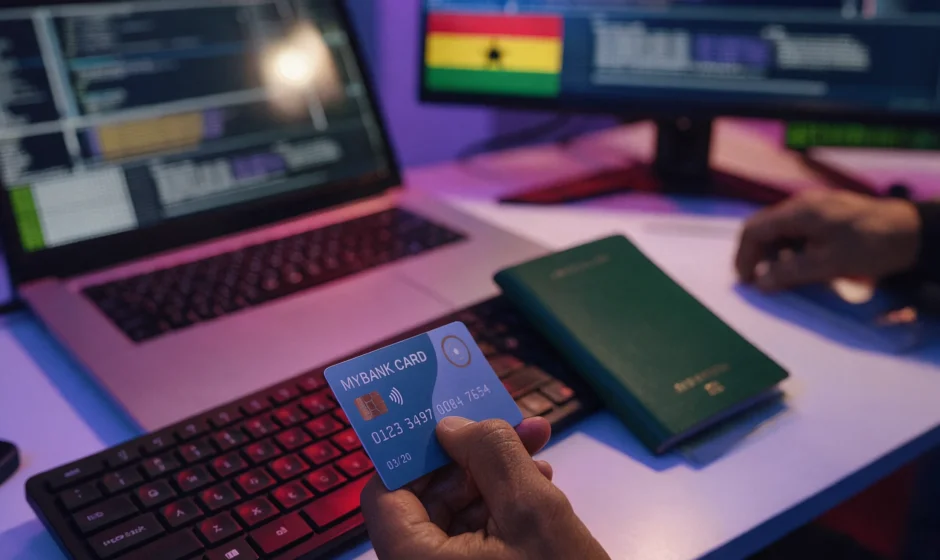

Ghana’s temporary shutdown of its Embassy in Washington, D.C., in May 2025 has developed into a much larger financial and administrative scandal after a special audit by Ghana’s Auditor-General put the estimated irregularities at approximately US$19.38 million.
The audit examined operations at the Embassy from January 2017 through June 2025 and investigated visa and passport application support services, mailing charges, payment systems, private companies connected to Embassy operations, procurement transactions, and the handling of sensitive passport and visa materials.
Among the most serious findings, auditors said visa and passport applicants were directed from Embassy-controlled systems to external platforms that collected additional fees. The audit also raised questions about private payment accounts, procurement arrangements, millions of dollars in application support and mailing charges, and passport booklets and visa stickers discovered outside normal consular controls.
The findings provide much more detail about the controversy that led Foreign Affairs Minister Samuel Okudzeto Ablakwa to take the extraordinary step of temporarily closing Ghana’s Washington Embassy on May 26, 2025, recalling Ghana-based staff, suspending locally recruited employees, dissolving the Mission’s IT department, and ordering a major systems overhaul.
The Embassy reopened three days later on May 29, 2025. It is operating today, and the current Embassy administration took office after the period examined by the audit.
For Ghanaians living in the United States and Americans applying for Ghanaian visas, the scandal is particularly significant because many of the questioned transactions were connected directly to ordinary consular services.
Table of Contents
- Why Ghana Closed Its Washington Embassy
- What the Special Audit Found
- Where the $19.38 Million Figure Comes From
- How Applicants Were Directed to External Websites
- The $29.75 Mailing Charge
- Visa and Passport Application Support Fees
- The Role Attributed to Fred Kwarteng
- Kwarteng’s Response
- Passport Booklets and Visa Stickers
- Procurement and Contract Questions
- What Ghana Did After the Allegations Emerged
- The Embassy Reopened After Three Days
- The Current Ambassador and the Audit Timeline
- What Visa and Passport Applicants Should Know Today
- How to Avoid Ghana Visa, Passport and Embassy Scams
- The Application Backlog
- Why the Scandal Matters Beyond $19 Million
- What Happens Next
Why Ghana Closed Its Washington Embassy
The public first learned the scale of the problem on May 26, 2025.
Foreign Affairs Minister Samuel Okudzeto Ablakwa announced that a special audit team established by the Ministry had uncovered alleged corrupt practices at Ghana’s Embassy in Washington, D.C.
One of the central allegations involved Fred Kwarteng, a locally recruited IT employee at the Embassy.
According to the Ministry’s findings at the time, an unauthorized link had been placed on the Embassy’s website that redirected people seeking visas and passports to a private business connected to Kwarteng.
Applicants were then charged additional amounts for services associated with their applications.
The Ministry said these extra charges had not been approved by the Ministry or Parliament as required for official government fees.
The government’s response went far beyond disciplining one employee.
- Fred Kwarteng was dismissed.
- Foreign Affairs Ministry personnel posted to the Washington Mission were recalled.
- The Embassy’s IT department was dissolved.
- Locally recruited employees were suspended pending further investigation.
- The Auditor-General was asked to conduct a forensic investigation.
- Matters arising from the investigation were referred to the Attorney-General for further action.
- The Embassy was temporarily closed while its systems were restructured.
The Embassy therefore closed temporarily on May 26, 2025.
At that point, however, the government did not yet have the fuller financial picture that would emerge from the Auditor-General’s investigation.
What the Special Audit Found
Ghana’s Audit Service identifies the investigation as the Special Audit Report of the Auditor-General on the Embassy of Ghana in Washington, D.C. for the period January 2017 to June 2025.
The scope is important. This was not an investigation limited to a few transactions immediately before the Embassy closed. Auditors examined years of operations at one of Ghana’s most important overseas diplomatic missions.
The audit identified problems involving several interconnected areas, including mailing and dispatch fees, visa and passport application support charges, online payment arrangements, third-party websites, procurement transactions, internal controls, and the custody of passport and visa materials.
The central issue was not simply that applicants paid money for services.
The important questions were whether those charges were properly authorized, where the money went, who controlled the systems collecting it, whether private businesses had been improperly inserted into government processes, and whether Embassy officials exercised adequate oversight.
Where the $19.38 Million Figure Comes From
This distinction is important because the frequently reported US$19.38 million figure can easily be misunderstood.
According to reporting based on the Auditor-General’s findings, auditors estimated approximately US$21.74 million in proceeds associated with the transactions examined, against estimated costs of approximately US$2.36 million.
The resulting difference was approximately US$19.38 million.
Different summaries of individual components of the audit produce slightly different subtotals because they refer to particular categories or calculations within the broader investigation. The figure most widely associated with the overall findings is approximately US$19.38 million.
| Audit Finding | Approximate Amount |
|---|---|
| Transactions/proceeds examined in major fee categories | US$21.7 million |
| Estimated costs | US$2.36 million |
| Estimated overall irregularities/difference reported | US$19.38 million |
| Application support services, 2021-2025 | US$14.35 million |
| Mailing fees examined | About US$6.95 million |
| Estimated difference associated with mailing charges | About US$4.59 million |
These figures should be read as audit calculations and findings, not as final criminal judgments against any individual.
How Applicants Were Directed to External Websites
One of the most troubling parts of the audit concerns the Embassy’s digital infrastructure.
Auditors reported that people visiting the Embassy’s online systems could be directed to external platforms for services connected with their visa or passport applications.
Among the platforms identified in reporting on the audit were GhanaPV.org and TravelGhana.net.
According to the audit findings, the external platforms used features including Ghana’s Coat of Arms, Embassy-related information, and presentation that could cause an ordinary applicant to believe that the service was an official or authorized part of the Ghanaian government’s consular system.
That distinction matters.
A traveler who independently chooses an unrelated private visa-assistance website may understand that the company is a third-party service provider. The situation is substantially different when someone begins within what appears to be the government’s application process and is then directed toward another platform connected to that process.
Applicants could reasonably assume that a resulting payment was part of the official procedure.
The Auditor-General’s findings indicate that this blurred boundary between government systems and private services was one of the major control failures at the Mission.
The $29.75 Mailing Charge
Mailing and dispatch services were a major part of the questioned transactions.
Applicants were reportedly charged US$29.75 for return mailing.
The audit estimated the underlying average postage cost at approximately US$10.10.
That leaves a difference of roughly US$19.65 per transaction before considering any other legitimate costs that may have existed.
Multiplied across large numbers of visa and passport applications over several years, relatively small individual charges can produce millions of dollars in revenue.
Auditors estimated approximately US$6.95 million in mailing fees in the transactions they examined and calculated an approximately US$4.59 million difference after accounting for estimated mailing costs.
The issue therefore became much larger than a dispute over a roughly US$20 difference on one person’s application.
Visa and Passport Application Support Fees
The larger financial component involved application support services.
According to the audit findings reported in August 2026, applicants were charged approximately US$68.78 to US$76.78 for certain visa support services, while passport support services carried a reported charge of approximately US$67.
Auditors used transaction information associated with approximately 188,050 visa-related transactions and 21,079 passport-related transactions in estimating the scale of these charges.
The resulting estimate for application support services between 2021 and 2025 was approximately US$14.35 million.
Again, the critical audit question was not simply whether a private company may legally charge for optional assistance.
It was whether applicants using a Ghanaian government diplomatic mission were improperly directed into private services, whether those services appeared official, whether the fees were authorized, and whether the resulting money was properly accounted for.
The Role Attributed to Fred Kwarteng
Fred Brian Kwarteng became the central individual identified publicly in the investigation.
The Foreign Affairs Ministry said he was recruited as a locally employed IT staff member in 2017.
The Auditor-General’s investigation subsequently examined his access to the Mission’s digital systems, including website configuration and consular technology.
According to the audit findings reported publicly, Kwarteng was associated with external platforms and private entities involved in services provided to visa and passport applicants.
Auditors alleged that Embassy website modifications included links or notices that directed applicants toward outside platforms.
The audit also examined payment processing. Reporting on the findings says a Square payment gateway associated with a private account was used for certain payments rather than an account controlled directly by the Government of Ghana or the Embassy.
Auditors said they could not obtain documentation establishing proper authorization for some of the fees and arrangements.
This is one reason the case raises a broader institutional issue.
An employee with administrative control over a government website can occupy an unusually powerful position. If that same person has a financial interest in a service promoted through that system, it creates an obvious potential conflict of interest requiring strong oversight.
Fred Kwarteng Has Disputed the Corruption Allegations
Kwarteng has publicly disputed the characterization of his actions as corruption.
Following the May 2025 controversy, he said the system he developed was intended to address processing problems at the Embassy and improve consular services.
He maintained publicly that the system was created in good faith and disputed claims that he had admitted wrongdoing.
This distinction is important for readers following the case.
The Auditor-General’s findings and the government’s allegations are serious, but an audit report is not itself a criminal conviction. Determining individual criminal liability requires the appropriate investigative and judicial processes.
Any prosecution, recovery action, surcharge, or administrative proceeding should therefore be followed separately from the audit itself.
Auditors Also Found Passport Booklets and Visa Stickers
The financial findings were not the only serious issue raised by the audit.
Reporting on the forensic investigation says auditors recovered 18 passport booklets from Kwarteng’s office.
Among them were reportedly four blank biometric passport booklets.
Auditors also reportedly recovered 59 used and unused visa stickers.
These are sensitive government-controlled materials.
Passport booklets and visa stickers require strict inventory, custody, and security procedures because unauthorized access to genuine travel-document materials creates risks extending beyond financial loss.
The audit also raised concerns about digital evidence.
The computer assigned to the IT officer was reportedly found without its internal solid-state drive when auditors conducted their examination.
That prompted questions about the availability and preservation of digital records connected to the systems under investigation.
These findings significantly broaden the significance of the case. What began publicly as a dispute over unauthorized visa and passport fees also became an investigation involving government IT controls and the custody of sensitive travel-document materials.
The Audit Also Raised Procurement and Contract Questions
The investigation extended beyond online application fees.
Auditors examined approximately US$295,907.84 in payments made during 2019 and 2020 to STEFRANN LLC, a company the audit linked to Kwarteng.
The payments were reportedly connected with renovation and furnishing work at the Ambassador’s residence.
The audit also examined how private companies became involved in Embassy services and whether the required procurement and governmental approvals existed.
In June 2025, Foreign Affairs Minister Samuel Okudzeto Ablakwa said the Ministry could find no evidence of the required procurement approval or legal clearance for a 2023 contract involving courier and visa application services and a company connected to Kwarteng.
The Ministry’s position was that the arrangement raised serious procurement and conflict-of-interest concerns.
The audit also examined the conduct and oversight responsibilities of other officials who served at the Mission during the period under review.
That is significant because the scale and duration described in the report raise an obvious question: how could the arrangements continue for years without being detected or stopped?
The Auditor-General’s findings point not only toward the conduct of individuals, but also toward weaknesses in supervision, internal financial controls, website governance, and management oversight.
What Ghana Did After the Allegations Emerged
The government’s response in May 2025 was unusually aggressive for a diplomatic mission.
Instead of leaving the Embassy operating normally while the investigation continued, the Foreign Affairs Ministry temporarily shut it down.
Ministry personnel posted to the Mission were recalled, locally recruited employees were suspended, and the IT department was dissolved.
A new team was assigned to operate the Mission, while an IT team reconfigured the Embassy’s website and payment infrastructure.
The Auditor-General was brought in for the wider investigation, while matters arising from the allegations were also referred for possible legal action.
The Ministry said the measures were intended to remove unauthorized links, restore control over Embassy systems, and protect applicants.
The Ghana Embassy Was Not Permanently Closed
One point has become confused in some discussions of the scandal.
Ghana did not permanently close its Embassy in Washington.
The Embassy closed temporarily on May 26, 2025, during the initial restructuring.
The Ministry announced that it would reopen on May 29, meaning the shutdown lasted only a few days.
When operations resumed, the Ministry said an IT team had reconfigured the website and payment platforms to eliminate unofficial and unauthorized links.
A new diplomatic team was also deployed.
The Embassy is currently operating from:
3512 International Drive NW
Washington, DC 20008
Official website: washington.mfa.gov.gh
The Embassy’s official website lists current consular and chancery information. Applicants should check the website directly for the latest hours, appointment requirements, application procedures, and fees before visiting or making a payment.
The Current Ambassador Was Not in Office During the Audit Period
Another important clarification emerged after the 2026 audit findings became public.
The audit covers activities through June 2025.
Ghana’s current Ambassador to the United States, Victor Emmanuel Smith, assumed office in Washington later, in September 2025.
The Embassy issued a statement in August 2026 rejecting attempts to associate Ambassador Smith with the irregularities described in the audit and emphasizing that the conduct under examination predates his tenure.
That timeline matters.
The findings should not be attributed to the current Ambassador simply because he now leads the Mission where the alleged conduct occurred.
What Ghana Visa and Passport Applicants in the United States Should Know Today
The scandal provides a practical lesson for anyone dealing with Ghanaian consular services online.
Applicants should verify that they are using current official government channels before submitting sensitive information or making payments.
Ghana’s Washington Embassy currently operates through:
https://washington.mfa.gov.gh/
The Ministry of Foreign Affairs operates through:
Applicants should be particularly cautious when a website uses Ghanaian government branding but operates on an unrelated commercial domain, requests payments not clearly identified in official Embassy instructions, redirects users to an unfamiliar third-party payment system, or claims that an additional private service is mandatory without corresponding information from the Embassy.
A website displaying Ghana’s Coat of Arms is not, by itself, proof that the website is controlled by the Government of Ghana.
When uncertain, applicants should return to the Ministry of Foreign Affairs or Embassy website and independently verify the process through the contact information published there.
How to Avoid Ghana Visa, Passport and Embassy Scams
The Washington Embassy case demonstrates an uncomfortable reality: simply starting from what appears to be an official government website does not always eliminate risk.
According to the audit findings, one of the central problems was that applicants could be directed from Embassy-controlled systems toward external platforms. Travelers and members of the Ghanaian diaspora should therefore pay attention not only to where an application begins, but also to where links, payment pages, and forms take them.
The following precautions can reduce the risk of paying an unauthorized fee or providing sensitive information to the wrong organization.
1. Start With an Official Ghana Government Website
For Ghana’s Embassy in Washington, D.C., begin with:
https://washington.mfa.gov.gh/
The Ministry of Foreign Affairs can be found at:
Pay close attention to the domain name. A website can display Ghana’s flag, Coat of Arms, photographs of government officials, and professional-looking visa information without actually being a Government of Ghana website.
Do not assume a website is official simply because it looks official.
2. Check the Address Again Before Every Payment
One of the most useful habits is checking the web address again when you reach the payment stage.
If you started on an mfa.gov.gh website but suddenly find yourself on an unfamiliar commercial domain, stop and determine why you were redirected before entering payment information.
A redirect is not automatically fraudulent. Governments sometimes use legitimate outside companies for payment processing, appointments, document delivery, and other services.
The important question is whether the Government of Ghana clearly identifies that third party as an authorized provider.
If you cannot verify the relationship through an official government source, do not assume the payment is required.
3. Verify Fees Against Official Instructions
Before paying for a visa, passport, mailing service, or other consular service, compare the amount with the fees published through the relevant Embassy, consulate, or Ministry of Foreign Affairs.
Be particularly cautious when you encounter additional charges described as application support fees, processing assistance, priority handling, document review, courier charges, administrative charges, or appointment fees.
Some of these services can be legitimate. The existence of an additional fee does not automatically mean there is a scam.
However, determine whether the service is mandatory, optional, government-operated, or provided by an authorized third party before paying.
4. Do Not Trust a Website Just Because It Uses Ghana’s Coat of Arms
Government logos and national symbols are easy to copy.
A convincing website can reproduce Ghana’s Coat of Arms, flag, photographs, and government terminology.
Instead of relying on appearance, verify the exact domain name, whether the site is linked from an official government website, who operates the payment system, whether the fee appears in official instructions, and whether official Embassy contact information confirms the service.
The domain and authorization matter more than the design.
5. Be Especially Careful With Passport Information
A passport contains extremely sensitive personal information.
Do not upload passport scans, birth certificates, photographs, or other identity documents to an unfamiliar website simply because it claims to assist with a Ghanaian application.
Before providing documents, confirm that you are using the official application process or a third-party service specifically identified by the Ghanaian government as authorized.
The same caution applies to passport numbers, dates of birth, home addresses, parents’ information, citizenship documents, birth certificates, and credit or debit card information.
These records can be valuable for identity theft and other forms of fraud.
6. Be Suspicious of Requests for Unusual Payment Methods
Exercise additional caution if someone claiming to represent an Embassy or government agency asks you to pay through an unusual method, particularly through a personal account.
Do not send money simply because someone creates a sense of urgency or claims your visa or passport will otherwise be canceled, rejected, or delayed.
Verify the request independently using contact information published on the official Embassy or Ministry website.
7. Do Not Rely Exclusively on a Google Search Result
Searching for terms such as “Ghana visa application” or “Ghana passport renewal” can produce advertisements, private visa companies, and third-party assistance services alongside government results.
A high position in search results does not establish government affiliation.
Check the actual domain before proceeding.
For Washington consular services, applicants can begin with the Embassy’s official mfa.gov.gh website rather than simply selecting the first result appearing in a search engine.
8. Independently Contact the Embassy When Something Looks Wrong
If a payment, website, or instruction seems unusual, independently contact the Embassy.
Do not use a telephone number or email address supplied only by the website you are questioning. Return to the official Ministry of Foreign Affairs or Embassy website and use the contact details published there.
Ask whether the company, website, fee, or payment method is authorized.
Taking a few minutes to verify a payment can be considerably easier than trying to recover money or sensitive identity documents afterward.
9. Keep Records of Everything You Pay
Save documentation associated with your application, including:
- Payment receipts
- Confirmation emails
- Application numbers
- Transaction records
- Courier tracking numbers
- Copies of relevant instructions
For an unfamiliar or unexpected charge, it can also be useful to preserve a screenshot showing the webpage, amount, domain name, and date.
These records can help establish what happened if you later need to dispute a payment or report a suspected unauthorized transaction.
10. If You Think You Already Paid a Fraudulent or Unauthorized Fee
Do not simply make another payment and forget about the first transaction.
Preserve your receipts and other evidence, verify the correct application status directly with the Embassy, and contact your bank or card issuer if you believe your payment information was compromised or an unauthorized transaction occurred.
If sensitive identity documents were supplied to a suspicious service, consider the potential identity-theft risk as well as the financial loss.
Suspected fraud involving a Ghanaian diplomatic mission or someone impersonating one should also be reported through official government channels and, where appropriate, to law-enforcement or consumer-protection authorities in the country where the transaction occurred.
The Scandal Also Left an Application Backlog
The audit identified another consequence for ordinary applicants: delayed documents.
According to reporting based on the Auditor-General’s findings, the Embassy accumulated a backlog of approximately 12,721 visa and passport applications between June and August 2025, even though applicants had paid mailing fees.
Of those, approximately 4,507 were mailed during the period examined, while 8,214 were either personally collected or remained undelivered.
The Embassy subsequently incurred approximately US$45,000 in additional mailing costs while working to address part of the backlog.
Separately, the Embassy reported after its May 2025 reopening that more than 2,200 backlogged visa applications were processed and returned within days.
For applicants, this illustrates the practical consequences of weak administrative controls. A financial irregularity inside a diplomatic mission does not remain an accounting problem. It can translate directly into delayed passports, delayed visas, missed travel, and additional costs.
Why the Washington Embassy Scandal Matters Beyond $19 Million
The headline number is enormous, but the institutional implications may be more important.
Ghana’s Embassy in Washington is one of the country’s most important diplomatic missions.
It serves Ghanaians living across the United States, processes consular matters, and represents Ghana in one of its most consequential bilateral relationships.
An Embassy website also carries an unusual degree of public trust.
A traveler or citizen who reaches a payment service through an official diplomatic website is unlikely to approach that service with the same skepticism they might apply to an ordinary commercial website.
That makes control over government digital infrastructure particularly important.
The scandal therefore raises broader questions for Ghana’s diplomatic missions:
- Who is permitted to modify Embassy websites?
- Who approves third-party service providers?
- How are online payment gateways authorized?
- Where are consular fees deposited?
- How are conflicts of interest detected?
- Who audits locally recruited employees with administrative access?
- How are passport booklets and visa materials inventoried?
- How quickly can the Ministry detect an unauthorized change to an Embassy website?
Those questions apply well beyond Washington.
What Happens Next?
The special audit does not necessarily represent the end of the Washington Embassy case.
The Auditor-General recommended recovery of amounts identified in the report from responsible actors and sanctions against officers found culpable.
The report also called for stronger controls over third-party providers, tighter monitoring of Embassy websites, and centralized approval of website content.
Any criminal prosecution is a separate matter.
Similarly, a government demand for repayment and a formal surcharge imposed under Ghana’s constitutional audit framework are not necessarily the same thing. Political and legal disagreement can arise over responsibility, recovery procedures, and who has authority to impose particular measures following an audit.
Several important questions therefore remain:
- Will the government recover substantial amounts identified by auditors?
- Will any current or former officials face formal disciplinary proceedings?
- Will the Attorney-General pursue criminal cases arising from the findings?
- Will the audit lead to reforms at Ghana’s other diplomatic missions?
- Will new controls prevent private commercial systems from being embedded into government consular processes without appropriate approval?
Those developments will determine whether the Washington investigation ultimately becomes an isolated scandal or a catalyst for broader reform of Ghana’s overseas missions.
Bottom Line
Ghana’s Washington Embassy scandal began publicly in May 2025 with allegations that visa and passport applicants had been redirected to private services charging unauthorized additional fees.
The government’s immediate response was dramatic: an employee was dismissed, staff were recalled or suspended, the IT department was dissolved, and the Embassy was temporarily closed.
The subsequent Auditor-General investigation has now provided a much fuller picture of the potential scale of the problem.
The special audit covering January 2017 through June 2025 identified approximately US$19.38 million in alleged financial irregularities across mailing charges, application support services, and other questioned transactions.
It also raised serious concerns about procurement, website control, private payment systems, administrative oversight, and sensitive passport and visa materials.
At the same time, readers should distinguish audit findings and government allegations from criminal convictions. Individuals named in the controversy retain the right to challenge allegations against them, and Fred Kwarteng has publicly disputed the characterization of his actions as corruption.
The Embassy itself is open and operating under a different team. The current Ambassador took office after the audit period.
For visa and passport applicants, the case also offers a practical warning: verify the government domain, check where a link takes you before entering sensitive information, and independently confirm unexpected charges or third-party services.
The next major question is what Ghana’s institutions will do with the Auditor-General’s findings, including whether money will be recovered, whether further legal proceedings will follow, and whether the weaknesses identified in Washington will lead to stronger controls across Ghana’s diplomatic missions.
Sources
- Ghana Audit Service: Special Audit Report of the Auditor-General on the Embassy of Ghana in Washington, D.C., January 2017 to June 2025
- Parliament of Ghana: Foreign Affairs Minister’s Statement on the Washington Embassy Investigation
- Ghana News Agency: Foreign Affairs Ministry Uncovers Visa Fraud at Washington Embassy; Staff Recalled (May 26, 2025)
- Ghana News Agency: Ghana Embassy in Washington DC to Reopen May 29 After Structural Reforms (May 27, 2025)
- Citi Newsroom: Forensic Audit Uncovers $19.38M in Alleged Irregularities at Ghana Embassy in Washington (August 10, 2026)
- Citi Newsroom: Former ICT Officer at Ghana Embassy in Washington Implicated in $19M Scheme, Audit Report (August 11, 2026)
- GBC Ghana: Auditor-General Reports Irregular Charges at Ghana Embassy in Washington (August 2026)
- Embassy of Ghana in Washington, D.C.: Official Website
- Ministry of Foreign Affairs, Ghana: Official Website