



Ghana is finalising its first standard treatment guidelines for the management of lead exposure and poisoning, a move aimed at strengthening diagnosis, treatment, and health system preparedness. Dr. Caesar Nyadedzor, Head of the Poison Control Unit of the Ghana Health Service, confirmed the development in an interview with the Ghana News Agency in Accra.
The guidelines will specify the tests required to identify and confirm lead poisoning, the treatment options available at different levels of care, and the equipment and facilities needed across the health system. They have already undergone a stakeholder validation meeting, and a technical team is reviewing comments before submission for ministerial approval and formal launch.
This effort addresses a critical gap: without standard protocols, health workers have lacked clear clinical direction for managing lead exposure. The guidelines are expected to help decision-makers allocate resources appropriately and improve patient outcomes across Ghana.
Quick links (related guides):
What the New Guidelines Will Cover
The forthcoming guidelines will address a long-standing gap in Ghana’s health system. According to Dr. Nyadedzor, the absence of standard treatment protocols has left clinicians uncertain about how to handle cases of lead exposure. The guidelines will establish:
- Diagnostic tests: Which blood tests and other methods should be used to confirm lead poisoning.
- Treatment protocols: Medications and therapies appropriate for different age groups and severity levels, including chelation therapy for severe cases.
- Health system requirements: Equipment and facilities needed at community-based health centres, district hospitals, and regional referral hospitals.
The document has already passed a stakeholder validation meeting where participants submitted additional comments. A technical team is currently reviewing those inputs before the guidelines are sent for ministerial approval and a formal launch.
Why Lead Poisoning Is a Growing Concern in Ghana
Lead exposure is a serious public health issue in Ghana. A survey conducted by the Ghana Health Service and UNICEF found that one in every two children under age five in Ghana has blood lead levels exceeding World Health Organisation limits. Common sources of lead exposure include lead-based paint, contaminated water, and food crops grown in mining communities.
Health experts stress that no amount of lead in the human body is safe. Even minimal exposure can cause permanent brain damage, reduced intelligence, kidney disease, and other lifelong complications in children. In adults, lead poisoning can lead to high blood pressure, cardiovascular disease, and reproductive issues. The new guidelines aim to equip health workers to identify and manage these cases more effectively.
Recognising the Symptoms of Lead Poisoning
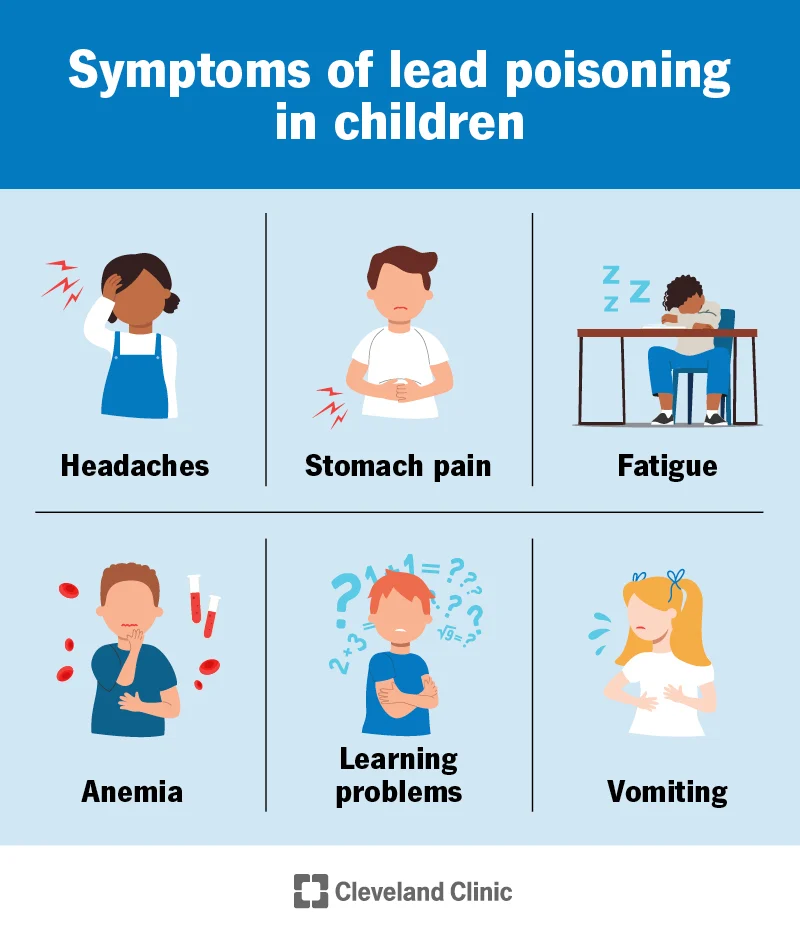
Lead poisoning often presents with no obvious symptoms, making it difficult to detect without testing. However, when symptoms do appear, they vary between children and adults. According to the Cleveland Clinic, common symptoms include:
- In children: Headaches, stomach pain, vomiting, fatigue, hyperactivity, learning problems, and behavioural changes.
- In adults: Headaches, abdominal pain, personality changes, anaemia, numbness in the feet and legs, and loss of sex drive.
Symptoms may develop over weeks or months and can come and go. Because the effects can be irreversible, early detection through blood lead testing is critical. The guidelines will help standardise testing protocols so that cases are identified sooner.
Treatment Options and What Happens Next
Treatment for lead poisoning begins with identifying and removing the source of exposure. For mild cases, doctors may recommend a diet rich in iron, calcium, and vitamin C to help lower blood lead levels. Routine follow-up blood tests are also important to monitor progress.
For severe cases, chelation therapy is the standard treatment. This involves administering medication that binds to lead in the blood, allowing the body to excrete it more easily. In cases where lead paint chips are visible on X-ray, whole-bowel irrigation may be used to flush out the digestive tract.
The long-term effects of lead poisoning are not reversible, but prompt treatment can prevent further damage. The new guidelines will give Ghanaian health workers the tools they need to offer consistent, evidence-based care. Dr. Nyadedzor declined to give a specific timeline for publication, noting that it depends on ministerial approval and the formal launch process.
Sources
- Ghana finalising first lead poisoning treatment guidelines | Ghana News Agency
- Lead Poisoning: Symptoms & Treatment