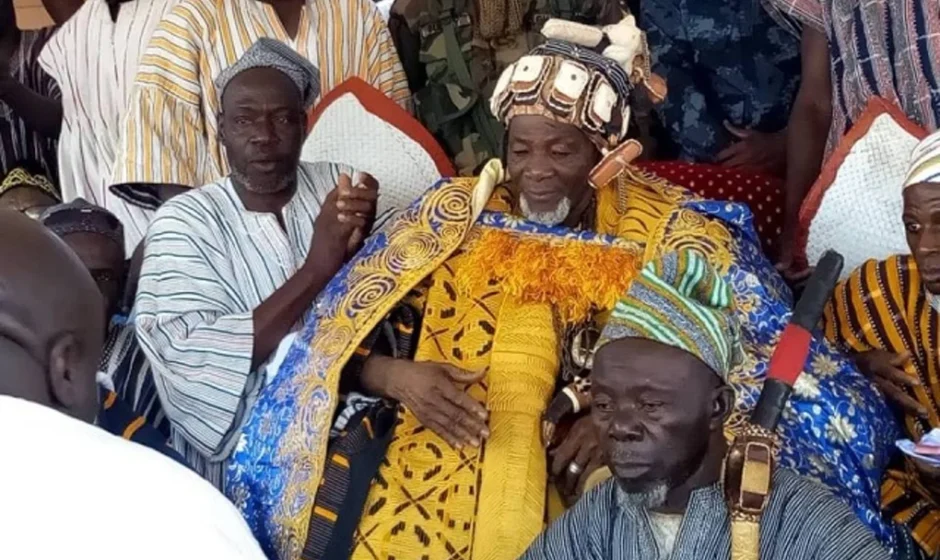

The Dagbon Kingdom is one of Ghana’s oldest and most structured traditional states, centered on the town of Yendi in the Northern Region and led by a monarch known as the Yaa Naa. Unlike a simple hereditary crown, Dagbon is governed through a layered customary system built around gate skins, kingmakers, and a formal regency, all designed to keep the kingdom stable between the death of one king and the selection of the next.
That system is active right now. Yaa Naa Abukari Mahama II, who had led Dagbon since 2019, died on July 11, 2026, while receiving medical treatment in South Africa. His death was announced on July 13, and his eldest son, Kampakuya Naa Yakubu Abukari, has since been enskinned as Regent to oversee the kingdom until a new Yaa Naa is chosen and installed under Dagbon custom.
For readers connected to Ghana, whether through heritage, business, or relocation, Dagbon’s story matters beyond Yendi. It shapes politics and security across northern Ghana, it demonstrates how customary law and the Ghanaian Constitution work side by side, and it offers a clear example of how a modern African nation manages power, tradition, and succession at the same time.
Quick links (related guides):
Table of Contents
- What Is the Dagbon Kingdom?
- The 2026 Succession: Death of Yaa Naa Abukari Mahama II
- How Dagbon’s Political Structure Works
- Royal Gates, Gate Skins and Kingmakers Explained
- Why the Regent Matters
- From Ancient Origins to the 2002 Crisis
- From Crisis to the 2019 Restoration
- Mourning Protocols and Public Ritual
- Dagbon and Ghana’s Constitution
- How Dagbon Compares to Other Ghanaian Kingdoms
- Practical Impact for Visitors, Diaspora and Investors
- Frequently Asked Questions
- What Happens Next
What Is the Dagbon Kingdom?
Dagbon is a centralized traditional kingdom of the Dagomba people, part of the wider Mole-Dagbani family of states in Ghana’s Volta basin that also includes Mamprugu and Nanung. Oral and written history trace these related kingdoms to a common ancestor, Tohazie, and the Gbewaa line, though scholars caution that much of this history survives through oral tradition, court records, and later legal codification rather than a single written chronicle.
The office of king in Dagbon is called the Yaa Naa, and the symbol of that office is a skin, not a stool as in Asante or Ga tradition. In Dagbon, the language of power revolves around naam, meaning the authority vested in the skin itself. That distinction is not decorative. It reflects a political culture where legitimacy comes from ritual investiture and communal recognition, not from bloodline alone.
According to Martin Staniland’s academic history The Lions of Dagbon, the recorded line of Yaa Naas stretches back roughly 500 years, and succession disputes over eligibility and process have been a recurring feature of Dagbon politics for most of that history. The 2002 to 2019 crisis, covered later in this guide, was the most severe modern example, but it was not a new phenomenon.
A quick note on spelling: Ghanaian outlets are not fully consistent on names tied to this story. You will see Ya-Na and Yaa Naa used interchangeably, along with Abukari, Abubakari, and Bukali for the same late king, and Kampakuya or Kampakoya for the regent’s title. This guide uses Yaa Naa and Abukari Mahama II throughout for consistency, and Kampakuya Naa for the regent’s title.
The 2026 Succession: Death of Yaa Naa Abukari Mahama II
Yaa Naa Mahama Abukari II died on Saturday, July 11, 2026, while in South Africa for medical treatment following a short illness. His death was officially announced on Monday, July 13, by the Kuga Naa, Adam Abdulai II, Head of the Dagbon Kingmakers, after the traditional talking drum was sounded and customary rites were performed at the Gbewaa Palace in Yendi.
Born in 1939, Yaa Naa Abukari II was 87 years old at his death. He was the 41st Yaa Naa of Dagbon and had served for just over seven years, having been selected and enskinned in January 2019 as the Yoo Naa of Savelugu, one of the three gate skins from which a Dagbon king must come. His enskinment ended a seventeen-year vacancy on the Yendi Skin that followed the 2002 killing of his predecessor, Yaa Naa Yakubu Andani II.
Following his death, his eldest son was recognized with the title Kampakuya Naa and later enskinned as Regent, becoming Kampakuya Naa Yakubu Abukari. Under Dagbon custom, the regent administers the kingdom’s affairs, including the completion of funeral rites, until a new Yaa Naa is selected from an eligible gate skin and formally enskinned. The regent is not automatically the next king. That is one of the most misunderstood points in outside coverage of Dagbon, and it matters for anyone trying to follow the succession accurately.
The late king was buried at dawn on July 13 at Katini, the royal mausoleum reserved for Dagbon kings. The third-day Adua prayers, an Islamic mourning rite, were held at the Gbewaa Palace on Thursday, July 16, 2026, drawing chiefs, government officials, and mourners from across Dagbon and beyond.
How Dagbon’s Political Structure Works
Dagbon is hierarchical, with the Yaa Naa at the top of a ranked system of paramount, divisional, sub-divisional, and village chiefs. Below the king sit major chiefs including the Karaga Naa, Yoo Naa, Mion Lana, Nanton Naa, Gushe Naa, Tolon Naa, Kumbung Naa, Kuga Naa, Yelizoli Lana, and Gulkpe Naa, among others. Each owes allegiance up the chain while retaining meaningful authority within their own area.
Eligibility for the Yendi Skin itself is filtered through three recognized gate skins: Karaga, Mion, and Savelugu, also called Yoo. A candidate for Yaa Naa must first hold one of these three chieftaincies before he can be considered for the throne. This is separate from the royal gates discussed below, and confusing the two is one of the most common errors in outside reporting on Dagbon.
Royal Gates, Gate Skins and Kingmakers Explained
Public discussion of Dagbon politics, especially conflict coverage, usually centers on two royal gates, or dynastic houses: Abudu and Andani. These are the family lines most often named when people talk about Dagbon’s succession disputes.
Gate skins are a different concept. They are the three chieftaincies, Karaga, Mion, and Savelugu or Yoo, that a candidate must hold before he is eligible for the Yendi Skin. A king’s royal gate identifies which family he belongs to. His gate skin identifies which specific chieftaincy qualified him to be considered. An accurate Dagbon explainer needs to keep these two layers separate.
Kingmakers add a third layer. Academic accounts distinguish between electors, sometimes described as the Gushie Naa and selected divisional chiefs, and the ritual kingmakers, traditionally the Kpatia, Gomli, and Tuguri naam, who secretly invest the chosen candidate. In everyday Dagbon reporting today, the term kingmakers is used more broadly and often centers on the Kuga Naa as head of the Dagbon Council of Kingmakers and chief custodian of the process. Both descriptions are accurate. They simply describe different levels of detail within the same institution.
This structure shows that authority in Dagbon is not concentrated in the king alone. Kingmakers, skin-makers, and ritual authorities all play a role in legitimizing a new Yaa Naa, which is part of why scholars describe Dagbon as a ritually checked monarchy rather than an absolute one.
Why the Regent Matters
The regent occupies one of the most sensitive positions in Dagbon government. Custom holds that the late king’s eldest son is first recognized with a preliminary title, usually Kampakuya Naa or Bolin Lana, depending on circumstances. That title alone does not grant him authority over the kingdom.
Full customary authority only comes once the Kuga Naa formally enskins him as Regent. From that point, he manages the kingdom’s affairs, including the completion of funeral obligations, public order during mourning, and coordination with government and security agencies, until the gate skins produce an eligible candidate and the kingmakers select and secretly invest a new Yaa Naa.
Academic research on Dagbon regency describes this office as historically combustible rather than purely ceremonial. Because the regent sits close to power without being guaranteed the throne, regency periods have contributed to tension in Dagbon’s history, including disputes around the 1974 succession. That history is one reason current coverage of the 2026 transition should avoid describing the regent as the presumptive next king.
From Ancient Origins to the 2002 Crisis
Dagbon’s modern political relevance cannot be separated from the events of March 2002, when Yaa Naa Yakubu Andani II was killed at the Gbewaa Palace during violent clashes between the Abudu and Andani gates. The killing triggered a seventeen-year interregnum in which no funeral could be completed and no successor could be enskinned, leaving the Yendi Skin effectively vacant for nearly two decades.
Older academic sources show that succession disputes in Dagbon predate 2002 by centuries. Historical debate has long existed over whether succession should follow strict rotation between the gates or a selection process run by kingmakers. A 1961 Statement of Custom, reproduced in Staniland’s research, insisted that succession should be determined by a properly formed selection committee rather than automatic rotation. Modern peace-process language and current Dagbon reporting now describe succession primarily through the recognized gates and gate skins, so both the historical debate and the current operating consensus are worth understanding.
From Crisis to the 2019 Restoration
Ending the seventeen-year vacancy required a long, structured peace process. The Committee of Eminent Chiefs, chaired by the Asantehene, Otumfuo Osei Tutu II, mediated the dispute over roughly sixteen years following the 2002 crisis, holding about 60 sittings before presenting a peace roadmap in November 2018. That roadmap sequenced the remaining steps: completing the funerals of both Yaa Naa Yakubu Andani II and his predecessor, installing a regent, and finally selecting and enskinning a new Yaa Naa.
On January 18, 2019, the last day of Yakubu Andani II’s long-delayed funeral rites, Dagbon kingmakers consulted the oracle and selected Abubakari Mahama, then the Yoo Naa of Savelugu, as the new king. He was formally outdoored as Yaa Naa Abukari Mahama II in public ceremonies held from January 25 to 27, 2019, attended by then President Nana Akufo-Addo and former presidents John Mahama and Jerry John Rawlings. His enskinment closed a seventeen-year rupture and, according to government and Dagbon accounts, ushered in a period of reconciliation between the Abudu and Andani gates, including the enskinment of 25 chiefs from 36 previously vacant skins by early 2020 and continued investment in the Dagbon Development Fund and the reconstruction of the Gbewaa Palace during his reign.
Mourning Protocols and Public Ritual
Mourning in Dagbon is a kingdom-wide event, not a private family matter. After the July 13 announcement, all public and private schools in Yendi Municipality were temporarily closed from midday that day through July 16, following consultations between the Ghana Education Service, the Yendi Municipal Chief Executive, and the Gbewaa Palace. Classes resumed on July 17.
Dagbon mourning traditionally includes prayer, drumming, and public displays of homage by ranked chiefs. The 2019 funeral of Yaa Naa Yakubu Andani II, for example, included the regent circumambulating the palace before thousands of mourners while sub-chiefs paid homage.
Contemporary Dagbon leadership has also drawn a clear line around safety. During the July 2026 rites, the Dagbon Council of Kingmakers publicly banned live ammunition at the funeral, warning that anyone found carrying or firing live rounds would be arrested. The measure, addressed by a senior Ghana Police Service officer at an emergency meeting at the Gbewaa Palace, responded directly to a pattern of injuries linked to celebratory gunfire at traditional events. Readers interested in the legal backdrop to that decision can review Ghana’s firearm laws for more context.
Dagbon and Ghana’s Constitution
Chieftaincy in Ghana is constitutionally protected. Under Article 270 of the 1992 Constitution, the institution of chieftaincy and its traditional councils are guaranteed, and Parliament cannot grant any authority the power to recognize or withdraw recognition of a chief. Disputes over selection, installation, or deposition move through Traditional Councils, the Regional Houses of Chiefs, the National House of Chiefs, and in some cases the Supreme Court.
The National House of Chiefs also codifies customary law and compiles official lines of succession for each stool or skin, and appeals in chieftaincy matters generally move through that structure before reaching the courts. The Chieftaincy Act, 2008 (Act 759) reinforces this framework, maintains a National Register of Chiefs, and bars chiefs from active party politics, meaning a chief must give up his stool or skin to run for Parliament.
In practice, this means the Ghanaian state can support security, coordinate school closures, and attend ceremonies, but it does not select or install a Yaa Naa. That distinction is central to understanding how customary sovereignty and constitutional government coexist in Ghana, a theme also explored in our guide to how the Ghana Constitution works.
How Dagbon Compares to Other Ghanaian Kingdoms
Dagbon’s regency system is one of its most distinctive features when compared to Ghana’s other major traditional states.
| Institution | Dagbon | Asante | Ga State |
|---|---|---|---|
| Apex office | Yaa Naa, king of a skin-based kingdom centered on Yendi | Asantehene, king ascended to the Golden Stool | Ga Mantse, president of the Ga Traditional Council |
| Symbol of office | Skin, especially the Yendi Skin, tied to the concept of naam | Stool, especially the sacred Golden Stool | Stool and palace presidency |
| Succession eligibility | Filtered through royal gates and three gate skins: Karaga, Mion, and Savelugu | Stool-based Asante royal tradition | Tied to the Ga Stool and kingmakers such as the Dzaasetse |
| Interim authority | Formal regency: eldest son gains full authority only after enskinment by the Kuga Naa | No directly comparable regency mechanism | Council presidency and gazetting matter most |
The comparison shows that Dagbon’s regency architecture and the way it separates mourning from succession is unusual among Ghana’s traditional states. Asante’s strongest symbolic feature remains the Golden Stool, while Ga authority is more council and kingmaker centered in an urban setting.
Practical Impact for Visitors, Diaspora and Investors
If you are planning travel to the Northern Region, or you have business or family ties in Yendi and the surrounding Dagbon area, a few practical points are worth knowing during this transition.
School closures and prayer gatherings are localized to Yendi Municipality and have already ended, with classes resuming on July 17. Large gatherings at the Gbewaa Palace during funeral and prayer events can mean heavier traffic and temporary security checkpoints around Yendi on those specific dates, so it is worth checking current advisories before travel if a visit coincides with a major rite. The live ammunition ban reflects a broader safety measure rather than a sign of unrest, and it applies specifically to funeral and traditional events, not to daily life in the region.
For diaspora readers with heritage ties to Dagbon, funerals and enskinment ceremonies are open, public events that draw large crowds, including dignitaries and international visitors. If you plan to attend a future outdooring ceremony once a new Yaa Naa is selected, expect a multi-day event similar in scale to the 2019 enskinment, which drew Ghana’s sitting and former presidents.
For investors and businesses operating in or near the Northern Region, Dagbon’s succession process has historically been managed without disruption to commerce once the regency is in place, and the current transition follows an established, peaceful roadmap rather than the contested 2002 to 2019 period. There is no indication of any impact on business registration, land transactions, or investment activity tied to this transition.
Frequently Asked Questions
Is the current regent automatically the next Yaa Naa?
No. Kampakuya Naa Yakubu Abukari administers the kingdom during the transition, but Dagbon custom requires a separate eligibility, selection, and secret investiture process before a new Yaa Naa is chosen. The next king must come from one of the three gate skins, Karaga, Mion, or Savelugu, and the regent does not automatically hold one of those positions.
How long does the selection process usually take?
It varies widely. The 2002 to 2019 crisis was an extreme outlier caused by a violent succession dispute and took seventeen years to resolve. Earlier and more recent transitions, including the current one, are expected to follow a shorter, established customary timeline now that the gates operate under the 2018 peace roadmap.
Does the government of Ghana choose the next Yaa Naa?
No. Chieftaincy is protected under Article 270 of the Constitution, and selection is a customary process carried out by Dagbon kingmakers. Government involvement is limited to coordination on security, education, and public order.
Is it safe to travel to Yendi or the Northern Region right now?
The mourning period’s most disruptive measures, school closures and the live ammunition restriction, were tied to specific dates that have already passed. There is no general safety advisory tied to the succession process itself as of this writing.
What Happens Next
With the burial and third-day prayers now completed, attention in Dagbon shifts to the remaining funeral rites, which Dagbon custom requires before the process of selecting a new Yaa Naa can move forward. Kampakuya Naa Yakubu Abukari continues to serve as Regent during this period, managing the kingdom’s affairs and coordinating with government and security agencies.
Readers should expect the eligibility, selection, and secret investiture stages to unfold over an extended period, consistent with Dagbon custom. Any credible report naming a specific successor before the kingmakers have completed selection and investiture should be treated with caution. Graphic’s own editorial coverage of the transition has urged the public to respect Dagbon customs and avoid speculation during this period.
Bottom line: Dagbon is best understood as a living system of governance, not a historical curiosity. Its stability has direct consequences for peace and development across northern Ghana, and its current transition is a customary process with defined stages, not an open contest to be predicted from the outside.
Sources
- Ghana News Agency: “Ya-Na Abukari II Passes On, Kampakuya-Na Outdoored As Regent” (July 2026)
- Graphic Online: “Dagbon: Ya-Na Abukari II Passes On” (July 2026)
- Graphic Online: “Nation Mourns Ya-Na Abukari II” (July 2026)
- Graphic Online: “Resolving the Dagbon Crisis”
- Citinewsroom: “GES Closes Yendi Schools Temporarily to Mourn Yaa-Naa Abukari II” (July 2026)
- Citinewsroom: “Yaa Naa Yakubu Andani Funeral Ends Today After Massive Display of Culture” (2019)
- MyJoyOnline: “Dagbon Kingmakers Ban Live Ammunition During Yaa Naa Abukari II Funeral Rites” (July 2026)
- MyJoyOnline: “My Peace Drive in Dagbon Resulted in Enskinment of 25 Chiefs From Vacant 36 Skins” (2020)
- Citinewsroom: “Yaa Naa Abukari II Brought Healing and Reconciliation to Dagbon, Govt” (July 2026)
- Judicial Service of Ghana: Chieftaincy
- Chieftaincy Act, 2008 (Act 759), Government of Ghana
- University of Ghana: Ghana Social Science Journal, article on Dagbon regency and succession