
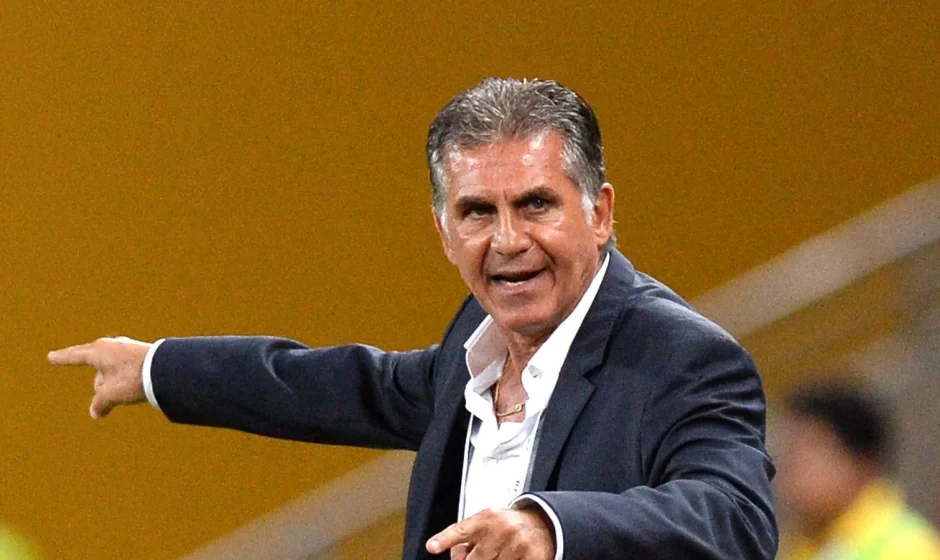

Carlos Queiroz has resigned as coach of Ghana’s Black Stars, just three months after taking the job ahead of the 2026 FIFA World Cup. The 73 year old Portuguese trainer announced his decision on Sunday, days after Ghana was eliminated in the Round of 32 following a 1-0 loss to Colombia.
In plain terms, this means Ghana enters the post-World Cup period without a head coach, and the Ghana Football Association must now start a fresh search at a moment when fans and officials are already debating what the team’s group stage run actually proved. Queiroz’s own farewell message pointed beyond results on the field, calling for stronger institutional support around the national team.
For Ghanaians following the Black Stars from home or from the diaspora, the coaching change matters because it sets the tone for how Ghana rebuilds toward its next major tournament, and because the departure arrives alongside unresolved questions about squad selection, player discipline, and how the football authorities manage high profile controversies such as the one involving midfielder Thomas Partey.
What Happened
Queiroz confirmed his resignation in a lengthy farewell statement addressed to Ghanaians, striking what he described as a tone of pride mixed with “healthy dissatisfaction.” The 73-year-old Portuguese trainer confirmed his departure days after Ghana were eliminated from the 2026 FIFA World Cup at the round-of-32 stage, following a 1-0 defeat to Colombia at Arrowhead Stadium in Kansas City.
He led the Black Stars to the Round of 32 on an initial four-month deal that included an option to extend by two years if Ghana reached the World Cup quarter-finals. That extension clause was never triggered. Jhon Arias’ 14th-minute strike for Colombia in Kansas City ended Ghana’s tournament in the last 32, and the Ghana Football Association is now expected to open a formal search for a successor.
Ghana’s exit made it one of the first nations to change coaches after the knockout stages began, with Jordan’s Jamal Sellami also leaving his post on the same day after Jordan finished bottom of Group J.
Queiroz’s Three Months in Charge
Queiroz was brought in after Ghana parted ways with previous coach Otto Addo, following friendly defeats to Germany and Austria in the lead-up to the tournament. He was appointed on April 13, roughly two months before the World Cup kicked off. The appointment carried weight given his resume: he had previously led Portugal, Iran, and Qatar at past World Cups, and had also managed South Africa and Egypt at the national team level.
In total, Queiroz took charge of five matches: a 1-1 draw with Wales in a pre-tournament friendly in Cardiff, a 1-0 win over Panama in Toronto, a 0-0 draw with England in Foxboro, a 2-1 loss to Croatia in Philadelphia, and the 1-0 defeat to Colombia in Kansas City that ended the campaign.
| Match | Opponent | Result | Venue |
|---|---|---|---|
| Pre-tournament friendly | Wales | 1-1 draw | Cardiff |
| Group L | Panama | 1-0 win | Toronto |
| Group L | England | 0-0 draw | Foxboro |
| Group L | Croatia | 2-1 loss | Philadelphia |
| Round of 32 | Colombia | 0-1 loss | Kansas City |
Ghana’s World Cup Run
Ghana finished third in Group L, advancing to the knockout rounds as one of the eight best third-placed teams. A late strike from Caleb Yirenkyi salvaged a narrow win over Panama in the opener, and a defensively disciplined performance earned a point against tournament favorites England. That was enough to send Ghana through, but the run ended against Colombia, a side that controlled the game despite the narrow scoreline.
Reaction among players was mixed. Leicester City forward Andre Ayew spoke publicly after the Colombia defeat to say he wanted Queiroz to stay on, a sign that the coach retained support inside the dressing room even as he chose to step aside.
The Thomas Partey Factor
Queiroz’s tournament was shadowed by a difficult decision made before a ball was kicked. He chose to include midfielder Thomas Partey in the World Cup squad while Partey awaits trial in London on multiple rape charges, which the player denies. Partey then missed Ghana’s opening match after being denied a visa to enter Canada, a decision that drew criticism from the Ghanaian government, before he went on to feature in the remaining matches against England, Croatia, and Colombia in the United States.
That sequence, an off-field legal controversy colliding with a visa denial and then a return to the pitch, became one of the defining subplots of Ghana’s tournament and fed directly into the broader debate Queiroz raised on his way out.
What Happens Next
The Ghana Football Association is now expected to step up its search for a new head coach ahead of the resumption of competitive action. No timeline has been given publicly for a new appointment. Whoever takes over inherits a squad that has just proven it can compete with strong opposition, but also one still working through questions about squad discipline, player availability, and travel logistics tied to visa issues for camps and away fixtures.
In his statement, Queiroz did not frame his exit purely around results. He suggested that Ghana’s football authorities need to provide stronger support away from the pitch, arguing that future success depends not only on match performances but on building the right environment to prepare, protect, and develop the country’s football talent. That framing puts pressure on the GFA to address structural issues, not just hire a new tactician.
Why This Matters
For Ghanaians at home and in the diaspora, a coaching change of this kind is more than a sports headline. National team performances shape public mood, media coverage, and government attention in ways that ripple into tourism, sponsorship, and how Ghana is discussed internationally during a World Cup cycle. A prolonged coaching search, or a repeat of the short-term appointments that have marked recent years, would leave the Black Stars without stability heading into the next set of qualifiers.
The Partey episode also carries a wider lesson for anyone tracking Ghana’s visa and travel policies around major sporting events: player and staff travel for international competitions is not automatic, and destination country visa rules can affect team logistics even at the highest level.
Sources
- Africanews: “Queiroz steps down after Ghana’s World Cup disappointment” (July 6, 2026)
- Flashscore: “Carlos Queiroz steps down as Ghana head coach after World Cup exit” (July 2026)
- TribalFootball: “Carlos Queiroz resigns as Ghana coach after World Cup failure” (July 2026)
- Tribuna: “Carlos Queiroz steps down as Ghana coach after World Cup exit” (July 6, 2026)
- VAVEL International: “Carlos Queiroz steps down as Ghana manager after World Cup exit” (July 7, 2026)