
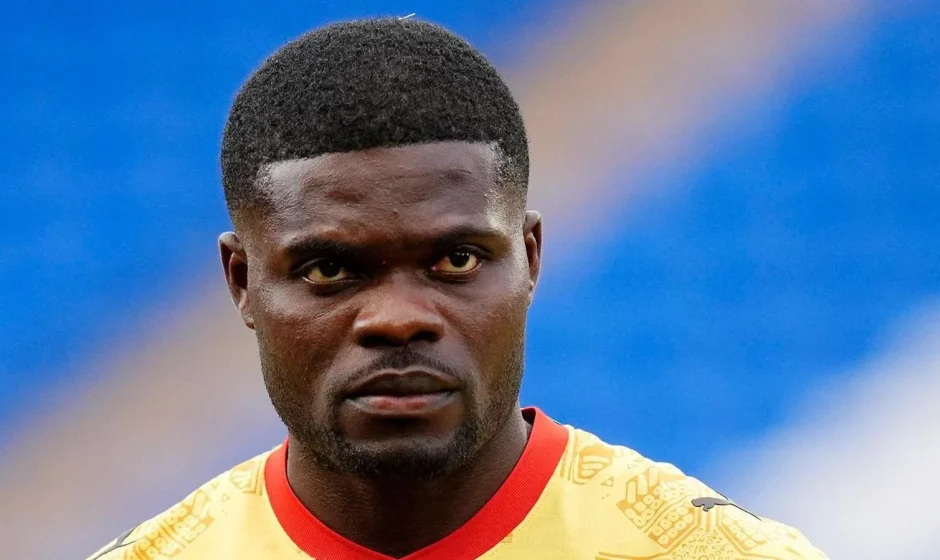

Ghana’s Ministry of Foreign Affairs has formally protested Canada’s decision to deny Black Stars midfielder Thomas Teye Partey a temporary residence visa ahead of the 2026 FIFA World Cup. The Thomas Partey Canada visa refusal has sparked a diplomatic dispute between the two countries, with Accra arguing the decision violates the fundamental legal principle of the presumption of innocence.
In plain terms: Canada blocked one of Ghana’s most prominent footballers from entering the country for the tournament, citing criminal proceedings currently underway in the United Kingdom. No conviction has been handed down. Ghana says that is precisely the problem.
For Ghanaians following the World Cup, the diaspora community, and anyone watching how Canadian immigration law intersects with international sporting events, this case raises real questions about how host nations handle athletes with pending legal matters.
Table of Contents
- Background: Who Is Thomas Partey?
- Why Canada Refused the Visa
- Ghana’s Diplomatic Response
- The Presumption of Innocence Argument
- What Happens Next
- 2026 World Cup Context
- What This Means for Ghanaians
- Sources
Background: Who Is Thomas Partey?
Thomas Teye Partey is one of Ghana’s most experienced and decorated footballers. A defensive midfielder by trade, the 32-year-old has served as a cornerstone of the Black Stars setup for close to a decade and played a central role in Ghana’s qualification campaign for the 2026 FIFA World Cup. At club level, Partey built his reputation at Atletico Madrid before spending several years with Arsenal in the English Premier League. He currently plays for Villarreal in Spain.
His selection for Ghana’s World Cup squad carries weight both nationally and internationally. Ghana qualified for the tournament after a competitive African qualifying campaign, and Partey’s experience and leadership are considered critical to the team’s chances.
Partey is currently facing criminal charges in the United Kingdom. London’s Metropolitan Police charged him with seven counts of rape involving two women and one count of sexual assault involving a third woman. He has pleaded not guilty and intends to contest all counts. His trial is scheduled to proceed in London later this year. Canadian immigration authorities referenced those pending proceedings in their decision to refuse his visa application.
Why Canada Refused the Visa
Canada’s immigration agency, Immigration, Refugees and Citizenship Canada (IRCC), denied Partey’s temporary residence application under paragraph A36(1)(c) of the Immigration and Refugee Protection Act (IRPA). That provision covers inadmissibility based on criminality, and it can apply to individuals facing serious charges abroad, not only those who have been convicted.
The Ghana Ministry of Foreign Affairs confirmed that the IRCC based its inadmissibility finding on the ongoing criminal proceedings in the UK. The ministry’s statement made clear that those proceedings have not produced any conviction or judicial finding of guilt.
Canada, as one of the three host nations for the 2026 World Cup alongside the United States and Mexico, retains full sovereign authority over who it admits. IRPA’s admissibility framework gives Canadian immigration officers discretion to deny entry based on pending proceedings, not just completed ones. The law does not require a conviction before a temporary residence application can be refused.
That legal reality is not disputed by Ghana. What Accra disputes is whether exercising that authority in this specific case is proportionate or fair under the circumstances.
Ghana’s Diplomatic Response
The Ministry of Foreign Affairs issued a formal statement describing the government’s “strong reservations” about the IRCC decision. The response has moved on multiple fronts simultaneously.
On June 11, 2026, Ghana sent an official note of protest to Global Affairs Canada, the Canadian foreign ministry equivalent, formally requesting that the visa refusal be reconsidered. Minister of Foreign Affairs Samuel Okudzeto Ablakwa personally engaged Canadian officials on the matter, including the Canadian High Commissioner to Ghana.
The government has also moved to pursue legal avenues available under Canadian law. Partey’s Canadian immigration lawyer has filed simultaneously for reconsideration of the refusal, a Temporary Resident Permit, and judicial review before the Federal Court of Canada. A Federal Court judge is scheduled to hear an injunction application on June 17, 2026, in which Partey’s legal team will argue for his right to enter Canada for the match. That is a significant escalation. Ghana is not simply registering an objection; it is actively litigating the matter in a Canadian court.
The statement reaffirmed Ghana’s commitment to constructive dialogue and expressed optimism that the longstanding bilateral relationship between Ghana and Canada would help produce an amicable resolution. Ghana and Canada have cooperated on trade, education, development assistance, and governance for many years.
The Presumption of Innocence Argument
The core of Ghana’s diplomatic position rests on a foundational principle of common law: that an accused person is presumed innocent until proven guilty by a court. Ghana’s Foreign Ministry statement invoked this directly, calling it “a cornerstone of justice and due process in democratic societies.”
The argument is not that Canada lacks the legal authority to apply its immigration statute. Ghana explicitly acknowledged Canada’s sovereign right to enforce IRPA. The argument is that denying a visa based on unproven allegations, without a judicial determination of guilt, raises serious concerns about fairness and proportionality when the person in question is a professional athlete selected to represent his country at a major international sporting event.
This is a genuine tension in how immigration law operates. IRPA’s inadmissibility provisions are written broadly by design. They allow Canadian officers to make risk-based decisions before a foreign court reaches a verdict. That serves legitimate immigration control purposes. But applied to a World Cup squad member who has not been convicted of anything, it creates an optics problem for the host nation and a diplomatic flashpoint with the sending country.
Ghana’s invocation of the presumption of innocence is also a play to international legal norms. Most democratic legal systems enshrine this principle, including Canada’s own criminal law framework. Ghana is essentially arguing that the spirit of Canadian law is being applied inconsistently if the criminal law presumes innocence but the immigration system does not.
What Happens Next
Ghana has indicated it will pursue all available diplomatic, legal, and administrative avenues. In practical terms, that means the situation could develop in several ways.
| Avenue | What It Means |
|---|---|
| Diplomatic negotiation | Ghana and Canada continue talks at the ministerial level. The Canadian High Commissioner in Accra and Global Affairs Canada are the primary channels. This is the most likely path to a quick resolution if Canada agrees to reconsider. |
| Ministerial permit or exemption | Under Canadian immigration law, the Minister of Immigration can issue a temporary resident permit (TRP) allowing an inadmissible person to enter Canada for a specific purpose and period. This is a discretionary tool used in exceptional cases. |
| Federal Court injunction (scheduled) | A Federal Court judge is set to hear Partey’s injunction application on June 17, 2026. If granted, it could allow him to enter Canada in time for the Panama match on June 18. A separate judicial review of the underlying IRCC decision has also been filed and would proceed on its own timeline. |
| No resolution | If the visa refusal stands and no permit is issued, Partey would be unable to participate in any matches played on Canadian soil during the World Cup. Games played in the US or Mexico would not be affected by the Canadian entry ban. |
The timeline is extremely tight. Ghana’s opening match against Panama is scheduled for June 18, 2026, in Toronto. The Federal Court injunction hearing on June 17 is essentially a last-minute bid to clear Partey’s entry before kickoff. If neither the court nor the minister acts by then, Partey misses the match. Partey is currently at Ghana’s base camp in Rhode Island and has been permitted to enter the United States; the entry ban applies specifically to Canada.
2026 World Cup Context
The 2026 FIFA World Cup is the largest in the tournament’s history, featuring 48 national teams across 16 host cities in the United States, Canada, and Mexico. Canada is hosting matches at BC Place in Vancouver and BMO Field in Toronto. The expansion of the tournament and the shared hosting arrangement means that teams may play matches across multiple countries depending on their group placement and knockout round bracket.
Ghana’s group stage schedule runs across all three host countries. The Panama opener on June 18 is in Toronto. Ghana’s remaining Group L matches are against England in Boston and Croatia in Philadelphia, both of which Partey can participate in regardless of how the Canadian visa dispute resolves, since he is permitted in the United States. However, if Ghana finishes as group runners-up, they would return to Toronto for a knockout round match on July 2, creating a second potential Canadian entry problem if the visa refusal is not overturned.
This case is not the first time a host nation’s immigration rules have created complications for World Cup participants. The intersection of national immigration sovereignty and international sporting event access is an ongoing structural challenge for FIFA and the host nations. Ghana’s willingness to escalate diplomatically and signal potential legal action puts Canada in a difficult position as a tournament host.
For readers following Ghana’s World Cup 2026 visa situation for fans traveling to the US, this case is a separate but related reminder that host country immigration rules apply with full force even during major international sporting events.
What This Means for Ghanaians
For the Ghanaian diaspora in Canada, this story carries particular resonance. Canada is home to a significant and growing Ghanaian community, and the Black Stars draw enormous support from Ghanaians living abroad. The idea that one of Ghana’s most prominent footballers cannot enter the country to compete in the World Cup touches on how immigration law operates in practice, often in ways that feel disconnected from the facts of an individual’s situation.
For Ghanaians planning to travel to Canada for the World Cup, this case is a reminder that Canadian immigration officials apply admissibility standards that go beyond passport and visa requirements. Anyone with pending legal matters in any country should take independent legal advice before attempting to enter Canada.
More broadly, the diplomatic dispute highlights how Ghana’s government is willing to push back formally when it believes a decision affecting Ghanaian citizens is unjust. The Foreign Ministry’s response was direct, legally grounded, and escalatory. That is worth noting regardless of how the Partey situation ultimately resolves.
For context on the Ghana national soccer team and its World Cup history, the Black Stars have appeared in the FIFA World Cup four times, with their best result coming in 2010 when they reached the quarterfinals in South Africa.
Sources
- Ghana News Agency: “Ghana protests Canada’s refusal of Visa to Black Stars midfielder Thomas Partey” (June 13, 2026)
- CBC News / Associated Press: “Ghana slams Canada’s decision to deny World Cup visa for Partey, who faces rape charges” (June 13, 2026)
- CBC Sports: “Ghana takes Thomas Partey’s World Cup entry fight with Canada to Federal Court” (June 15, 2026)
- Now Toronto: “Exclusive: Thomas Partey’s lawyer pushes for Canada to reconsider World Cup visa refusal” (June 16, 2026)