
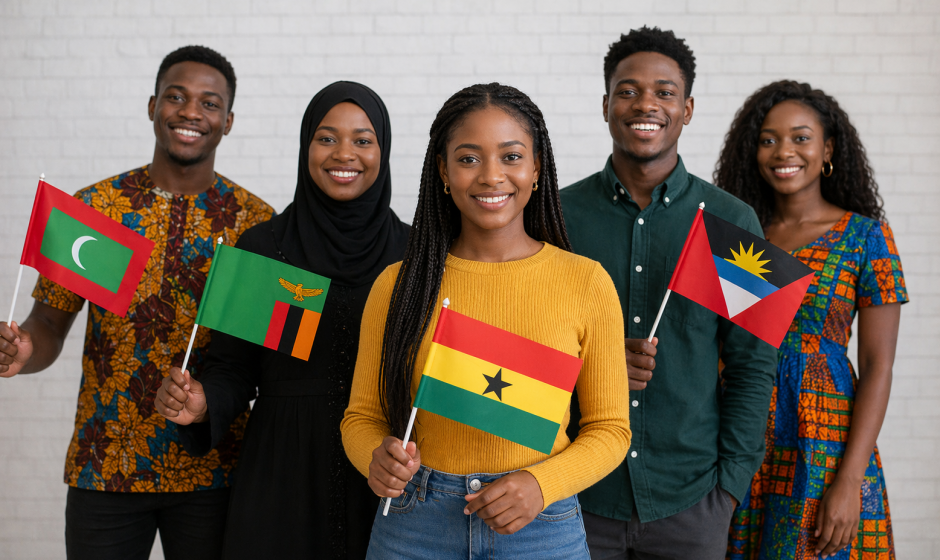

On April 22, 2026, Ghana’s Cabinet approved reciprocal visa waiver agreements with three countries: Antigua and Barbuda, the Maldives, and Zambia. Foreign Affairs Minister Samuel Okudzeto Ablakwa made the announcement publicly, confirming that the Cabinet had given the green light the previous day.
Here is what that actually means in practice: once the agreements are ratified by Parliament, Ghanaian passport holders will be able to travel to any of those three countries without applying for a visa in advance. Citizens of Antigua and Barbuda, the Maldives, and Zambia get the same access to Ghana. No visa application. No fee. No waiting at an embassy window. Just a passport and a valid travel purpose.
The agreements cap each visit at 30 days. They are reciprocal, covering ordinary, service, and diplomatic passport holders on all sides. And they move Ghana’s passport index in a positive direction at a moment when the government has made passport mobility a stated foreign policy priority.
What the Ghana Visa Waiver Agreement Covers
The three agreements are identical in structure. Each one grants nationals of both countries the right to enter and stay for up to 30 days per trip without a visa. That 30-day window resets on re-entry, so it applies per trip rather than per calendar year.
Ablakwa confirmed that the waiver covers all passport categories. That is an important detail. Some bilateral travel arrangements are restricted to diplomatic or official passport holders, leaving ordinary citizens still subject to visa requirements. These agreements make no such distinction. A Ghanaian holding a standard burgundy passport gets the same waiver as a government official traveling on a service document.
| Country | Passport Categories Covered | Maximum Stay Per Trip | Agreement Status (April 2026) |
|---|---|---|---|
| Antigua and Barbuda | Ordinary, Service, Diplomatic | 30 days | Cabinet approved – awaiting Parliament ratification |
| Maldives | Ordinary, Service, Diplomatic | 30 days | Cabinet approved – awaiting Parliament ratification |
| Zambia | Ordinary, Service, Diplomatic | 30 days | Cabinet approved – awaiting Parliament ratification |
The practical scope of each agreement differs by destination, of course. Zambia is a landlocked southern African country with strong regional trade ties. The Maldives is a high-end island tourism destination in the Indian Ocean, popular with honeymooners and divers. Antigua and Barbuda is a small Caribbean nation with a growing financial services sector and one of the more established second-passport programmes in the world. Three different travel profiles, one consistent standard: no visa required for Ghanaian passport holders.
Parliament Must Still Ratify
Cabinet approval is not the final step. Under Ghana’s constitutional framework, international agreements of this kind must be ratified by Parliament before they carry legal force. Ablakwa confirmed that Parliament is expected to take up the ratification process shortly.
Until that happens, the agreements are approved in principle but not yet enforceable at ports of entry. Ghanaians planning travel to the Maldives, Zambia, or Antigua and Barbuda should not assume the waiver is already in effect. The safe approach is to check the status through the Ghana Ministry of Foreign Affairs or the relevant embassy before traveling, and to confirm whether a visa is still required at the time of booking.
Ratification timelines in Ghana’s Parliament can vary. Some agreements move through quickly; others sit in committee for weeks. The minister did not give a specific date, only saying the process is expected “shortly.” Watch official announcements from the Ministry of Foreign Affairs for confirmation.
Part of a Wider Ghana Visa Waiver Agreement Strategy
These three agreements do not stand alone. They form part of a deliberate push by the Mahama administration to expand the travel reach of the Ghanaian passport, a priority Ablakwa has spoken about in public statements repeatedly this year.
Earlier in 2026, Ghana moved to open its borders to nationals of all African Union member states, granting visa-free entry to fellow Africans as part of a broader continental mobility framework. That was a significant shift in inbound policy. These new agreements address outbound mobility, expanding where Ghanaians themselves can travel without advance bureaucratic hurdles. You can read more about the visa-free entry policy for African nationals for context on how the two sides of the policy fit together.
Ablakwa’s statement added a second dimension to the strategy. He said the government will continue negotiating additional visa waiver agreements “while enhancing security protocols around acquiring Ghanaian passports.” That pairing matters. Expanding passport access without tightening document integrity can undermine the very value the agreements are meant to create. The government appears aware of that tension, and framing both goals together in the same announcement suggests they are being pursued in parallel rather than treated as separate tracks.
What This Means for Ghanaian Travelers and the Diaspora
For Ghanaians in the diaspora holding a Ghanaian passport, or for dual nationals using their Ghanaian travel document, the agreements represent a concrete extension of travel rights once ratified. The Maldives, in particular, is a destination that has historically required advance visa arrangements for many African passport holders. Zambia, meanwhile, offers direct relevance for those involved in regional trade or with family connections in southern Africa.
The Antigua and Barbuda addition is worth noting specifically for business travelers. Antigua is one of the primary hubs for Caribbean financial services and has established itself as a base for international business operations. Visa-free access reduces a friction point for Ghanaian professionals or entrepreneurs exploring business opportunities in that market. If you are considering expanding into new markets, the Ghana visa on arrival guide provides useful context on how Ghana manages reciprocal travel arrangements more broadly.
For diaspora members thinking about returning to Ghana, or about using a Ghanaian passport more actively, this is also relevant context. The full breakdown of Ghanaian citizenship benefits covers passport access alongside other rights that come with full citizenship status.
Three new destinations is a modest expansion in absolute terms. Ghana’s passport does not yet compete with European or North American documents in terms of raw visa-free access. But the direction is clear, the strategy is being articulated explicitly by the government, and each agreement that passes through Parliament makes the Ghanaian passport a more practical document for international travel.
Get your copy here.
Sources
- GhanaWeb: “Ghana expands visa-free access to Maldives, Zambia, Antigua and Barbuda” (April 22, 2026)
- Ghana Ministry of Foreign Affairs – Official government source for visa and travel agreements