

543 Business Ideas to Start in Ghana
Quick links (related guides):
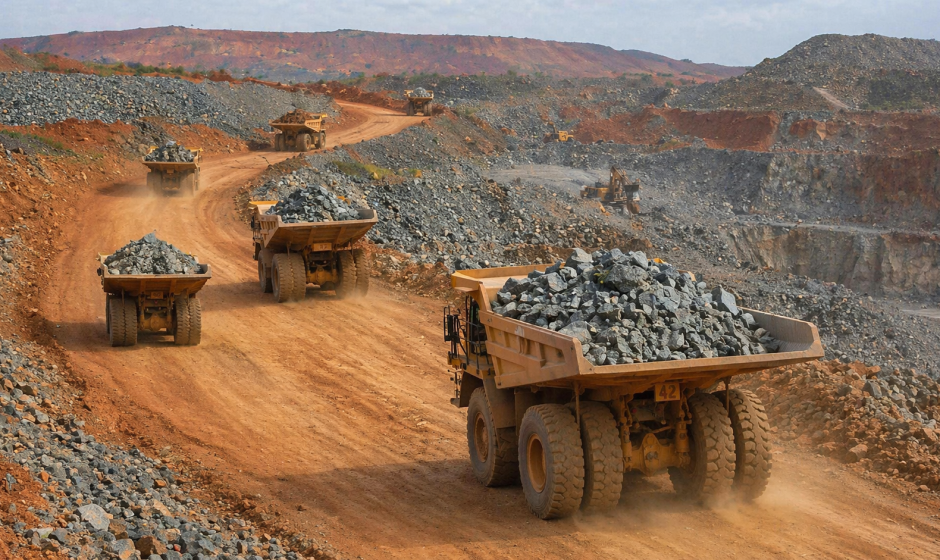
Engineers & Planners (E&P), led by Ibrahim Mahama, formally assumed the Damang mine lease on April 18, 2026, after a one-year transitional arrangement that followed Ghana’s rejection of Gold Fields’ renewal application in April 2025.
If that sounds like a routine lease transfer, here is the real meaning: after decades of foreign-controlled mining, the government has chosen to place this major gold asset under domestic control through a locally owned company. This transfer is one of the clearest signs yet that Ghana wants greater local participation in the mining sector while keeping production going and protecting jobs.
What Happened: Damang’s Transfer to a Local Firm
The transition followed a bidding process focused on locally controlled Ghanaian firms, supervised by the Minerals Commission after Gold Fields’ previous lease expired. E&P was selected after showing it had secured $505 million in financing (just above the government’s $500 million threshold) and scoring strongly on technical experience, safety, and local content. The company had already worked as the primary mining contractor at Damang since 2016.
Background: Why Gold Fields Left
Gold Fields had operated Damang for more than two decades under a lease first granted in 1995. In April 2025, Ghana rejected Gold Fields’ lease-renewal application and assumed operational control of the mine. The two sides later agreed to a 12-month transitional lease that allowed Gold Fields to resume some mining activity, process stockpiles, and carry out feasibility work before the final handover in April 2026.
Gold Fields had previously said the mine had limited remaining life and lacked economic reserves, though it later committed to a clean handover.
Infrastructure and Community Investment
At the handover ceremony, Mr. Mahama outlined plans that go far beyond gold extraction. He pledged investments in roads, healthcare, sports facilities, and even an airport.
“We’ve applied for that mine to have an airport. Within six months, Damang will have an airport such that we can fly to Accra easily from there,” he said. He added: “In the next two years, we’ll be able to drive from here to Cape Coast on a concrete road or an asphalt road. This is not political talk, this is real talk.”
Mahama emphasized the goal is to prove Ghanaians can invest in themselves. “The plan I have for Damang Mine is not a joke. I just want to prove that we can invest in ourselves in this country.”
Financing the Takeover
E&P’s selection was backed by documented access to $505 million in financing, which met the government’s minimum threshold. At the handover ceremony, Ibrahim Mahama also said multiple banks had expressed willingness to support the project at even higher levels: “One has given us $650 million, another $600 million.”
That level of local capital mobilization is rare in Ghana’s mining sector. If successful, it could encourage other domestic firms to bid for assets previously considered out of reach.
Broader Policy Shift: Local Content and Ownership Reforms
The Damang takeover is not an isolated event. It is part of a wider policy shift under President John Dramani Mahama’s administration to deepen Ghanaian ownership in mining.
In February 2026, the Minerals Commission announced sweeping reforms. More than 300 small-scale mining licences acquired through irregular means were revoked. The reforms also include a crackdown on “fronting,” the illegal practice where foreign entities use Ghanaian nominees to acquire mineral rights.
Isaac Tandoh, CEO of the Minerals Commission, framed the changes as a correction of decades of imbalance. “Employment is not the same as ownership. Labour is not the same as control. Our people are working in the mines, agreed, but do they own the mines?”
The government has proposed ending long-term mining stability agreements and raising royalties sharply as part of a broader mining-sector overhaul.
Controversy and Scrutiny
The selection process has drawn criticism from some opposition figures and industry observers. Some critics alleged the process favored a company led by the president’s brother, while officials denied wrongdoing.
The government and Minerals Commission have maintained that all procedures followed national laws and policy objectives. A report from The Ghana Report notes that the previous NPP government issued a “No Objection Letter” to E&P in March 2024, well before the current administration took over.
What Happens Next
The official handover on April 18 marked the final step in the transition. E&P has pledged to maintain production levels, protect jobs, and introduce efficiency-driven practices to boost output.
Lands and Natural Resources Minister Emmanuel Armah-Kofi Buah, who performed the symbolic transfer, reminded E&P that the lease is not a sell-off. “Engineers and Planners, you are not just taking over a mine; you are carrying a nation’s confidence. This is only a leasing right, not a sell-off. The Republic of Ghana remains the owner of this mineral asset. This lease will be reviewed when its term expires.”
For Ghana, the Damang shift is a litmus test. Success could inspire more local takeovers; failure could scare off capital and hurt production.
Sources
- Reuters: “Ghana and Gold Fields reach transitional deal on Damang mine” (April 23, 2025)
- Reuters: “Ghana awards Gold Fields’ Damang mine lease to local firm Engineers & Planners” (April 7, 2026)
- Reuters: “Exclusive: Ghana to scrap mining stability pacts, double royalties” (January 15, 2026)
- Minerals Commission: “Chief Unveils Reforms to Boost Ghanaian Ownership” (February 18, 2026)
- MyJoyOnline: “Ibrahim Mahama outlines ambitious blueprint to transform Damang enclave” (April 19, 2026)
- The Ghana Report: “E&P completes takeover of Damang Mine amid tender controversy” (April 19, 2026)