


250 Things to Know Before Moving to Ghana
Quick links (related guides):
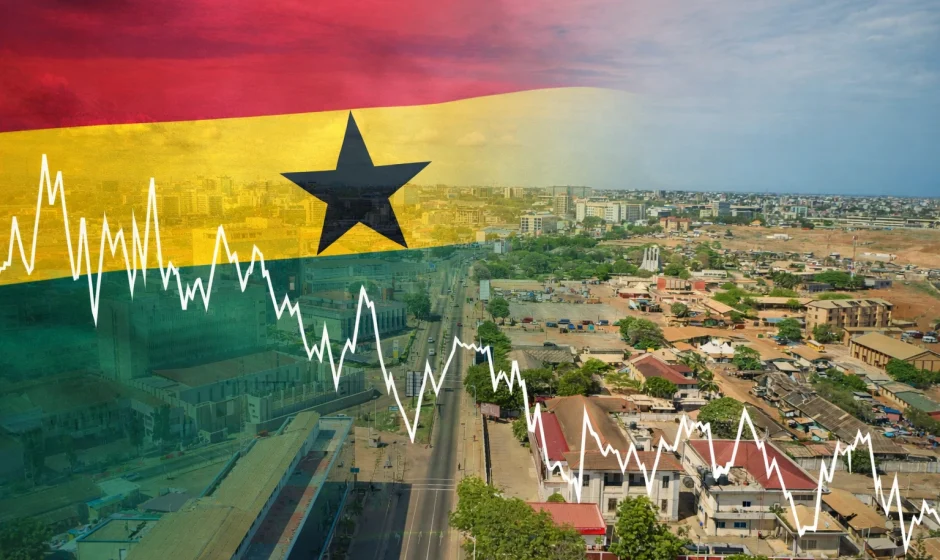
Fresh pressure is building on the Ghana cedi after strong corporate demand for US dollars outpaced available supply in the local market. Reuters reported on April 16, 2026 that traders expected the cedi to remain under pressure after bids at the latest Bank of Ghana foreign exchange auction reached about $401 million, while only $110 million was allotted. That imbalance matters because when more buyers chase dollars than the market can provide, the cedi weakens.
The cedi affects everyday life in Ghana. It influences fuel prices, food imports, business costs, rent negotiations, remittances, and investment returns. Even though inflation has cooled sharply (falling to 3.2% year-on-year in March 2026, the 15th consecutive monthly decline according to Reuters), currency pressure remains one of the most important economic risks to watch for the rest of the year.
This guide explains what is happening now, why it matters, and what expats, investors, and families sending money to Ghana should know.
What Happened
According to Reuters, the cedi traded near GH₵11.03 per US dollar in mid-April 2026, slightly weaker than GH₵11.01 a week earlier. Bank of Ghana interbank data show a mid-rate of GH₵11.05 as of April 17. The move may look small, but it reflects a larger supply-and-demand imbalance inside Ghana’s foreign exchange market.
Andrews Akoto, head of trading at Absa Bank Ghana, said strong foreign exchange demand from the energy, commerce, and manufacturing sectors was likely to support a stronger dollar in the days ahead as supply stayed tight.
The latest central bank auction made the gap visible. Roughly $401 million in bids were submitted, but only $110 million was allocated — leaving a backlog of unmet demand worth more than $290 million.
Why This Matters
A currency story is not just about traders or banks. The effects reach households and businesses within days.
- Expats paid in foreign currency: If you earn in dollars, pounds, or yuan, a weaker cedi means you receive more cedis when converting funds. The trade-off is that imported goods, electronics, and dollar-linked rents tend to creep upward in cedi terms over time.
- Businesses: Importers face higher effective costs for fuel, machinery, stock, and raw materials priced in foreign currency. Margin pressure can be rapid when the cedi depreciates against the supplier’s billing currency.
- Investors: A local investment can perform well in cedis but still lose value once converted back into dollars. Currency risk needs to be priced into any Ghana-based return calculation.
- Families receiving remittances: A weaker cedi converts incoming transfers into more cedis for recipients. But rising import prices, particularly for food and fuel, can absorb part of that gain. Learn more in our guide to the best way to send money to Ghana.
Main Drivers of the Pressure
Energy imports. Ghana depends heavily on imported refined petroleum products. Fuel purchases push up demand for dollars, and this pressure intensifies in the first quarter of each year as importers restock inventories after the holiday period.
Manufacturing demand. Many factories and wholesalers depend on imported machinery, spare parts, and production inputs. Dollar demand from these sectors compounds the seasonal pressure from energy imports.
Limited auction supply. When Bank of Ghana allocations do not match total bid volume, unmet demand spills into the commercial market. That gap puts direct downward pressure on the cedi in the interbank and retail markets.
Global commodity and dollar uncertainty. Oil price swings, shifting US trade policy, and broader dollar sentiment can move Ghana’s currency independently of domestic conditions. An unexpected dollar rally abroad raises the cost of servicing external obligations at home.
Recent Context
The current pressure follows an exceptional recovery. The cedi gained approximately 40% against the US dollar over the full year 2025 — one of the strongest annual currency performances globally that year, according to analysis by Black Star Group and Business and Financial Times. That gain was not accidental. The Ghana Gold Board (GoldBod) confirmed that its gold purchasing drive helped the Bank of Ghana mobilise approximately US$10 billion in foreign exchange in 2025, through a programme that formalised purchases from small-scale miners and helped the Bank of Ghana build its foreign exchange reserve position. Ghana’s gold output reached a record 6 million ounces in 2025, nearly doubling the foreign exchange earnings available to the Bank.
The cedi traded around GH₵15.53 per US dollar in early 2025, when Ghana was still emerging from its debt restructuring. Since then, it has strengthened to about GH₵11.05 in mid-April 2026 — a major recovery that helped ease Ghana’s inflation from above 50% in 2023 to 3.2% in March 2026.
Momentum continued into 2026, though at a slower pace. The cedi shed 4.4% against the dollar in the first quarter of 2026, closing March at GH₵10.98, according to Black Star Group’s Q1 analysis. That was the mildest Q1 loss in at least six years — roughly half the 8.7% average first-quarter depreciation recorded over the preceding five years. The current weakness is renewed pressure after a historic rebound, not a return to crisis conditions.
Current Exchange Rate
| Currency Pair | Interbank Mid-Rate (April 17, 2026) |
|---|---|
| USD/GHS | GH₵11.0500 |
| GBP/GHS | GH₵14.9811 |
| EUR/GHS | GH₵13.0435 |
| CNY/GHS | GH₵1.6211 |
Source: Bank of Ghana Daily Interbank FX Rates. Rates are official interbank mid-rates and update each business day. Retail cash rates and money transfer rates will differ. Always check the Bank of Ghana page for the latest published rate before making a large transfer.
What It Means for You
If you live in Ghana on foreign income: Converting dollars or pounds into cedis today yields meaningfully more cedis than it did in 2024. That said, imported groceries, electronics, school fees, and dollar-linked rents can drift upward when the cedi softens, so the purchasing-power advantage is not one-for-one. Knowing how money works in Ghana as a foreigner helps avoid common conversion mistakes.
If you are planning a move: Build a currency buffer into your monthly budget. Exchange rates can change faster than salaries or lease terms adjust, and a 10-15% cushion for import-exposed budgets applies even when the cedi appears stable.
If you run a business: Review pricing, supplier contracts, and inventory strategy now. Businesses exposed to imports need room in their margins for exchange-rate changes, particularly in energy and manufacturing inputs.
If you send money to Ghana: Compare providers carefully. A better exchange rate can be cancelled out by high transfer fees and slow delivery times. Use licensed, Bank of Ghana-regulated transfer services.
2026 Outlook
Databank Research projects the cedi will end 2026 around GH₵12.85 to the dollar, representing a 7.2% full-year depreciation from its 2025 close, according to the firm’s 2026 Economic Outlook. Black Star Group’s Q1 analysis places the year-end estimate slightly lower, at GH₵12.60. That gives a combined analyst range of GH₵12.60 to GH₵12.85. Fitch Solutions takes a slightly more conservative view, projecting approximately 8% full-year depreciation. Under all three scenarios, the cedi would still be well above the levels seen in early 2025, and more than 17% stronger than the GH₵15.53 it touched when Ghana was at the depths of its debt restructuring.
Whether the cedi tracks the more optimistic or more pessimistic end of that range depends on a set of intersecting conditions. Oil prices staying manageable would reduce the dollar drain from energy imports. Strong gold and cocoa export earnings would keep supply-side pressure contained — Ghana’s record gold output in 2025 injected significant forex liquidity, and GoldBod’s monthly purchasing programme remains active. Continued central bank credibility matters as well: the Bank’s Monetary Policy Rate now stands at 14%, after 400 basis points of cuts in Q1 2026 alone, following a further 900 basis points in 2025. That trajectory signals improving macroeconomic conditions, but it also narrows the policy buffer against future shocks.
Fiscal discipline under Ghana’s IMF-supported reform path is the other anchor. Slippage on the fiscal side — through spending overruns or revenue shortfalls — could undercut the Bank’s credibility and force a sharper correction. If those conditions hold steady, Ghana is on track for controlled depreciation rather than another currency shock.
Practical Steps
- Diversify savings across currencies: Keeping all funds in a single currency concentrates your exchange-rate risk. Holding a mix of GHS for local expenses and a foreign currency reserve for larger purchases gives more flexibility if the cedi moves sharply in either direction.
- Watch timing on large transfers: Exchange rates shift daily and sometimes intraday. Comparing live rates before a large remittance or business payment can make a material difference on amounts above GH₵5,000.
- Negotiate leases and contracts in cedis when possible: Landlords and vendors who insist on dollar pricing shift all currency risk onto the tenant or buyer. Negotiating in cedis removes that exposure, though it requires some back-and-forth.
- Keep a 10-15% budget cushion: Budgets that rely heavily on imports (food, electronics, fuel, or foreign school fees) should have a built-in buffer for cedi depreciation. A 10% swing in the exchange rate over six months is well within the range of recent history.
- Use Bank of Ghana-licensed providers only: Whether sending money or opening an account, choose regulated banks and licensed transfer services. You can also explore how to open a Ghanaian bank account from the USA if you want to hold funds locally in a formal, licensed institution.
Sources
- Reuters: “Ghanaian and Zambian currencies seen under pressure” (April 16, 2026)
- Bank of Ghana: “Daily Interbank FX Rates” (updated daily)
- Reuters: “Ghana consumer inflation slows to 3.2% year-on-year in March” (April 1, 2026)
- Business and Financial Times: “Cedi posts best Q1 in half-decade” (April 16, 2026)
- Citi Newsroom: “Cedi to depreciate by 7.2% in 2026 — Databank” (March 2, 2026)
- Ghana Gold Board (GoldBod): “How GoldBod’s Gold Purchasing Drive Helped BoG Mobilise $10bn for Ghana’s Stability”
Compliance note: All money transfer services must be licensed by the Bank of Ghana.