

View GhanaCitizenship.com Resources
Quick links (related guides):
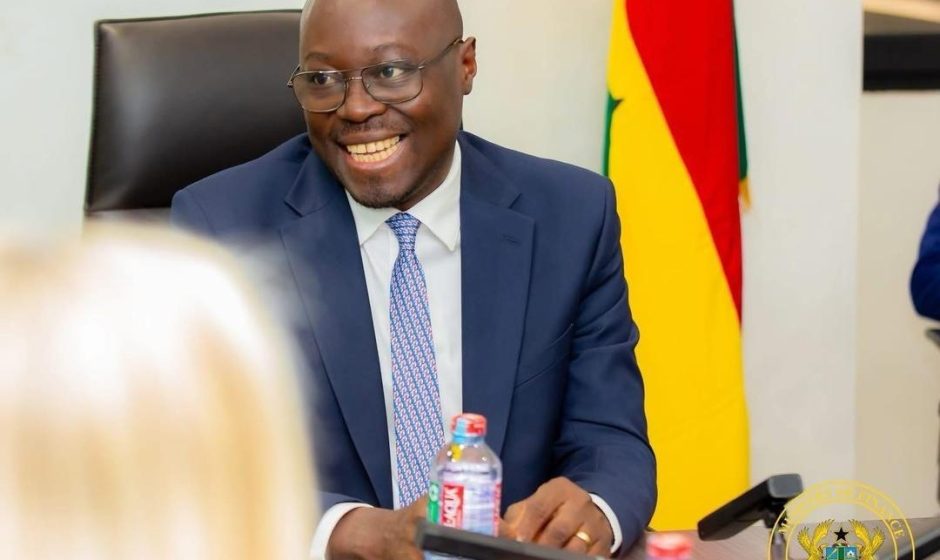
Ghana economy in 2026 remains resilient, according to Finance Minister Dr. Cassiel Ato Forson after meetings during the IMF and World Bank Spring Meetings. In plain English, the government is telling investors and the public that Ghana has absorbed recent shocks better than many expected and that reforms are starting to show results.
That matters because confidence drives real outcomes. When lenders, businesses, and households believe conditions are stabilizing, borrowing costs can fall, investment can rise, and consumers may begin spending more freely.
What Happened
According to Joy Business, the Finance Minister said Ghana’s economy remains resilient despite global uncertainty, pointing to policy discipline, stronger buffers, and increased domestic energy production. He also noted that the power distribution sector still needs reform and more private sector participation.
The statement comes only days after Moody’s revised Ghana’s outlook to positive from stable. Ratings agencies do not run countries, but their opinions can affect how expensive it is for a government or company to borrow money in global markets.
Why It Matters
Ghana experienced a severe economic strain following a period of financial distress, marked by a major debt restructuring program, high inflation, and significant currency pressure[reference:18][reference:19]. This restructuring process is critical as its success will help the government regain full access to international capital markets and reduce its reliance on more expensive domestic borrowing[reference:20]. So when officials now use words like resilient, the real question is whether ordinary people and businesses feel that improvement.
The answer is mixed. Macro conditions may improve before household finances do. A stronger economy on paper does not instantly lower rent, food prices, or transport costs. Still, improving national indicators usually come first, with household relief arriving later.
Ghana Economy in 2026: Key Indicators to Watch
| Indicator | Latest Reading / Status | Why It Matters |
|---|---|---|
| Inflation | 3.2% (March 2026)[reference:21] | Shows how fast prices are rising. A sharp decline from 23.8% in 2024 signals strong progress[reference:22]. |
| Cedi Exchange Rate | Relatively stable around GH¢11.02 per USD (April 2026)[reference:23] | Affects imports, fuel, and business costs. Stability follows a >40% appreciation against the dollar in 2025[reference:24]. |
| Interest Rates | Policy Rate cut to 14% (March 2026)[reference:25] | Impacts loans and business expansion. The rate has been cut twice in 2026 to stimulate lending[reference:26]. |
| GDP Growth | IMF projects 4.8% growth for 2026[reference:27] | Measures total economic activity. This follows 6% growth recorded in 2025[reference:28]. |
| Foreign Reserves | ~$12.5 billion, covering >5 months of imports[reference:29] | A key buffer against external shocks. This provides greater flexibility to manage currency fluctuations. |
Economic Snapshot (2026)
| Metric | Latest Reading |
|---|---|
| Inflation Rate (March 2026) | 3.2%[reference:30] |
| Cedi to USD (Interbank, April 2026) | ~GH¢11.02 per USD[reference:31] |
| IMF GDP Growth Forecast (2026) | 4.8%[reference:32] |
| Bank of Ghana Policy Rate | 14% (March 2026)[reference:33] |
| Gold Export Earnings (Feb 2026) | $4.3 Billion[reference:34] |
What Investors Should Watch
Investors looking at Ghana in 2026 should focus less on headlines and more on execution. The biggest questions are whether reforms continue, whether debt restructuring stays on track, and whether the power sector becomes more efficient.
Strong areas often mentioned in Ghana include gold, agriculture, logistics, fintech, housing, and consumer services. If financing conditions improve, local businesses may also find it easier to expand.
For readers exploring opportunities, see the Ghana Foreign Investment Guide.
What It Means for Expats and Returnees
If you are considering relocation, a more stable economy can affect daily life in practical ways: exchange-rate planning becomes easier, business forecasting improves, and long-term housing decisions become less risky.
That said, relocation decisions should never rely on one speech or one headline. Look at healthcare access, schooling, neighborhood quality, transport, taxes, and your own income plan. You can also compare lifestyle costs in our Cost of Living in Ghana vs USA guide.
Bottom Line
The Finance Minister’s message is clear: Ghana appears to be in a recovery phase rather than a crisis phase. That does not mean every challenge is solved. It means the direction may be improving.
The real test now is simple. Do inflation, jobs, currency stability, and business confidence keep improving over the next 6 to 12 months? If yes, the resilience argument becomes much stronger.
Sources
- MyJoyOnline / Joy Business: Ghana’s economy still resilient – Finance Minister (April 2026)
- Reuters: Moody’s revises Ghana outlook to positive (April 10, 2026)
- International Monetary Fund: Ghana and the IMF
- Ghana Ministry of Finance: Economic Turnaround at IMF/World Bank Meetings
Compliance note: All money transfer services must be licensed by the Bank of Ghana.