

Quick links (related guides):
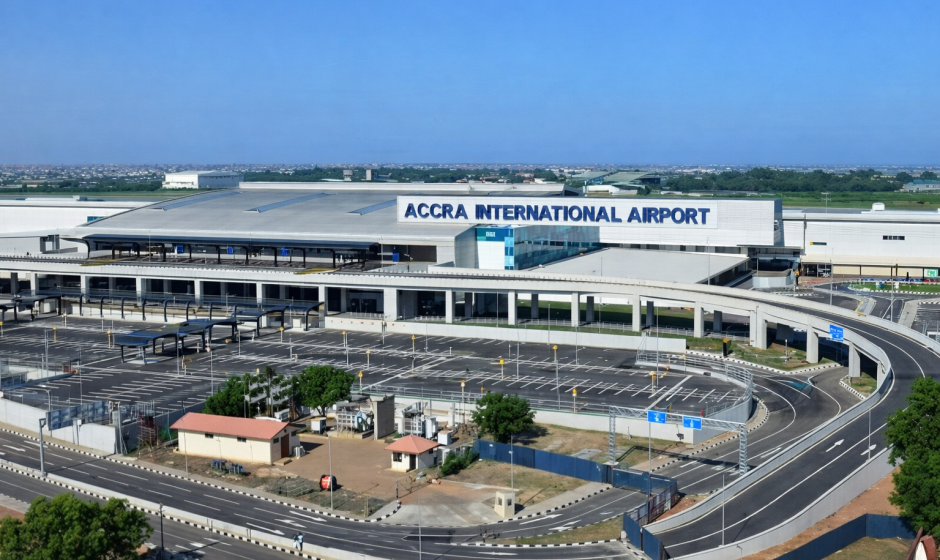
Accra International Airport name change is now official. Ghana’s government has removed the name “Kotoka” from the country’s main international airport and restored its original title: Accra International Airport. If that sounds symbolic, it is. The decision directly revisits Ghana’s 1966 coup, the legacy of Kwame Nkrumah, and how modern Ghana defines its democratic identity.
In plain terms, the airport still operates the same way. Flights continue. Immigration procedures remain unchanged. However, the political meaning behind the name has shifted. That matters in a country whose post-independence history includes multiple coups before returning to constitutional democracy in 1992.
What the Accra International Airport Name Change Actually Did
The Ministry of Transport confirmed that Kotoka International Airport will now operate under its original name, Accra International Airport. The change is administrative and symbolic. Aviation codes, international routing systems, and airport operations are unaffected.
According to statements reported by BBC News Africa, the government described the move as a step toward presenting a neutral national image aligned with Ghana’s constitutional values.
You will not see disruptions at check-in counters. What changes is the historical narrative attached to the building.
Who Was Emmanuel Kwasi Kotoka?
Brigadier Emmanuel Kwasi Kotoka was one of the senior military officers who led the February 24, 1966 coup that overthrew President Kwame Nkrumah while he was abroad. The coup installed the National Liberation Council.
Nkrumah, who led Ghana to independence in 1957, had faced growing criticism at the time, including concerns about the Preventive Detention Act and increasing executive power. Historians still debate the role of external actors in the coup, including declassified references involving Western intelligence agencies. However, interpretations vary across academic sources.
Kotoka was later killed in 1967 during a failed counter-coup attempt at the airport itself. In 1969, the military government renamed the airport in his honor, portraying him as a liberator.
Why the Accra International Airport Name Change Is Politically Sensitive
Supporters of the renaming argue that honoring a coup leader conflicts with Article 3 of Ghana’s 1992 Constitution, which prohibits unconstitutional changes of government. Civil society groups have increasingly maintained that national infrastructure should reflect democratic continuity rather than military intervention.
Opponents disagree. Some members of parliament, including Minority Leader Alexander Afenyo-Markin, have argued that the move diminishes the legacy of a figure they view as part of Ghana’s complex political history. Others question whether symbolic renaming should take priority during economic challenges such as unemployment and rising living costs.
This tension reflects something deeper. Ghana’s democratic stability since 1992 is one of its strongest international reputational assets. How it interprets its coup era remains politically charged.
The Larger Historical Context Since 1966
After Nkrumah’s removal in 1966, Ghana experienced multiple coups until the return to multiparty democracy in 1992. Since then, the country has conducted competitive elections and peaceful transfers of power. That democratic record is often cited by international observers and institutions as a regional benchmark.
For many Ghanaians, especially those who lived through military rule, public memory of that era is not abstract. It is personal. That is partly why naming debates continue to carry emotional weight decades later.
What the Accra International Airport Name Change Means for Travelers and Investors
Operationally, nothing changes. Immigration procedures remain under the authority of the Ghana Immigration Service. International travel protocols continue as before. Airlines are not affected.
Symbolically, however, the change signals how the current administration wants Ghana’s democratic identity presented globally. For investors, diplomatic partners, and diaspora communities, it reinforces a narrative centered on constitutional governance rather than military legacy.
If you are relocating, investing, or researching Ghana’s political climate, understanding this context helps explain how history still shapes modern policy discussions.
Sources
- BBC News Africa: Ghana Removes Kotoka Name From Airport (2026)
- Parliament of Ghana – 1992 Constitution
- Ghana Immigration Service – Official Portal
- Konadu & Campbell, The Ghana Reader: History, Culture, Politics
Compliance note: All money transfer services must be licensed by the Bank of Ghana.