
Related Ghana guides:
Ghana petroleum revenue report became a major national talking point after the Public Interest and Accountability Committee (PIAC) said more than $561 million tied to petroleum revenues between 2022 and 2024 had not been paid into the Petroleum Holding Fund. The issue centers on a dispute involving Explorco, a subsidiary of GNPC, and whether those funds should have been transferred to the state account under Ghana’s petroleum revenue framework. This matters because oil money can help fund roads, schools, infrastructure, debt management, and economic stability when managed well.
What happened with the $561 million?
According to PIAC’s 2025 annual report, $561 million to $561.8 million in petroleum revenues linked to the period from 2022 to 2024 remains disputed and unpaid into the Petroleum Holding Fund. PIAC says the money belongs to the Republic of Ghana and should be transferred. GNPC and Explorco reportedly disagree with PIAC’s interpretation. That distinction is important: this is not the same as cash physically disappearing from a vault. It is a governance and accounting dispute over whether funds should be recognized and remitted to the state fund.
In plain English, the argument is about ownership, classification, and transfer of petroleum income. If PIAC’s position is correct, the state should receive the funds. If the corporation’s position prevails, the treatment could be different under existing operational arrangements.
What is PIAC?
PIAC is Ghana’s independent public oversight body created under the Petroleum Revenue Management Act. Its role is to monitor how petroleum revenues are collected, allocated, and used. PIAC regularly publishes reports intended to improve transparency and accountability in the oil sector. Think of it as a watchdog that reviews whether oil money is being handled according to the rules.
Why this matters to ordinary Ghanaians
| Issue | Why Citizens Should Care |
|---|---|
| Public Revenue | Oil income can support roads, schools, hospitals, and utilities. |
| Debt Pressure | Every dollar properly collected can reduce pressure on borrowing. |
| Trust in Institutions | Transparent systems build confidence in government and regulators. |
| Currency Stability | Strong export sectors can help foreign exchange earnings over time. |
| Future Investment | Investors prefer countries with clear and predictable rules. |
Even people who never work in oil are affected by how petroleum revenues are managed. Good governance can improve services. Poor governance can deepen frustration, waste opportunities, and weaken confidence in institutions.
The bigger picture: falling oil output
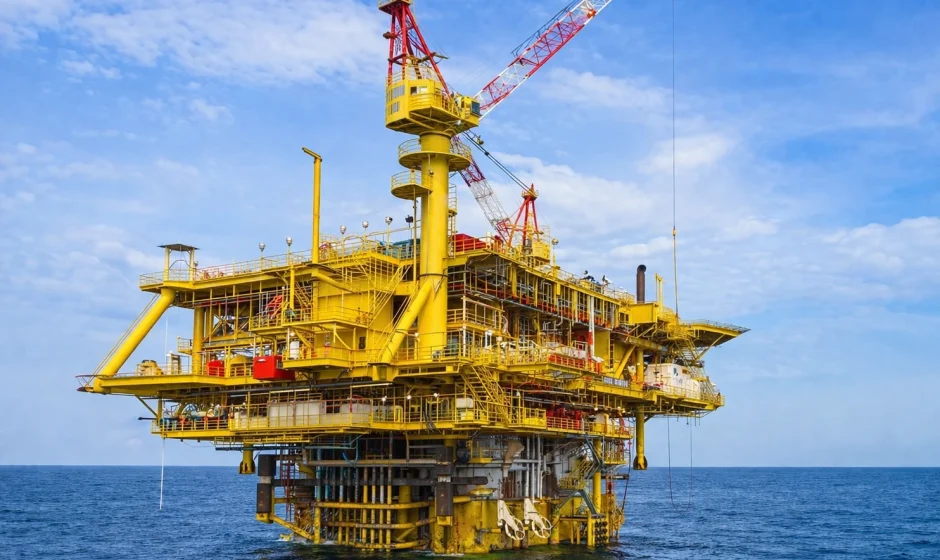
The same report highlighted another major issue: Ghana’s crude oil production has reportedly declined for six consecutive years. Output fell from a peak of about 71.4 million barrels in 2019 to roughly 37 million barrels in 2025. Petroleum receipts for 2025 were also reported at around $770 million, down sharply from about $1.36 billion in 2024.
That means this story is not only about one disputed figure. It is also about long-term national strategy. Mature fields decline. New exploration, better policy, fresh capital, and efficient management become more important as production slows.
What businesses and investors should watch
- Regulatory clarity: Clear rules reduce uncertainty.
- Contract confidence: Investors want predictable treatment of revenues and obligations.
- Energy sector reforms: New exploration incentives may emerge.
- Infrastructure spending: Oil revenue decisions can affect public projects.
- Currency and macroeconomy: Export earnings matter for broader market sentiment.
For diaspora investors and entrepreneurs, this is a reminder that understanding institutions matters as much as spotting opportunities.
Related Ghana guides:
Why This Matters
The $561 million headline is important, but the practical issue is accountability. When petroleum revenues are disputed or delayed, the public cannot clearly see what was earned, what was transferred, and what remains outstanding.
That matters beyond the energy sector. Public revenue affects budgets, infrastructure plans, debt pressure, and investor confidence. Ghana already has oversight bodies such as PIAC. What Ghanaians should watch now is whether the dispute is resolved, the reporting becomes clearer, and future revenues are handled with less controversy.
FAQs
Was $561 million stolen?
Current reporting describes a dispute over unremitted or unaccounted petroleum revenues, not a confirmed theft finding.
What is the Petroleum Holding Fund?
It is the state account where qualifying petroleum revenues are paid before allocation under Ghana’s legal framework.
Does this mean Ghana’s oil sector is collapsing?
No. It means Ghana faces governance and production challenges that require policy attention.
Why should non-oil businesses care?
Oil revenues can influence infrastructure spending, investor confidence, and the broader economy.