

Download “543 Business Ideas to Start in Ghana” →
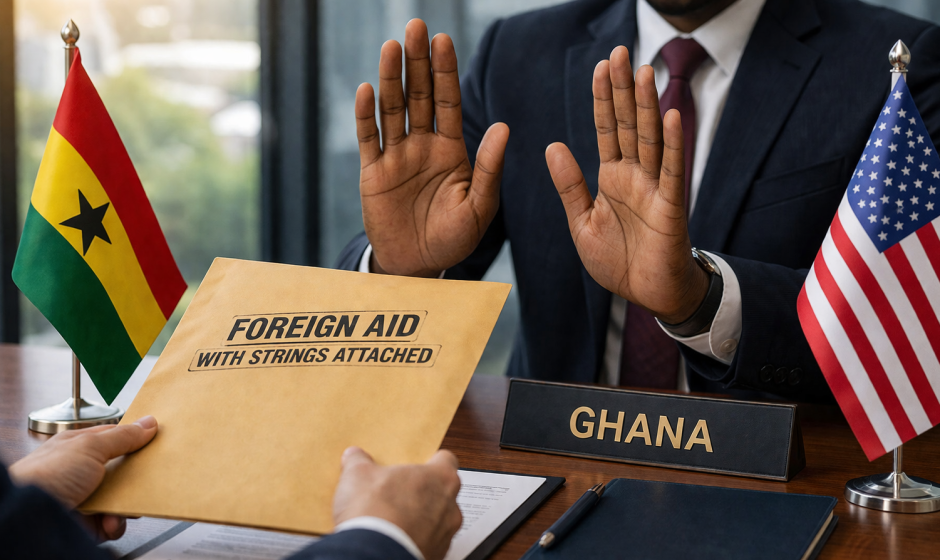
Ghana has rejected a proposed $109 million US health aid deal, according to a source familiar with the negotiations cited by Reuters on April 28, 2026. Accra declined to proceed after objecting to terms requiring the sharing of sensitive health data with the United States. Negotiations ran from November 2025 until Washington set an April 24 deadline that Ghana ultimately decided it could not meet.
For diaspora members, expats, and anyone watching Ghana’s relationship with one of its most significant historical foreign aid partners, this development carries real weight. The US disbursed $96 million specifically for health programs in Ghana in 2024 alone, making it a major external health funder. Because the proposed agreement focused on HIV/AIDS, malaria, tuberculosis, and polio, any reduction in that support could affect those programs.
Quick links (related guides):
What Ghana Rejected and Why
The deal on the table would have provided $109 million in US health assistance to Ghana over five years. A source familiar with the negotiations, speaking to Reuters, said the talks started reasonably enough. “They were pretty normal dealings and negotiations in the beginning, and then increasingly there was a lot more pressure, especially at the end,” the source said.
The sticking point was data. The proposed agreement included provisions requiring Ghana to share sensitive health data with the United States, which Ghanaian officials considered unacceptable. What kind of data exactly was not specified publicly, and neither Ghana’s foreign ministry nor the government’s spokespersons responded to requests for comment from Reuters.
Washington had set April 24, 2026, as the deadline to finalize the agreement. Accra decided it could not accept what was being proposed and formally communicated its position to the Trump administration. The US State Department, for its part, confirmed only that it does not disclose details of bilateral negotiations and that it continues to look for ways to strengthen the bilateral partnership with Ghana.
The “America First Global Health Strategy” Explained
The rejected deal formed part of a broader restructuring of how Washington funds global health. On September 18, 2025, the Trump administration announced what it calls the “America First Global Health Strategy.” The policy reframes foreign health aid away from indefinite US funding and toward a model where recipient countries gradually take on a larger share of costs and responsibility.
The strategy targets four disease areas: HIV/AIDS, malaria, tuberculosis, and polio. The long-term goal is self-reliance, meaning countries currently dependent on US health dollars must develop domestic funding mechanisms over time. The US Agency for International Development (USAID), which historically administered much of this aid, ceased operations in 2025 as part of the administration’s wider foreign aid overhaul.
As of Monday April 27, 2026, the State Department said 32 bilateral agreements had been signed under the strategy, representing $20.6 billion in total funding. That breaks down to $12.8 billion from the United States and $7.8 billion in co-investment commitments from recipient countries. Ghana is not among the 32. Washington indicated it expects additional memoranda of understanding to be signed in the near future, suggesting negotiations with other countries are still underway.
A Pattern Across Africa: Zimbabwe and Kenya
Ghana is not alone in pushing back. For example, Zimbabwe halted negotiations over a separate $367 million US health deal in February 2026, citing objections to provisions requiring the sharing of epidemiological data and biological samples. A leaked letter from Zimbabwe’s foreign affairs ministry described the terms as “clearly lopsided,” according to reporting by Health Policy Watch and Reuters.
Zambia separately pushed back on a deal worth more than $1 billion in February 2026. Moreover, the Zambian case involved an additional dimension: the US had reportedly linked health funding to a “bilateral compact” tied to mining access – specifically copper and cobalt. Health advocates described the arrangement as exploitative. Zambia acknowledged the deal “did not align with the country’s interests” and requested revisions, according to Reuters.
Kenya’s situation is different again. On December 4, 2025, Kenya and the US signed a $1.6 billion health cooperation framework. However, within days, Kenya’s High Court suspended its implementation pending the outcome of legal challenges filed by the Consumer Federation of Kenya (COFEK) and a senator, both citing data privacy concerns and insufficient parliamentary oversight. Consequently, that suspension remains in effect as of publication.
Despite these rejections and suspensions, multiple other African countries have signed bilateral MOUs with the US under the “America First Global Health Strategy,” according to Africa CDC Director-General Dr. Jean Kaseya. Therefore, the deals are not uniformly failing – but they are generating significant controversy over their data and sovereignty terms. Whether more countries follow Ghana’s path will likely depend on how urgently each government needs the funding.
Countries That Accepted, Rejected, or Disputed the Deal
Overall adoption: 32 agreements signed globally
Ghana’s rejection stands out partly because most countries approached by Washington have signed. According to the US State Department, 32 bilateral MOUs had been concluded as of April 27, 2026, spanning Africa, Latin America, and Asia. The agreements cover the period 2026 to 2030 and collectively represent $20.6 billion in health funding – $12.8 billion from the US and $7.8 billion in co-investment commitments from the recipient countries.
First signatory and the court hurdle: Kenya
The first MOU was signed with Kenya in December 2025, though its implementation faced an immediate court suspension. After Kenya, the US moved rapidly across sub-Saharan Africa. Most signatories have long depended on PEPFAR and USAID-funded programs for HIV, tuberculosis, and malaria treatment. For many of them, walking away from the deal carried too high a practical cost. For instance, a Think Global Health analysis found that Nigeria and Botswana pledged to co-fund 59 percent and 78 percent of their respective MOU spending – significant commitments that reflect just how dependent these health systems have become on sustained US support.
African signatories: a selected list
Despite these rejections and suspensions, multiple African countries have signed bilateral MOUs with the US under the “America First Global Health Strategy.” The exact public list continues to evolve as trackers and official announcements are updated.
| Country | Region | Status | Notes / Reported Deal Size |
|---|---|---|---|
| Ghana | West Africa | Rejected | $109M proposed over 5 years. Rejected over data-sharing concerns. (Reuters, April 2026) |
| Kenya | East Africa | Signed – Implementation Suspended by Court | $1.6B. Implementation paused over privacy/parliamentary oversight concerns. (Reuters, Dec 2025) |
| Zimbabwe | Southern Africa | Rejected | $367M proposed. Negotiations collapsed over data/sovereignty concerns. (Reuters/Health Policy Watch, Feb 2026) |
| Zambia | Southern Africa | Negotiations Stalled | $1B+ proposed. Government sought revisions; reported minerals linkage controversy. (Guardian/Reuters, Feb 2026) |
| Nigeria | West Africa | Signed | 59% co-funding commitment. Confirmed in AP reporting. (AP News, March 2026) |
| Botswana | Southern Africa | Signed | $487M. 78% co-funding commitment. (Reuters, Dec 2025 / Think Global Health) |
| Ethiopia | East Africa | Signed | Confirmed in Reuters December 2025 grouped announcement. |
| Madagascar | Indian Ocean / Africa | Signed | Confirmed in Reuters December 2025 grouped announcement. |
| Sierra Leone | West Africa | Signed | $30M+ (2026 only). Confirmed in Reuters December 2025 grouped announcement. |
| Côte d’Ivoire | West Africa | Signed | $480M US commitment, plus up to $292M in Ivorian co-investment by 2030. Confirmed by AP reporting. (AP News, Dec 2025) |
| Rwanda | East Africa | Signed | Confirmed in AP News March 2026 roundup of 9 African signatories. |
Proof links by country: Below are public reports confirming signed, rejected, or disputed agreements under the US health strategy. Some countries were announced in grouped statements rather than separate standalone articles.
- Ghana (Rejected) – Reuters: Ghana rejects proposed US health aid deal
- Kenya (Signed, implementation suspended by court) – Reuters: US signs pact with Kenya
- Zimbabwe (Rejected) – Health Policy Watch / Reuters: Zambia and Zimbabwe back away from prescriptive US health deals
- Zambia (Stalled) – The Guardian: Rising anger over ‘lop-sided’ and ‘immoral’ US health funding pacts
- Botswana, Ethiopia, Madagascar, Sierra Leone (Signed) – Reuters grouped announcement: US signs health agreements with African nations
- Nigeria, Rwanda, Kenya (Signed as part of 9-country group) – AP News: US signs new health deals with 9 African countries
- Côte d’Ivoire (Signed) – AP News (separate): US commits $480M in health funding to Ivory Coast
Source note: Compiled from Reuters, AP, KFF tracker, Think Global Health, and publicly reported announcements as of April 28, 2026. The table above shows selected publicly reported agreements and is not an exhaustive list of all 32 signed MOUs referenced by the US State Department. Statuses may change as legal challenges or negotiations proceed. The KFF tracker notes that its list is based on available public State Department, embassy, and ministry sources, and that MOU texts remain limited.
The Numbers at Stake
What Ghana walked away from
To understand what Ghana has walked away from, the baseline numbers matter. According to US government foreign assistance data, the US disbursed $219 million in foreign assistance to Ghana in 2024 alone – the last full year before the Trump administration’s foreign aid cuts took effect. Of that total, $96 million went specifically to health programs.
The proposed deal represented a steep drop
The proposed deal would have replaced that annual funding with $109 million spread across five years, or roughly $21.8 million per year. That is a steep drop from the $96 million per year Ghana received for health in 2024. Furthermore, the Reuters source confirmed that it was unclear what financial co-contribution Ghana would have been required to make under the agreement. This adds another layer of uncertainty to what the deal actually represented in practice.
Consequently, the shift from roughly $96 million annually to $21.8 million annually under the proposed deal represents a reduction of more than 77 percent in US health funding – even before accounting for any co-investment obligations Ghana might have needed to meet. Put in those terms, the Mahama government’s rejection carries a certain logic: if the deal reduced total health funding substantially while adding sensitive data obligations, the calculus for accepting it was not straightforward.
| Metric | Figure | Notes |
|---|---|---|
| US foreign assistance to Ghana (2024) | $219 million | Last full year before Trump-era cuts; US government data |
| Health-specific US funding (2024) | $96 million | Portion earmarked for health programs |
| Proposed deal value | $109 million over 5 years | Approx. $21.8M/year – a 77%+ reduction in annual health funding |
| Negotiations began | November 2025 | Broke down by April 24, 2026 deadline |
| Deals signed globally under “America First” strategy | 32 (as of April 27, 2026) | $20.6B total: $12.8B US + $7.8B recipient co-investment |
What Happens Next
No immediate return to negotiations
There is no public indication that Ghana and the US are returning to the table. Ghana has communicated its position. Washington has not publicly responded beyond its standard line about not disclosing bilateral negotiation details. That is where things stand as of publication.
How Ghana might fill the gap
With USAID dismantled and no replacement deal in place, the practical question is how Ghana fills the gap in health program funding. The Mahama administration’s domestic health ambitions are already substantial: in April 2026, Health Minister Kwabena Mintah Akandoh confirmed that the government’s Free Primary Healthcare policy will cost at least GHS 1.2 billion annually. Adding a reduction in external health support to that spending pressure sharpens the fiscal challenge.
Three possible paths forward
Whether Ghana returns to negotiations under modified terms, seeks health funding from other partners (China, the European Union, multilateral development banks), or absorbs the gap domestically remains to be seen. Data sovereignty appears to have been the central concern, based on Reuters reporting – the terms around sensitive health data were what Accra found unacceptable, even at a cost measured in tens of millions of dollars per year.
For those considering relocating to Ghana or currently living there, understanding how Ghana’s health system is funded and what services are available is worth tracking as this situation develops.
Get your copy here →
Sources
- Reuters: “Ghana rejects proposed US health aid deal, citing data concerns, source says” (April 28, 2026)
- Reuters / CNBC Africa: “Kenyan court suspends health pact with US to hear data privacy case” (December 11, 2025)
- Reuters / CNBC Africa: “Zambia pushed back on US health funding deal to protect interests, government says” (February 25, 2026)
- US State Department: “America First Global Health Strategy” (September 18, 2025)
- KFF: “Tracker: America First MOU Bilateral Global Health Agreements” (updated April 2026)
- Think Global Health: “Tracking the America First Bilateral Health Agreements” (April 21, 2026)
- Citi Newsroom: “Ghana walks away from US health agreement over sensitive data concerns” (April 28, 2026)
- Health Policy Watch: “Zambia and Zimbabwe back away from prescriptive US health deals” (February 27, 2026)