

250 Things to Know Before Moving to Ghana
Table of Contents
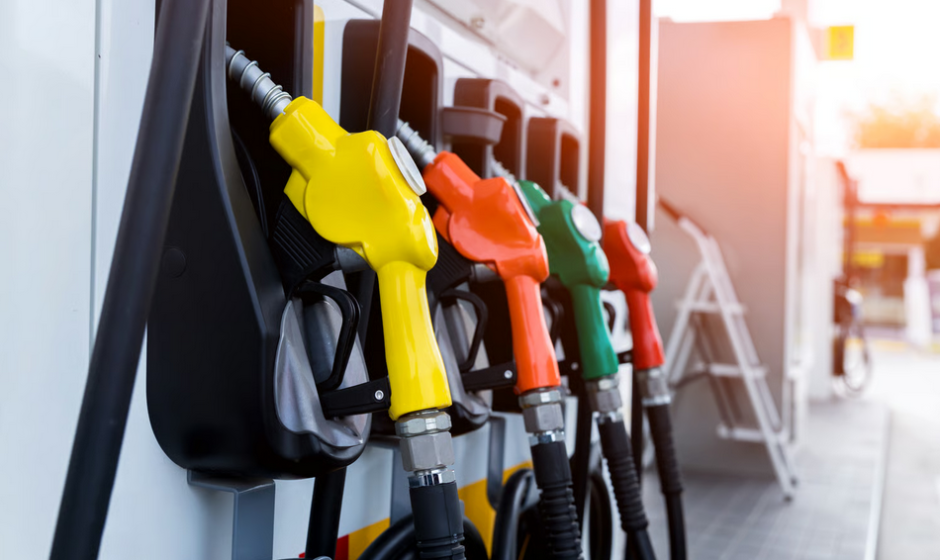
Ghana’s government has announced a temporary suspension of some fuel taxes and levies. This comes after a sharp rise in global oil prices, driven by the ongoing conflict in the Middle East.
In practical terms, the policy is meant to stop fuel prices from rising even faster. The government is cutting its own taxes to shield consumers from global shocks.
This matters because Ghana imports about 70% of its refined fuel. When global prices surge, the impact hits the pump fast, and from there it hits everything: transport fares, food prices, and the cost of running a business.
1. The Price Spike: What Happened at the Pumps
Before the tax cuts were announced, fuel prices had already jumped sharply. The National Petroleum Authority (NPA) raised the mandatory minimum price floors for the April 1–15 pricing window.
Here is how the numbers changed:
| Fuel Type | Previous Price (GHS/litre) | New Price (GHS/litre) | Increase (GHS) | Increase (%) |
|---|---|---|---|---|
| Petrol | 11.57 | 13.30 | 1.73 | 15% |
| Diesel | 14.35 | 17.10 | 2.75 | 19% |
In US dollars, that works out to roughly $1.21 per litre for petrol and $1.55 for diesel. For context, a litre is about a quarter of a US gallon.
Government officials linked the increase to the Middle East conflict. “The increases seen over the last pricing window were solely attributable to the Iran conflict,” said Felix Kwakye Ofosu, the Minister for Government Communications. The Middle East conflict involving Iran, the United States, and Israel has pushed global oil prices higher, and Ghana, like many other African nations, is feeling the heat.
2. The Government’s Response: Tax Cuts and Four Weeks of Relief
On April 9, 2026, President John Dramani Mahama chaired an emergency Cabinet meeting. The result was a set of directives aimed at reducing the price of fuel.
The key measure is a temporary suspension of some taxes and margins on fuel. The Finance Minister, Dr. Cassiel Ato Forson, and the Energy Minister, Dr. John Abdulai Jinapor, have been tasked with implementing this.
Here are the essential details:
- Duration: The tax suspension will last for an initial four weeks.
- Timing: The changes are expected to take effect in the next pricing window, about a week from the announcement on April 10.
- Impact: The government has not yet specified which taxes will be cut, but Kwakye Ofosu said the reduction will be “significant.”
This is a temporary measure. The government will review the situation after four weeks, depending on how global oil markets evolve.
3. Beyond Fuel: Metro Mass Buses and Lower Fares
The government is not just cutting taxes. It is also trying to ease the burden on commuters directly by expanding public transport.
The Transport Minister, Joseph Nikpe, has been instructed to fast-track the deployment of 100 newly acquired Metro Mass Transit (MMT) buses. These buses will operate on high-traffic corridors.
The key point: fares on these buses must be set below what private operators charge. That is a direct intervention to provide affordable transport options.
More buses are on the way. A second batch of 100 is expected in August 2026, and a final batch of 100 in November, bringing the total to 300 new buses.
In a move to reinforce fiscal discipline, President Mahama also reminded all ministers and senior government appointees to strictly adhere to his ban on fuel allowances and allocations.
4. The Economic Context: Inflation and the Cedi
This fuel price shock is hitting at a time when Ghana’s economy has been showing real signs of recovery.
According to local reports, Ghana’s inflation fell to 3.2% in March 2026 – one of the lowest readings in decades, down from over 54% in late 2022. (We recommend verifying directly with the Ghana Statistical Service for the most current official figure.)
However, the crisis in the Middle East is already forcing economists to revise their forecasts. Fitch Solutions has cut its 2026 GDP growth forecast for Ghana to 5.5% from 5.9% and revised its average inflation forecast up to 7.8% from 7.3%.
The government is trying to get ahead of that. By cutting fuel taxes, it hopes to prevent the global price surge from feeding into higher inflation at home. The logic is simple: stable or lower fuel prices help keep transport fares, food prices, and business costs in check.
The relief package is designed to protect the economic gains the country has made, including a stable exchange rate and lower food inflation.
5. What This Means for Commuters, Businesses, and Expats
The impact of this relief package will vary depending on who you are.
For commuters: You should see some relief. The immediate benefit will come from the Metro Mass buses, which will offer lower-than-market fares. The fuel tax cuts should also prevent further increases in transport fares charged by private operators, though don’t expect a dramatic drop in your daily trotro fare overnight.
For businesses: If your business relies on transport, logistics, or generators, this is a breather. Diesel prices jumped 19% at the start of April, which directly hits operating costs. A significant reduction in taxes could help stabilize those costs. The government’s move signals that it is aware of the pressure businesses are under.
For expats and those considering a move to Ghana: This is a reminder of how external shocks can affect the cost of living. Ghana’s economy is more stable than it has been in years, but it remains vulnerable to global oil prices because it imports most of its refined fuel. If you are budgeting for a move, factor in that fuel prices can be volatile. The good news is that the government has shown it is willing to intervene to soften the blow.
6. What Comes Next: The Four-Week Review
The four-week tax suspension is just the first step. The government has said it will review the situation after that period, based on global oil market developments.
Here is what to watch for:
- Global oil prices: If the conflict in the Middle East eases and oil prices drop, the government may not need to extend the tax cuts. If prices stay high, an extension is likely.
- The next pricing window: Consumers are expected to see changes in the next pricing window, around mid-April. That is when the tax cuts will be applied.
- Official announcement of the specific taxes: The government has not yet said exactly which taxes are being suspended. That detail is expected after stakeholder consultations.
For now, the message from the government is clear: it will act to protect Ghanaians from external shocks. Whether that means extending the tax cuts or finding other solutions, the next few weeks will be critical.
Sources
- Reuters: “Ghana to cut fuel taxes and levies as Iran conflict drives up pump prices” (April 10, 2026)
- Xinhua: “Ghana orders fuel levy cuts amid global price surge” (April 10, 2026)
- GNA: “Cabinet directs Finance, Energy Ministers to mitigate impact of US/Israel war with Iran” (April 10, 2026)
- GhanaWeb: “Fuel Tax Slash, Bus Roll Out: How Ghana is shielding consumers” (April 10, 2026)
- Graphic Online: “Govt gives fuel price relief – Measures include public transport fare & tax cuts” (April 10, 2026)
- GhanaWeb: “NPA sets new fuel price floors for April 1-15” (March 31, 2026)
- GNA: “Ghana’s inflation falls to 3.2 per cent in March 2026” (April 1, 2026)
- The Independent Ghana: “Middle-East war slows Ghana’s economic growth to 5.5% – Fitch” (March 25, 2026)