
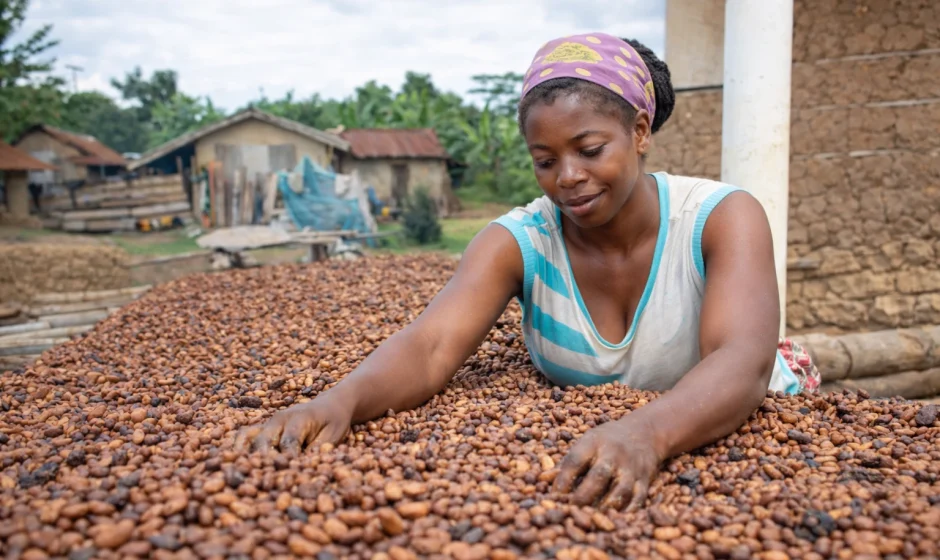

The Ghana cocoa farming industry remains one of the most important sectors in the country’s economy, but it is now under serious pressure. Ghana is still the second-largest cocoa producer in the world, yet production has dropped sharply from historic highs, approximately one million cocoa farming families have gone months without payment, and the government was forced in February 2026 to cut the farmgate price by nearly 29 percent.
If that sounds like a contradiction, here is what it really means: Ghana still produces a globally critical crop, but the system supporting that production has weakened badly. This matters because cocoa is not just an export. It supports approximately 800,000 farm families across ten of Ghana’s sixteen administrative regions and plays a major role in the country’s economic stability.
Quick links (related guides):
- Business Opportunities in Ghana
- Cost of Living in Ghana vs USA
- How to Get Ghanaian Citizenship
- Ghana Economy 2026
- Industries in Ghana That Make Money
- Ghana Foreign Investment Guide
- Ghana Tomato Industry
- Business Registration for Foreign Investors
- Can Foreigners Own Land in Ghana?
- Ghana Corporate Tax Rates
Why Cocoa Still Matters in Ghana
Ghana’s cocoa sector remains central to the country’s economy. Alongside Ivory Coast, Ghana produces the majority of the world’s cocoa supply. This gives the country global relevance in the chocolate and food manufacturing industries.
More importantly, cocoa supports approximately 800,000 smallholder farm families across regions including Ashanti, Western North, Eastern, and Central Ghana. Historically, cocoa exports helped fund infrastructure, education, and early economic development.
However, the importance of cocoa has not protected the industry from decline. That is where the real issue begins.
Production Trends in the Ghana Cocoa Farming Industry
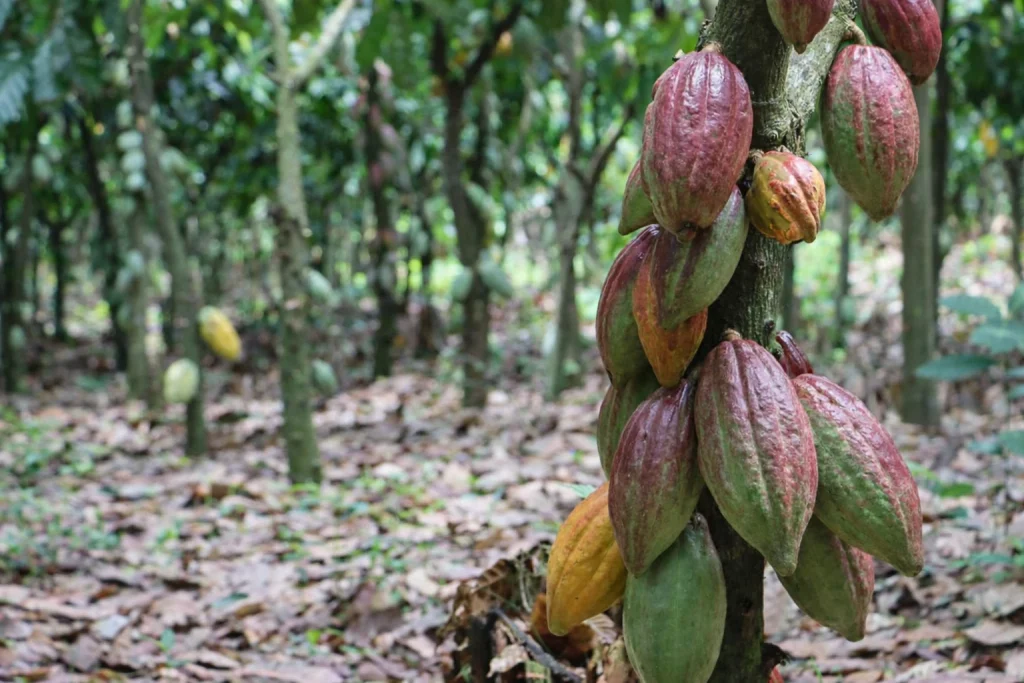
Ghana’s cocoa production has experienced a dramatic swing over the past several years, and understanding those specific seasons matters.
During the 2021/22 season, output reached approximately 1.04 million metric tons, a recent peak. Production then fell sharply, dropping to around 425,000 metric tons in the 2023/24 season, the lowest level in two decades. A partial recovery followed, with the 2024/25 season reaching approximately 600,000 metric tons. For the current 2025/26 season, the USDA Foreign Agricultural Service forecasts output of around 750,000 metric tons, a further improvement, but still well below historical highs.
This means the current recovery is not a full rebound. It is a partial recovery after a severe decline, and the system remains fragile.
Ghana’s average cocoa yield also highlights a deeper productivity problem. Farmers currently produce between 300 and 400 kilograms per hectare, compared to approximately 1,000 kilograms per hectare achieved by cocoa producers in Southeast Asia. No farmgate price adjustment can bridge a gap of that scale. It requires sustained investment in mechanisation, extension services, and farm rehabilitation.
The February 2026 Farmgate Price Crisis
The most significant development in the Ghana cocoa farming industry in recent months is the farmgate price cut announced on February 12, 2026.
Ghana’s Finance Minister, Dr. Cassiel Ato Forson, announced that the producer price would be reduced from GH₵3,625 to GH₵2,587 per 64-kilogram bag, a cut of approximately 29 percent. In per-tonne terms, the price dropped from GH₵58,000 to GH₵41,392. (use our currency converter for prices in your market)
The background matters. When the 2025/26 season opened in August 2025, the farmgate price was set based on a global price of roughly $7,200 per tonne. In October 2025, the price was raised further to GH₵58,000 per tonne (approximately $5,300) to compete with Ivory Coast’s pricing and prevent cross-border smuggling. But the increase coincided almost exactly with the start of a global price collapse. By February 2026, the world market price had fallen to approximately $4,100 per tonne, making Ghana’s cocoa significantly overpriced and unattractive to international buyers.
Licensed Buying Companies stopped purchasing beans because they had no off-takers. Farmers who had delivered cocoa in November and December 2025 had still not been paid by February 2026. Outstanding arrears exceeded GH₵10 billion. The February price reset, while painful, was a market realignment driven by this standoff.
The price cut sparked immediate protests. On February 20, cocoa farmers from the Western North Region picketed at COCOBOD’s headquarters in Accra. The Ghana Catholic Bishops’ Conference described rescuing the cocoa industry as a moral imperative, citing unpaid labour, disrupted schooling, and mounting farmer debt.
Why Cocoa Farmers in Ghana Are Struggling
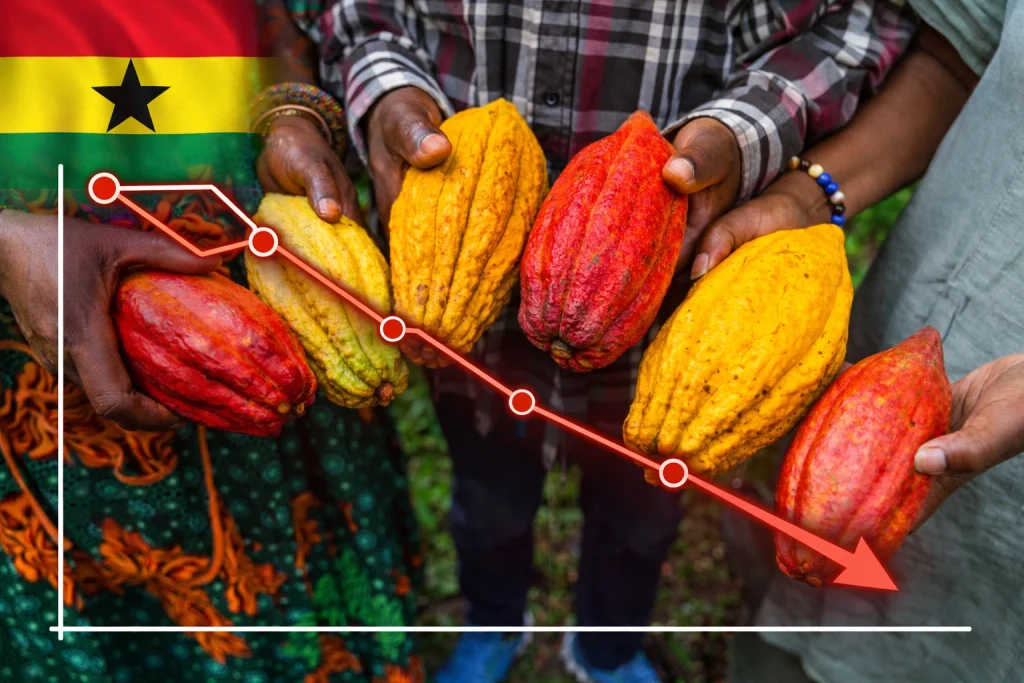
The biggest weakness in the Ghana cocoa farming industry is the farmer’s position in the value chain.
Ghana captures only a small percentage of the total value of the chocolate supply chain, while international processors and brands capture most of the profit. Even within Ghana’s domestic system, the structural incentives have consistently failed farmers.
In the current crisis, farmers have faced three compounding problems simultaneously: a 29 percent cut to the price they will receive for future deliveries, months of unpaid arrears for beans already delivered, and no access to buyers, because Licensed Buying Company district offices closed in areas where off-takers were unavailable.
Some farmers have been forced to borrow from traders and moneylenders at high rates to cover household expenses. Field reports from the Eastern, Western, and Western North regions describe farmers with significant unsold stocks sitting on farms with no buyers available. In the most extreme cases, some farmers have transferred portions of their land to illegal sand miners simply to generate immediate cash, permanently rendering that land infertile.
This creates a cycle that is difficult to break. Delayed payment leads to reduced farm investment. Lower investment leads to lower yields. Lower yields compound income decline and fuel further abandonment.
Key Structural Problems in the Ghana Cocoa Farming Industry
Climate Change and Disease
Changing rainfall patterns and rising temperatures are reducing yields across farming regions. Diseases including cocoa swollen shoot virus and black pod disease continue to damage farms, compounding the productivity deficit already caused by aging trees and poor farm maintenance.
Illegal Mining (Galamsey)
Illegal gold mining is a major and worsening threat. Cocoa farmland is being destroyed, water sources are polluted, and some farmers are abandoning cocoa entirely in favor of mining, which offers faster income. The USDA has specifically flagged unlicensed mining activity spilling over into cocoa production lands as a structural risk to future output.
Smuggling
Cocoa smuggling into neighboring countries has been a persistent problem driven by pricing differences. Ironically, the February 2026 price cut created a new dynamic: because Ghana’s revised price is still marginally higher than the effective prices Ivorian farmers are receiving in practice, some cross-border movement of Ivorian beans into Ghana has reportedly occurred. The smuggling problem runs in both directions depending on relative prices at any given time.
Financing Crisis
The cocoa sector depends heavily on external financing. Ghana has traditionally relied on an annual syndicated loan to fund cocoa purchases. In 2023/24, this arrangement suffered significant delays following a loss of lender confidence after COCOBOD failed to deliver over 333,000 metric tonnes of cocoa that had already been sold to buyers, marking the first such default in the institution’s history. This financing breakdown contributed directly to the payment delays farmers experienced in late 2025 and early 2026.
Poor Value Capture
Ghana currently processes between 30 and 40 percent of its cocoa beans locally. The majority of beans are still exported raw, meaning most of the value is captured by processors and chocolate manufacturers in Europe and North America. This value gap is a long-standing structural weakness that the government is now beginning to address through policy.
EU Deforestation Regulation
A new compliance challenge took effect on December 31, 2025. The EU Deforestation Regulation requires cocoa exporters to demonstrate that their supply chains are free from deforestation. COCOBOD is rolling out a Ghana Cocoa Traceability System in response. For exporters that cannot demonstrate compliance, this regulation represents a significant trade risk. For those that can, it offers a premium market access opportunity.
COCOBOD: Debt Accumulation and Policy Failures
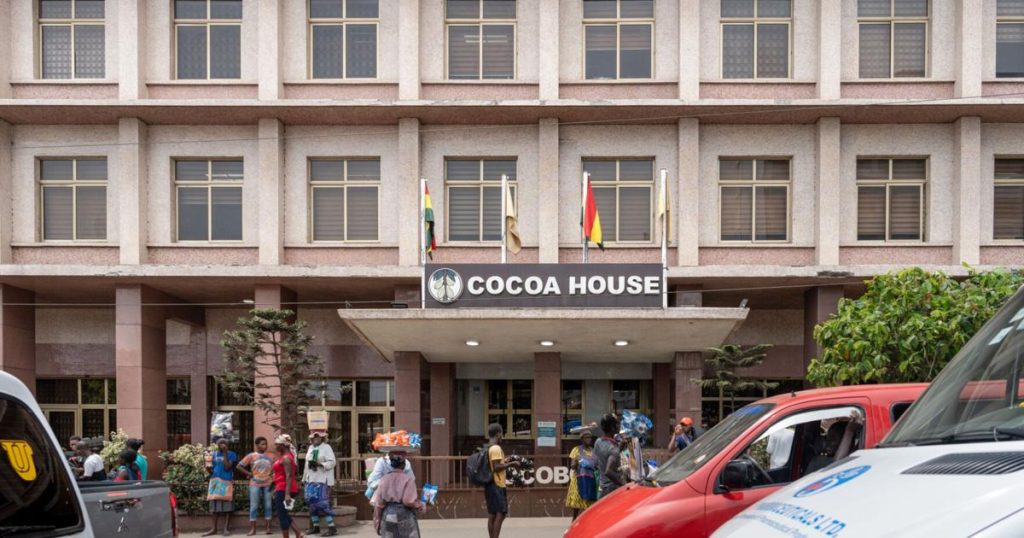
The Ghana cocoa sector is managed by the Ghana Cocoa Board, known as COCOBOD. The centralized system is designed to provide price stability and quality control, but it has accumulated serious structural problems.
As of early 2026, COCOBOD’s total liabilities are estimated at approximately GH₵60 billion. This includes GH₵17.8 billion in loans and GH₵26.5 billion in cocoa road contracts awarded between 2014 and 2024, of which GH₵21.5 billion were awarded in just three consecutive crop years (2018/19, 2019/20, 2020/21). The Finance Minister has directed the Attorney General to conduct a forensic audit and criminal investigation into COCOBOD’s operations over the past eight years.
The contract pricing mismanagement also deserves specific explanation. Ghana’s system of forward sales is designed to provide predictable revenue by locking in prices before harvest. In a period when global prices surged to between $9,000 and $12,000 per tonne, COCOBOD was unable to deliver the volumes it had already contracted at lower prices. This forced it to roll those contracts into subsequent seasons, and then to fulfil them at elevated market costs when global prices had already peaked. The result was a combination of delivery failures and financial losses that damaged lender confidence and contributed to the collapse of the syndicated loan arrangement.
Global Market Pressure and Price Volatility
The global cocoa market has experienced extraordinary volatility. Climate-driven crop failures in 2023 and early 2024 pushed prices to historic highs, with futures reaching approximately $12,000 per tonne. As production recovered through 2025, prices entered a sharp liquidation phase. By early February 2026, the world market price had fallen to approximately $4,000 to $4,100 per tonne, roughly two-year lows and a decline of around 65 percent from the peak.
This price cycle created severe problems for Ghana. The country’s farmgate pricing mechanism was calibrated to the high-price environment. When global prices collapsed, Ghana’s domestic price became wildly uncompetitive, and buyers stopped purchasing Ghanaian beans. Licensed Buying Companies held unsellable inventory, payments to farmers stopped, and the warehouse backlog grew.
The volatility also has a longer-term structural implication. Growing buyers in Europe and North America are beginning to diversify supply chains toward Ecuador, Brazil, and other emerging producers where supply is more consistent and pricing is less dependent on government-mandated mechanisms. If this trend continues, it could permanently reduce Ghana’s market share regardless of production recovery.
Government Reform Package (2026)
Following the February 2026 crisis, the government announced what amounts to the most comprehensive reform package the cocoa sector has seen in recent memory. The key elements are as follows.
Farmgate price realignment. The immediate price cut to GH₵2,587 per bag was framed as a market alignment measure, with the new price representing 90 percent of the achieved gross FOB price, up from 70 percent previously. A new Cocoa Board Bill will be presented to Parliament to make price adjustments automatic based on world market prices, exchange rates, and other variables, while guaranteeing farmers a minimum of 70 percent of the gross FOB price.
New financing model. The traditional syndicated loan model is being replaced by domestic cocoa bonds, with proceeds to be repaid within each crop year. This is intended to reduce reliance on international lender confidence and improve payment predictability for farmers.
50 percent local processing target. The government has set a firm target of processing at least 50 percent of cocoa beans locally from the 2026/27 crop season. To support this, the state-owned Cocoa Processing Company (CPC) will be revived.
Debt conversion. Approximately GH₵5.8 billion of legacy debt owed to the Ministry of Finance and the Bank of Ghana will be converted into equity to stabilize COCOBOD’s balance sheet.
Forensic audit. The Attorney General has been directed to conduct a forensic audit and criminal investigation into COCOBOD’s financial management over the past eight years.
These reforms represent a shift from aspirational policy toward binding commitments with timelines. Whether they are implemented effectively will determine the sector’s trajectory.
Future Opportunities in Ghana’s Cocoa Industry
Despite the current crisis, the structural case for Ghana’s cocoa sector remains strong if reforms are followed through.
Local processing is now a policy commitment, not just an opportunity. The 50 percent target for the 2026/27 season and the revival of the Cocoa Processing Company provide a concrete framework for capturing more value within Ghana before export.
Beyond beans, industrialization of cocoa byproducts, including cocoa butter, cocoa powder, and derivatives used in cosmetics and pharmaceuticals, could diversify revenue streams and reduce exposure to raw commodity price cycles.
Ghana’s reputation for high-quality Forastero and Trinitario beans supports premium and single-origin branding opportunities in specialty markets, where consumers and manufacturers pay above-commodity prices for traceable, verified product.
The EU Deforestation Regulation, while a compliance burden in the short term, creates a certification premium for Ghanaian exporters who demonstrate full traceability. The COCOBOD Traceability System, if successfully rolled out, positions Ghana to access these higher-value regulated markets ahead of less-organized competitors.
Finally, closing the yield gap is the most significant long-term opportunity. Moving from 300 to 400 kilograms per hectare toward the 1,000 kilograms achieved in Southeast Asia would more than double effective output without expanding the land under cultivation. This requires sustained investment in mechanization, fertilizer access, disease-resistant varieties, and extension services, but the potential return is larger than any pricing reform.
The Real Outlook for the Ghana Cocoa Farming Industry
| Area | Current Status |
|---|---|
| Production (2025/26 forecast) | ~750,000 MT, recovering but below historical highs |
| Farmgate price | Cut 29% in February 2026 to GH₵2,587/bag |
| Farmer payments | Severely delayed; arrears exceeding GH₵10 billion as of February 2026 |
| COCOBOD finances | ~GH₵60 billion in total liabilities; forensic audit underway |
| Global cocoa price | ~$4,000/MT, down ~65% from 2024 peak |
| Government response | Comprehensive reform package announced; implementation pending |
| Long-term outlook | Dependent on reform execution and productivity investment |
The Ghana cocoa farming industry is not collapsing, but it has entered one of its most serious periods of strain in two decades. The combination of COCOBOD’s financial mismanagement, a global price crash, and widespread farmer payment failures has exposed structural weaknesses that pricing adjustments alone cannot fix.
The February 2026 reform package gives the sector a credible framework to stabilize and restructure. Whether it succeeds will depend on how quickly arrears are cleared, whether the domestic bond financing model attracts sufficient liquidity, and whether the 50 percent processing target translates into real capacity rather than a policy announcement.
Sources
- USDA Foreign Agricultural Service: Ghana Cocoa Sector Overview
- Graphic Online: Cocoa producer price reset to GH₵2,587 per bag (February 2026)
- CNBC Africa: Ghana cuts farmgate cocoa price, introduces new financing model
- Modern Ghana: Beyond the Price Cut: What Ghana’s Cocoa Crisis Really Demands
- IMANI Africa: From Price to Productivity: Why Ghana’s Cocoa Conversation Must Change
- MyJoyOnline Ghana News