

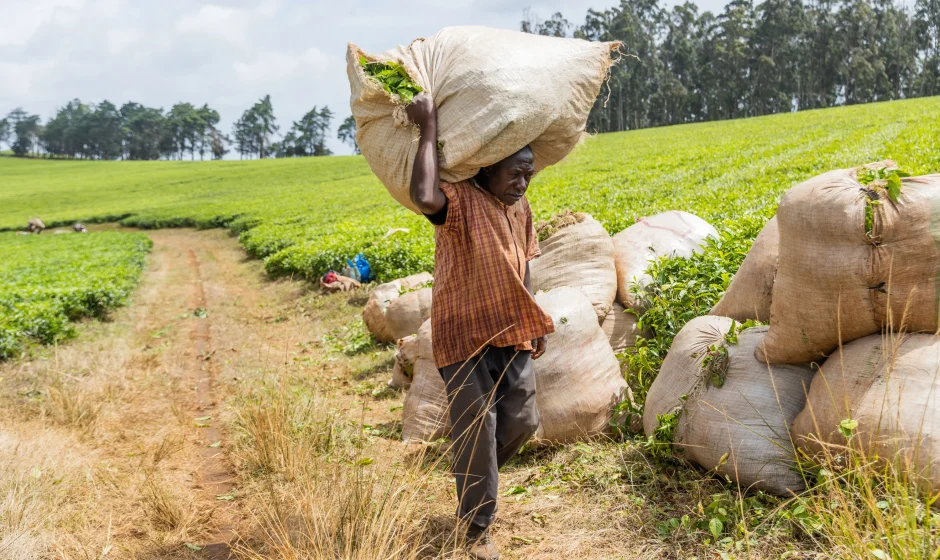

Ghana’s Parliament passed the Ghana Cocoa Board Bill 2026 on July 30, introducing one of the most significant proposed changes to the country’s cocoa industry in decades. The bill would legally guarantee farmers at least 70% of the Gross Free on Board price realised by the Ghana Cocoa Board, give every cocoa farm protected status and impose long prison sentences for serious offences involving cocoa farms, illegal mining and smuggling.
The most important qualification is that the bill was not yet law as of August 6, 2026. The Associated Press reported that President John Dramani Mahama had not signed it, while a Pulse Ghana review published on August 5 also described it as awaiting presidential assent.
Until assent is granted, the proposed price protection, farm restrictions and penalties cannot be treated as enforceable law.
What Parliament Passed
According to the Ghana News Agency, Parliament approved the Ghana Cocoa Board Bill on July 30 as part of a group of major bills passed before the parliamentary recess.
The legislation would replace the Ghana Cocoa Board Act, 1984, also known as P.N.D.C.L. 81, and consolidate a collection of older cocoa laws, regulations and administrative practices into one framework.
The revised bill says its purpose is to establish COCOBOD as the institution responsible for regulating, overseeing and monitoring activities across the cocoa value chain. Its responsibilities would include supporting cultivation, regulating cocoa marketing and financing, buying and exporting cocoa, maintaining quality standards, managing industry data and promoting local processing.
| Major provision | What it would do |
|---|---|
| Farmer price guarantee | Set the producer price at no less than 70% of the Gross FOB price realised by COCOBOD for the crop season. |
| Protected cocoa farms | Give protected status to every farm where cocoa is cultivated, regardless of the form of land ownership. |
| Mining restrictions | Restrict extractive and environmentally disruptive activities on or near protected cocoa farms. |
| Local processing | Require regulations providing for a local processing threshold of at least 50% of Ghana’s cocoa production within a transitional period. |
| Farmer welfare | Establish pension and educational support schemes for cocoa farmers and their families. |
| Industry enforcement | Create stronger offences, penalties, licensing rules, traceability systems and dispute-resolution procedures. |
How the 70% Cocoa Farmer Price Guarantee Works
The headline provision is the minimum price share for farmers. The revised bill states that the producer price for a crop season must not be less than 70% of the Gross Free on Board price realised by COCOBOD for that crop season.
This wording matters. It does not guarantee farmers 70% of the international cocoa price displayed on a commodities exchange on a particular day. It refers to the Gross FOB price COCOBOD actually realises from selling Ghana’s cocoa.
The bill defines Gross FOB as the price realised from cocoa sales before deductions prescribed or approved under the legislation. It separately defines Net FOB as the gross amount after industry costs, statutory deductions, stabilisation charges and other approved deductions have been removed.
The use of the gross figure gives farmers a clearer statutory floor. It also limits the ability of a future government or COCOBOD administration to reduce the farmers’ share below 70% through a policy decision alone.
The producer price would still be determined for each crop season through a pricing formula. COCOBOD would be required to consult the Finance Minister, recognised representatives of cocoa farmers, licensed buying companies and other relevant stakeholders.
The commitment is not entirely new as a government policy. COCOBOD previously announced that the producer price for the 2025/2026 season represented 70% of a stated Gross FOB value. The bill’s significance is that it would turn that policy commitment into a statutory minimum.
What Protected Status Would Mean for Cocoa Farms
The bill designates every farm on which cocoa is cultivated as a protected farm. This applies whether the farm is situated on stool land, skin land, family land, clan land, privately owned land or public land.
A person would be prohibited from destroying, uprooting, damaging or felling a cocoa tree except for rehabilitation approved by COCOBOD. The bill would also prohibit extractive or environmentally disruptive activity on or within 500 metres of a protected farm.
Activities that pollute or divert water serving a cocoa farm, degrade soil quality, reduce farm productivity or threaten sustainable cocoa production would also be restricted.
In practical terms, a landowner could not simply clear an active cocoa farm for illegal mining, housing development or another commercial use without complying with the new legal framework. Most conversions would require cocoa trees to be destroyed or uprooted, which the bill treats as a regulated activity.
The protection is aimed partly at illegal mining, commonly called galamsey, which has damaged farms, contaminated water and encouraged some landowners to abandon long-term cocoa production for immediate mining payments.
The bill also allows the government to prescribe compensation values for protected cocoa trees. The valuation is expected to consider the age of each tree, its potential yield, its remaining productive life and the income the farmer could lose. The actual compensation procedures and values would still need to be established through regulations.
Could Farmers Really Face 20 Years in Prison?
Yes, the bill includes a maximum prison term of 20 years, but that sentence does not apply automatically to every unauthorised change in land use.
The clearest 10-to-20-year penalty applies to prohibited extractive activity affecting a specified water body on or within 500 metres of a protected cocoa farm. A convicted person could face between 10 and 20 years in prison, a fine of 50,000 to 100,000 penalty units for each affected tree, or both.
Where an offence involves large-scale destruction, organised activity or repeated conduct, a court could impose imprisonment and the maximum fine. It could also order restitution to the farm owner or require restoration of the damaged farm.
A separate part of the bill covers general prohibited acts. Unlawfully destroying, damaging, uprooting, felling, sabotaging or interfering with a cocoa farm, nursery, plantation or economic shade tree could result in:
- A fine of 100,000 to 200,000 penalty units;
- A fine equal to 10 times the value of the damage or loss, where that amount is higher;
- Imprisonment for 10 to 15 years; or
- Both imprisonment and a fine.
Cocoa smuggling is another offence carrying a possible 10-to-20-year sentence. This distinction is important because some reports have created the impression that every farmer who changes the use of a farm would automatically face 20 years in prison. The actual penalty would depend on the offence charged, the conduct involved and the court’s decision.
The Bill Is About More Than Criminal Penalties
The severe penalties have attracted the most attention, but the bill contains wider reforms intended to improve farmer welfare and stabilise the cocoa industry.
It establishes a contributory Cocoa Farmers Pension Scheme within the framework of Ghana’s National Pensions Act. It also creates an Educational Trust Scheme to provide educational support for the children and wards of cocoa farmers.
A Cocoa Stabilisation and Diversification Fund would be used as an economic and risk-management tool. Its purposes include supporting producer-price stability and helping the sector manage changes in international cocoa markets.
The bill also establishes a Cocoa Sector Debt Sinking Fund for cocoa-sector liabilities that have been verified through an audit or certification process.
Other changes include a national cocoa management platform, farm registration, traceability systems, digital payments, stronger licensing requirements and new mechanisms for resolving industry disputes.
Local value addition is another major part of the reform. Regulations would be required to provide for a minimum local processing threshold of at least 50% of Ghana’s cocoa beans, although the bill allows this target to be reached over a transitional period. It should not be interpreted as an immediate requirement that half of the current crop be processed locally from the first day the legislation takes effect.
Why Some Farmers and MPs Are Concerned
Supporters see cocoa as a national economic asset that needs protection from illegal mining, environmental destruction and declining production. Critics agree that cocoa farms need protection but question how far the government should be allowed to restrict privately financed farms.
Moses Djan Asiedu of the Ghana Cooperative Cocoa Farmers and Marketing Association told the Associated Press that farmers frequently pay for land acquisition, clearing and years of maintenance before receiving meaningful income. He argued that stronger restrictions should be accompanied by greater government support for production costs.
Kennedy Osei Nyarko, the Member of Parliament for Akim Swedru, has also criticised the land-use restrictions. He argued that a cocoa farmer or landowner should retain the right to decide how privately owned land is used.
These concerns expose the main tension in the bill. Ghana wants to protect cocoa as a national export and prevent productive farms from being lost to mining. Farmers, meanwhile, may see the law as placing national obligations on land and trees that they financed themselves.
The effectiveness of the legislation will depend partly on whether the government provides practical rehabilitation support, transparent compensation, prompt payment for cocoa and a fair process for farmers seeking permission to change land use.
What Happens Next?
Parliamentary passage is not the final step. President Mahama must assent to the bill before it becomes law.
As of August 6, 2026, no official presidential announcement confirming assent had been published. Reports from AP and Pulse Ghana continued to describe it as awaiting the President’s signature.
COCOBOD has already begun stakeholder engagements with farmer organisations, civil society groups and licensed cocoa buyers. Discussions have focused on farm protection, financing, pricing, licensing, traceability and the proposed farmer pension scheme.
Once the bill becomes law, regulations and operational guidelines will still be needed to answer several practical questions. These include how farmers can obtain approval for rehabilitation or land-use changes, how protected trees will be valued, how the pension scheme will operate and how the 50% local processing target will be phased in.
For farmers, investors and landowners, the immediate step is to wait for confirmed presidential assent and the publication of the final enacted version. The revised parliamentary bill provides the current framework, but regulations may determine how many of its most important provisions work in practice.
What the Ghana Cocoa Board Bill Means in Plain English
The Ghana Cocoa Board Bill would give farmers a legally protected minimum share of the cocoa export price while giving the state much stronger control over how cocoa farms are damaged, converted or exposed to mining.
The 70% guarantee is based on the Gross FOB price realised by COCOBOD, not simply the daily international market price. Cocoa farms on private, family, stool, skin, clan and public land would all receive protected status.
The bill does include prison sentences of up to 20 years, but the maximum term is tied mainly to specified mining, water-body and smuggling offences. General unlawful destruction or interference with a cocoa farm carries a separate range of 10 to 15 years.
The next development to watch is presidential assent. Until that happens, the bill remains proposed legislation rather than enforceable law.
Sources
- Revised Ghana Cocoa Board Bill, 2026, parliamentary text dated July 29, 2026
- Ghana News Agency: “Parliament Adjourns Sine Die Without Reconsidering Anti-LGBTQ Bill, Passes 12 Key Laws” (August 2026)
- Citi Newsroom: “Parliament Passes Ghana Cocoa Board Bill to Guarantee Farmers 70% of FOB” (July 30, 2026)
- MyJoyOnline: “Parliament Approves Landmark COCOBOD Reforms to Strengthen Cocoa Sector” (July 31, 2026)
- Associated Press: “Ghana Parliament Backs Tough Cocoa Farm Protections, With Up to 20 Years in Prison” (August 3, 2026)
- MyJoyOnline: “COCOBOD Begins Stakeholder Engagements on New Cocoa Board Bill” (August 4, 2026)
- Pulse Ghana: “Ghana Cocoa Board Bill 2026: Restrictions, Penalties and Benefits” (August 5, 2026)