

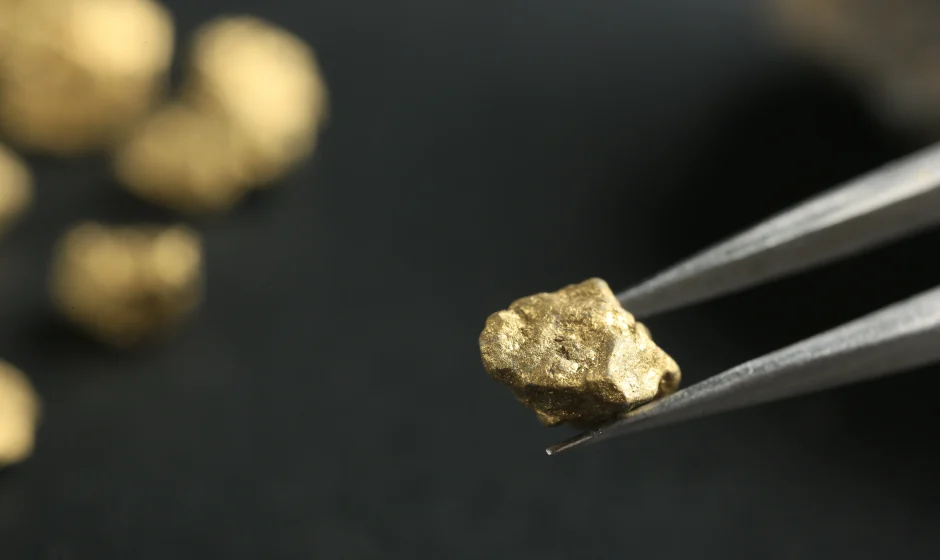

Ghana’s Gold Board exported 104 metric tonnes of artisanal and small-scale mining gold in 2025, generating more than $10 billion in foreign exchange. The Finance Ministry says those GoldBod gold exports were the single largest driver of the Ghana cedi’s 41% appreciation against the US dollar that year.
Deputy Finance Minister Thomas Nyarko Ampem made the disclosure in Parliament on June 24, 2026, while outlining the Gold Board’s economic impact. The numbers he presented also showed Ghana’s foreign reserves climbing from $8.98 billion in December 2024 to $13.8 billion by the end of 2025, a jump that gave the cedi its strongest footing in years.
For Ghanaians abroad sending money home, for businesses pricing imports, and for investors watching the exchange rate, this is a shift worth understanding. The cedi’s recovery has not been accidental, it has been backed by a deliberate government strategy to redirect gold revenues through official channels.
What the Finance Ministry Reported
Speaking to Parliament, Deputy Finance Minister Thomas Nyarko Ampem said Ghana’s Gold Board purchased, aggregated, and exported ASM gold totaling 104 metric tonnes in 2025. That volume earned the country more than $10 billion in foreign exchange, a figure that the Ministry attributed directly to improvements in the cedi’s exchange rate performance.
He also confirmed that the Gold Board purchased a cumulative 135.843 metric tonnes of gold between January 2025 and May 2026, with the bulk coming from artisanal and small-scale mining operations. The difference between the 104 tonnes exported in 2025 and the 135.843 tonnes purchased across the full period reflects gold held in inventory and the carry into 2026 purchases.
| Metric | Figure |
|---|---|
| ASM gold exported (2025) | 104 metric tonnes |
| Foreign exchange earned (2025) | Over $10 billion USD |
| Total gold purchased (Jan 2025 – May 2026) | 135.843 metric tonnes |
| Total GoldBod purchase spend (Jan 2025 – May 2026) | Approx. $16.1 billion USD |
| Gold purchase spend (2025 alone) | $9.8 billion USD |
| Cedi appreciation vs. USD (2025) | ~41% |
Source: Deputy Finance Minister Thomas Nyarko Ampem, Parliament of Ghana, June 24, 2026.
How Much GoldBod Spent on Gold Purchases
The Deputy Minister told Parliament that from January 2025 through May 2026, the Gold Board spent approximately $16.1 billion on gold purchases. Of that total, $9.8 billion was spent between January and December 2025 alone.
That level of spending represents a significant government commitment to routing gold purchases through official channels. In practice, the Gold Board acts as the aggregator, it buys gold from small-scale miners, assays and refines it, then exports it through formal channels that are recorded and taxed. The previous system left significant volumes unaccounted for, with gold being underpriced or smuggled across borders.
The gap between what GoldBod spent ($9.8 billion in 2025) and what it earned (over $10 billion) reflects the value added through formal aggregation and export pricing at international market rates, though the Ministry did not break out exact margins in the parliamentary statement.
What This Meant for the Cedi and Foreign Reserves
The cedi’s 41% appreciation against the US dollar in 2025 was one of the more dramatic currency recoveries in recent Ghanaian economic history. For context, the cedi had been under sustained pressure for several years, losing ground sharply between 2021 and 2023 as Ghana navigated its debt crisis and IMF negotiations.
Foreign reserves tell the same story. The Bank of Ghana’s gross reserves stood at approximately $8.98 billion in December 2024. By December 2025, that figure had risen to $13.8 billion, an increase of roughly $4.8 billion in twelve months. That reserve build gave the Bank of Ghana much greater capacity to defend the currency and service foreign debt obligations.
A stronger cedi and higher reserves are not abstract figures. They translate directly into lower import costs for businesses, reduced pressure on fuel prices, and more stable purchasing power for households. Ghanaians abroad sending remittances also saw the exchange rate moving in a direction that delivered more cedis per dollar sent home, though rates vary by provider. If you want to track current rates, the Ghana currency converter provides up-to-date interbank reference data.
For the broader investment picture, the relationship between gold revenues, reserves, and currency stability is directly relevant to anyone considering Ghana as a destination for capital. The 2025 performance suggests the macroeconomic floor is firming up, even if volatility can return quickly if gold prices shift or policy implementation stumbles.
The Bigger Policy Shift Behind the Numbers
Thomas Nyarko Ampem framed the GoldBod results not just as performance data, but as evidence of a structural shift in how Ghana manages its mineral wealth. His language in Parliament was pointed: the government is deliberately moving from a system where “gold wealth was dispersed, underpriced and smuggled” to one where gold is “transparently aggregated, assayed, refined, exported and turned into foreign exchange and reserves for the Republic.”
That is a significant claim, and the reserve numbers partially support it. Whether the model can sustain itself depends on several factors: international gold prices (which remained elevated through 2025 driven by global demand), the cooperation of small-scale miners who must choose to sell through GoldBod rather than alternative buyers, and the Board’s ongoing operational capacity.
The Gold Board also introduced a new official pricing regime set to take effect from July 1, 2026, which is designed to tighten pricing standards further and reduce the incentive for off-channel sales. That policy development is worth watching, as it will test whether the transparency gains of 2025 can be locked in structurally rather than remaining dependent on price conditions alone.
Ghana’s gold sector has long been a subject of debate between large-scale mining companies and the artisanal sector. The GoldBod model focuses squarely on the ASM side. For a broader look at how Ghana’s gold output has evolved, see the earlier coverage on Ghana’s record 6 million ounce gold output in 2025.
What This Means for Ghana
The Finance Ministry’s parliamentary statement puts a number on something the currency market had already been signaling: 2025 was a year of genuine macroeconomic improvement for Ghana, driven in large part by gold. That improvement did not happen in isolation — the IMF program completion, Fitch’s credit upgrade, and fiscal consolidation all contributed. But the GoldBod gold export numbers give the clearest dollar figure yet for what the formal gold channel contributed.
For foreign investors looking at Ghana, reserve levels and currency stability are among the first signals they examine. A country with $13.8 billion in reserves has considerably more buffer than one at $8.98 billion, both in terms of import cover and the ability to honor external debt. The cedi’s recovery reduces currency risk for investors converting profits back to hard currency — though exchange rate movements always carry risk in either direction.
For Ghanaians in the diaspora, the practical implication is that the cedi’s purchasing power improved through 2025. Whether that holds through 2026 depends heavily on gold prices, GoldBod’s continued performance, and fiscal discipline. The Ghana cedi forecast for 2026 covers those variables in more detail.
The Trafigura gold deal, which structured a portion of Ghana’s gold exports through a specific commercial arrangement, is part of the broader context for how Ghana has been monetizing its gold sector. That arrangement was separate from the GoldBod ASM aggregation model, and the two represent different parts of Ghana’s gold strategy. See the full breakdown at the Trafigura-Ghana gold deal explained.
The Ghana Gold Board’s July 1 pricing changes and ongoing ASM purchasing program will be the next test of whether the 2025 results were a one-year high or the start of a durable new baseline for the country’s gold revenues and currency stability.
Sources
- CitiNewsroom — “GoldBod’s $10bn exports contributed to 41% cedi appreciation — Finance Ministry,” June 24, 2026: citinewsroom.com
- Parliament of Ghana — Statement by Deputy Finance Minister Thomas Nyarko Ampem, June 24, 2026
- Bank of Ghana — Foreign Reserve Data Referenced in Parliamentary Statement