

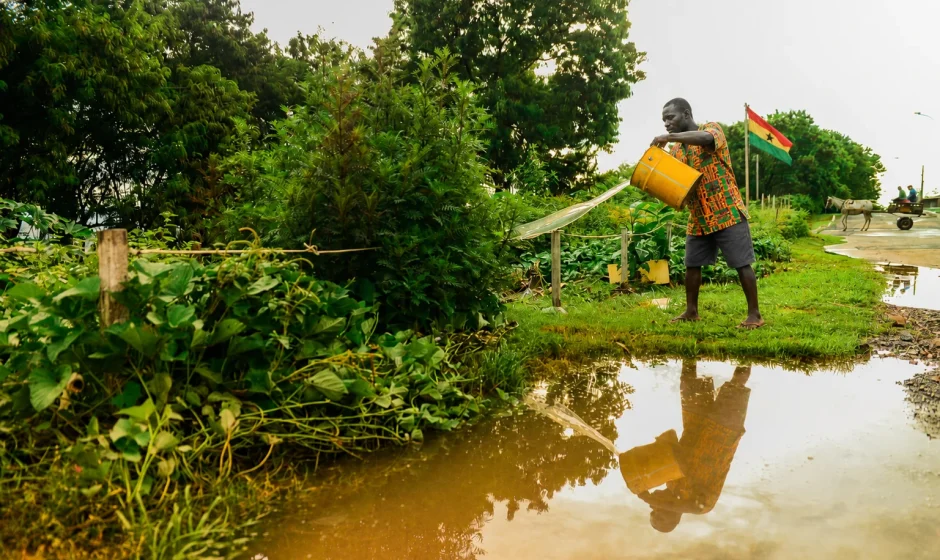

President John Dramani Mahama has directed the flood taskforce of the National Disaster Management Organisation (NADMO) and other relevant state agencies to prepare a comprehensive presentation on Ghana’s flooding situation. The directive was issued on Tuesday, June 9, 2026, at the Accra International Airport shortly after the President returned from an official visit to Belarus.
The order follows widespread flooding in Accra and other parts of the country after heavy and prolonged rainfall. In plain terms, the government is moving from routine responses to a systematic national audit of flood-prone areas, restricted waterways, and blocked drainage channels. The goal is to map all critical hotspots and move beyond temporary fixes to permanent solutions.
This matters because perennial flooding in Accra has displaced families, destroyed property, and disrupted daily life for years. The President’s directive signals that the government intends to break the cycle of treating flooding as a seasonal inconvenience rather than a national emergency. For residents in low-lying communities, this could lead to stricter enforcement of planning laws, potential relocations from vulnerable areas, and a more coordinated long-term response to a recurring crisis that has claimed lives and livelihoods.
The Flood Impact: June 2026
Torrential rains that began in late May and continued into June have caused widespread flooding in Accra, paralyzing parts of the capital and affecting several other communities. The Ghana National Fire Service (GNFS) rescued 21 residents trapped in their homes in Doblo Gonno New Site after a downpour on June 4, 2026. In Klagon, one person is feared dead after being swept away when the River Klagon overflowed its banks, submerging roads and a bridge.
Major roads were cut off, stranding commuters overnight. The Kaneshie Market saw floodwaters sweep through sections of the trading area, destroying goods. Communities including Kaneshie, Pantang, Ashaley Botwe Lakeside, Ashaiman, Sakumono, and Kwabenya were among the hardest hit.
The recurrence of such flooding, coming eleven years after the June 3, 2015 twin flood and fire disaster at the GOIL filling station near Kwame Nkrumah Circle, which killed 154 people, has renewed public frustration and demands for lasting solutions.
Nationwide Flood Assessment Ordered
President Mahama’s directive to NADMO’s flood taskforce aims to identify critical flood-prone areas and inform both immediate and long-term interventions. According to the President, the presentation will help the government pinpoint major flood hotspots, including restricted waterways, and guide urgent and long-term fixes for the persistent problem.
The President noted that the intensity of this year’s rains, which began in May and have persisted into June, has exacerbated the situation compared to previous years. He also expressed concern about human activities that have contributed to the flooding problem, particularly the construction of buildings in waterways and other vulnerable locations.
Questioning how some of these developments obtained official approval, President Mahama called for greater accountability in physical planning and development control. “But some of the houses have building permits. How did they get them? So we have to do some soul-searching,” he said. He stressed the need for authorities to take firmer action to prevent further encroachment on waterways and flood-prone lands.
The President further urged state institutions to move beyond routine responses to flooding, warning against a pattern of inaction until disasters occur. “We shouldn’t be like the vulture who says he will repair his roof when the rain stops,” he said, adding that the government must adopt sustained corrective measures rather than rely on temporary solutions.
Root Causes: Human Activities on the Spot
The government has consistently identified human actions as the primary factor worsening Ghana’s flooding crisis. In a press release issued on June 6, 2026, the Ministry of Works, Housing and Water Resources stated that indiscriminate disposal of waste into drains, unauthorized construction on waterways and wetlands, and persistent disregard for planning regulations continue to obstruct the natural flow of water.
The Ministry’s press release noted that Ghana does not lack the legal framework or technical expertise required to address flooding. The challenge lies in ensuring effective enforcement of existing laws and securing the cooperation of all stakeholders. “Our cities do not lack laws or engineering expertise; what it lacks is the collective discipline and will of all key stakeholders,” the release stated.
The Ministry further cited encroachment on water retention areas, poor maintenance of drainage infrastructure, and unregulated urban development as factors that have collectively intensified the impact of seasonal rains, particularly in rapidly expanding urban centers such as Accra.
Immediate Response and Emergency Interventions
In response to the recent floods, the government has activated a range of emergency interventions through the Ghana Hydrological Authority, NADMO, Metropolitan, Municipal and District Assemblies, and security services. These include:
- Deployment of emergency response teams to affected communities
- Distribution of relief items to displaced households
- Assessment of damaged infrastructure
- Intensified drainage maintenance operations in flood-prone areas
- Desilting exercises and emergency clearing of blocked drains
Long-term measures announced include accelerating drainage improvement projects, removing structures obstructing waterways, strengthening early warning systems, restoring wetlands, and enforcing environmental and planning regulations. The government has also called on citizens to keep drains clean, avoid construction on waterways, and comply with environmental laws to help prevent future flooding.
GMET Warning: Brace for More Rains
The Ghana Meteorological Agency (GMet) has warned Ghanaians to prepare for heavier and more frequent rains in the coming weeks as the country enters the peak of the rainy season. Joseph Tetteh Portuphy, Deputy Director in charge of Forecasting at GMet, said the recent rains are only the beginning of a more intense rainy period expected to peak in June.
“I believe by June we should see the reality of the rain and then we should brace ourselves for more rains,” he cautioned. He attributed the changing weather pattern partly to the effects of climate change, noting that Ghana experienced a weaker Harmattan season this year.
Portuphy urged residents in flood-prone communities to take precautionary measures early. “Everybody knows where they are and when it rains you know how it looks, especially those of us in the low land, there are waterways we should make sure that at least we should move. If we cannot move out then we should move out temporarily then after the rains return,” he advised.
Practical Safety Tips for Residents
Given the likelihood of continued heavy rains and the risk of further flooding, residents are advised to take the following precautions:
- Stay informed by following official weather bulletins and alerts from GMet and NADMO
- Avoid outdoor activities during heavy downpours and stay clear of flooded roads and waterways
- Residents in low-lying or flood-prone communities should proactively relocate to safer, higher ground when severe weather threatens
- Keep emergency numbers handy, including 112 (national emergency line) and Fire Management Centre lines 0302 772 446 / 0299 340 383
- Do not attempt to drive or walk through floodwaters; fast-moving water can sweep away vehicles and individuals
- Report emergencies promptly to the Fire Service or NADMO officials
For those considering relocating to Ghana or moving to safer areas within the country, internal guides on flood-safe locations and relocation planning are available through the Quick Links section above.
Sources
- Citi Newsroom: “Mahama orders nationwide flood assessment after Accra flooding” (June 9, 2026)
- MyJoyOnline: “Gov’t reaffirms commitment to tackling flooding as heavy rains devastate communities” (June 7, 2026)
- Citi Newsroom: “More rains ahead, brace yourselves – GMet” (May 23, 2026)
- GhanaWeb: “Inside government’s new flood control measures” (June 8, 2026)
- Adomonline: “Accra flooding: One feared dead as River Klagon overflows, sweeps away vehicle” (June 7, 2026)
- Pulse Ghana: “We cannot build and hope for the best – Ministry of Works blames human activities for Accra floods” (June 7, 2026)