
Quick links (related guides):
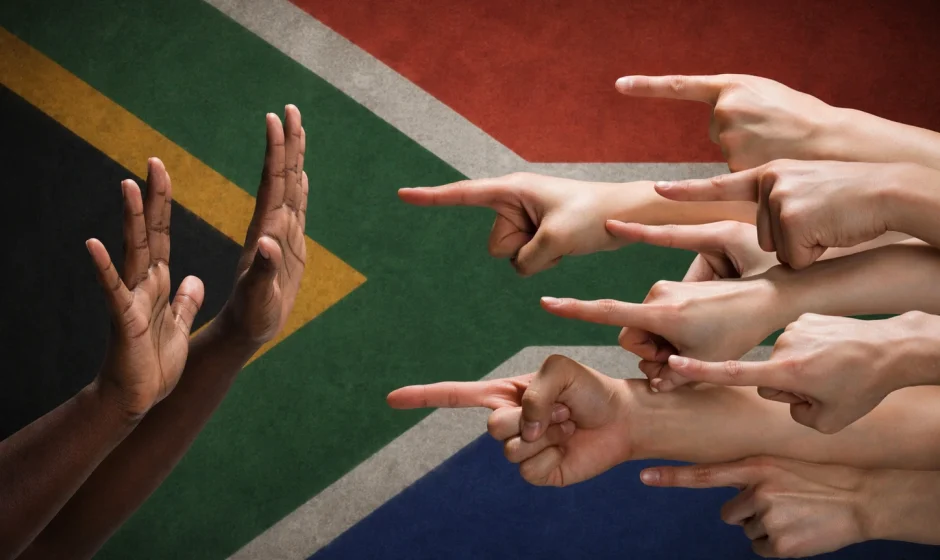
“The kwerekwere are stealing our jobs.” This slur, muttered in the sprawling townships of Soweto or the cramped streets of Alexandra, captures a perverse reality in post-apartheid South Africa. Black South Africans, who constitute four-fifths of the nation’s population, have become one of the world’s most economically excluded majority populations, while simultaneously directing their most visceral anger not at the white minority that owns most of the country’s wealth, but at fellow Black Africans from other nations.
On the surface, the hostility makes no sense. Xenophobic attacks in South Africa often target foreign nationals from other African countries, including Zimbabweans, Nigerians, Somalis, Ethiopians, Malawians and Ghanaians, people who share the same skin color and face many of the same struggles. But beneath the surface, a brutal economic logic unfolds: when more than half of young Black South Africans cannot find work, when two-thirds live below the poverty line, and when the white minority still holds a vastly disproportionate share of the nation’s private wealth, the few economic opportunities that become available feel like rare commodities to be fiercely guarded. South Africa’s extreme inequality, the highest in the world, did not emerge from a vacuum. It was engineered over centuries of white-minority rule under colonialism and apartheid, and three decades after democracy it remains almost unchanged.
The line of causation runs from history to economics to psychology: centuries of dispossession produced today’s lopsided wealth distribution; that lopsidedness created a scarcity of opportunity for Black South Africans; that scarcity, in turn, has turned African immigrants into convenient scapegoats. To understand xenophobia in South Africa is to understand that the country’s immigrants are not the problem but the mirror reflecting one of the world’s most unequal societies.
Table of Contents
- What Was Apartheid and How Did It Engineer Racial Inequality?
- The Wealth Gap: Who Owns South Africa in 2026?
- The Opportunity Chasm: Jobs, Education, and Why Black South Africans Struggle
- Poverty, Crime, and the Scarcity Mindset That Fuels Xenophobia
- A History of Xenophobic Violence: 2008–2025
- Beyond Apartheid: Post‑1994 Governance Failures
- The 2025 Expropriation Act: A New Chapter in Land Reform
- Immigrants Become the Scapegoat: ‘They Are Taking What Little We Have’
- The Counterargument: Does Immigration Affect Local Competition?
- Sources
What Was Apartheid and How Did It Engineer Racial Inequality?
Apartheid, Afrikaans for “apartness”, was a system of racial segregation and white-minority rule enforced by the South African government from 1948 to 1994. Its roots extended much deeper. British colonialism had already dispossessed Black South Africans of their land, and the 1913 Natives Land Act restricted Black ownership to about 7% of the country’s territory, a figure later raised to a still-crippling 13%. When the National Party came to power in 1948, it transformed existing discriminations into a comprehensive legal structure of racial domination.
Under apartheid, the government classified all South Africans into four racial groups: Black, White, Coloured (mixed-race), and Indian/Asian. Race dictated where you could live, which schools you could attend, what jobs you could hold, whether you could vote, and even who you could marry. Black South Africans were stripped of citizenship and assigned to underfunded, overcrowded “homelands”, Bantustans, that made up only a fraction of the country’s land despite housing the vast majority of the population. They were legally prohibited from living in white-designated areas unless they held passbooks and performed low-wage labor for white employers. White South Africans, by contrast, controlled the government, the military, the courts, the banks, and the industrial economy, receiving heavily subsidized education, housing, and healthcare while exploiting Black labor for profit.
The social architecture formed over more than three centuries of white rule entrenched patterns of wealth and ownership that have proven almost impossibly resilient. As the World Inequality Lab observed, “Asset allocations before 1993 still continue to shape wealth inequality.” In practice, this means that a Black South African born in 1995, the celebrated “born-free” generation, entered an economy where the country’s productive assets remained overwhelmingly in white hands. Wealth is intergenerational; when your parents and grandparents were legally barred from owning land, starting businesses, or accumulating capital, you start the race hundreds of meters behind the starting line. Thirty years of democracy have not altered that fundamental reality.
In fact, the World Inequality Lab report, which analyzed data from 1993 to 2017 (authored by Amory Gethin and Aroop Chatterjee), found “no evidence that wealth inequality has decreased since the end of apartheid.” The richest 1% of South Africans have likely increased their share of wealth since apartheid ended, with the gap between South Africa’s richest and poorest failing to narrow meaningfully. Although Black South Africans have outnumbered whites among the richest 10% of the population for roughly seven years, this decline in racial inequality has been driven almost entirely by a surge in top Black incomes rather than any meaningful increase in wealth for the poorest. In other words, a tiny Black elite has emerged, but the Black majority remains locked in poverty.
The Wealth Gap: Who Owns South Africa in 2026?
The numbers are stark, and they explain more about South African xenophobia than any political speech can. According to the World Inequality Lab, the richest 10% of South Africans own 86% of aggregate wealth, while the bottom 50% hold more liabilities than assets. The top 1% of the adult population, about 350,000 people, own 55% of all personal wealth, and the top 0.1% (35,000 individuals) control nearly a third of the country’s net worth. Even more dramatically, just 3,500 people, the top 0.01%, own 15% of household net worth, more than the bottom 90% of the population combined.
Racial disparities remain extreme. The 2017 government land audit (the most recent comprehensive data) found that white individuals owned 72% of farms and agricultural holdings held by individual landowners. (That figure applies only to individually owned agricultural land, not all registered agricultural land, which makes the overall white share slightly lower but still dominant.) The Johannesburg Stock Exchange remains heavily white-controlled, though precise ownership percentages are contested. A 2022 Reuters report noted that Black ownership of JSE-listed companies had reached 30%, while a widely cited 2013 JSE study found white ownership of the top 100 firms at only about 22%, with 39% foreign-owned. Estimates placing white ownership of private wealth above 70% are common, but exact figures vary by methodology. The larger picture is unambiguous: white South Africans, now about 7.3% of the population, hold a vastly disproportionate share of the country’s productive assets.
Black South Africans, who make up roughly 81% of the population (per Census 2022), own a small fraction of the nation’s wealth. A typical Black household holds only about 5% of the wealth of a typical white household. Only 3% of Black South Africans possess wealth exceeding R250,000 (approximately USD 13,500), whereas 50% of white South Africans have wealth surpassing this threshold. The World Bank has repeatedly identified South Africa as the most unequal country in the world, with a Gini coefficient of 63-67, exceeding every other nation for which data is available. For comparison, neighboring countries like Namibia and Zambia have Gini coefficients around 56, while most developed nations cluster between 25 and 40.
Poverty figures, updated with the latest official data, are devastating. According to Stats SA’s Poverty Trends Report 2025 (released December 2025, covering 2023 data), 66.7% of South Africans lived below the upper-bound poverty line of R2,846 per month. The food poverty line, the minimum required to meet caloric needs, stood at R796 per month, affecting 17.6% of the population (about 10.8 million people). The wealthiest 20% of South Africa’s population hold nearly 70% of the national income, while the poorest 40% hold just 7%.
This extreme concentration of wealth in white hands is the product not of any inherent superiority but of deliberate policy. Apartheid systematically transferred resources, land, capital, education, and social connections, from the Black majority to the white minority. When that system ended in 1994, the assets remained where they had been accumulated. And because wealth begets wealth, the gap has not meaningfully narrowed in three decades. For the Black South African struggling to find work, feed a family, or escape a crowded township, the white-owned wealth across the highway might as well be on another planet.
The Opportunity Chasm: Jobs, Education, and Why Black South Africans Struggle
If wealth inequality is the foundation, unemployment is the lived daily reality that shapes Black South African consciousness. South Africa’s unemployment crisis is among the most severe in the world. By the third quarter of 2025, the official unemployment rate stood at 31.9%, using the narrow definition that counts only those actively seeking work. Under the expanded definition, which includes discouraged job-seekers who have given up looking, the rate reached 42.4% (the LU3 measure).
However, these national averages mask the racial chasm beneath them. In Q3 2025, Black African unemployment stood at 35.8% according to Statistician-General Risenga Maluleke, while white unemployment remained in the 7-8% range. Black African women recorded an unemployment rate of 40.2% (based on 2024 data), compared to roughly 8.8% for white women. Among Black youth aged 15-24, the unemployment rate reached 58.5% in Q3 2025. When young Black South Africans leave school, if they finish school at all, they enter a labor market that offers vanishingly few opportunities. During the first year of the Government of National Unity, the labour force increased by 419,000 people but the economy created only 155,000 jobs, according to a Business Day analysis of Stats SA data.
The education system, intended to be the great equalizer, instead replicates apartheid-era outcomes. Official Stats SA data shows that roughly 25% of white South Africans hold a bachelor’s degree, compared to approximately 5% of Black Africans. (A self-reported Afrobarometer survey from April 2025 using a broader definition of “degree” that includes any post-secondary qualification produced higher figures of 80% for whites and 22% for Blacks, but the stricter official Stats SA data tells the more conservative story.) The reasons trace directly back to apartheid. Black schools in townships and rural areas remain underfunded, overcrowded, and understaffed, staffed by teachers who themselves often received inadequate training. Wealthy formerly white schools, by contrast, boast swimming pools, computer labs, and classes of 25 students. A report warned that the South African education system was “replicating Apartheid outcomes” rather than reversing patterns of unemployment and poverty. Among children, 62.1% under the age of 17 live in poverty, lacking basic necessities like adequate food, water, housing, healthcare, or schooling.
Even for Black South Africans who manage to obtain degrees and qualifications, the playing field remains tilted. Workplace microaggressions endured by Black professionals, like Rethabile Ratsomo who reported being constantly complimented on how well she speaks English and being viewed as a B-BBEE hire, thus not capable of doing the work, highlight how deeply racial assumptions persist. Abigail Noko, Representative for UN Human Rights Regional Office of Southern Africa, notes: “Dismantling such entrenched racist and discriminatory systems requires commitment, leadership, dialogue, and advocacy to put in place anti-racist policies.”
What this all means for the average Black South African is an experience of being trapped. You are born in a township, attend an underfunded school where most of your peers will drop out, compete for scarce jobs against thousands of equally desperate applicants, and watch from a distance as the white minority lives in gated communities, drives new cars, and sends its children to private universities abroad. When all avenues to legitimate economic participation seem blocked, frustrated members of the township populace become highly susceptible to narratives that offer simple explanations for their suffering. The simplest explanation is the one that blames outsiders. (This is it folks)
Poverty, Crime, and the Scarcity Mindset That Fuels Xenophobia
When two-thirds of the population lives below the poverty line and more than half of young Black South Africans cannot find work, crime becomes not just a social ill but a near-inevitable consequence of economic collapse. Research has established a strong link between income inequality and violent crime at the local level. In plain language: the more unequal the neighborhood, the more violence.
Homicide data confirms the pattern. South Africa’s murder rate remains one of the highest globally. In the 2023-2024 financial year, SAPS recorded 27,621 murders. The 2024/25 SAPS annual report showed a modest improvement, with total contact crime decreasing by 6.7%, though levels remain extremely high by global standards and disproportionately affect Black men in low-income areas. More than half of young people aged 15-24 (58.5%) are unemployed, and the struggles of young men and women caught “in a cycle of desperation, crime, and hopelessness” have become the defining feature of life in South Africa’s townships. The EFF has maintained that “crime in South Africa cannot be divorced from structural economic conditions. Mass unemployment, deep inequality, substance abuse, collapsing public services, and corruption create fertile ground for violence and criminal recruitment.”
This environment of generalized scarcity and lawlessness produces a particular psychological state: the scarcity mindset. When resources, jobs, housing, healthcare, even food, are perceived as finite and overwhelmingly controlled by a different racial group, every newcomer looks like a threat. The few economic opportunities that become available in Black townships are competed for fiercely, and resentment festers against anyone who appears to be taking “what little we have.”
It is critical to note that South Africa’s immigrants are not responsible for the country’s economic failures. Foreign nationals make up roughly 4% of the population, a “significant but not enough to account for our unemployment,” as one analysis noted. Research from the World Bank and academic studies has shown that immigrants contribute to the informal economy, pay taxes through consumption, and send remittances that support households in neighboring countries. Yet in an economy already stretched to its breaking point, the presence of any competitor can feel existentially threatening. That perception, not the reality of immigrant economic impact, drives xenophobic violence.
A History of Xenophobic Violence: 2008-2025
The structural conditions described above have erupted repeatedly in bloody pogroms against foreign nationals. Understanding the timeline is essential to recognizing that xenophobia is not a new phenomenon but a recurring crisis.
2008: In May 2008, nationwide attacks left at least 62 people dead, hundreds injured, and tens of thousands displaced. Immigrants from Zimbabwe, Mozambique, Malawi, and Somalia were the primary targets. The violence spread from Johannesburg townships to Durban, Cape Town, and beyond, exposing the depth of anti-foreigner sentiment.
2015: Another wave of attacks, often described as “xenophobic pogroms”, targeted foreign-owned shops in Durban and Johannesburg. At least seven people were killed, and thousands of foreign nationals fled to makeshift camps or returned to their home countries.
2019: In September 2019, violent attacks in Johannesburg and Pretoria left 12 people dead (including two foreign nationals) and hundreds of businesses looted. The violence triggered diplomatic protests from Nigeria, Ethiopia, and other African nations, leading to the rare cancellation of the World Economic Forum on Africa.
2021 onward – Operation Dudula: Formed in 2021, Dudula, meaning “push back” in Zulu, emerged as a vigilante movement conducting patrols in townships, demanding identity documents, and blocking foreign nationals from accessing healthcare and education. On 4 November 2025, the Gauteng High Court interdicted Operation Dudula, declaring its conduct unlawful and in violation of constitutional rights. Yet the group continues to operate, channeling public anger over crime and unemployment toward foreign nationals.
2025 – Addo attacks: In May 2025, xenophobic violence in Addo (Eastern Cape) left at least four people dead, ten injured, and hundreds of immigrants, including women and children, displaced and sheltering outside the police station. The attacks followed the killing of a young South African man; revenge attacks targeted all foreign nationals indiscriminately. According to the Zimbabwean embassy, 30 Zimbabweans were injured and 17 remained hospitalized.
These recurrent waves demonstrate that xenophobic violence is not a series of isolated incidents but a chronic symptom of structural inequality, impunity, and political scapegoating.
Beyond Apartheid: Post‑1994 Governance Failures
While apartheid created the original inequality, South Africa’s post-1994 governments must shoulder significant blame for failing to reverse it. Persistent corruption, weak service delivery, the electricity crisis, policing failures, slow land reform, and low economic growth have all deepened the crisis. The promise of a “better life for all” has gone unfulfilled for millions.
Corruption scandals (notably state capture under President Jacob Zuma) diverted billions of rand from public services. Municipalities have collapsed, leaving townships without reliable water, electricity, or waste collection. Load-shedding, scheduled power cuts, has crippled small businesses and destroyed jobs. The police are understaffed, underpaid, and often complicit in crime. Land reform has been glacial: the government missed its own target of transferring 30% of commercial farmland to Black owners by 2014, and by 2025 the figure remained below 15%.
Economic growth has averaged less than 2% per year since 1994, far too slow to absorb the millions of young people entering the labor market each year. The failure to build a competitive manufacturing base or to reform the rigid labor market has left South Africa trapped in a low-growth, high-inequality equilibrium.
None of this excuses xenophobic violence. But acknowledging these governance failures provides a more complete explanation: immigrants become scapegoats not only because of apartheid’s legacy, but also because the post-1994 state has repeatedly failed to deliver jobs, housing, or dignity to its own citizens.
The 2025 Expropriation Act: A New Chapter in Land Reform
On 23 January 2025, President Cyril Ramaphosa signed the Expropriation Bill into law, replacing the outdated 1975 Expropriation Act. The new law sets out how organs of state may expropriate land and property in the public interest, and aims to align expropriation processes with the Constitution. It explicitly allows for nil compensation in specific circumstances, where land is held for speculative purposes, is abandoned, or where the market value is negligible.
This is the most significant land reform development in post-apartheid South Africa. For the first time, the government has a legal mechanism that goes beyond the “willing seller, willing buyer” model, which failed to meaningfully redistribute land in three decades of democracy. The Act has generated intense legal and political opposition, with some private-property advocacy groups vowing court challenges. Whether it will measurably reduce the vast racial land ownership gap remains to be seen, but its passage signals a pivotal shift in the national conversation about economic redress. For Black South Africans who have watched white-owned farms and corporate landholdings remain largely untouched since 1994, the Expropriation Act represents either a long-overdue instrument of redress or a symbolic gesture, depending on how aggressively it is enforced.
Immigrants Become the Scapegoat: ‘They Are Taking What Little We Have’
Operation Dudula, described above, is the most organized expression of anti-immigrant sentiment. The High Court’s November 2025 interdict has not stopped the group; it continues to operate, with leaders claiming they are merely “protecting the rights of South Africans.” As Judge Wilson observed in the ruling, “Xenophobia is merely another kind of racism,” and like the racism of apartheid, it divides the oppressed against each other while leaving the structure of inequality intact. (Bhekisisa, December 2025)
Jonathan Jansen, writing in the Sunday Times in December 2025, captured the tragic irony: “Xenophobic hatred makes suspects out of people for the singular misfortune of having been born in another African country. Are they taking the jobs of the natives? No, because there are very few black South Africans qualified with science degrees in math, physics, and chemistry thanks to a lousy education system.” Jansen notes further: “A racial cynic might observe that while whites once again take care of each other, we persecute those who look like us.”
Immigrants are not merely passive victims; they also make measurable economic contributions. Research from the World Bank and academic studies has documented that immigrants in South Africa contribute to the informal economy, generate tax revenue through consumption, and send remittances that support households in neighboring countries. In some townships, studies have found that as many as 74% of spaza shop owners were foreign nationals, with Somali and Ethiopian entrepreneurs dominating the sector. To a Black South African who cannot find work, the sight of a Somali shopkeeper selling bread and airtime in his own township feels like an invasion, even though that shopkeeper likely arrived with nothing and built his business through sheer desperation.
A critical distinction must be made: South Africa hosts a mix of legal migrants (with work or residence permits), refugees and asylum seekers (protected by law), and undocumented migrants. Public anger rarely distinguishes between these categories, but the causes and legal statuses are different. Undocumented immigrants are the most vulnerable and the most scapegoated, yet they often take the most dangerous, low-paid jobs that locals reject. Conflating all foreigners into a single “threat” is both legally inaccurate and analytically lazy.
The ultimate tragedy of South African xenophobia is that it attacks the wrong target. White South Africans still control a vastly disproportionate share of the country’s wealth. White-owned corporations dominate the JSE. White farmers own the vast majority of agricultural land. White students attend vastly better schools and secure vastly better jobs. Yet Black South African anger rarely boils over in the direction of gated communities or corporate boardrooms; it explodes in the cramped streets of Alexandra and Soweto, directed at people who share their skin color, their poverty, and their struggle.
South Africa’s xenophobia is not a mystery. It is the predictable outcome of a society that remains, thirty years after apartheid, the most unequal in the world. When you trap millions of people in poverty, deny them adequate education, lock them out of the formal economy, and leave them with no hope for advancement, they will look for someone to blame. That blame lands on other Black Africans not because it is rational, but because it is the only target within reach. The tragedy is the misdirection of the anger. The real thieves sit not in the spaza shops but in the corporate boardrooms, and until South Africa confronts that reality, the xenophobic violence will continue.
The Counterargument: Does Immigration Affect Local Competition?
It would be dishonest to claim that immigration has no local economic impact. In specific townships, the concentration of foreign-owned spaza shops, hair salons, and street vending stalls does create competition for Black South African informal traders. Somali and Ethiopian shopkeepers often work longer hours, pool capital through community lending circles, and keep prices lower, practices that South African traders may find difficult to match. Research has found that in some areas, as many as 74% of spaza shops were foreign-owned, and local South African shop owners reported declining revenues.
However, this local competition effect does not explain national unemployment. Foreign nationals are about 4% of the population; even if every immigrant left tomorrow, South Africa would still have a 31.9% unemployment rate. The informal sector competition argument also ignores that many foreign-owned businesses serve markets that South African traders had abandoned (due to crime, lack of capital, or poor service). Moreover, immigrants create jobs too: they employ South African staff, pay rent to South African landlords, and buy from South African wholesalers.
Acknowledging the real localized pressures does not justify violence, nor does it make xenophobia rational. But refusing to acknowledge those pressures weakens the article’s credibility. The honest position is: yes, in some townships there is genuine economic competition with foreign nationals. But that competition is a symptom of a failed national economy, not its cause. Targeting immigrants will not create jobs or reduce poverty; only structural economic reform can do that.
Ready to gain a deeper understanding? Our e-book “250 Things to Know Before Moving to Ghana” covers everything from cost of living to cultural integration. Get your copy here
Sources
- TIME Magazine: “South Africa Wealth Gap Unchanged Since Apartheid, Says World Inequality Lab” (April 2022)
- OHCHR: “30 years on, South Africa still dismantling racism and apartheid’s legacy” (April 2024)
- Daily Maverick: “Xenophobic violence breaks out in Addo after murder” (May 2025)
- GroundUp: “Hundreds of women and children chased from their homes as xenophobic attacks kill four” (June 2025)
- Parliament of South Africa: Court interdict against Operation Dudula (November 2025)
- Bhekisisa: “Court orders government, police to block vigilantes from two clinics” (December 2025)
- Government of South Africa: Land Audit Report (2017)
- Reuters: “Thirty years after end of apartheid, equality eludes South Africa” (November 2025)
- Statistics South Africa: National Poverty Lines (2025) – UBPL R2,846/month
- Statistics South Africa: Poverty Trends Report 2025 (December 2025) – 66.7% UBPL, 17.6% food poverty
- Statistics South Africa: Quarterly Labour Force Survey Q3 2025
- Statistics South Africa: Census 2022 – racial demographics
- Statistics South Africa: Immigrant population (3.9% of population, 2022)
- SAnews: “President signs Expropriation Bill into law” (January 2025)
- SAPS: Annual Crime Statistics 2023/24 (27,621 murders) and 2024/25 quarterly reports
- Afrobarometer Dispatch AD970: Educational attainment survey (April 2025)