

250 Things to Know Before Moving to Ghana
Quick links (related guides):
Table of Contents
- What Triggered the Diplomatic Response?
- Diplomatic Talks Begin: Ablakwa Engages Lamola
- Ghana’s Embassy Steps In: Victim Located and Safe
- A Pattern of Violence: Xenophobia in South Africa
- Mahama’s 2015 Warning Resurfaces
- Why This Matters: Beyond the Headlines
- What Happens Next: Investigation and Consular Support
- Sources
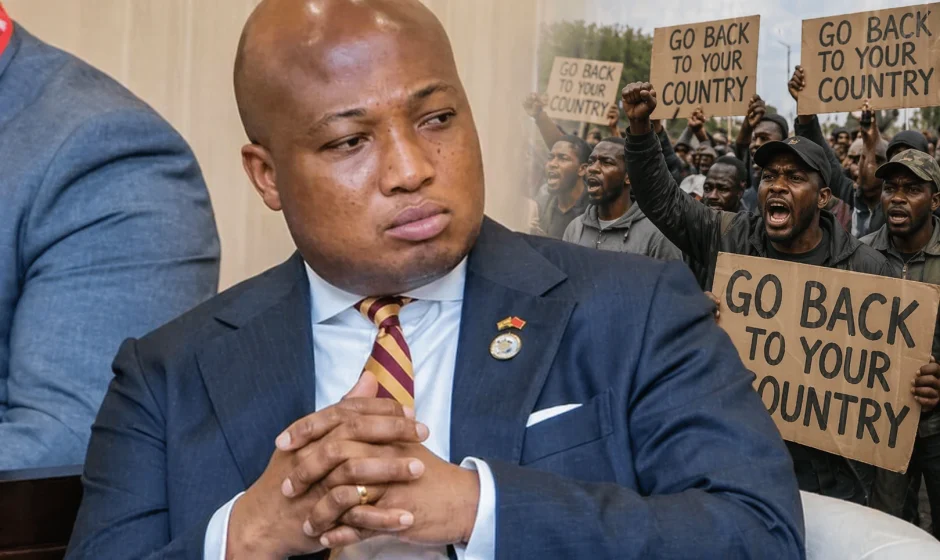
On April 22, 2026, Ghana engaged South African authorities after viral videos allegedly showed foreign nationals being targeted in xenophobic incidents, with Ghanaian citizens reportedly among those affected. The issue quickly escalated after Ghana’s Foreign Minister confirmed direct talks with his South African counterpart.
If that sounds like another news headline, here is the real meaning: Ghana moved from monitoring the viral reports to direct diplomatic engagement, seeking clarity, protection for its citizens, and a full investigation.
That shift matters because it shows Accra is treating the reports as a serious consular and foreign policy issue, not just ordinary social media outrage.
What Triggered the Diplomatic Response?
Disturbing videos began circulating online on April 21, 2026, appearing to show xenophobic attacks and intimidation involving foreign nationals in South Africa.
One widely shared video appeared to show a group of people entering a government hospital and demanding that all foreigner patients be discharged. The group instructed medical staff to “stabilise and discharge” foreign patients so they could seek treatment at private facilities. According to those shown in the footage, no foreigner is allowed to seek medical attention in public hospitals. The group could be seen inspecting ID cards of persons at the hospital, targeting those without South African documentation. The footage circulated widely online, though full context and all circumstances were still being independently verified at the time of reporting. [Source: GhanaWeb, April 22, 2026]
Separate footage showed confrontations on the streets, with groups demanding that foreigners leave the country. The seriousness of the footage prompted immediate government action in Accra.
Diplomatic Talks Begin: Ablakwa Engages Lamola
Ghana’s Minister for Foreign Affairs, Samuel Okudzeto Ablakwa, confirmed he held a telephone conversation with his South African counterpart, Ronald Lamola, Minister of International Relations and Cooperation.
“I called him on the trending videos about Ghanaians coming under extremely disturbing xenophobic attacks in South Africa,” Ablakwa stated in a Facebook post on April 22, 2026. [Source: GhanaWeb, April 22, 2026]
According to Ablakwa, Lamola expressed sympathy for the victims and assured that full-scale investigations are underway. “The South African Foreign Minister has expressed his empathy with the victims and promised full-scale investigations into the depressing incidents,” Ablakwa said. [Source: GBC Ghana Online, April 22, 2026]
The South African government also committed to holding a briefing with African ambassadors later that day as part of efforts to address the situation and reassure affected countries. [Source: TimesLIVE, April 23, 2026]
Ghana’s Embassy Steps In: Victim Located and Safe
Ablakwa confirmed that he has been in constant contact with Ghana’s High Commissioner to South Africa, Benjamin Anani Quashie, to coordinate the country’s response.
“I am gladdened that so far colleagues in our diplomatic mission have located the main victim in the viral video and are offering consular assistance. He is doing very well,” the minister disclosed. [Source: Daily Graphic, April 22, 2026]
Ablakwa also reassured the public that as of the minister’s April 22 statement, no Ghanaian deaths had been recorded in connection with the reported incidents. “No Ghanaian life has been lost. We urge calm and confidence in our collective capacity to protect Ghanaians,” he said. [Source: MyNewsGh, April 22, 2026]
The minister confirmed that the Mahama administration remains uncompromising about the welfare and safety of Ghanaians both at home and abroad. “We are determined to guarantee the protection of all citizens,” he added. [Source: Ghanaian Times, April 22, 2026]
A Pattern of Violence: Xenophobia in South Africa
South Africa has experienced recurring outbreaks of xenophobic attacks since at least 2008. Major episodes in 2015 and 2019 drew condemnation from across Africa, with foreign nationals from other African countries facing violence and intimidation.
Researchers argue such incidents are often mischaracterized as sudden eruptions rather than products of deeper socio-economic pressures. Dr. Nixon S. Chekenya, a political scientist at Texas Tech University and author of Migrants and Xenophobic Attacks in South Africa: Theory and Evidence, argues xenophobic violence is often linked to ethnic polarization, economic insecurity, and weak institutional responses. His study, drawing on Xenowatch data, found hostility toward migrants often grows where economic grievances are politicized. [Source: Ghanaian Watch, April 23, 2026]
South Africa continues to face severe unemployment pressures, particularly among youth. According to the African News Agency, South Africa’s unemployment rate sits above 30 percent, and load-shedding has cost the economy hundreds of billions of rands over the past 10 years. The public health system remains severely under-resourced. [Source: African News Agency, March 26, 2026]
Human Rights Watch, in its 2026 South Africa country assessment, flagged continuing threats against migrants, including actions by vigilante-style groups obstructing access to public health services and education. The report specifically named anti-immigrant vigilante groups such as Operation Dudula and March for March, noting they have blocked migrants’ access to healthcare in public facilities. [Source: Human Rights Watch, 2026]
In July 2025, a one-year-old Malawian boy died after Operation Dudula blocked him from accessing treatment at two local government clinics in Alexandra because the family lacked South African identity documents. The Economic Freedom Fighters subsequently lodged a murder charge. In November 2025, the Johannesburg High Court interdicted Operation Dudula and its leaders from intimidating, harassing, or assaulting non-citizens and from publishing hate speech on social media. [Source: African News Agency, March 26, 2026]
Human rights activists have raised the alarm over intensifying xenophobic violence and rhetoric, with South Africa’s migrant community fearing for their safety and employment stability. Dr. Lubna Nadvi, a political science lecturer, said political opportunism has intensified the issue, with political parties engaging in acts of violence against non-South Africans ahead of local government elections. “This is a very misplaced way of thinking,” she said. [Source: The Witness, April 11, 2026]
Mahama’s 2015 Warning Resurfaces
Amid the 2026 incidents, a video has resurfaced of President John Dramani Mahama condemning xenophobic attacks in 2015. At that time, over ten people had been confirmed dead in xenophobic attacks, with South Africans accusing black foreigners of taking jobs. [Source: GhanaWeb, April 23, 2026]
In the resurfaced footage, Mahama criticized South Africa’s behavior as a betrayal of other African countries that led the fight against apartheid. “The whole of this continent stood behind South Africa, the whole of Africa stood behind South Africa to fight apartheid. It is regrettable that the same people who fought against apartheid are being attacked in this way,” he said.
Mahama had also called on then-President Jacob Zuma to take strong action, stating that those involved in the atrocities must be brought to book and punished so it serves as a deterrent. He warned that the recurring attacks set a poor example for African integration, especially for South Africa, which has investments across the continent.
Why This Matters: Beyond the Headlines
These incidents matter for several reasons that extend beyond the immediate victims.
Regional integration is under pressure. Recurring xenophobic violence in South Africa undermines broader African unity and can weaken confidence among migrants, businesses, and neighboring governments.
Remittances and labor mobility could be affected. According to Ghanaian Watch, repeated xenophobia scares can affect diaspora remittances, labor mobility, tourism confidence, and investor perceptions. The issue is less about whether South Africa condemns xenophobia, and more about whether institutional responses have broken the cycle. [Source: Ghanaian Watch, April 23, 2026]
Diplomatic pressure is mounting. Ghana’s intervention follows similar engagements by Nigeria and other African nations. Nigerian officials and media have repeatedly raised concerns over attacks and deaths involving Nigerian nationals in South Africa in recent years.
Pan-African solidarity is being tested. As Ablakwa noted, “The overwhelming majority of Africans are united and share an unbreakable bond. We shall not be divided by the hatred of a few fringe elements.” [Source: Rainbow Radio Online, April 22, 2026]
Broader protests have erupted elsewhere. Recent anti-immigrant protests in Durban, led by groups including March and March, turned violent. Similar protests occurred in KuGompo, Eastern Cape, after the unauthorized coronation of a Nigerian traditional leader, sparking nationwide outrage. In Mpophomeni township, residents looted shops and stormed homes. [Source: TimesLIVE, April 23, 2026] [Source: The Witness, April 11, 2026]
What Happens Next: Investigation and Consular Support
Based on official statements from both governments, here is what to expect in the coming days and weeks:
- Investigation: According to Ablakwa, South African authorities pledged a full investigation into the incidents shown in the viral videos.
- Verification of facts: Authorities in both Accra and Pretoria are still verifying the full scope of what occurred.
- Consular support ongoing: Ghana’s diplomatic mission continues to provide assistance to affected citizens.
- Possible arrests: If crimes are confirmed through investigation, arrests may follow.
- Diplomatic updates: Further statements and briefings are expected from both governments as more information becomes available.
For now, the primary recommendation from Ghana’s diplomatic mission to Ghanaians in South Africa is to remain indoors when protests occur and avoid confrontations. [Source: Yen.com.gh, April 22, 2026]
Sources
- Daily Graphic: “Ghana engages South Africa over xenophobic attacks on citizens” (April 22, 2026)
- GhanaWeb: “Ablakwa meets SA counterpart after ‘disturbing’ viral video of Ghanaian migrant” (April 22, 2026)
- GBC Ghana Online: “Ablakwa engages South Africa over xenophobia attack claims on Ghanaians” (April 22, 2026)
- TimesLIVE: “Ghana urges action after xenophobic attacks in KZN” (April 23, 2026)
- GhanaWeb: “Watch viral video of South Africans sacking non-citizens from a government hospital” (April 22, 2026)
- GhanaWeb: “Mahama’s 2015 caution to South Africans resurfaces amid Xenophobia” (April 23, 2026)
- Human Rights Watch: “World Report 2026: Rights Trends in South Africa” (2026)
- Ghanaian Watch: “Xenophobic Attacks in South Africa: Ghana Presses Pretoria Over Assaults on Ghanaians” (April 23, 2026)
- African News Agency: “South Africa’s Anti-Immigration marches and the politics of misdirection” (March 26, 2026)
- The Witness: “Concern over intensifying xenophobia” (April 11, 2026)
- Rainbow Radio Online: “Ghana Intervenes as Foreign Minister Demands Protection for Citizens Amid Xenophobic Attacks in South Africa” (April 22, 2026)
- Yen.com.gh: “Ghanaian Man in South Africa Gives Update on His Wellbeing” (April 22, 2026)