


Quick links (related guides):
Table of Contents
- The Operation: What Happened
- The Demographic Breakdown
- Why Now: Years of Local Pressure
- What Happens Next: Screening and Repatriation
- The Legal Framework Behind the Operation
- Policy Context: Balancing Open Borders and Enforcement
- A Pattern of Crackdowns
- The Revolving Door Problem
- What Readers Should Know
- Sources
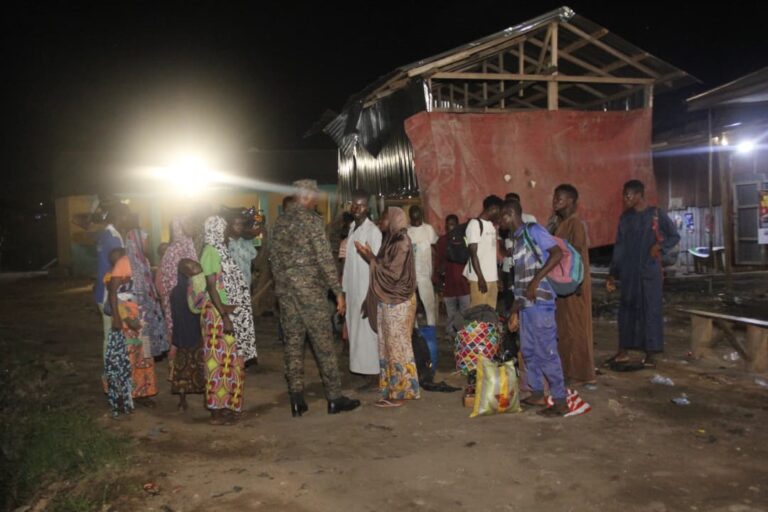
Kumasi immigration sweep operations made national headlines on April 21, 2026, after the Ghana Immigration Service (GIS) arrested 606 undocumented migrants in a dawn raid across six communities in Asokore Mampong. The operation signals a tougher enforcement stance on illegal residency, organized street begging, and repeat immigration violations.
If that sounds like a standard enforcement action, here is the real meaning: Ghana is taking a more aggressive stance on undocumented migration, particularly targeting foreign nationals linked by authorities to organized street begging activities that have generated public complaints in some areas. This is not an isolated incident. It is part of a broader, intensifying crackdown across major urban centers.
That shift matters because immigration enforcement in Ghana has historically been inconsistent. Porous borders, alleged weak enforcement at some entry points, and repeat re-entry after repatriation have undermined past efforts. What makes this operation significant is the scale – over 600 people in a single two-hour operation – and the demographic profile: nearly two-thirds of those arrested are children.
The Operation: What Happened
The operation was led by the Ashanti Regional Commander of the GIS, Deputy Commissioner of Immigration (DCOI) Fred Amankwa. Specialized teams moved through high-density informal settlements and street-side encampments where foreign nationals – predominantly from Niger and other West African countries – have established a visible presence.
Assistant Inspector of Immigration Elijah Abugragu, the Public Relations Officer of the Ashanti Regional Command, confirmed that all arrested individuals have been transferred to a holding center at Prampram in the Greater Accra Region for further screening to establish their identities and immigration statuses prior to possible deportation. The GIS intentionally delayed the Ashanti operation as a strategic measure to ensure suspected irregular migrants did not flee after a similar operation in Accra more than a year ago.
The Demographic Breakdown
The numbers reveal a complex migration pattern that goes beyond simple law enforcement. Of the 606 individuals arrested:
- 381 are children (approximately 63% of all arrests)
- 72 are adult females
- 153 are adult males
The presence of 381 children in a single immigration enforcement operation raises serious questions. According to GIS officials, some children were allegedly being used by adults to solicit alms from motorists and pedestrians. Witnesses report that children are deployed at major traffic intersections where they approach vehicles, sometimes aggressively, until money is given.
This practice is not new. In 2025, the Ghana Immigration Service arrested 2,244 street beggars nationwide, with 90 percent identified as Nigerien nationals. Of those, 925 were deported in a coordinated effort with the Embassy of Niger. The 2025 operation was temporarily paused to prevent overcrowding at detention facilities, but the GIS made clear then that enforcement would resume.
Why Now: Years of Local Pressure
This operation did not happen in a vacuum. Residents of Kumasi and surrounding communities have been calling for action for years. The complaints are not limited to nuisance – they encompass safety, sanitation, and quality of life.
According to multiple reports, residents have reported the following issues:
- Aggressive begging – Some beggars reportedly attack motorists who refuse to give money
- Open defecation – Local residents have accused migrants of engaging in unhygienic practices in public spaces
- Public space loss – Major traffic intersections and public areas have become effectively occupied
- Return after repatriation – Many of those arrested had been deported about two years ago but found their way back, raising questions about border control effectiveness
The Kumasi Metropolitan Assembly (KMA) signaled this crackdown months in advance. In January 2026, KMA Chief Executive Richard Ofori-Agyemang Boadi announced a joint initiative with the GIS to remove migrant beggars from the streets, stating, “We’re working hand-in-hand with Ghana Immigration to remove migrant beggars from the streets of Kumasi.” He described the growing presence of foreign nationals involved in street begging and prostitution as a threat to Kumasi’s image and security.
What Happens Next: Screening and Repatriation
All 606 arrested individuals are now at the GIS holding facility in Prampram. The next steps follow a standard immigration enforcement protocol:
Step 1: Identity verification. GIS officials will establish the true identities and nationalities of each individual. Many are believed to be Nigerien nationals, but other West African countries may be represented.
Step 2: Immigration status determination. Officials will determine whether individuals have any legal basis to remain in Ghana. Individuals found to lack valid immigration status or required documentation may face removal proceedings.
Step 3: Deportation proceedings. Under the Immigration Act 2000 (Act 573), individuals found to be in Ghana illegally may be subject to removal or deportation under Ghanaian law. The GIS typically coordinates with home country embassies to facilitate repatriation, as it did with the Embassy of Niger during the 2025 operation.
Step 4: Potential legal consequences for facilitators. Under Section 52(1)(b) of the Immigration Act 2000 (Act 573), harboring or renting property to illegal immigrants is an offense. Recent joint operations have increasingly targeted landlords who knowingly accommodate undocumented migrants.
The GIS has not yet announced a specific timeline for repatriation, but past operations suggest deportations could begin within weeks of screening completion.
The Legal Framework Behind the Operation
The GIS derives its enforcement authority from the Immigration Act 2000 (Act 573), which remains the primary immigration legislation in Ghana. The Act has seen little modification since its passage, though authorities are reportedly considering a review to bring it in line with current trends.
Key provisions relevant to this operation include:
- Admission and residence controls – The Act gives the GIS authority to regulate who enters, resides in, and works in Ghana
- Removal provisions – Section 52 outlines offenses related to illegal immigration, including harboring illegal immigrants
- Deportation authority – The Minister of the Interior has authority to order deportation of foreign nationals found in Ghana illegally
The GIS operates under the Ministry of the Interior, with a statutory mandate to “regulate and monitor the entry, residence, employment and exit of all foreigners”. The Ministry has reaffirmed its commitment to strengthening border security and migration governance, with Interior Minister Muntaka Mubarak emphasizing the need for immigration officers to remain vigilant and professional at Ghana’s borders.
It is worth noting that harboring or renting property to undocumented migrants carries legal consequences. Under Section 52(1)(b) of the Immigration Act 2000 (Act 573), property owners can face prosecution for providing accommodation to foreign nationals without valid immigration status. This provision has been increasingly enforced in recent joint operations between GIS and the Ghana Police Service.
Policy Context: Balancing Open Borders and Enforcement
This enforcement operation occurs against a backdrop of significant policy contradictions. On one hand, Ghana is tightening enforcement against undocumented migrants. On the other, the government is moving toward greater openness for African travelers.
Effective May 25, 2026 – Africa Day – Ghana will implement a visa-free policy for all African nationals. The policy, announced by President John Dramani Mahama, is designed to promote regional integration and facilitate easier movement across African borders. An e-Visa platform is being launched to serve as the main application portal.
However, the government has been careful to clarify that visa-free does not mean document-free. Foreign Affairs Minister Samuel Okudzeto Ablakwa stated, “Not paying visa fees does not mean you will not go through visa screening.” Entry requirements – including valid passports, proof of purpose of visit, and compliance with immigration laws – remain in effect.
This creates a tension: Ghana wants to be welcoming to African visitors and investors, but it also wants to enforce its laws against those who enter illegally and engage in activities deemed unacceptable. The Kumasi sweep sends a clear message that visa liberalization does not equate to open borders.
A Pattern of Crackdowns
The Kumasi operation is not an isolated event. The GIS has significantly ramped up enforcement activities in 2026, often in joint operations with the Ghana Police Service. According to a GhanaWeb report, there has been a “noticeable increase in joint operations resulting in the arrest of hundreds of suspects” as of March 2026.
Notable operations in 2026 alone include:
| Date | Location | Arrests | Nature |
|---|---|---|---|
| March 12, 2026 | Accra | 12 foreign nationals | Cybercrime and human trafficking |
| March 16, 2026 | Amansie West | 28 foreign nationals plus landlords | Immigration law violations |
| March 10, 2026 | Accra | 93 Nigerians arrested, 73 victims rescued | Cyber fraud syndicate |
| January 5, 2026 | Tuba, Accra | 11 foreign nationals | Counterfeiting and cyber fraud |
| April 21, 2026 | Kumasi | 606 individuals (381 children) | Undocumented migrants / street begging |
What makes the Kumasi operation different is the scale – 606 arrests in a two-hour window – and the humanitarian dimension of 381 children being detained. Previous operations targeting street beggars arrested 2,244 individuals nationwide in 2025, but the Kumasi operation represents one of the largest publicly reported single-location sweeps in recent years.
The Revolving Door Problem
Perhaps the most significant challenge facing Ghana’s immigration enforcement efforts is the “revolving door” – migrants who are deported often find their way back within months or years.
Authorities have acknowledged that many of the individuals arrested in Kumasi were repatriated about two years ago but have since returned. This raises fundamental questions about the long-term effectiveness of operations that focus on arrest and deportation without addressing the underlying drivers of migration or the border security weaknesses that allow re-entry.
Several factors contribute to this problem:
- Porous borders – Ghana shares land borders with three ECOWAS countries (Togo, Côte d’Ivoire, and Burkina Faso), and informal crossing points are numerous and difficult to monitor
- Limited border surveillance infrastructure – Despite government commitments to strengthen border security, resource constraints limit effective monitoring
- Allegations of corruption at entry points – Public comments on social media following the arrests reflected widespread skepticism about border integrity. One commenter noted, “Your colleagues at the borders would eventually allow them in again by collecting monies from them”
- ECOWAS free movement complexities – While ECOWAS protocols allow visa-free travel for up to 90 days, weak border systems and lack of harmonized documentation make it difficult to distinguish legitimate travelers from those who overstay
Without addressing these root causes, large-scale enforcement operations risk becoming expensive, high-profile exercises that provide only temporary relief rather than lasting solutions.
What Readers Should Know
For foreign nationals living in or traveling to Ghana, this operation carries several implications:
If you are a foreign national in Ghana legally: You have nothing to fear from these operations, but you should always carry your passport and valid residence or work permit. Enforcement sweeps sometimes check documentation in public spaces.
If you are a landlord renting to foreign nationals: Verify the immigration status of your tenants. Under Section 52(1)(b) of the Immigration Act 2000 (Act 573), renting to undocumented migrants is an offense that can lead to prosecution. Recent operations have specifically targeted landlords who knowingly accommodate illegal immigrants.
If you employ foreign nationals: Ensure all employees have valid work permits and residence permits. The GIS has authority to inspect workplaces and verify documentation.
If you see aggressive begging or suspect human trafficking: Report concerns to local authorities or the GIS. Public complaints have been a driving force behind enforcement actions in Kumasi, Accra, and other urban centers.
For parents concerned about children used in begging: The high number of children arrested – 381 – suggests that child protection issues are intertwined with migration enforcement. If you encounter children being used for begging, reporting to authorities may help identify trafficking situations.
Visa issue, overstay, permit renewal, deportation concern, or residency question?
Use the form below to speak with a Ghana immigration lawyer.
If you need personalized legal assistance, consider reaching out to a qualified Ghanaian immigration lawyer. Use the form below to get started:
Sources
- MyJoyOnline: “Kumasi: Immigration sweeps 606 undocumented migrants off the streets” (April 21, 2026)
- YEN.com.gh: “Ghana Immigration Service arrests over 600 undocumented migrants in Kumasi” (April 21, 2026)
- Citinewsroom: “GIS arrests over 600 undocumented migrants in Kumasi raid” (April 21, 2026)
- Asaase Radio: “GIS arrests over 600 undocumented migrants in Kumasi dawn raid” (April 21, 2026)
- GBC Ghana Online: “Ghana Immigration Service arrests 606 undocumented migrants in Kumasi” (April 21, 2026)
- Ghanaian Spokesman: “Ghana Immigration Service Reports Mass Arrests and Deportations of Foreign Street Beggars” (May 20, 2025)
- GhanaWeb: “Immigration-Police Joint Taskforce: 8 crackdowns on undocumented migrants, cybercrime” (March 17, 2026)
- MyJoyOnline: “KMA boss declares war on sex workers, migrant beggars in Kumasi” (January 2026)
- NATLEX: “Immigration Act, 2000 (Act 573)”
- GhanaWeb: “Ablakwa clarifies Ghana’s Free Visa for Africans policy” (April 3, 2026)